
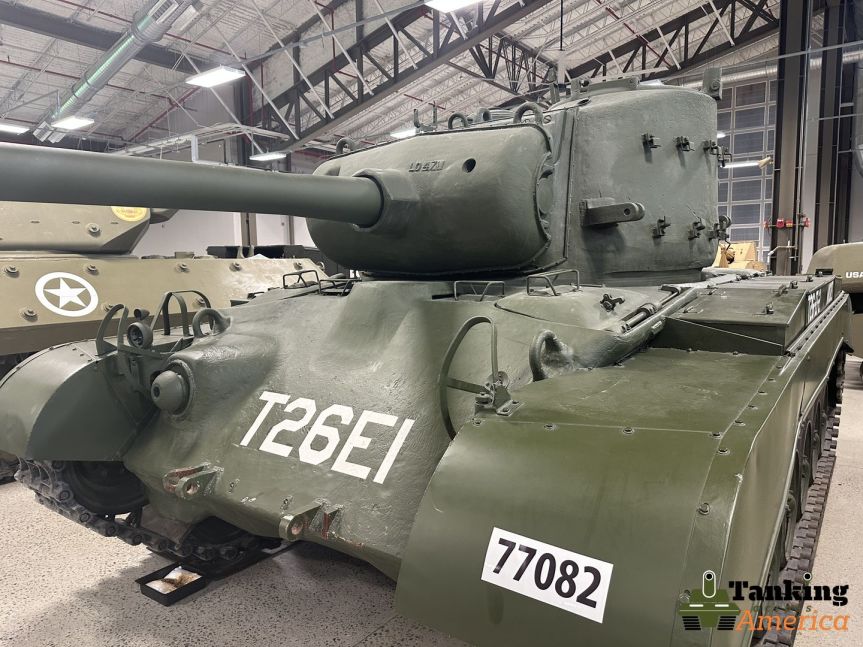
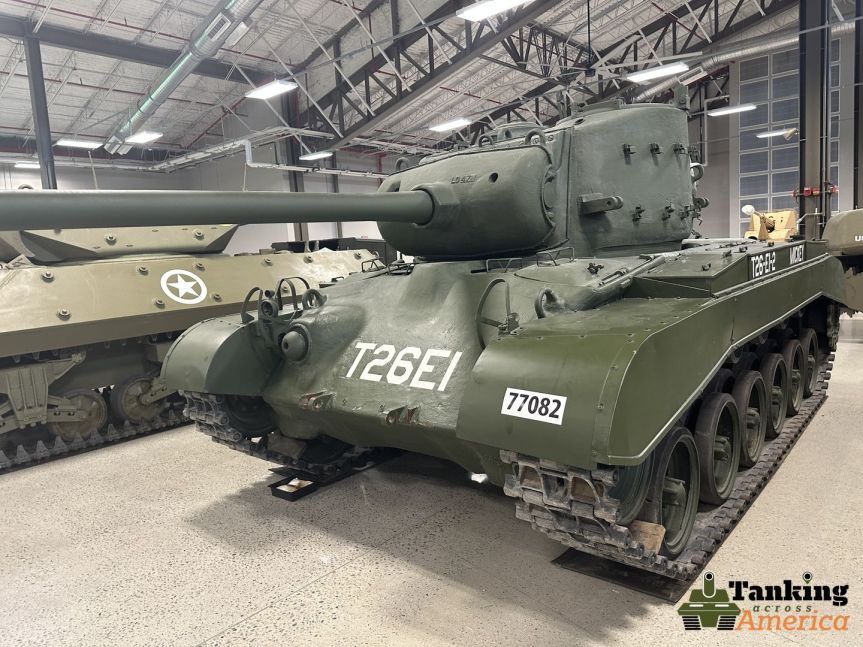
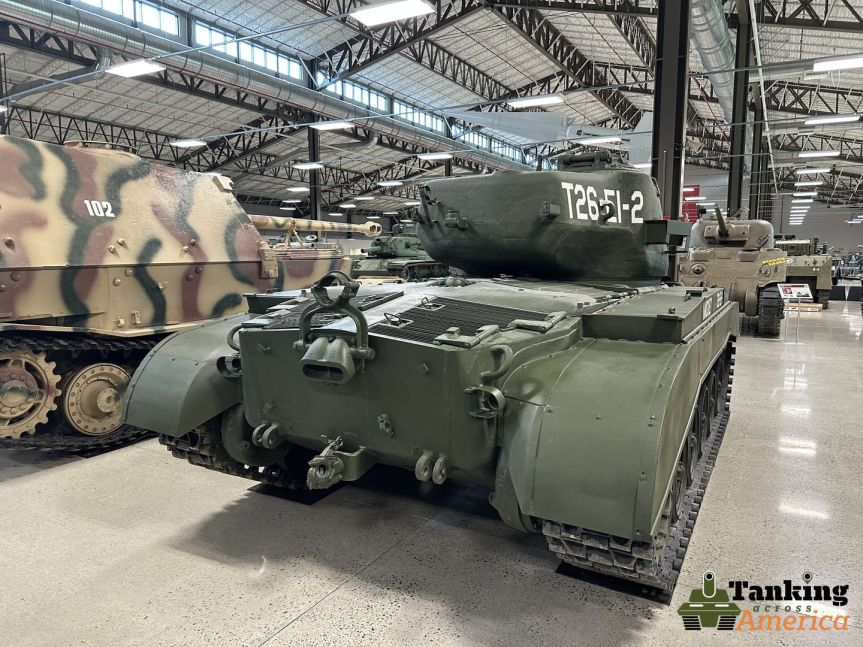
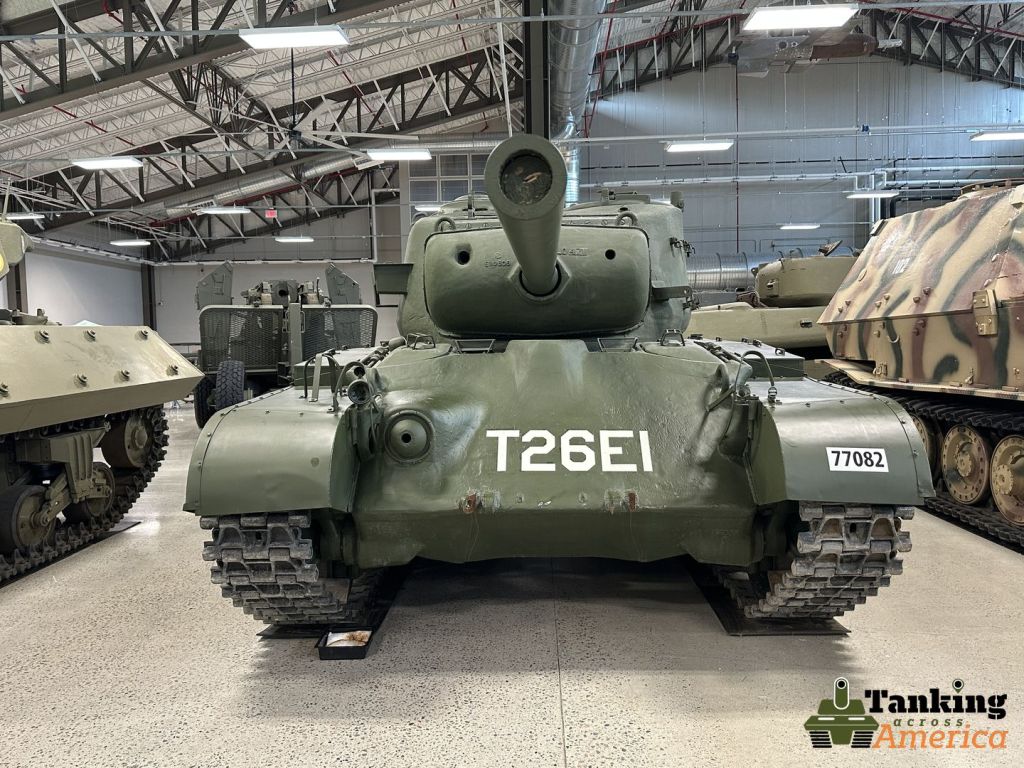
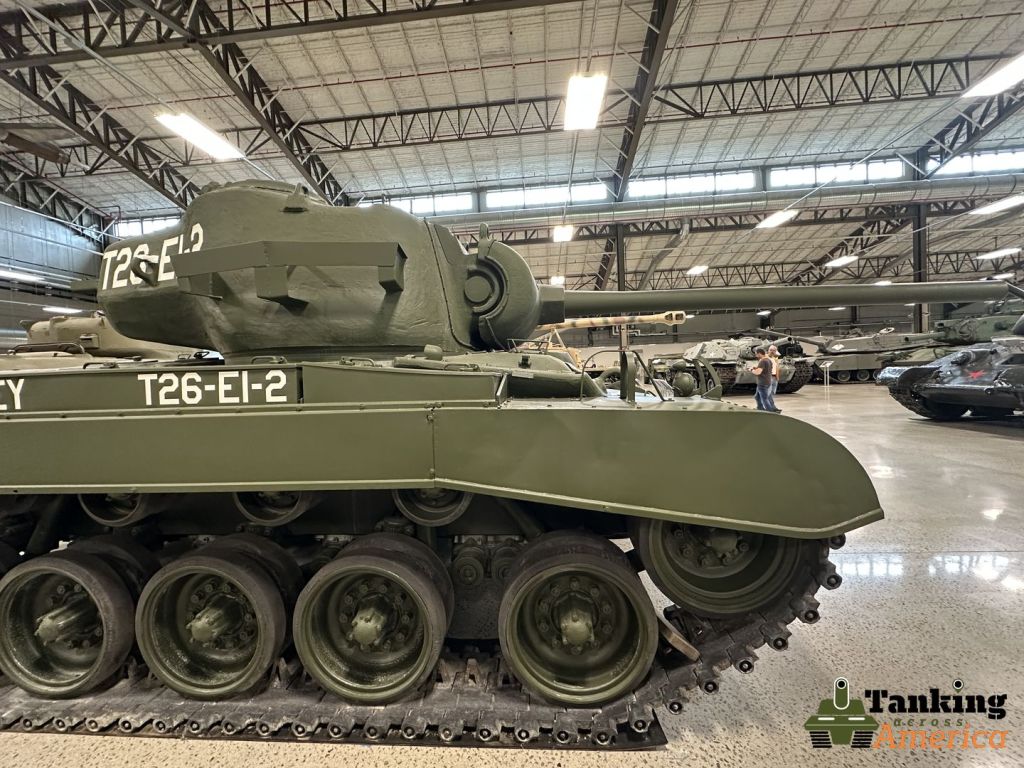
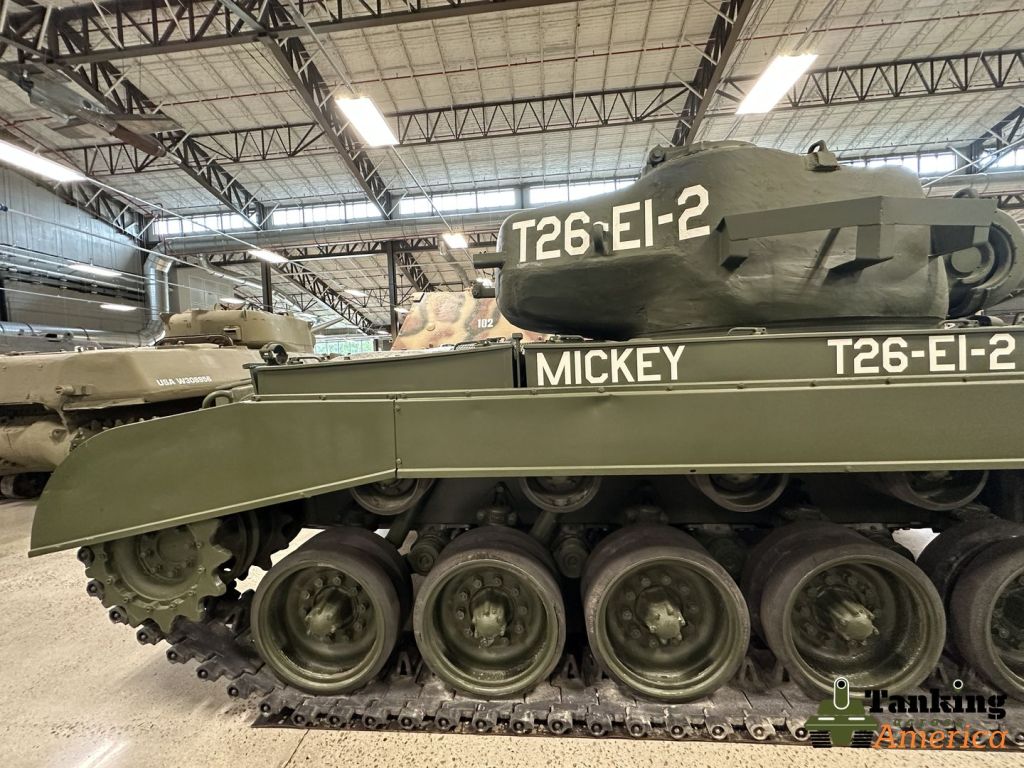
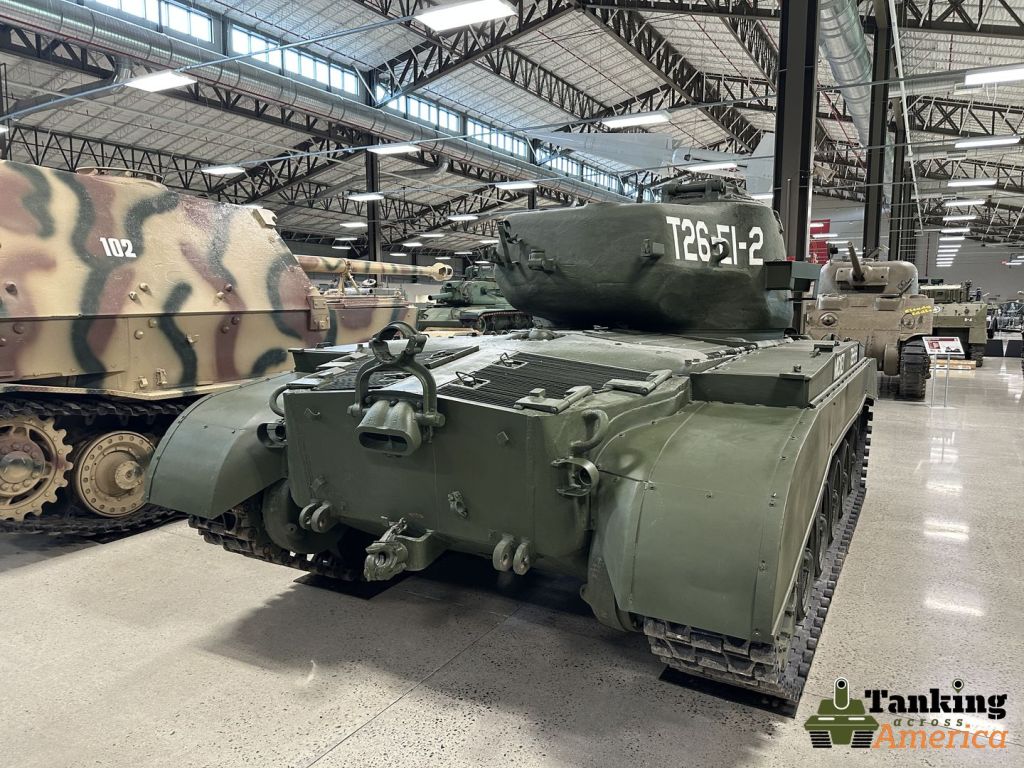
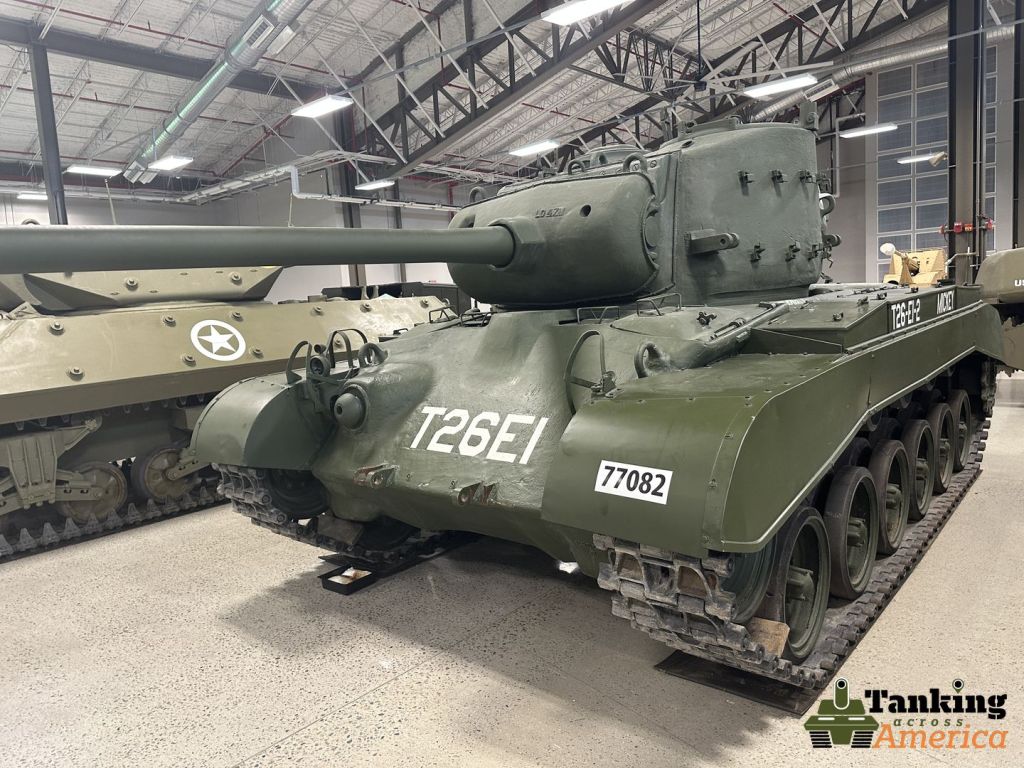
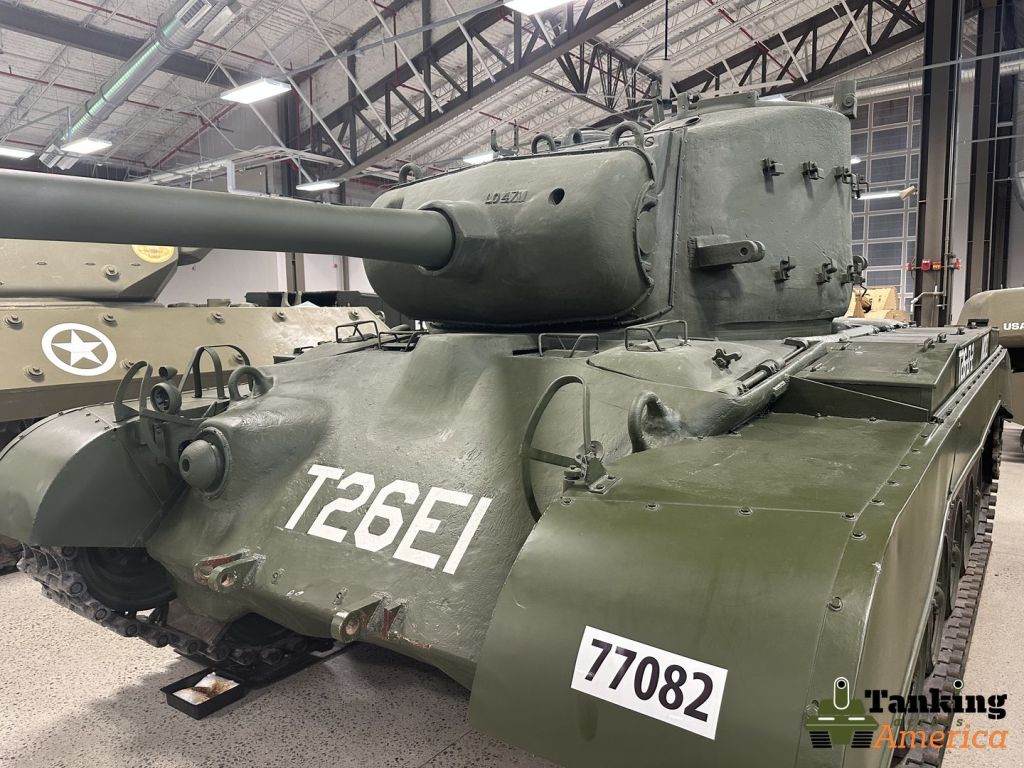
Located at the Fort Lee Ordnance Facility, is one of the T25 medium tank prototypes that is on display. It was painted with “T26E1” on the front which is incorrect.

Origins & Development
The T25 emerged mid-1943 as the Army Ordnance Department sought to surpass the M4 Sherman with a more powerful successor. Built upon the T23 prototype’s platform, two T23 hulls were modified with a new cast turret housing the formidable 90 mm M3 (T7) gun.
Prototype Testing & Plans
In total, two prototypes were completed and sent to Aberdeen Proving Ground in early 1944. One early unit carried registration U.S.A. 30103053 and began trials in January 1944. The original plan called for converting about 40 additional T23s into T25E1s — variants with torqmatic transmission — but full production never materialized.
Specifications & Features
Here’s what made the T25 stand out:
- Armament: Primary 90 mm M3 gun; secondary weapons included a coaxial and hull-mounted .30‑cal Browning M1919, plus a .50‑cal M2 on the turret roof .
- Crew & Dimensions: Carried a crew of five; weighed approximately 35–38 tons; length around 7–7.5 m, width 3.1 m.
- Performance: Powered by a Ford GAN V8 engine (~470 hp for T25; GAF for T25E1), providing a top speed near 40 km/h.
- Protection: Frontal armor ~76 mm, turret up to ~68 mm, mantlet ~89 mm.
- Suspension: The T25 used HVSS (horizontal volute spring suspension); the T25E1 moved to torsion-bar suspension for better load handling.
Why the T25 Was Shelved
Despite its upgrade in firepower, the T25 didn’t offer enough advantage over its heavier counterpart — the T26 — which eventually entered mass production as the M26 Pershing. By early 1945, focus shifted to the latter, and the T25 was quietly dropped.



 tankingacrossamerica.com