

Origin and Development
- The M26 Pershing was a U.S. heavy/medium tank introduced in late WWII, aimed at countering German heavy armor like the Tiger and Panther.
- To boost its firepower, U.S. engineers developed an upgraded version with a long-barreled 90 mm T15E1 gun (about L/73), resulting in the prototype designated T26E1‑1 and later, after the upgrade, T26E4 Pilot Prototype No. 1—popularly known as the Super Pershing.
- A second iteration used the T15E2 gun with two-piece ammunition, and about 25 production models (T26E4) were completed—though none saw widespread service

Combat and Modifications
- The Super Pershing prototype was shipped to Europe in March 1945 and served with the U.S. 3rd Armored Division.
- It featured improvised up-armoring: a salvaged Panther frontal plate (80 mm) welded to the mantlet, boiler-plate spaced armor on the hull, and a heavy counterweight at the turret rear to offset the heavier gun.
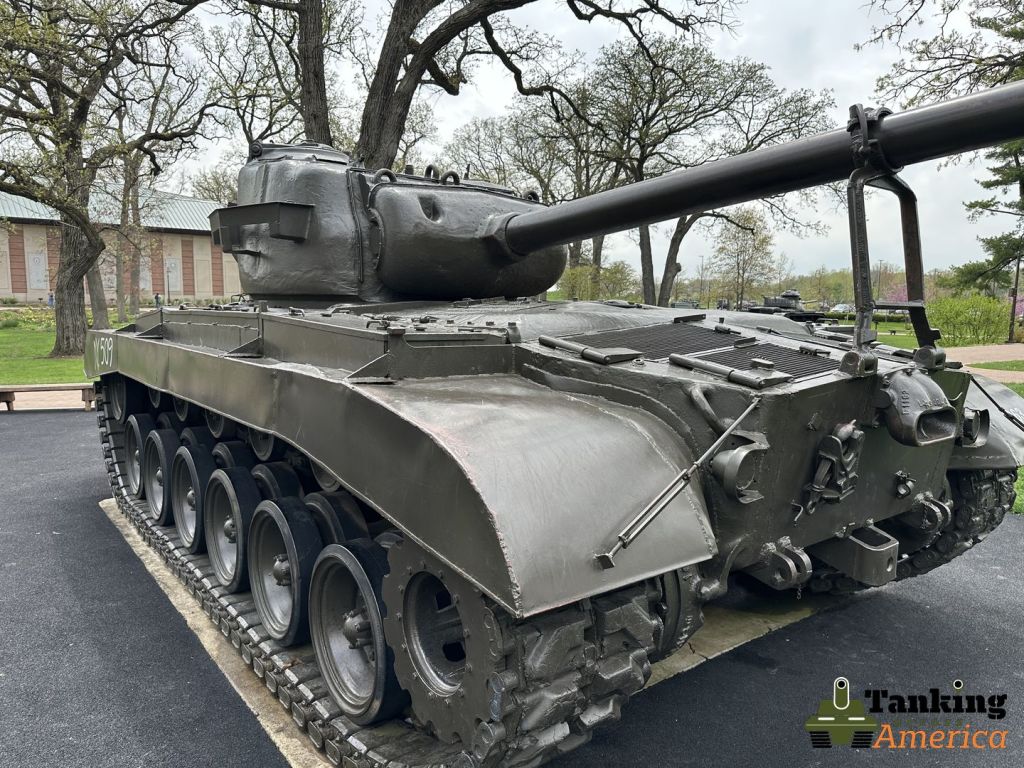
- External equilibrator springs were initially mounted atop the mantlet due to internal fit constraints—later removed in production models
Preservation at Cantigny
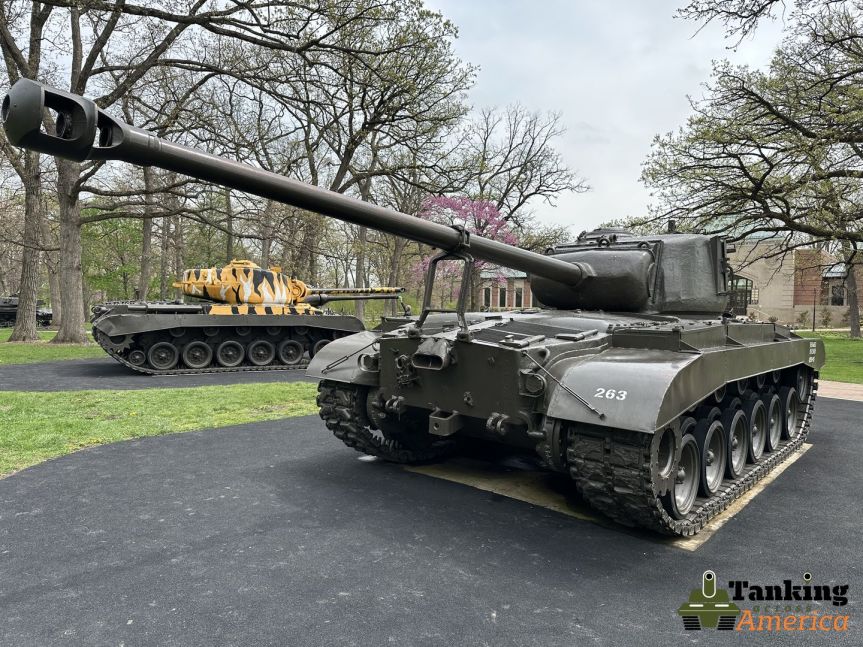
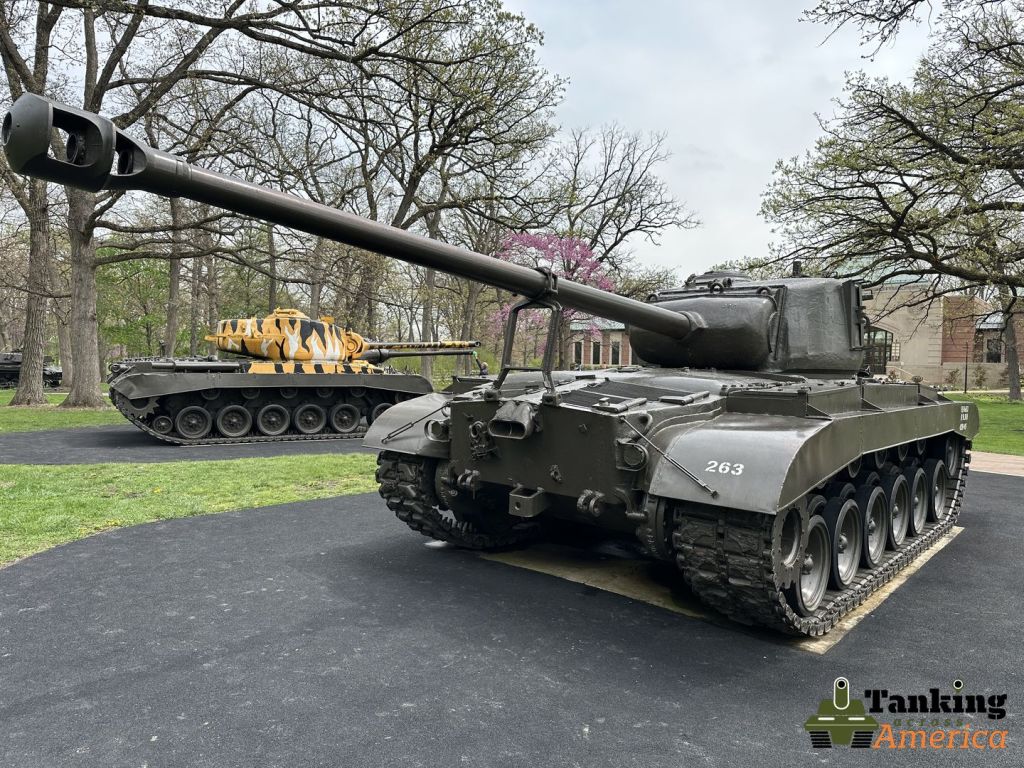
- Cantigny Park’s First Division Museum in Wheaton, Illinois, is home to the only remaining T26E4—the Super Pershing—on public display.
- The Tank Park exhibit lets visitors get up close to this remarkable relic of armored innovation, making it a must-see for history enthusiasts.
 tankingacrossamerica.com