
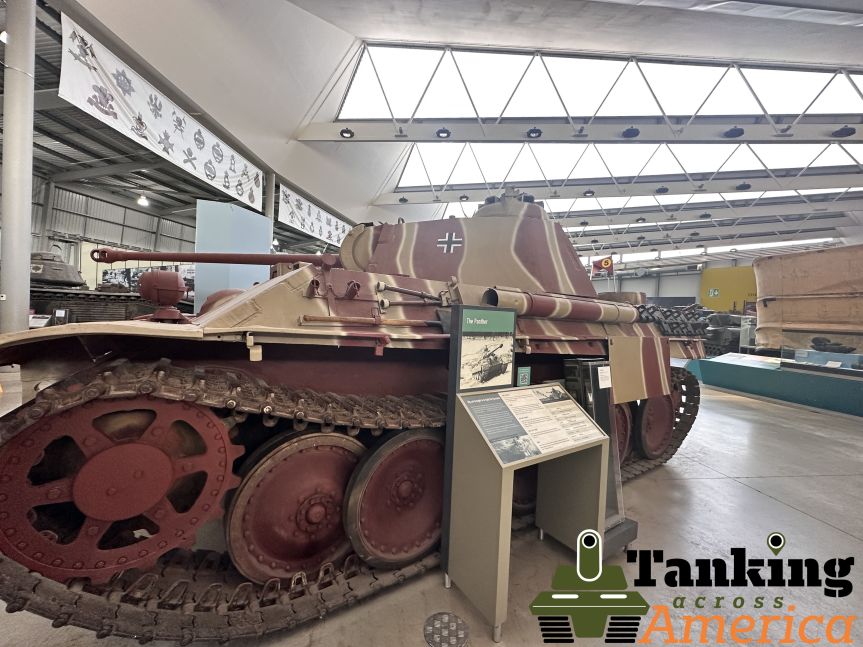
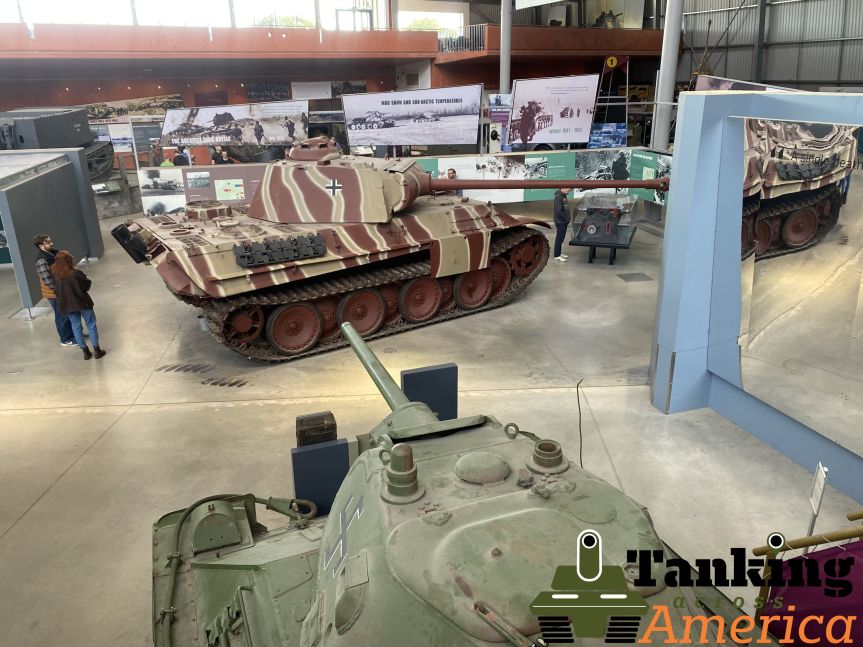
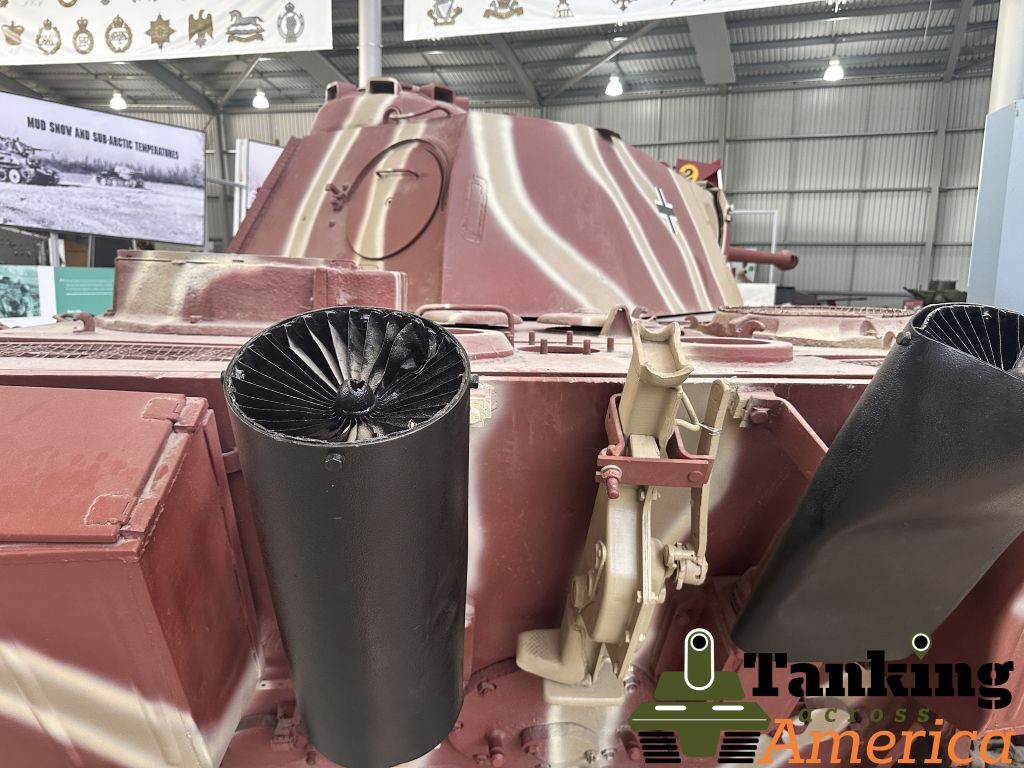
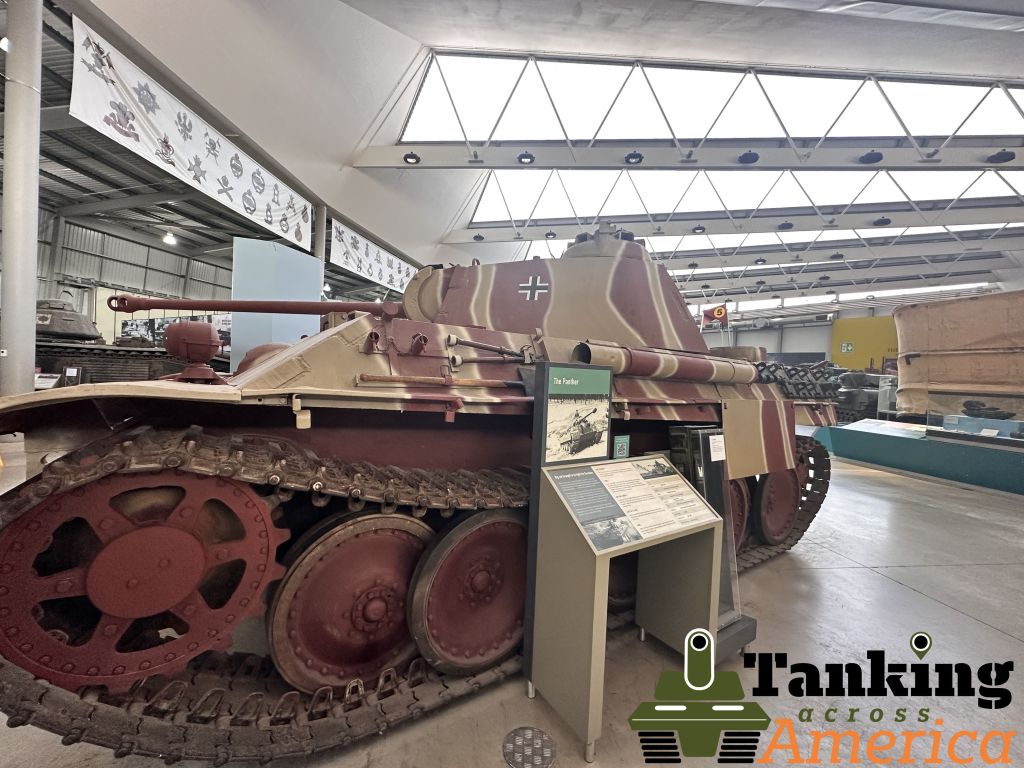
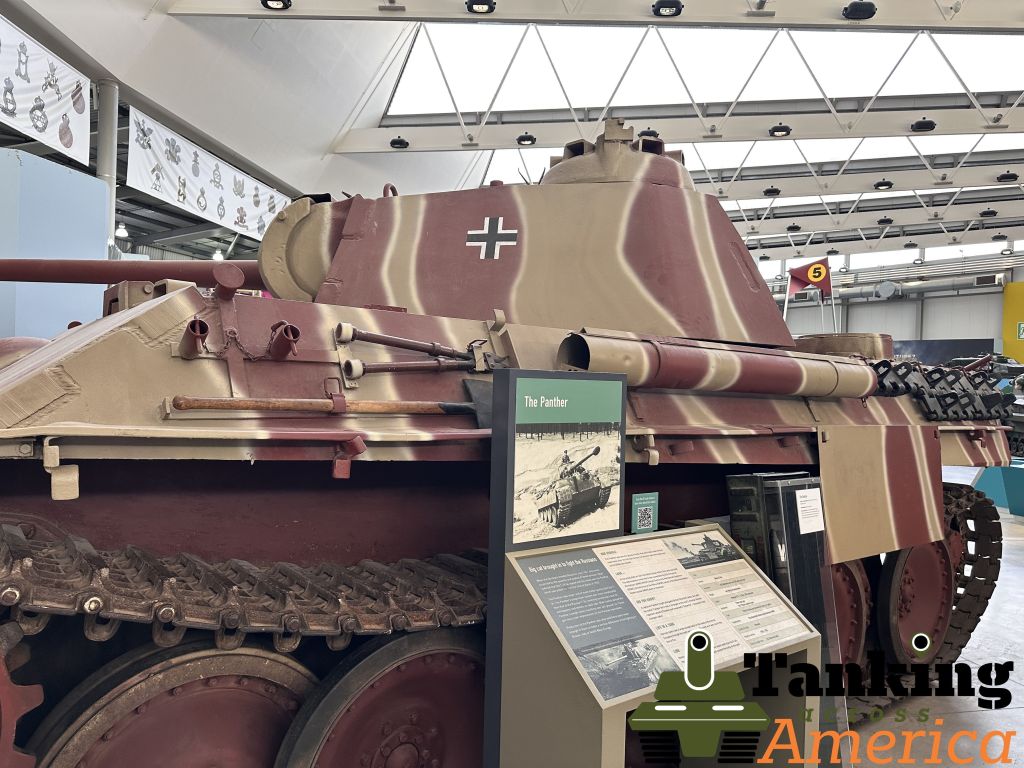
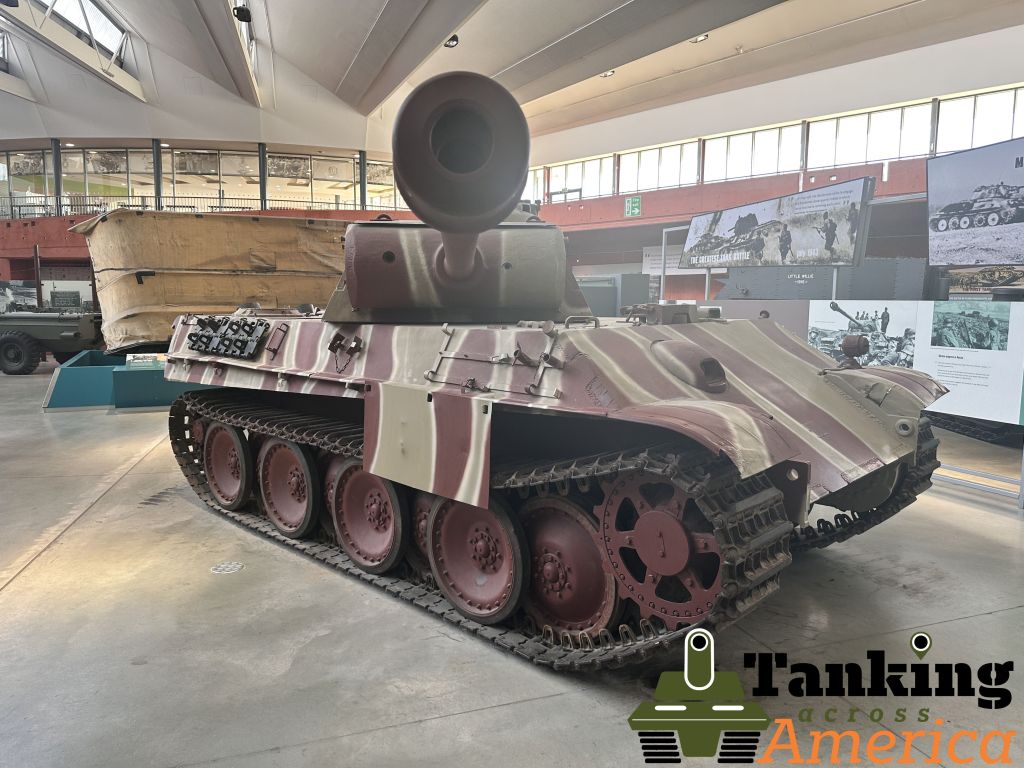
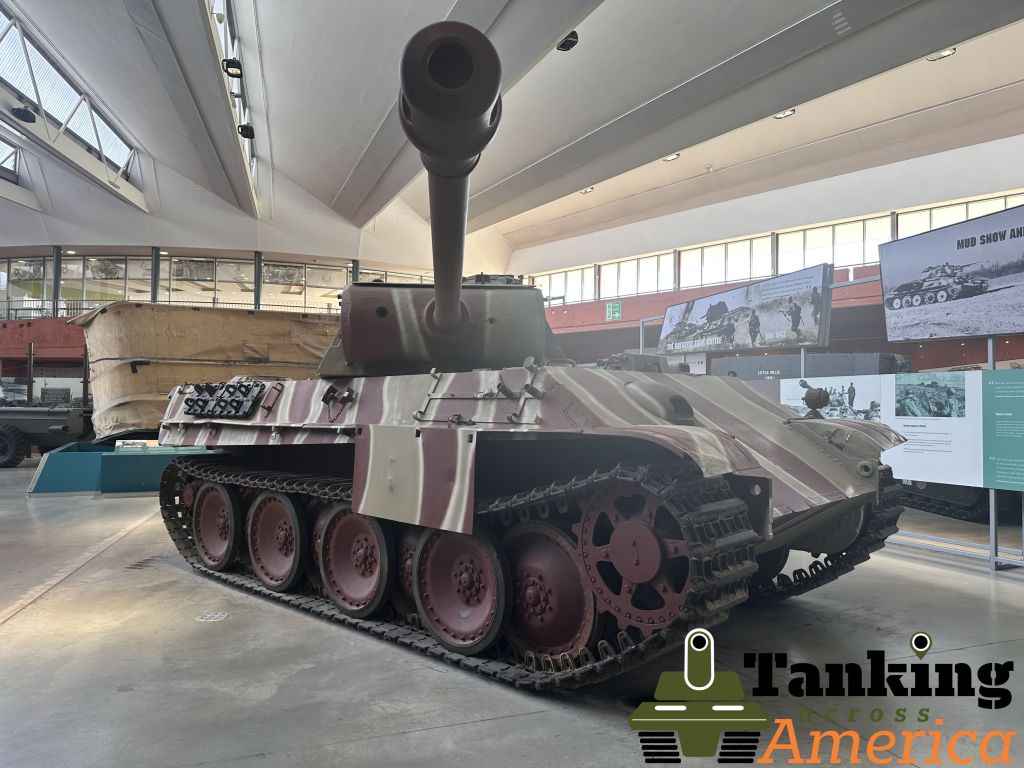
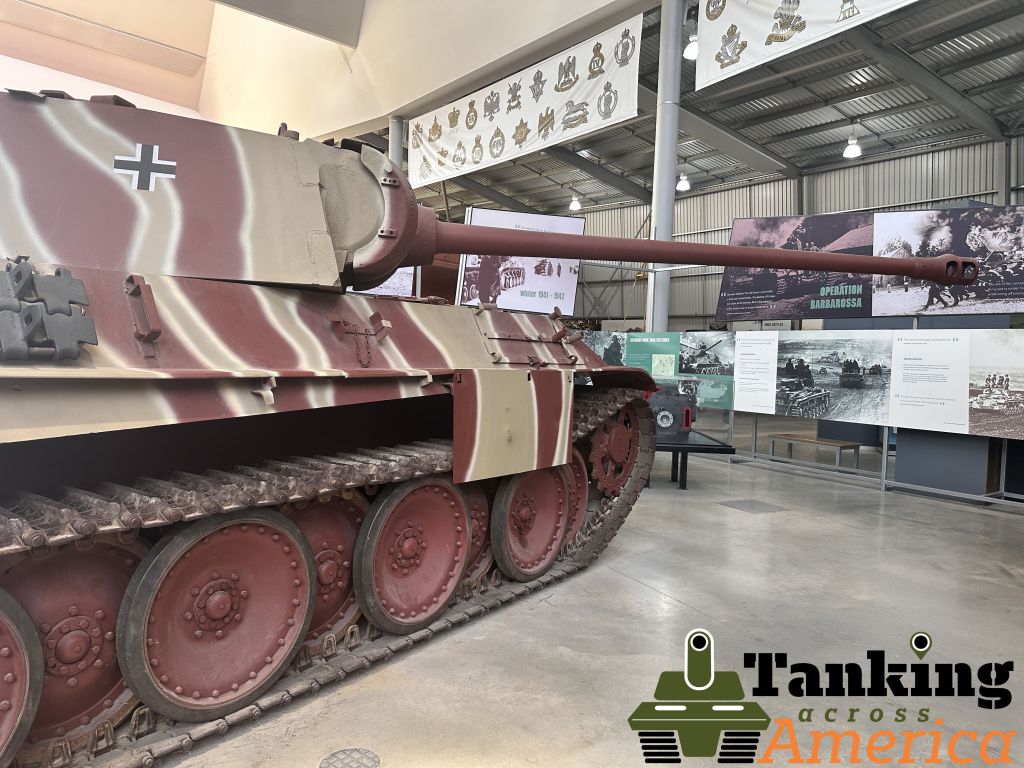
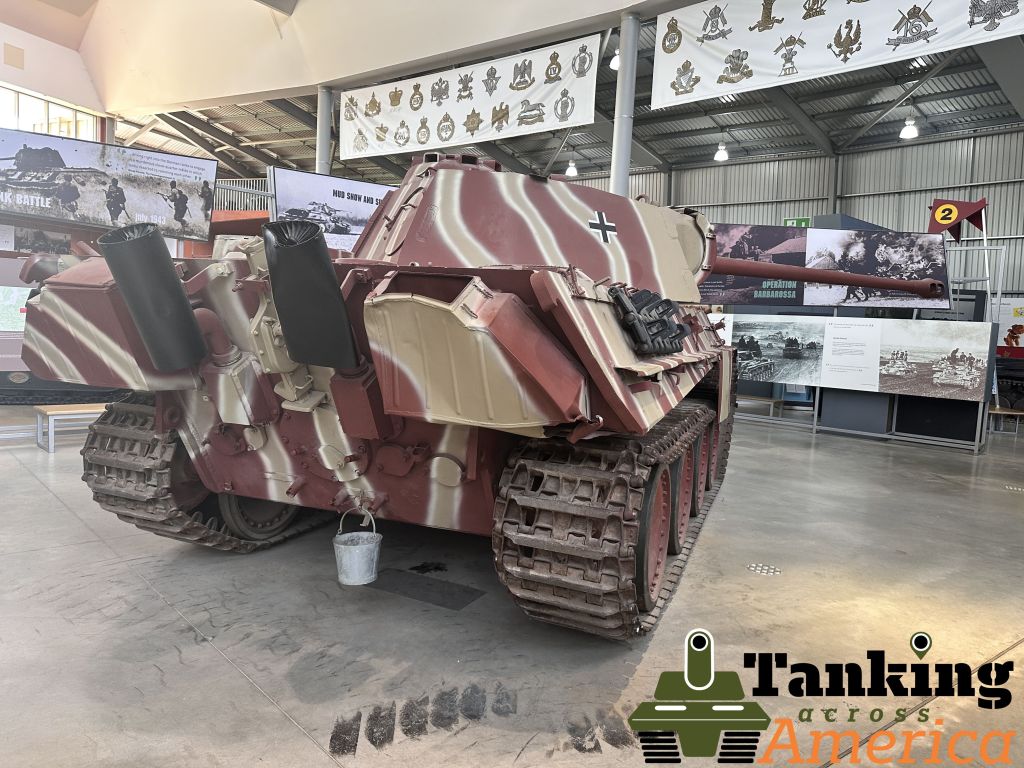
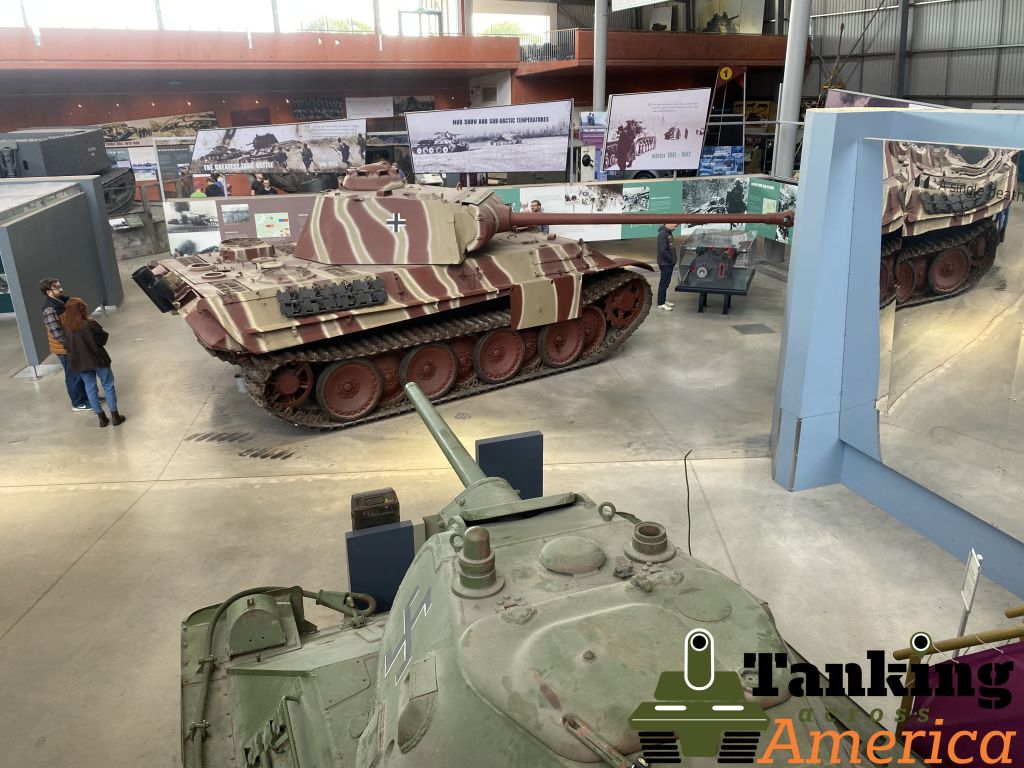
At The Tank Museum in Bovington, Dorset, the Panther draws attention with its long gun, sloped front armour and overlapping road wheels. It looks every bit like a German tank built for the Second World War. Yet this particular Panther has an unusual history: it was assembled after the fighting had ended, under British supervision. The Tank Museum’s collection record makes it a fascinating vehicle to examine up close.
Why the Panther was built
Germany developed the Panther after encountering Soviet tanks, especially the T-34, during its 1941 invasion of the Soviet Union. The new design combined sloped armour with a powerful 7.5 cm KwK 42 L/70 gun and wide tracks. The Panther first saw action at Kursk in 1943. Its firepower and protection made it a formidable opponent, although its complex construction slowed production and placed heavy demands on maintenance. The Tank Museum lists a five-person crew and a weight of 44 tonnes for the type.
Bovington’s unusual example
The story of Bovington’s Panther begins at the Maschinenfabrik Niedersachsen, or MNH, factory in Hannover. After Allied forces took control of the plant, British Army personnel supervised the assembly of a small group of tanks there. Bovington’s Panther was one of them.
A small plate on the front identifies the British unit involved: 823 Armoured Workshops, part of the Royal Electrical and Mechanical Engineers (REME) in the British Army of the Rhine. It is a detail a visitor could easily overlook, but it changes how we read the vehicle. This Panther is a surviving example of German tank design and of the British effort to examine that design after the war. The Tank Museum documents its assembly at MNH.
What to look for at the museum
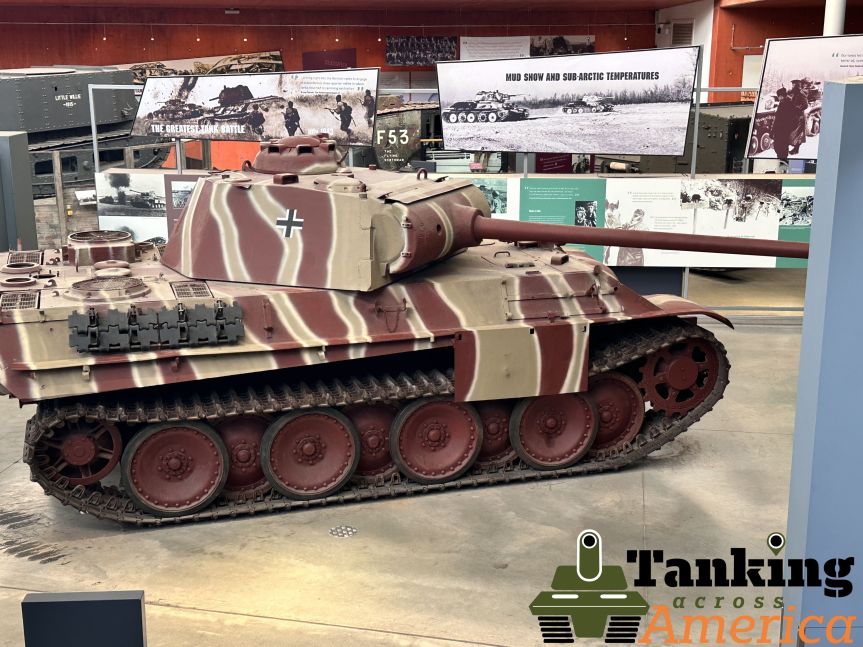
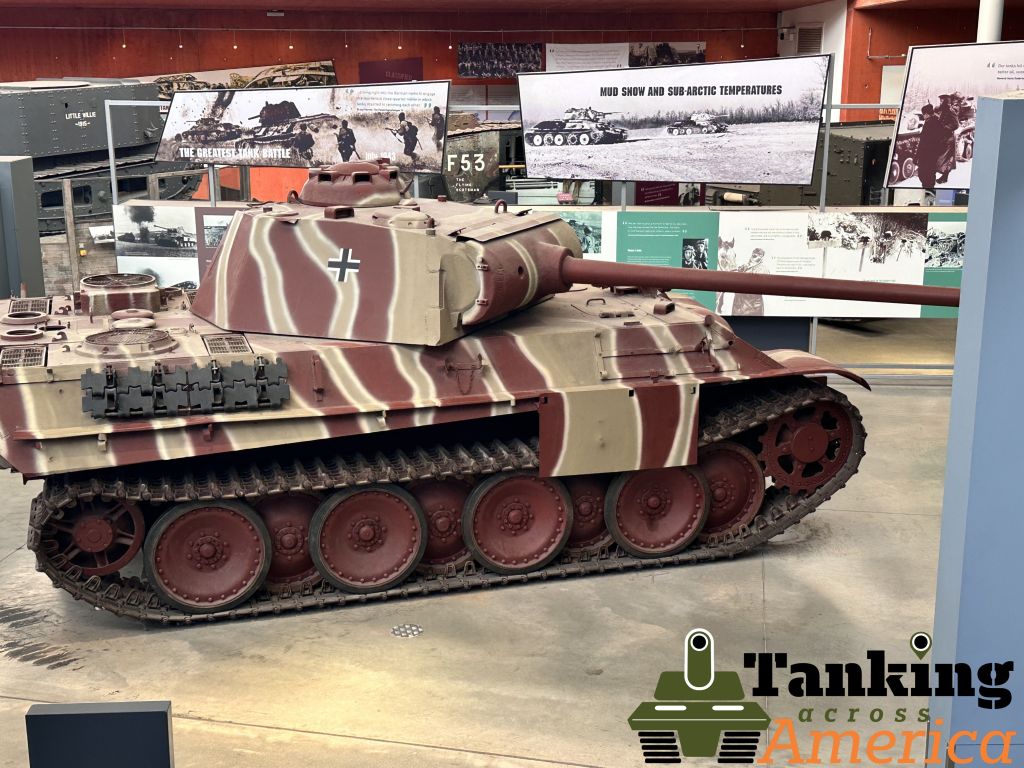
Start with the front hull. Its sloped plate shows how the Panther sought to improve protection without relying on vertical armour alone. Then follow the length of the 75 mm gun barrel and look down at the tightly packed, overlapping wheels. Those features help explain both the Panther’s reputation on the battlefield and the difficulty of building and maintaining it.
Finally, look for that small plate on the front. Many preserved tanks invite questions about where they fought. Bovington’s Panther invites a different one: what happened to Germany’s weapons and factories once the war was over? That postwar chapter is what makes this particular tank so memorable.


So are you Tanking across the UK too now ? 😃
It’s an interesting story behind that particular vehicle.
LikeLike