
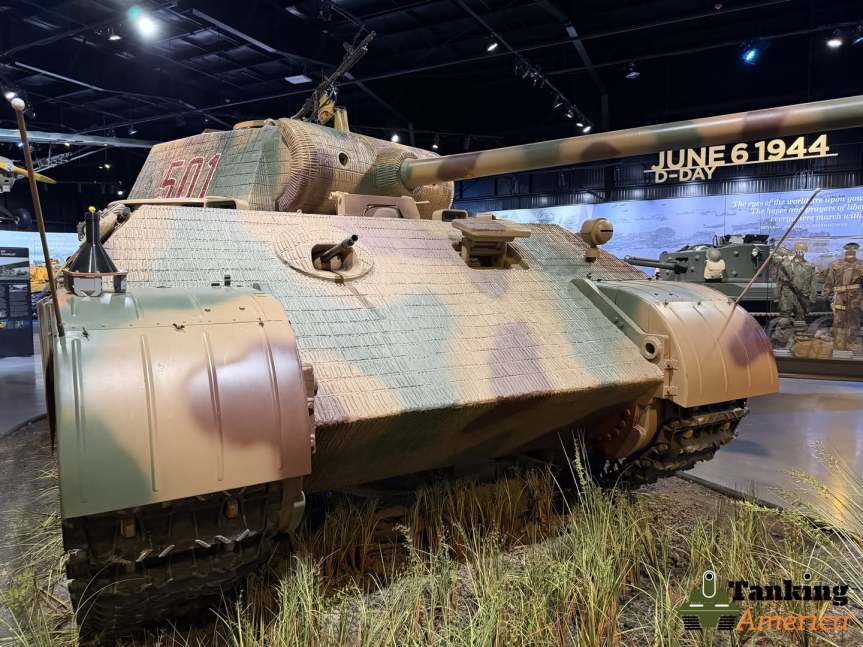
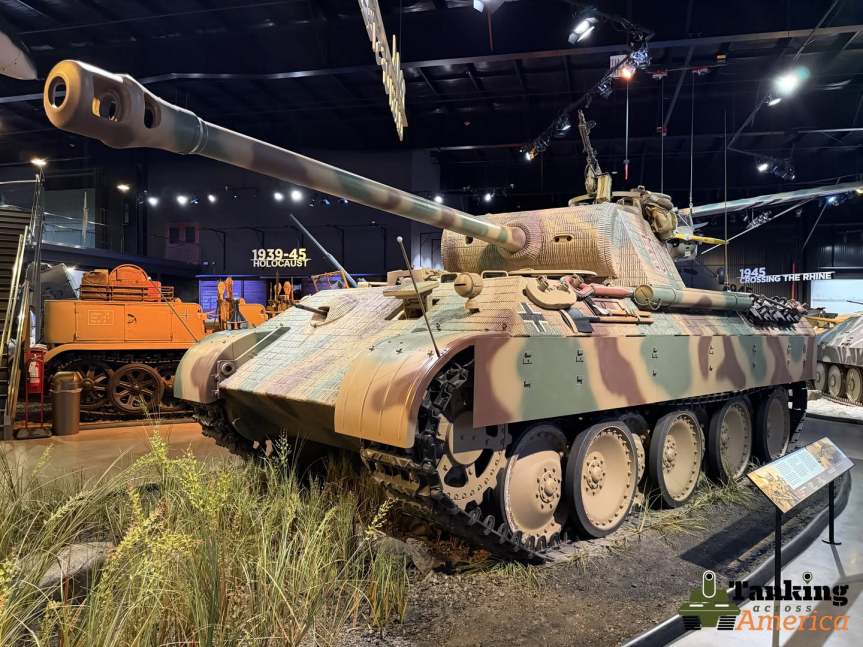
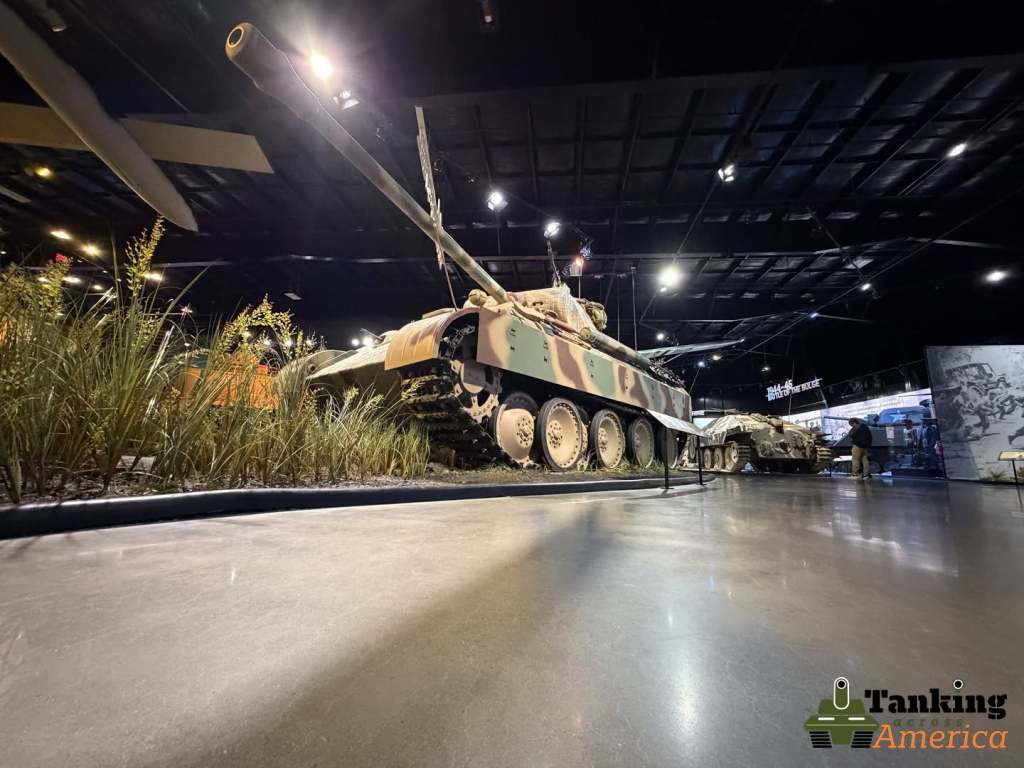
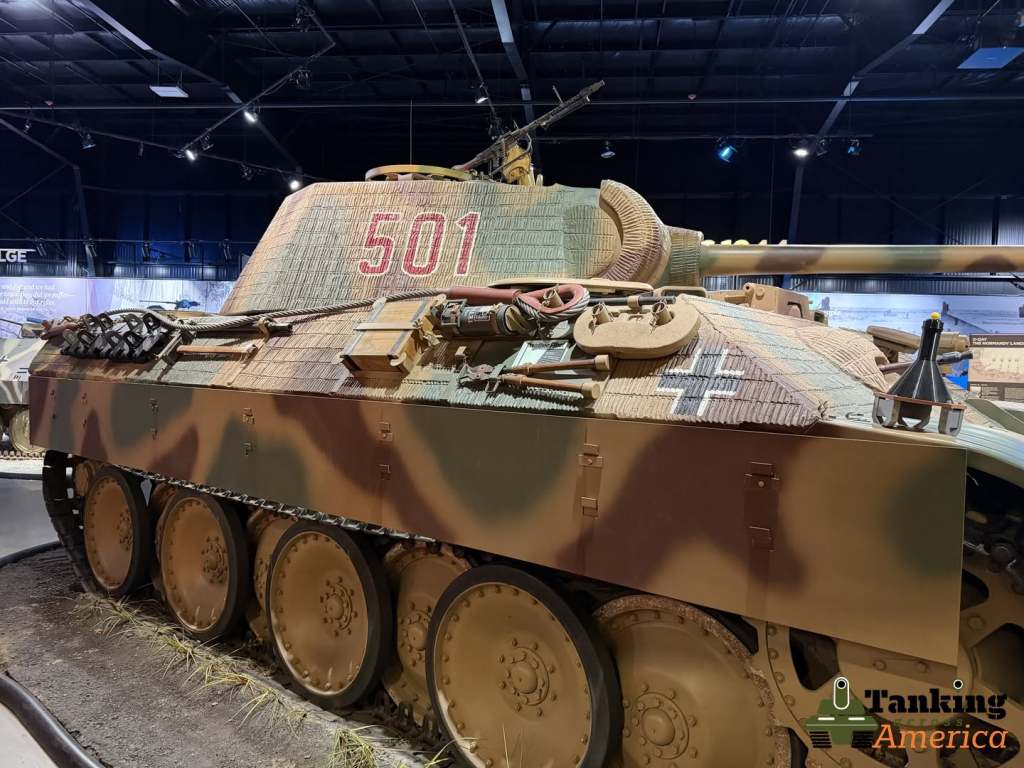
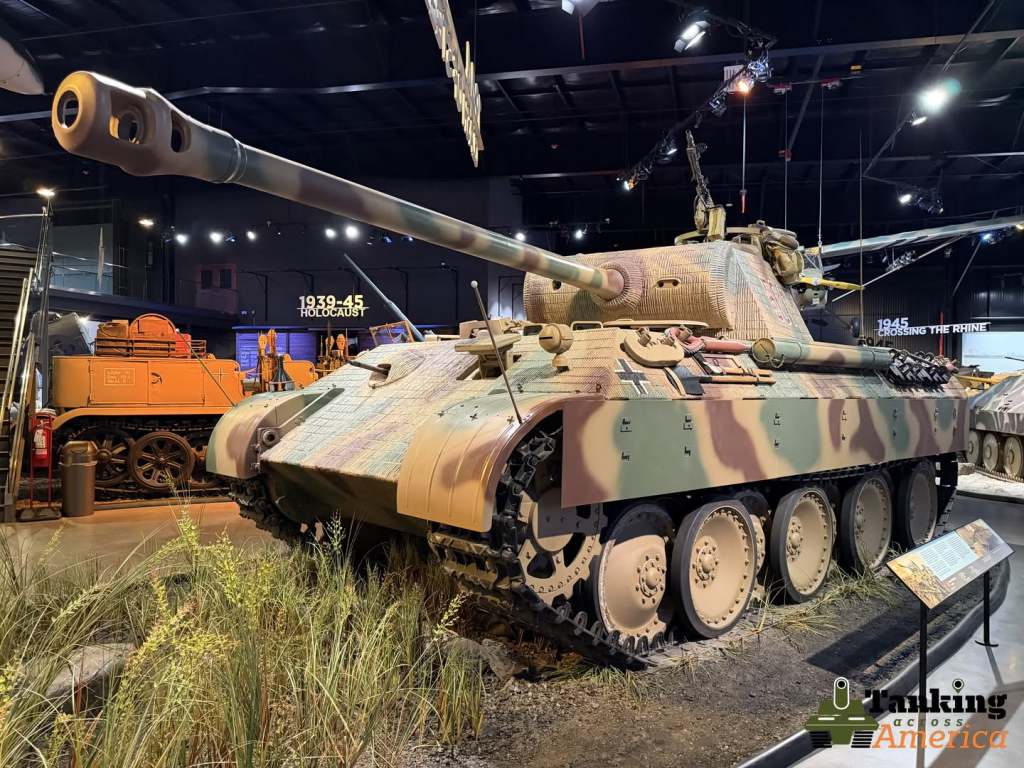
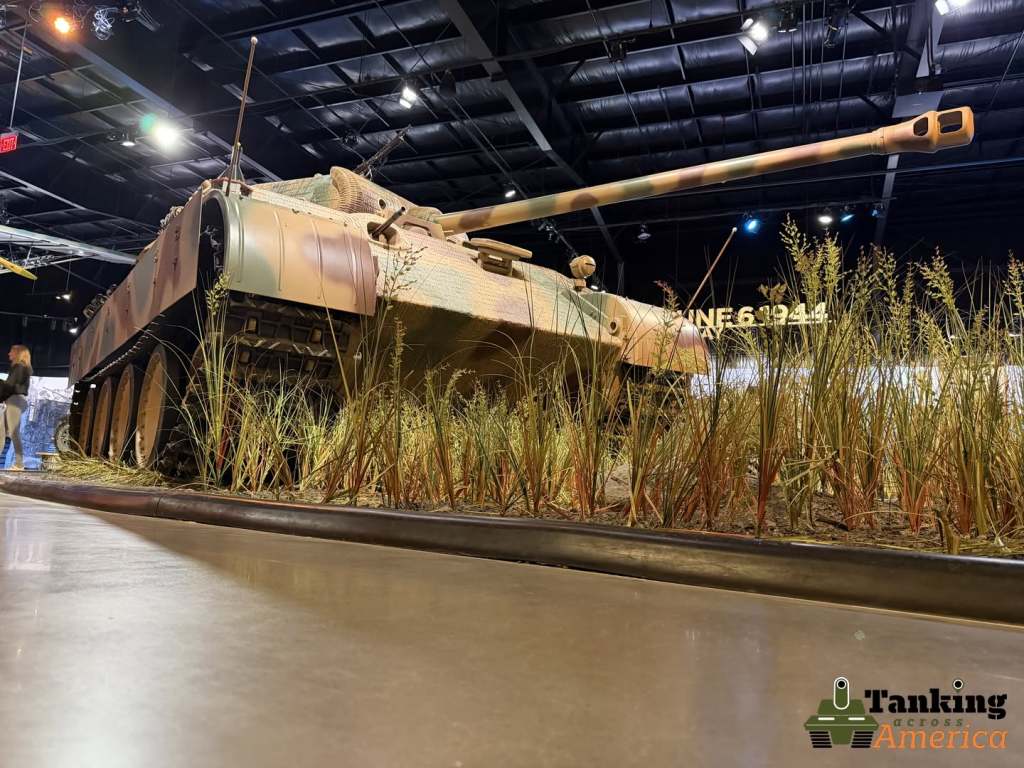
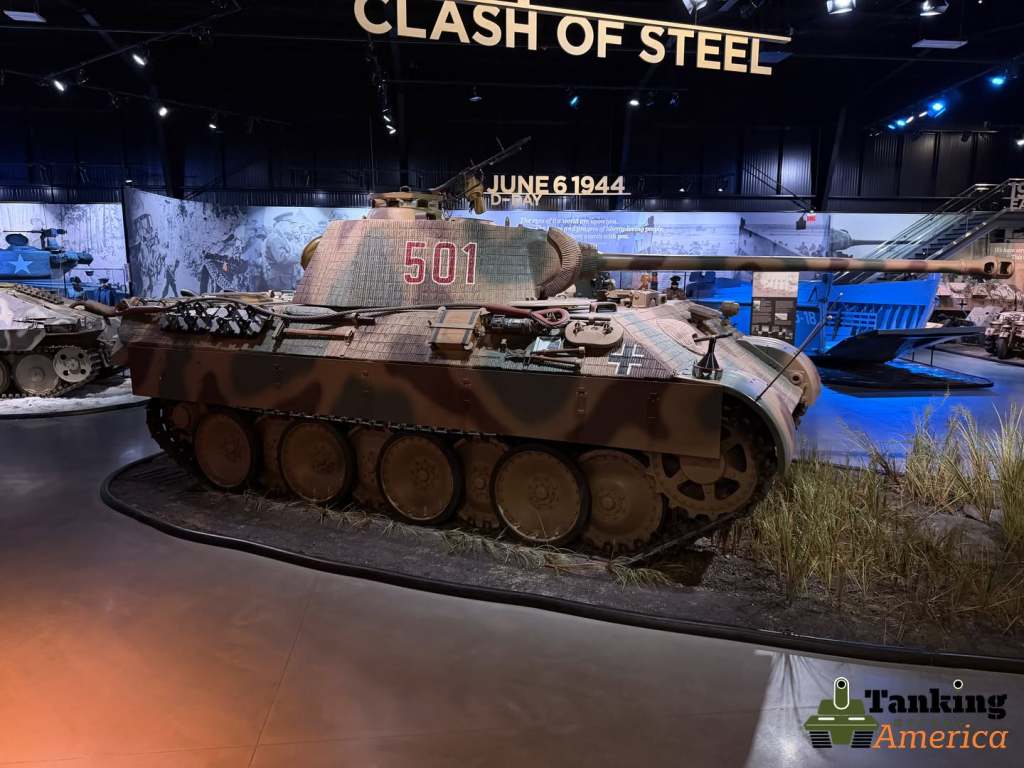
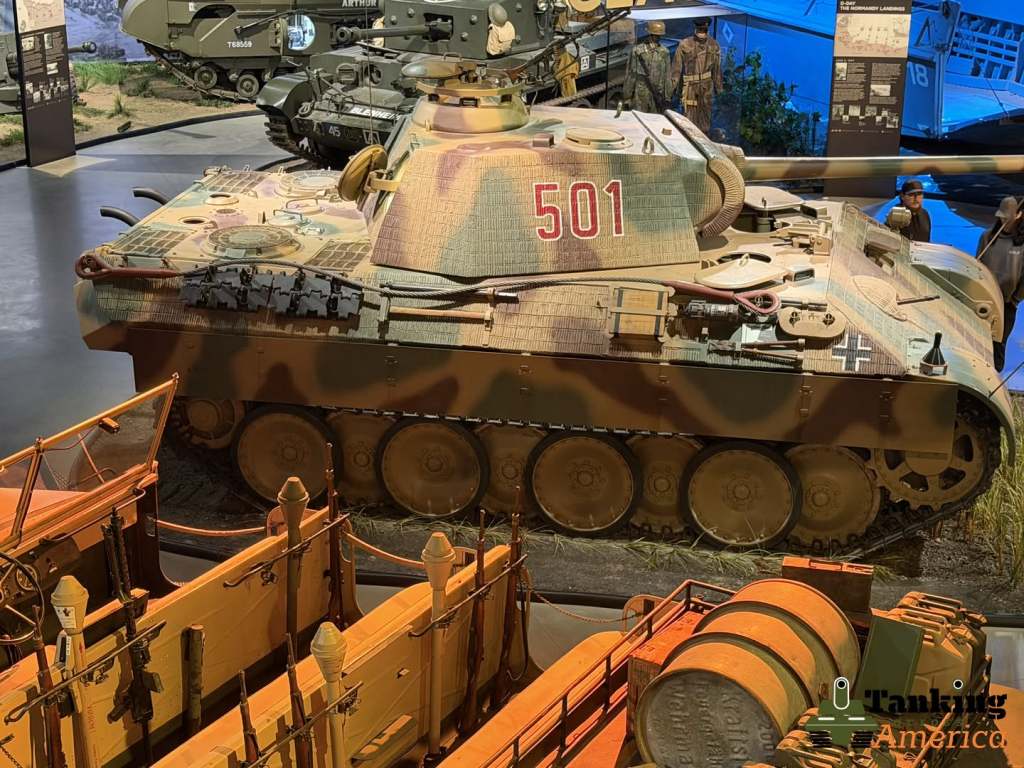
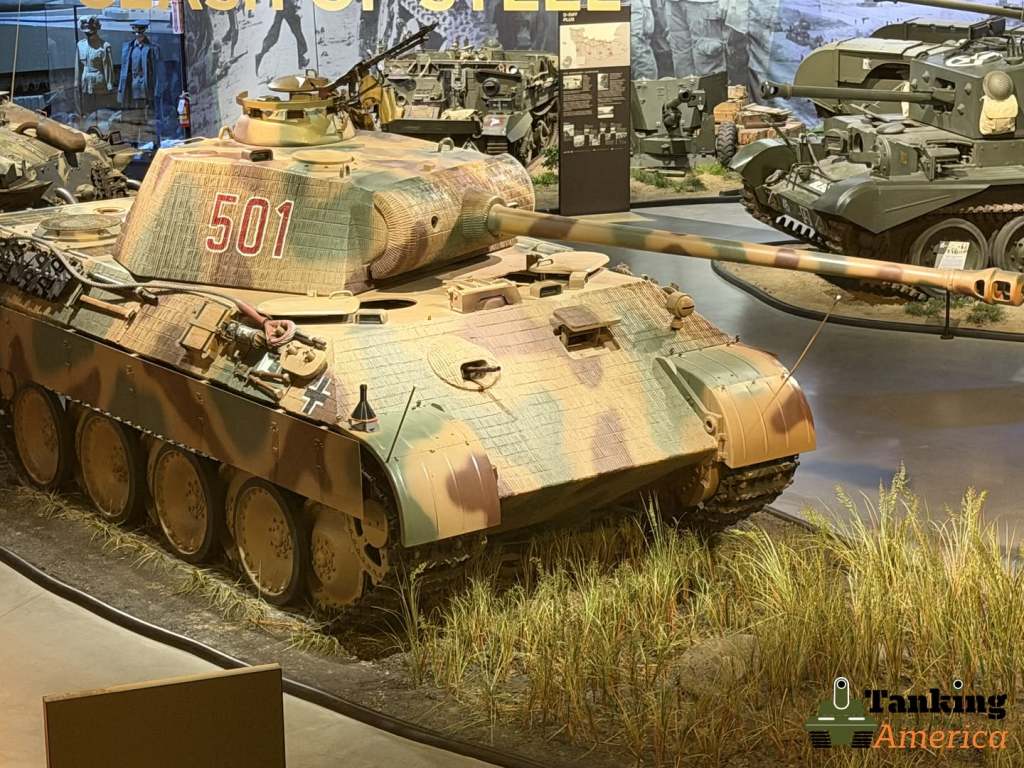
Among the many historic armored vehicles displayed at the American Heritage Museum in Hudson, Massachusetts, few have a story as remarkable as its German Panther tank. This imposing Panzerkampfwagen V Panther Ausf. A is more than a rare survivor of World War II—it is also the product of an extraordinary restoration that brought a heavily damaged battlefield relic back to life.
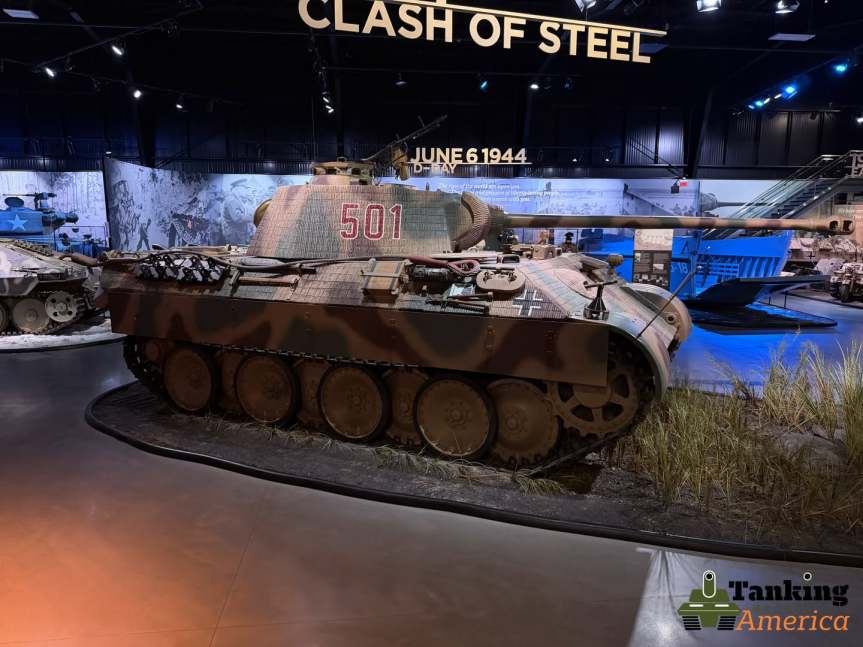
Today, the Panther occupies a prominent place in the museum’s “Clash of Steel” exhibit, where it faces one of its most important wartime opponents: the Soviet T-34/85.
Germany’s Answer to the T-34
When Germany invaded the Soviet Union in June 1941, German troops encountered the Soviet T-34. Its sloped armor, wide tracks and powerful gun came as an unpleasant surprise. Although Soviet crews did not always use the T-34 effectively during the early fighting, the tank’s basic design forced German engineers to reconsider the future of their armored forces.
The result was the Panther.
Officially designated the Panzerkampfwagen V Panther, or Sd.Kfz. 171, the new tank combined sloped armor with a high-velocity 7.5 cm KwK 42 L/70 cannon. Although its gun had a smaller bore than the Tiger I’s famous 88 mm weapon, its high muzzle velocity gave it excellent armor-piercing performance. A well-positioned Panther could destroy most Allied tanks at considerable range.
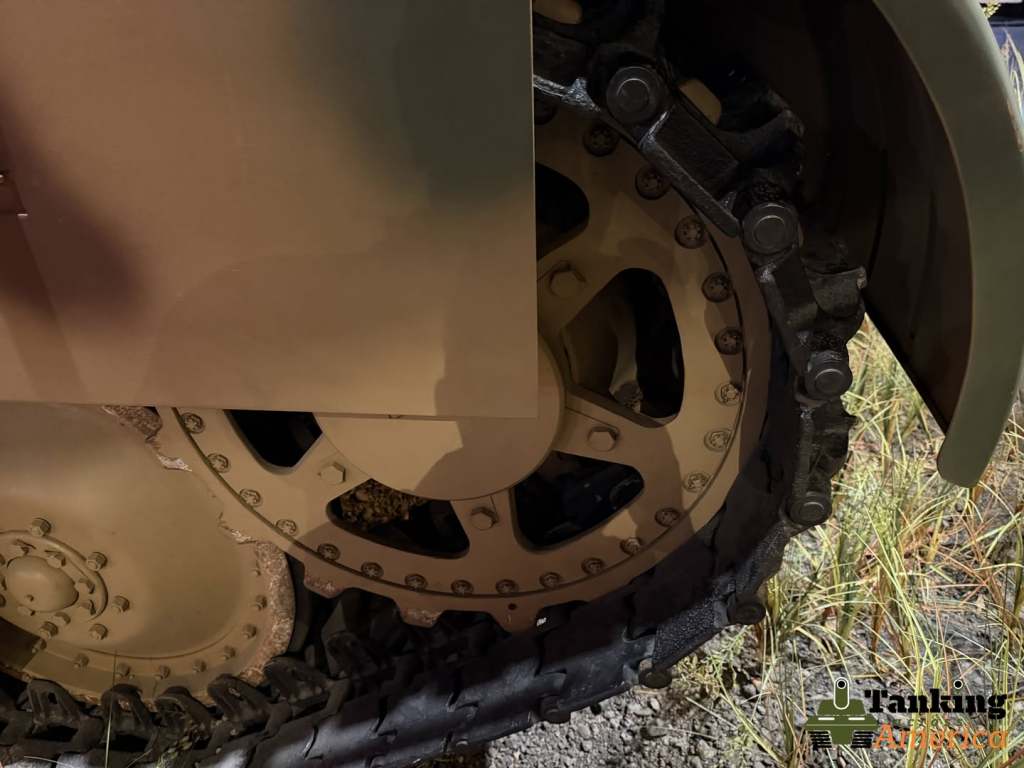
The Panther carried a crew of five: commander, gunner, loader, driver and radio operator. It weighed approximately 44 metric tons and was powered by a Maybach gasoline engine. Its wide tracks provided relatively low ground pressure, while its interleaved road wheels gave the vehicle a smoother ride across rough terrain.
On paper, it was one of the most formidable tanks of World War II.
A Difficult Beginning at Kursk
The Panther entered combat during Operation Citadel, the German offensive against the Kursk salient in July 1943. Its battlefield debut was far from successful.
The earliest Panthers suffered from numerous mechanical problems, including engine fires, transmission failures and unreliable final drives. Many vehicles broke down before reaching the battlefield. Mines, Soviet antitank guns and difficult recovery conditions added to the losses.
Despite these problems, the Panther’s potential was clear. Its long-barreled gun was extremely effective, while its heavily sloped frontal armor offered excellent protection. Later production improvements made the tank more dependable, although it never became easy or inexpensive to maintain.
The Panther Ausf. A followed the original Ausf. D into production during 1943. It introduced several improvements, including a redesigned commander’s cupola and other changes intended to make the tank more practical in combat. Panthers eventually served on the Eastern Front, in Italy and throughout Western Europe.
The Panther never appeared in sufficient numbers to reverse Germany’s fortunes, however. It was complicated to manufacture, demanding to maintain and vulnerable from the sides and rear. Germany produced only a fraction of the tanks manufactured by the Soviet Union and the Western Allies.
Recovered from a Polish River
The Panther now preserved at the American Heritage Museum had a very different journey from most surviving German tanks.
Its remains were recovered from the Czarna Nida River in Poland in 1991. By that time, the vehicle had spent decades submerged and was far from complete. The surviving hull was corroded, damaged and missing numerous components.
The Panther eventually became part of the collection assembled by American engineer and military-vehicle enthusiast Jacques M. Littlefield. Littlefield created one of the world’s most important private collections of tanks and armored vehicles at his Military Vehicle Technology Foundation in California.
Restoring the Panther became one of the collection’s most ambitious projects.
An Extraordinary Restoration
Returning a Panther to operating condition is a tremendous challenge. Original components are extremely scarce, and many of the tank’s mechanical systems are both complicated and difficult to reproduce.
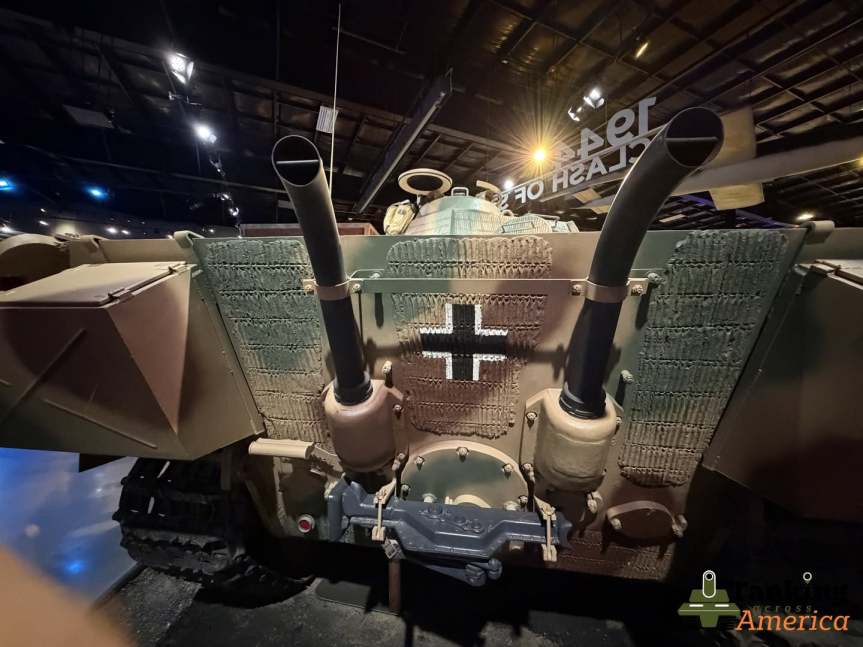
Littlefield’s restoration team carefully rebuilt the surviving hull while locating, repairing or manufacturing the parts needed to make the vehicle complete. The work involved the engine, transmission, suspension, turret, tracks, road wheels and countless smaller fittings. Where usable original parts could not be found, replacements had to be fabricated with close attention to the original German designs.
The process took years.
The completed tank represented far more than a cosmetic reconstruction. It had once again become a running Panther—an exceptionally rare achievement in the world of historic military-vehicle preservation. Littlefield reportedly regarded the Panther restoration as one of the crowning accomplishments of his collection.
Following Littlefield’s death in 2009, much of his collection was transferred to the Collings Foundation. The most historically important vehicles eventually became the core of the American Heritage Museum, which opened to the public in 2019.
The “Clash of Steel”
The museum displays the Panther opposite a Soviet T-34/85 in an exhibit appropriately titled “Clash of Steel.” The arrangement allows visitors to compare two very different approaches to armored warfare.
The Panther emphasized long-range firepower, excellent frontal protection and sophisticated engineering. The T-34 emphasized mobility, mechanical simplicity and mass production. The German tank was arguably more capable in a direct, one-on-one engagement under favorable conditions, but the Soviet vehicle could be built and maintained in vastly greater numbers.
The comparison illustrates an important lesson: the best tank is not necessarily the vehicle with the thickest armor or most powerful gun. Production, reliability, fuel consumption, crew training, maintenance and battlefield recovery are equally important.
Germany produced roughly 6,000 Panthers of all versions. Soviet factories, by comparison, manufactured tens of thousands of T-34s during the war. The Panther was a dangerous opponent, but it could not overcome the Allies’ enormous advantage in manpower, industry and logistical support.
A Rare Survivor
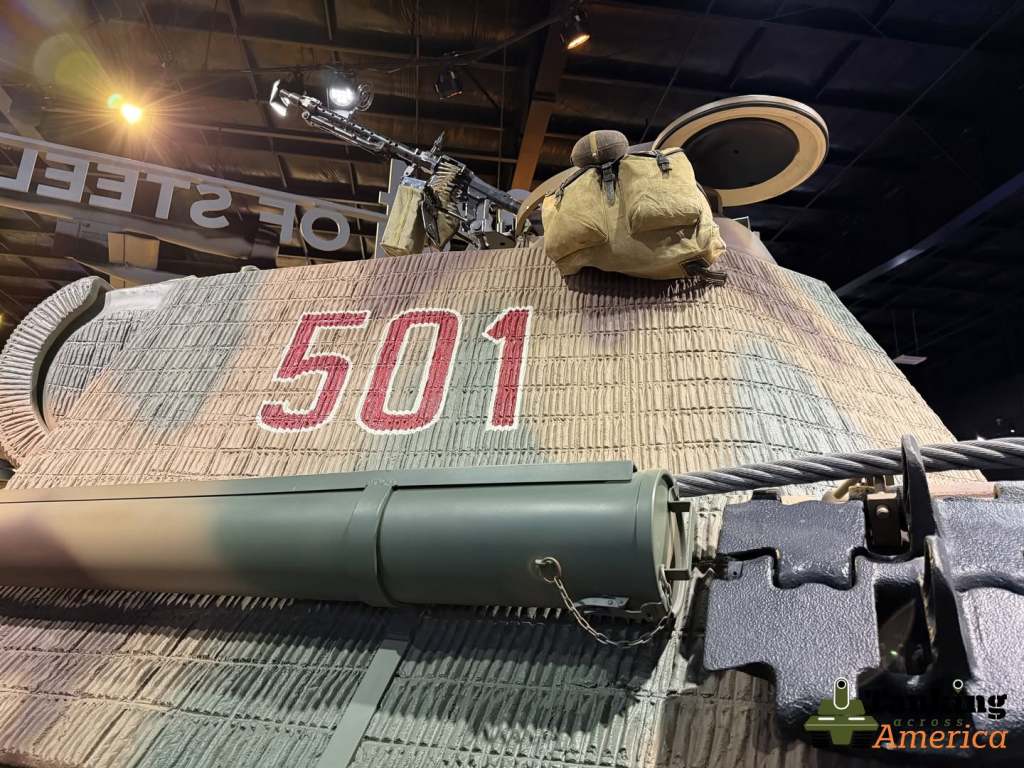
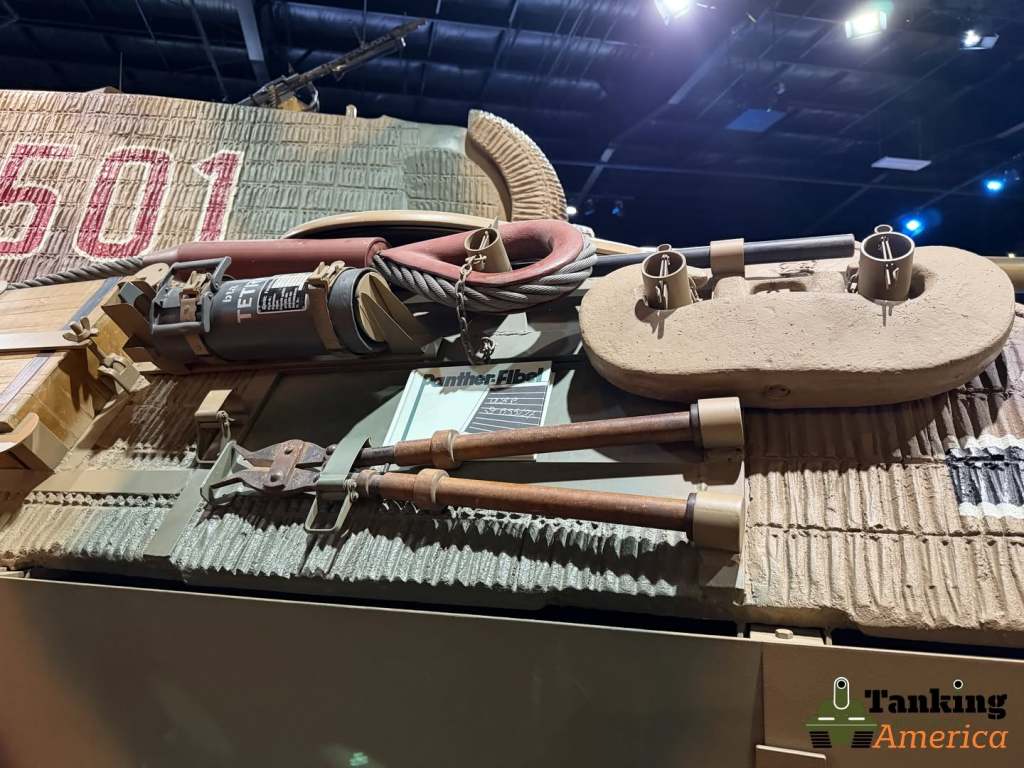
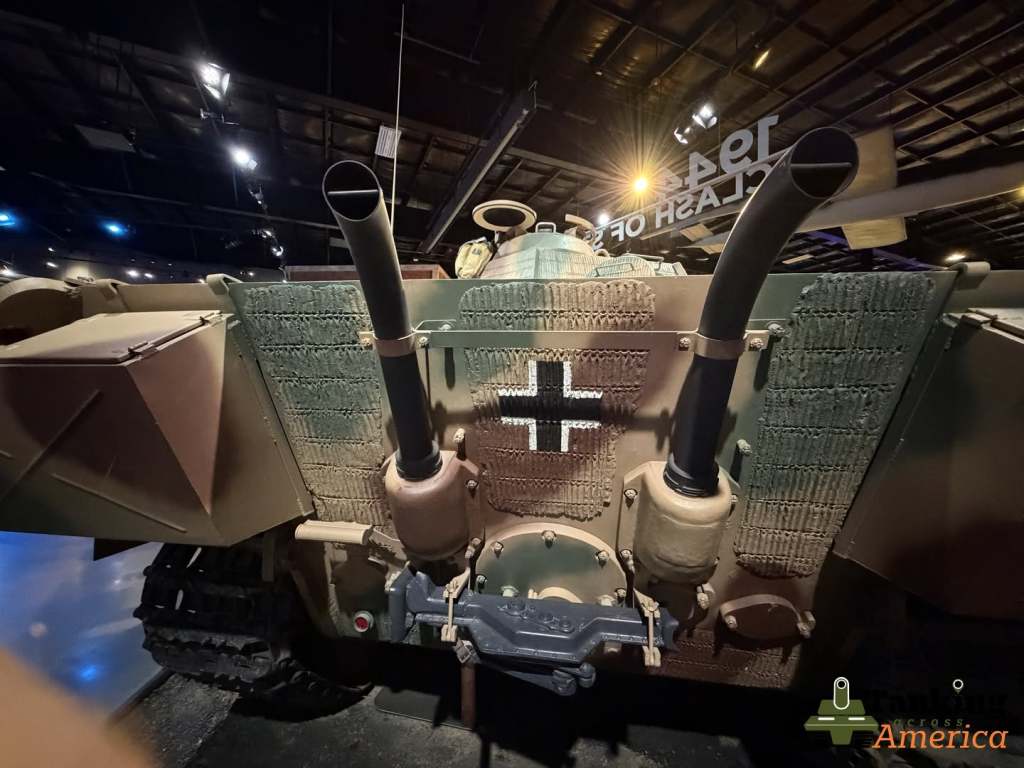
Few original Panthers survive today, and even fewer have been restored to running condition. That makes the American Heritage Museum’s Ausf. A one of the most significant vehicles in its collection.
Standing beside the tank, visitors can appreciate its immense size. The long 75 mm gun extends well beyond the hull, while the sharply sloped armor gives the vehicle a surprisingly modern appearance. Its overlapping road wheels and broad tracks reveal both the sophistication and complexity of German wartime engineering.
Yet the tank’s history also extends beyond its original military service. Its recovery from a Polish river, transportation to the United States and painstaking reconstruction demonstrate what can be accomplished through historical research, skilled craftsmanship and long-term dedication.
Preserving the Machinery of History
The Panther at the American Heritage Museum should not be viewed simply as an impressive piece of machinery. Tanks were designed for war, and their technological achievements came at an enormous human cost.
By displaying the Panther beside the T-34/85, the museum places the vehicle within the larger story of the Eastern Front—a campaign marked by enormous armored battles, brutal conditions and staggering casualties. The exhibit helps visitors understand both the development of armored warfare and the experiences of the people who operated these machines.
The Panther’s survival is remarkable. Once abandoned and submerged in a Polish river, it has been transformed into one of America’s most important examples of German World War II armor. For tank enthusiasts and military historians, it is one of the highlights of the American Heritage Museum and a powerful reminder that even the most advanced weapon is only one part of a much larger historical story.
The Panther Ausf. A and T-34/85 can be seen in the museum’s official “Clash of Steel” exhibit. General Panther specifications are documented by The Tank Museum, while the recovery of the Littlefield Panther from Poland is recorded in this surviving-vehicle history.


Quite a lot of other armoured beasties in the background there. Are you going to cover those too?
Cheers,
Frank
LikeLike
I am, I have a lot of content to post.
LikeLiked by 1 person
Cool, I look forward to seeing them.
🙂
LikeLike