
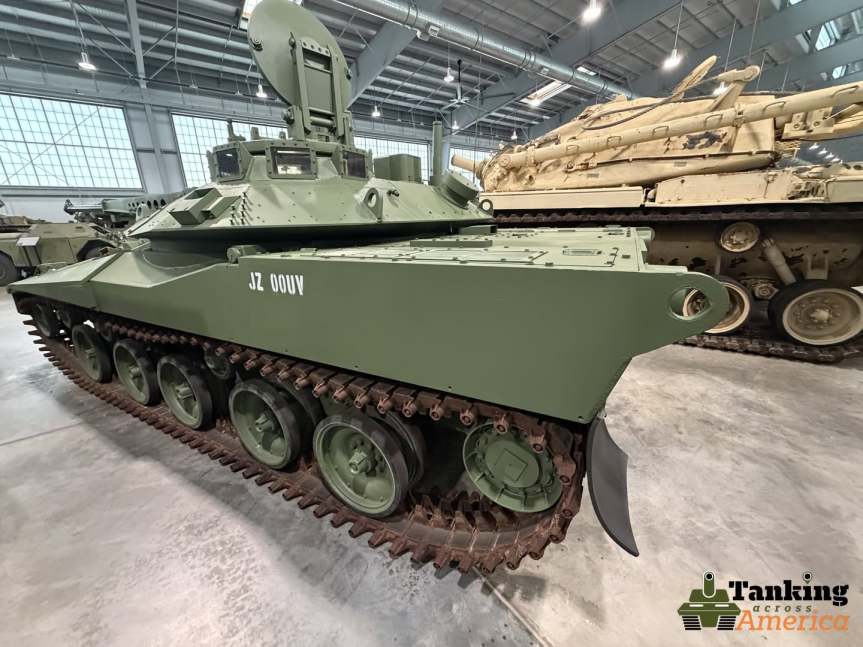
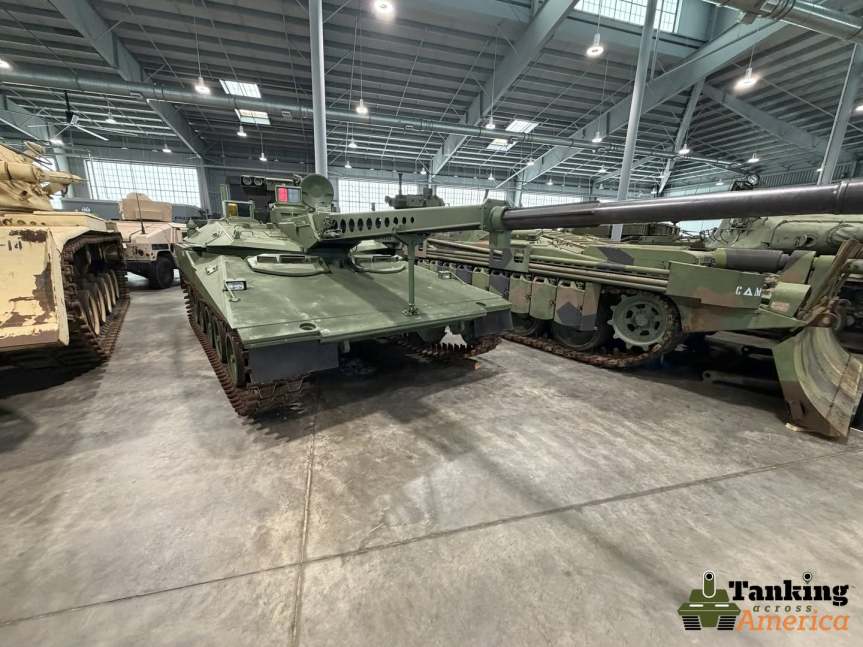
HSTV-L: America’s Experimental High-Speed Tank of the Future
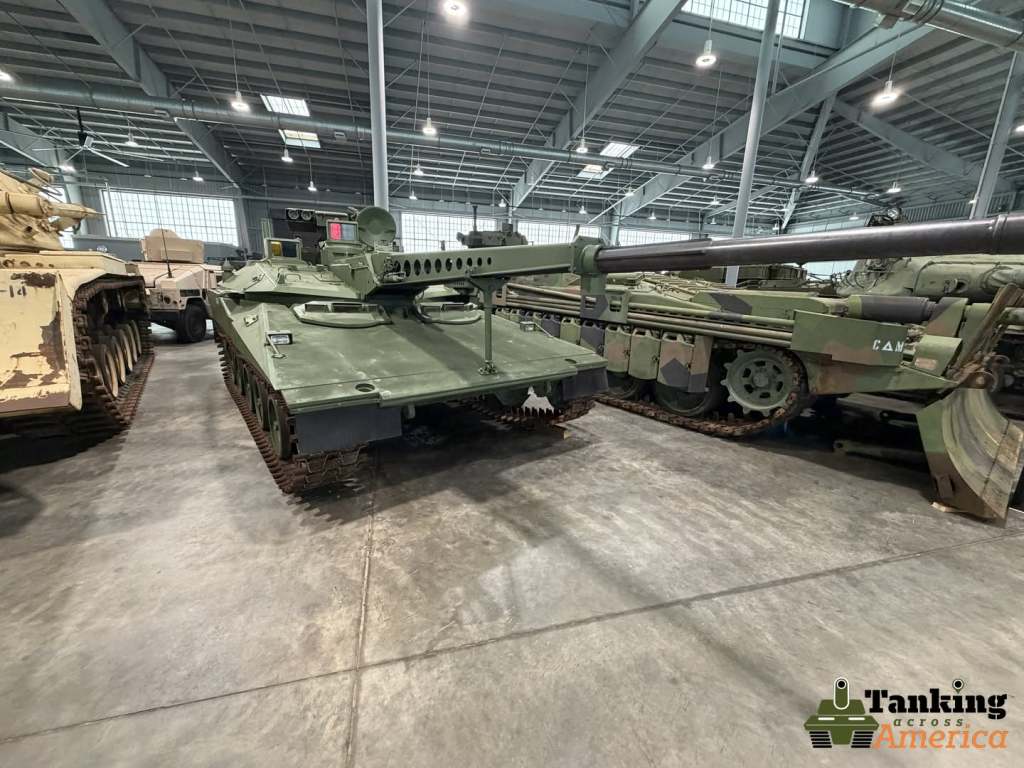
The HSTV-L looks like something that escaped from a Cold War science-fiction movie.
It was low, fast, powered by a gas turbine, packed with advanced electronics, and armed with a rapid-firing 75 mm cannon fed by an automatic loading system.
Yet the HSTV-L was never intended to become an ordinary production tank.
Its full name—High Survivability Test Vehicle–Lightweight—reveals its real purpose. Developed during the late 1970s, the HSTV-L was an experimental U.S. armored vehicle designed to answer a provocative question:
Could speed, firepower, technology, and a tiny silhouette keep a lightly armored vehicle alive on a battlefield dominated by increasingly powerful anti-tank weapons?
The answer produced one of the most fascinating American armored vehicles of the Cold War.
Rethinking the Light Tank
By the 1970s, the U.S. military was investigating what the next generation of armored vehicles might look like.
Traditional tank design generally revolved around balancing three competing qualities: firepower, protection, and mobility. More armor increased survivability but also increased weight. Larger weapons brought greater firepower but required larger turrets, more ammunition space, and stronger suspension systems.
The HSTV-L approached the problem differently.
Rather than trying to absorb enemy fire with enormous quantities of armor, the vehicle would attempt to avoid being hit in the first place.
The concept emphasized a low profile, rapid acceleration, high speed, advanced fire-control equipment, and the ability to fire accurately while moving.
The HSTV-L emerged from the U.S. Army’s Armored Combat Vehicle Technology program, or ACVT. In 1977, designs from AAI Corporation and Pacific Car and Foundry were evaluated, with AAI ultimately receiving the contract to construct the HSTV-L test vehicle.
Only one HSTV-L testbed was ultimately constructed.
But that single machine incorporated an extraordinary amount of experimental technology.
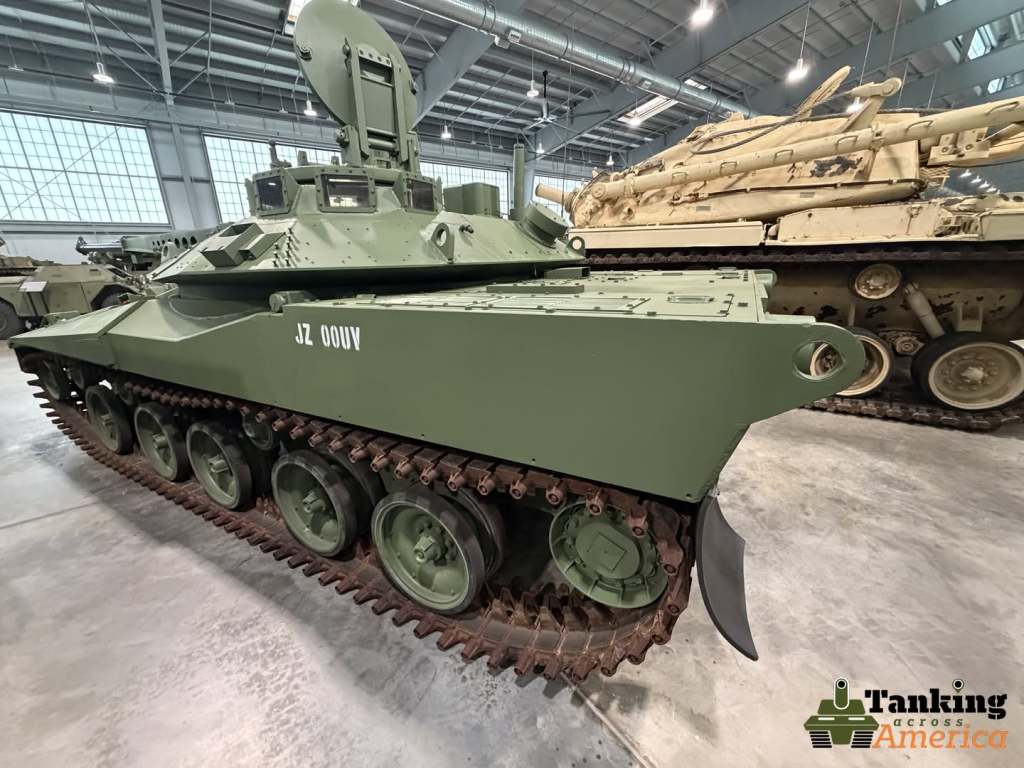
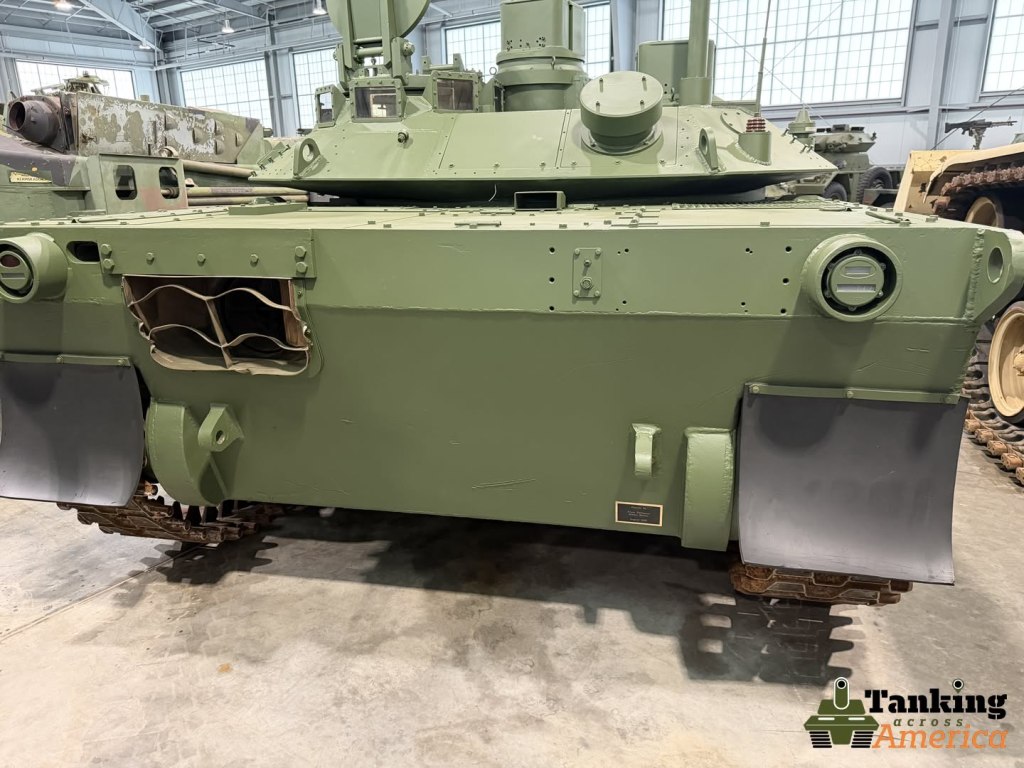
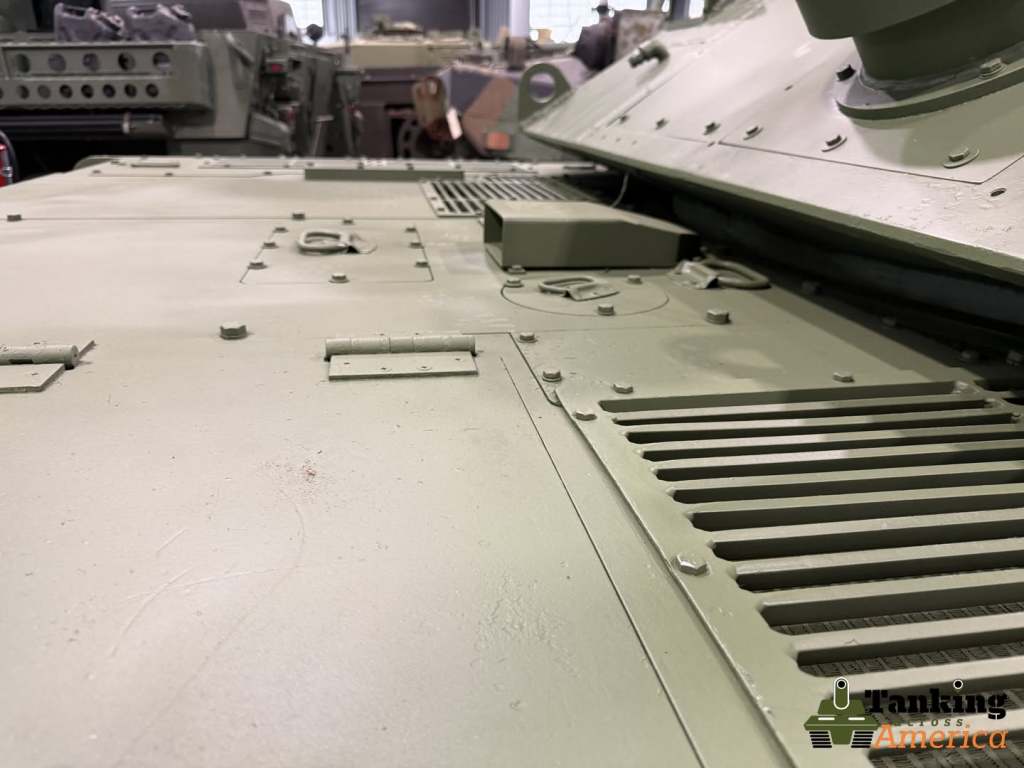
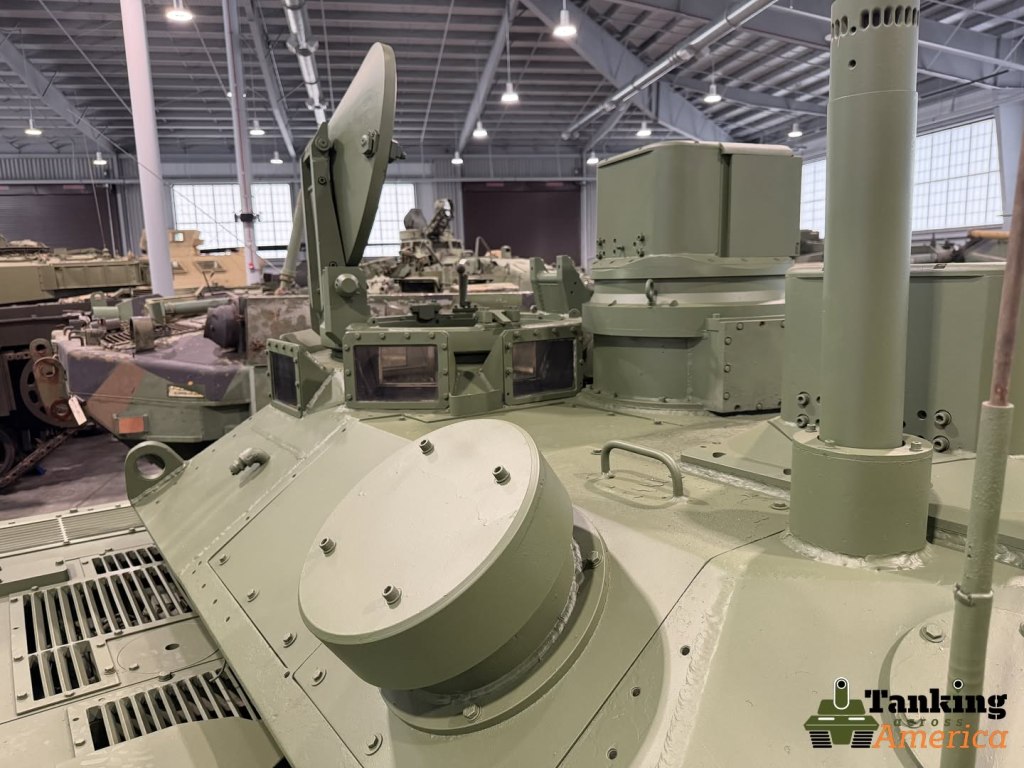
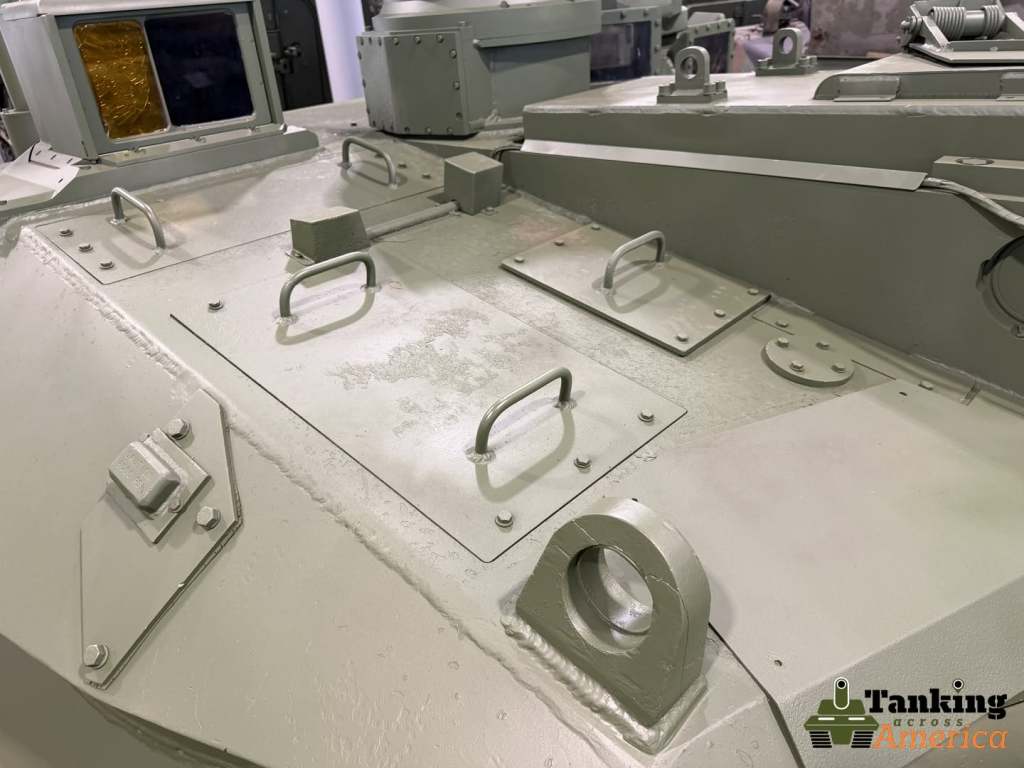
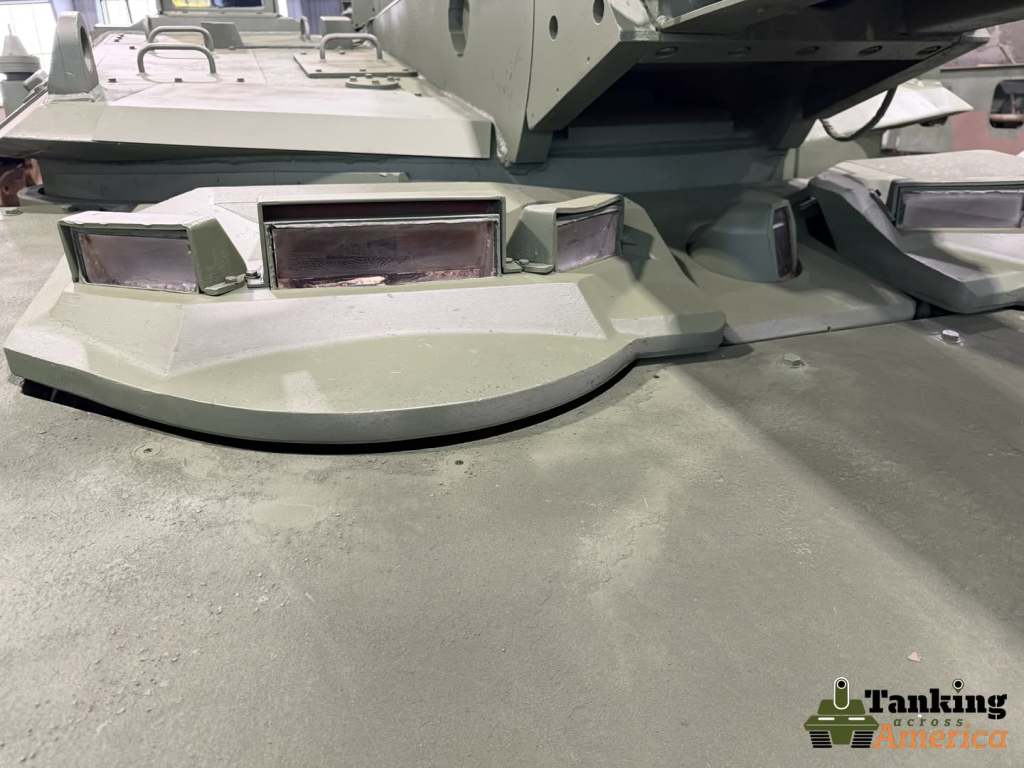
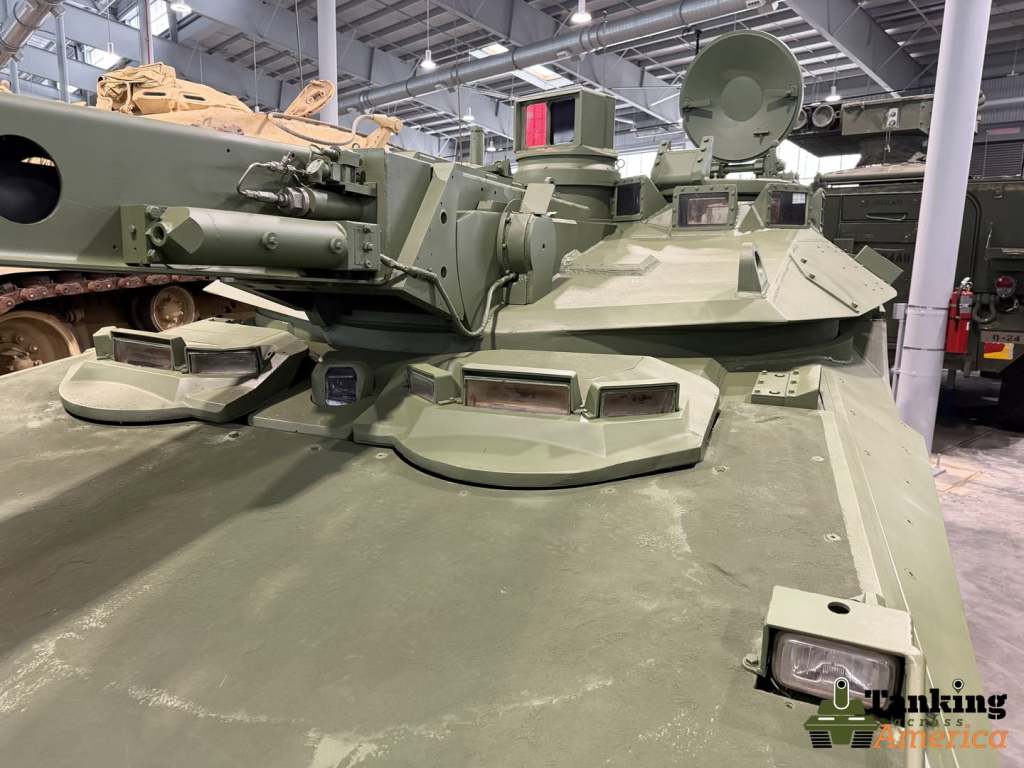
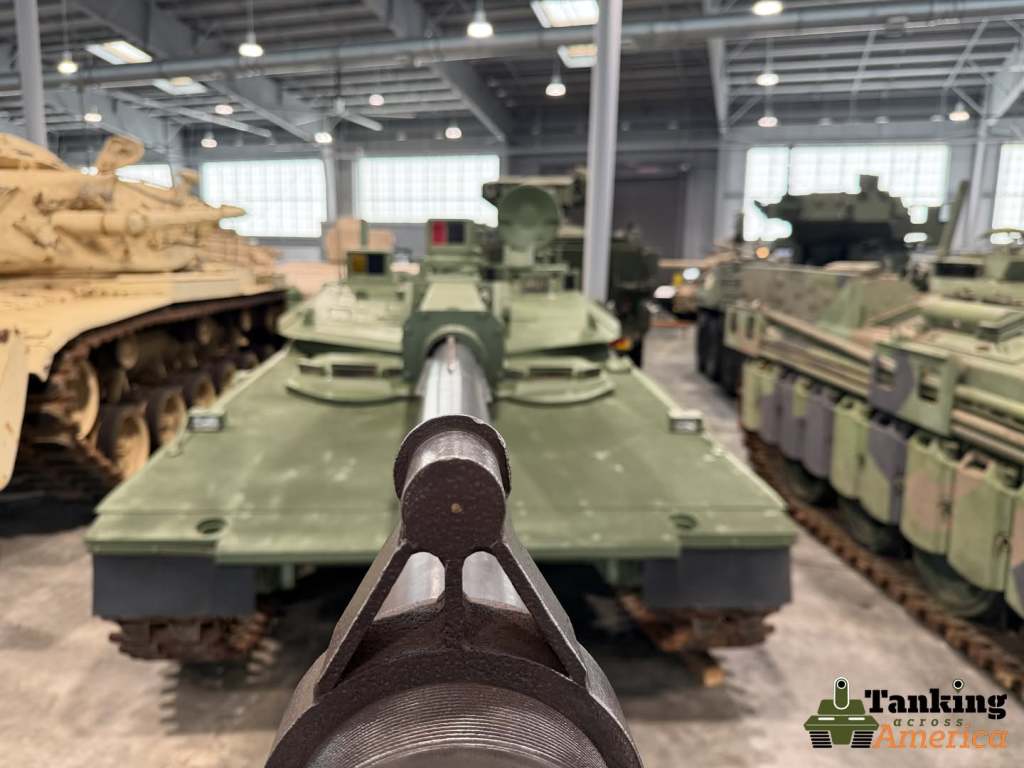
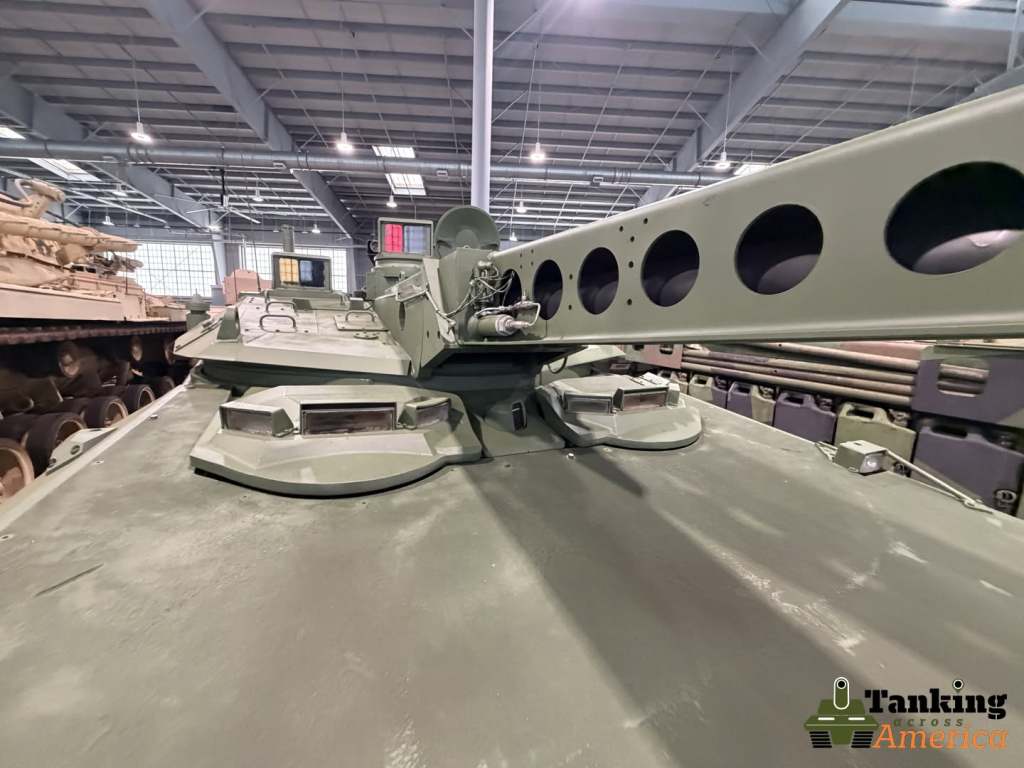
The 75 mm XM274: The Heart of the HSTV-L
The most distinctive feature of the HSTV-L was its main weapon.
Instead of mounting the 105 mm gun commonly found on Western tanks of the era, the vehicle carried the experimental 75 mm XM274 cannon developed by ARES Incorporated.
Calling it simply a “75 mm gun,” however, doesn’t really convey what made it interesting.
The weapon used an automatic loading system and specialized telescoped ammunition. The Army described the system as a high-rate-of-fire rotating-breech cannon capable of both single shots and bursts.
The objective wasn’t necessarily to destroy heavily armored vehicles with one enormous projectile.
Instead, the concept combined extremely high projectile velocity with rapid follow-up shots.
The HSTV-L could fire armor-piercing ammunition as well as high-explosive ammunition, giving the vehicle the potential to engage both armored and softer battlefield targets. The cannon was also stabilized, an important part of the project’s emphasis on firing accurately while moving.
For the late 1970s and early 1980s, it was an extraordinarily ambitious weapon system.
An Unusual Crew Layout
The HSTV-L was just as unconventional inside as it was outside.
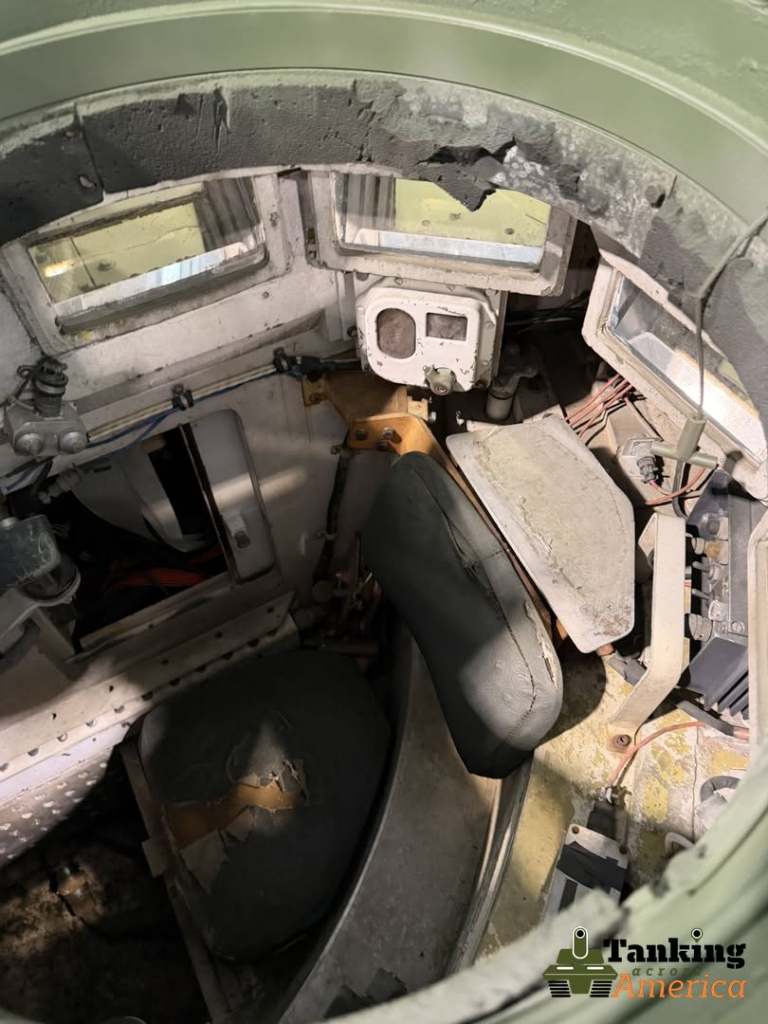
It carried only three crew members: commander, gunner, and driver.
But unlike a conventional tank, the gunner wasn’t sitting beside the commander in the turret.
Both the driver and gunner were positioned inside the hull, while the commander occupied the turret.
This helped give the HSTV-L its remarkably low silhouette.
The vehicle stood only about 2 meters to the top of the turret, excluding its higher fittings, and the hull itself was only about 1.4 meters high.
Reducing the exposed profile of a tank had obvious advantages. A smaller target is harder to spot, harder to track, and potentially harder to hit.
That fit perfectly with the HSTV-L philosophy.
Survival wasn’t supposed to come primarily from thick armor.
It came from not presenting the enemy with an easy target.
650 Horsepower in a Lightweight Vehicle
Then there was the engine.
The AAI HSTV-L used an Avco Lycoming gas turbine producing approximately 650 horsepower, connected to an automatic transmission.
That might not sound extraordinary compared with the 1,500-horsepower engines of modern main battle tanks.
But the HSTV-L was far lighter.
Its test weight eventually grew considerably beyond the designers’ original ambitions. During testing, the Army reported a combat-loaded weight of around 19 tons without special armor and roughly 22 tons with it.
Even so, 650 horsepower gave the little vehicle impressive mobility.
During contractor testing at Aberdeen Proving Ground, the HSTV-L reached slightly more than 51 mph, or roughly 82 km/h. It could accelerate from 0 to 30 mph in approximately 11.8 seconds.
For a tracked armored vehicle developed more than four decades ago, those were serious numbers.
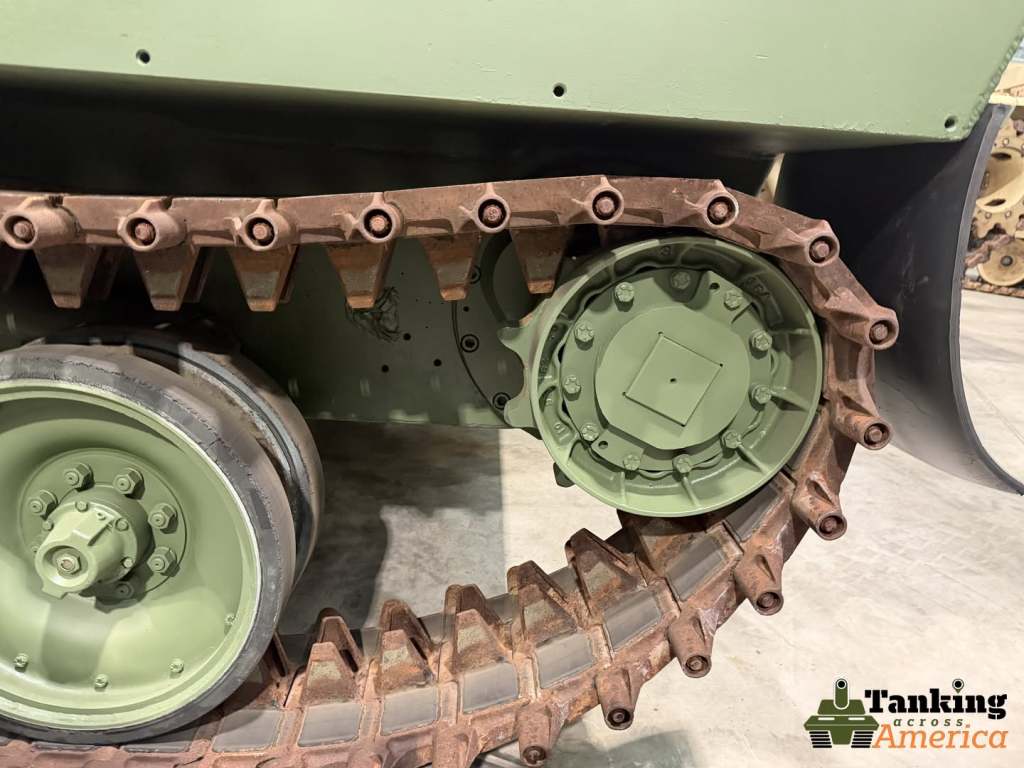
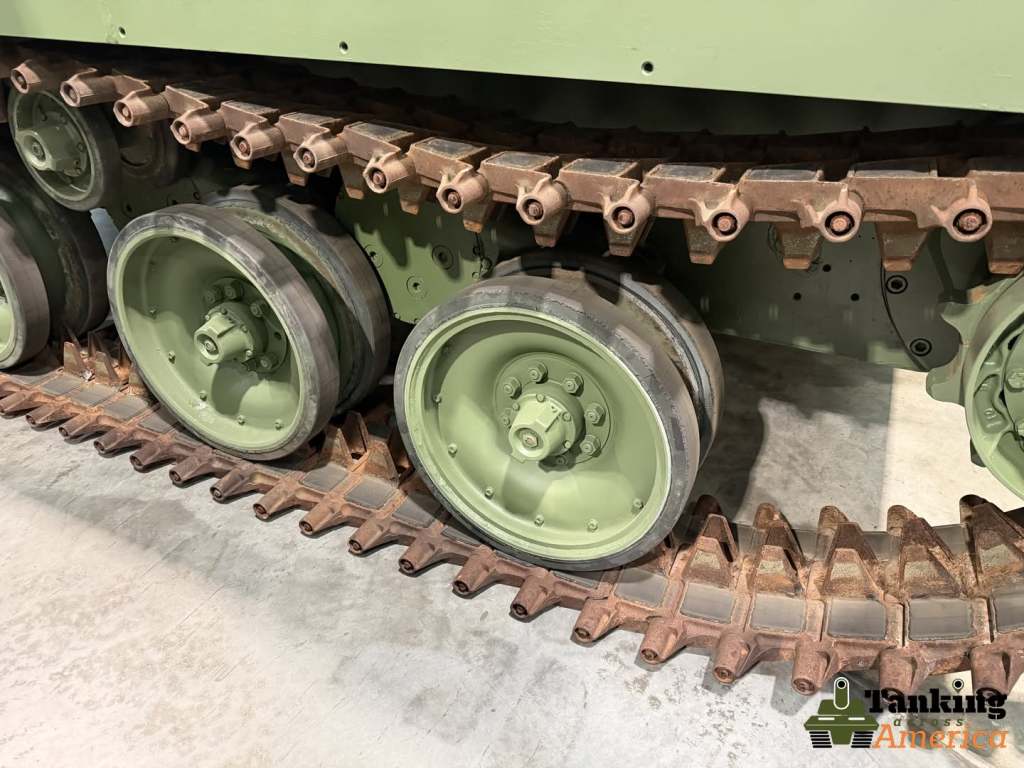
The HSTV-L also employed hydropneumatic suspension, reinforcing the project’s focus on mobility and stable firing on the move.
Don’t Get Hit
All of this technology served the idea behind the vehicle’s name: High Survivability.
That sounds strange when discussing a lightly armored tank.
Normally, survivability and armor are closely linked. The HSTV-L instead explored a different equation:
Low profile + mobility + situational awareness + accurate fire = survivability.
The theory was that a vehicle capable of rapidly moving between firing positions, exposing very little of itself, locating targets quickly, firing accurately, and relocating before the enemy responded might survive without the enormous armor package of a main battle tank.
This wasn’t merely an attempt to build a faster tank.
It was an experiment in changing how a tank survived.
Advanced Fire Control
The HSTV-L’s electronics were another major part of the experiment.
The vehicle incorporated sophisticated sighting and fire-control equipment intended to allow accurate engagements while either the HSTV-L or its target was moving.
Its commander had an independently stabilized sight that could be used to locate targets separately from the gunner.
Today, the concept of a commander independently searching for targets while the gunner engages another one is familiar on advanced tanks.
In the HSTV-L’s era, however, these technologies represented the leading edge of armored vehicle development.
The broader ACVT program was specifically interested in evaluating different levels of fire-control sophistication and suspension performance during firing on the move. Army documents also discussed experimenting with the rapid-fire cannon against low- and medium-performance aircraft.
The HSTV-L was therefore more than a light tank prototype.
It was effectively a rolling laboratory.
Why Didn’t the Army Build It?
With all that technology, why didn’t fleets of HSTV-Ls enter service?
Because experimental vehicles don’t necessarily have to become production vehicles to succeed.
The HSTV-L was designed primarily to test ideas.
And some of those ideas came with serious compromises.
Its lightweight construction inevitably limited protection. Its sophisticated automatic cannon and fire-control equipment introduced technological complexity. Its ammunition capacity was limited compared with conventional tanks, and the vehicle’s weight increased during development.
Most importantly, the HSTV-L existed during a period when the U.S. military was still trying to determine exactly what role its future lightweight armored vehicles should perform.
Testing continued into the 1980s, but the HSTV-L never became an operational U.S. Army tank.
That didn’t make the project useless.
Quite the opposite.
The Army described HSTV-L testing as a way to examine high mobility, agility, and automatic cannon technology in a vehicle configured more realistically than some of the program’s other engineering testbeds.
Information from HSTV-L and related testing subsequently contributed to thinking about future lightweight armored systems.
The HSTV-L’s Legacy
The HSTV-L occupies an interesting place in American tank history.
It wasn’t a failed production tank because it was never really a production tank to begin with.
It was an experiment.
Its designers explored concepts that would become increasingly important in armored warfare: automatic loading, stabilized weapons, advanced sights, small crews, high power-to-weight ratios, sophisticated fire control, and the ability to rapidly detect and engage targets while moving.
Some concepts worked better than others.
Some appeared elsewhere in different forms.
And some remained technological curiosities.
But that was precisely the point.
Test vehicles exist to discover which ideas are worth pursuing before thousands of vehicles are built around them.
A Tank Designed Around a Different Kind of Armor
The HSTV-L never fought a battle.
It never equipped an armored battalion.
Only one test vehicle was built.
Yet decades later, it remains one of the most recognizable American experimental tanks of the Cold War.
Part of that is undoubtedly its appearance. With its tiny turret, dramatically sloped hull, long 75 mm cannon, and unusually low profile, the HSTV-L still looks futuristic.
But its real significance lies underneath.
The HSTV-L represented an attempt to redefine survivability itself.
Instead of asking:
“How much armor can we put on the vehicle?”
Its designers were effectively asking:
“What if the enemy can’t hit it?”
That question led to a 650-horsepower, gas-turbine-powered experimental tank capable of more than 50 mph, carrying an autoloaded rapid-fire cannon and advanced fire-control technology.
It never became America’s next light tank.
But as a glimpse of what engineers thought the future of armored warfare might look like, the HSTV-L remains one of the most fascinating tanks America never built.

