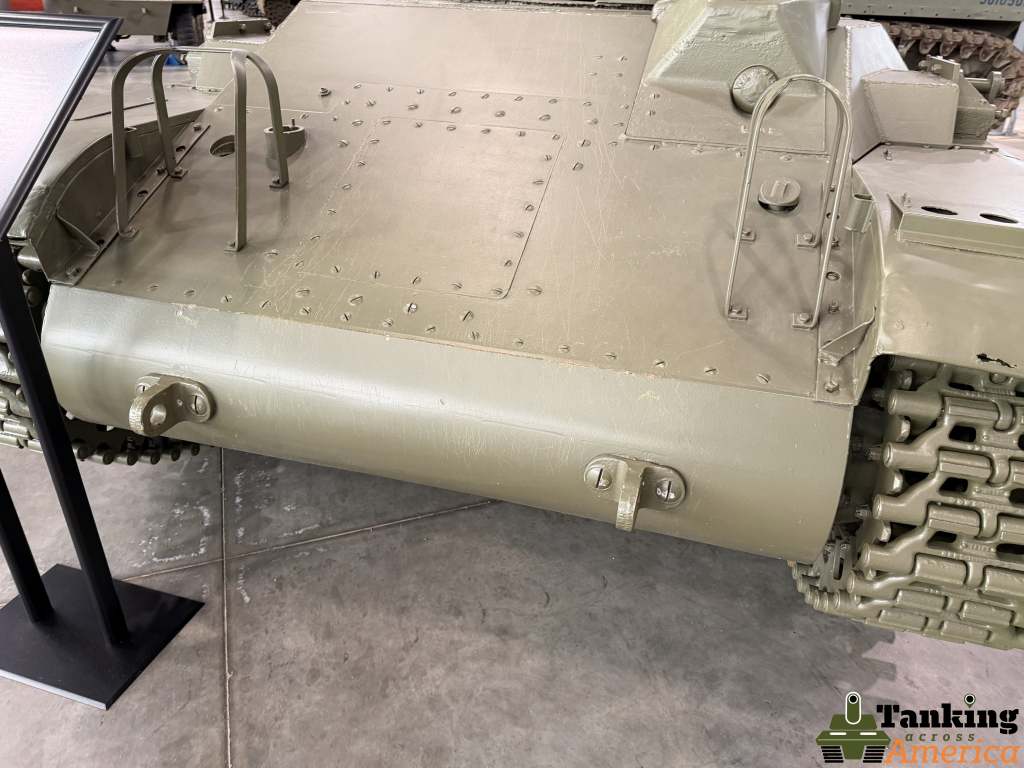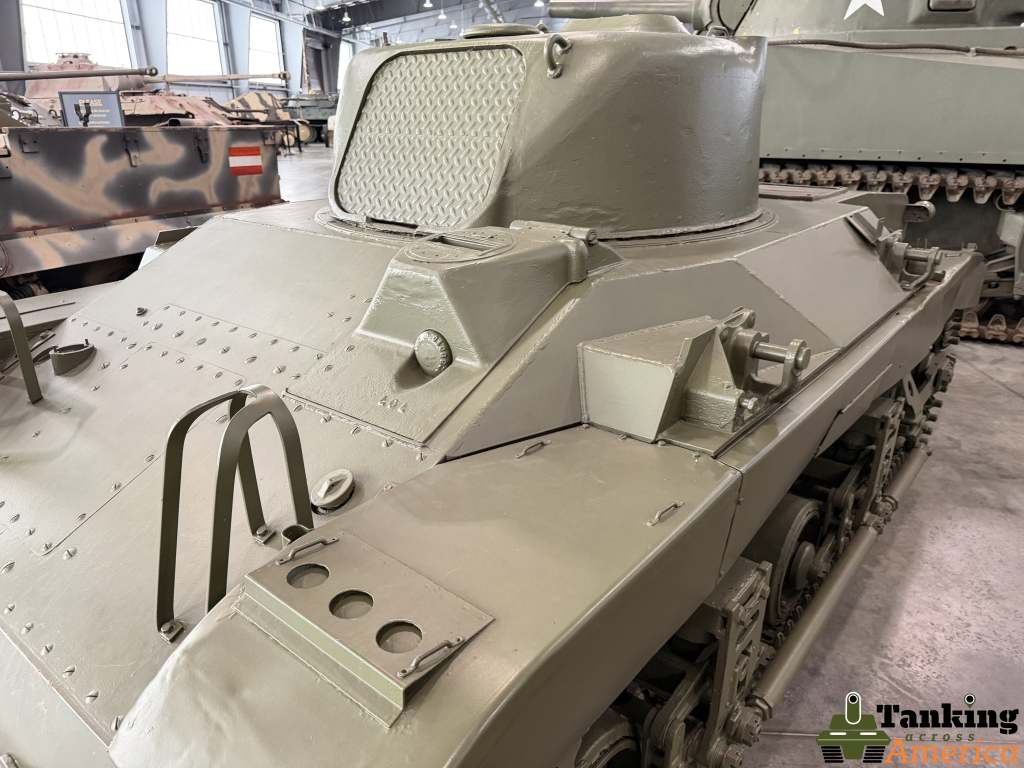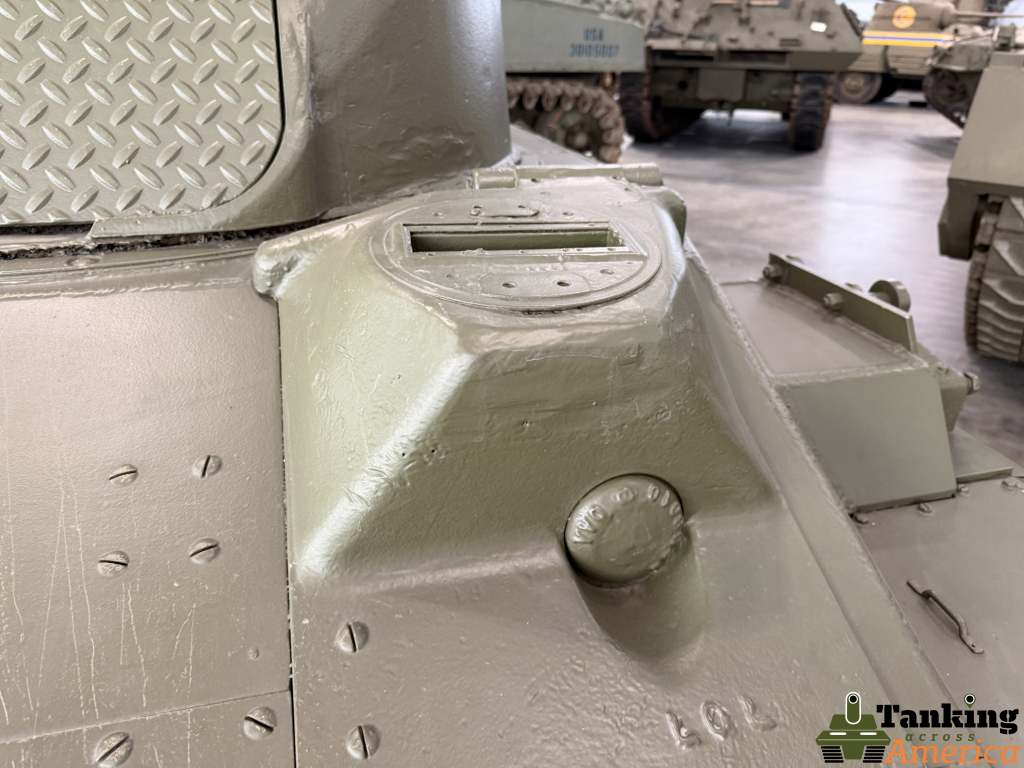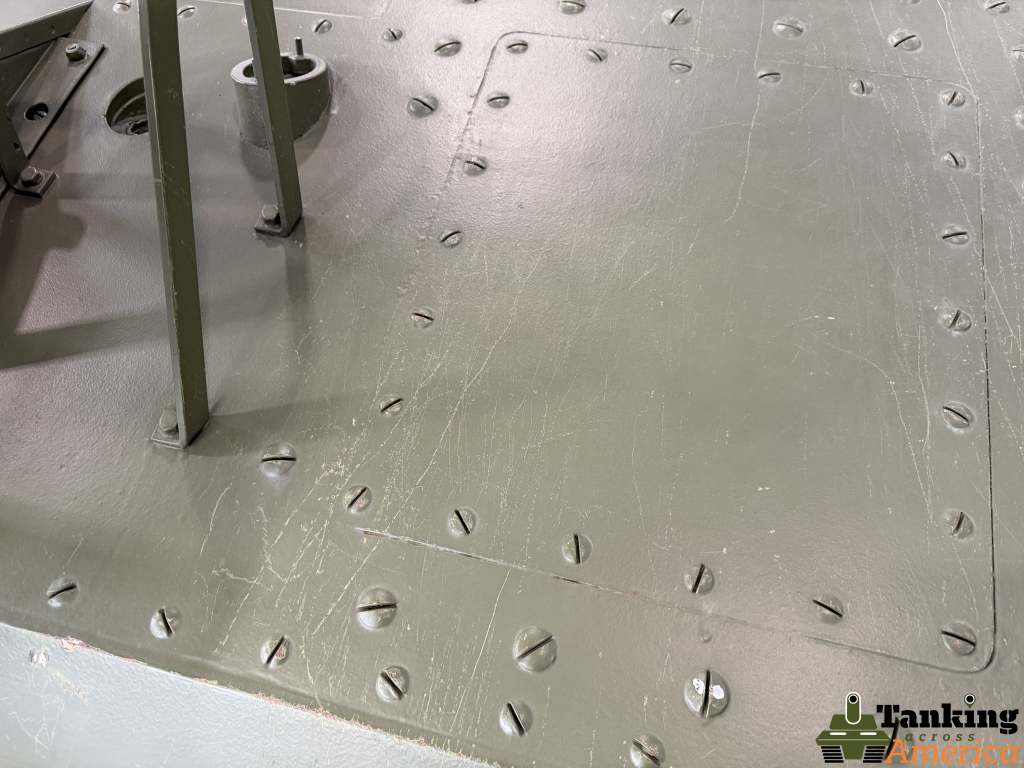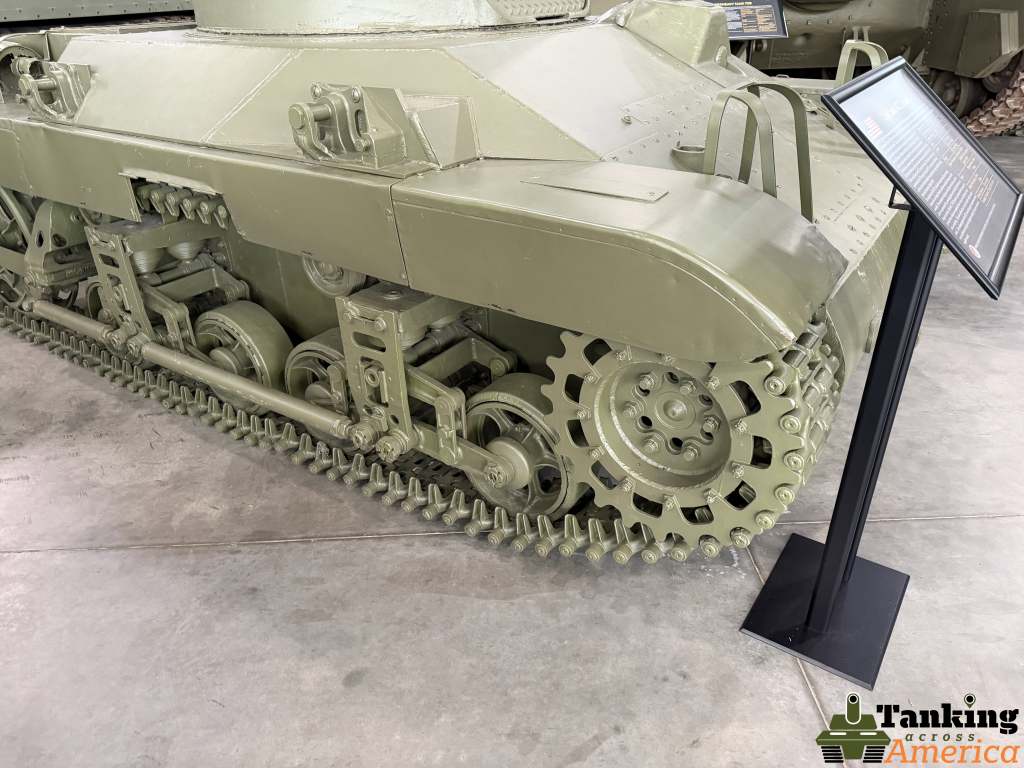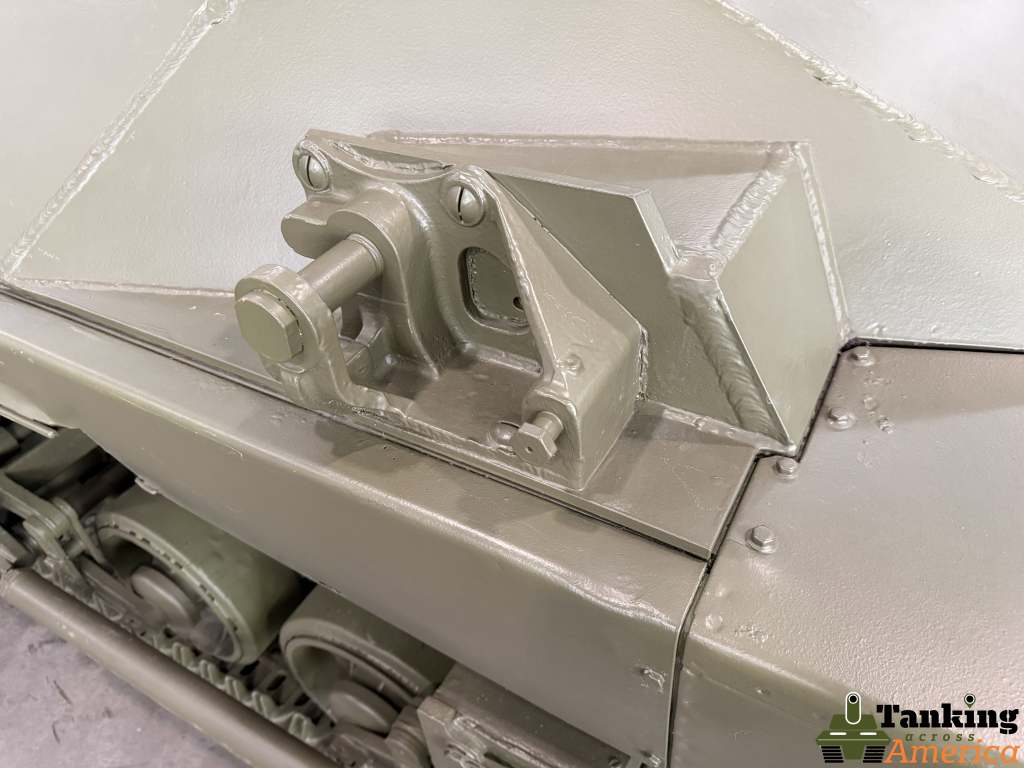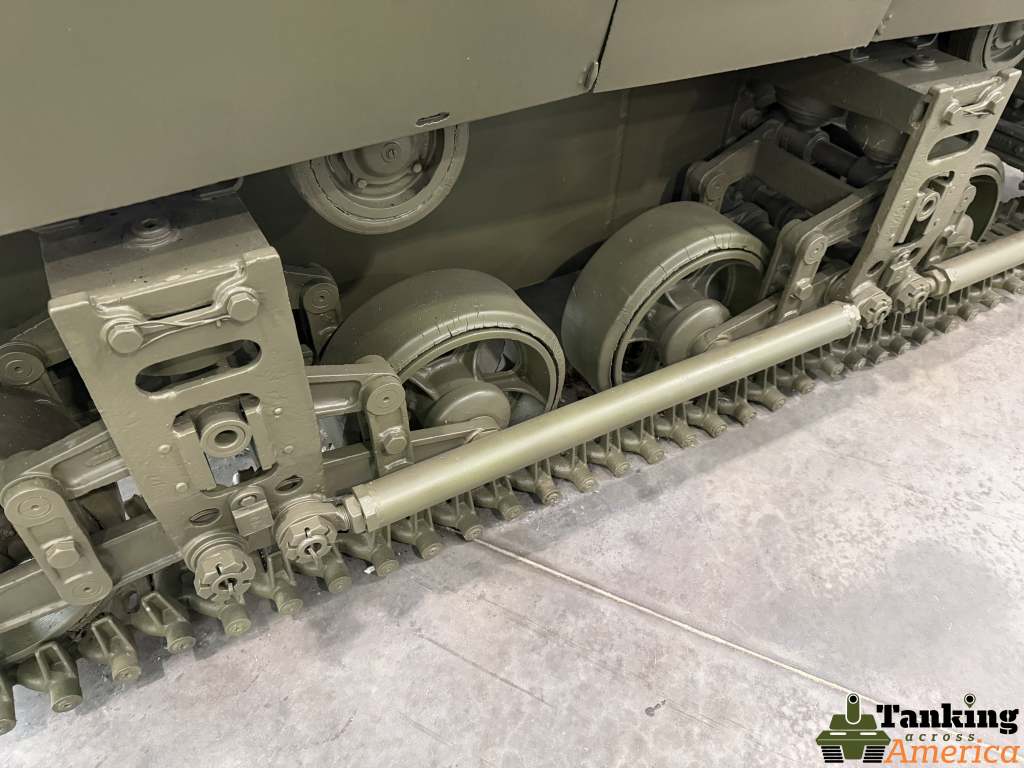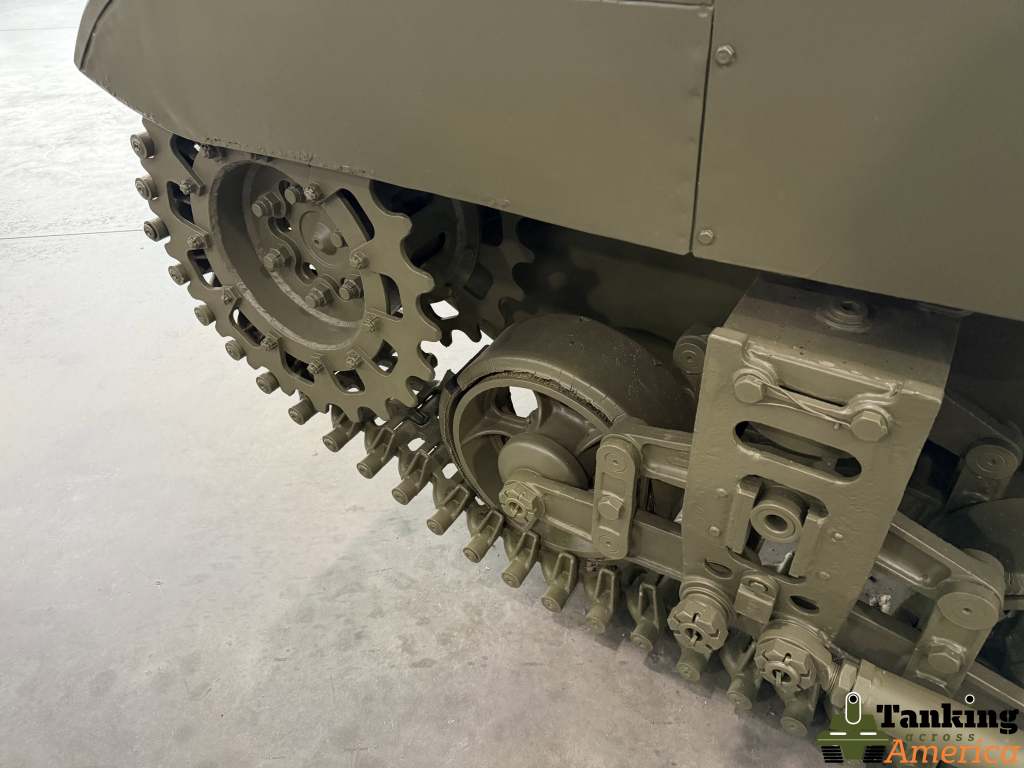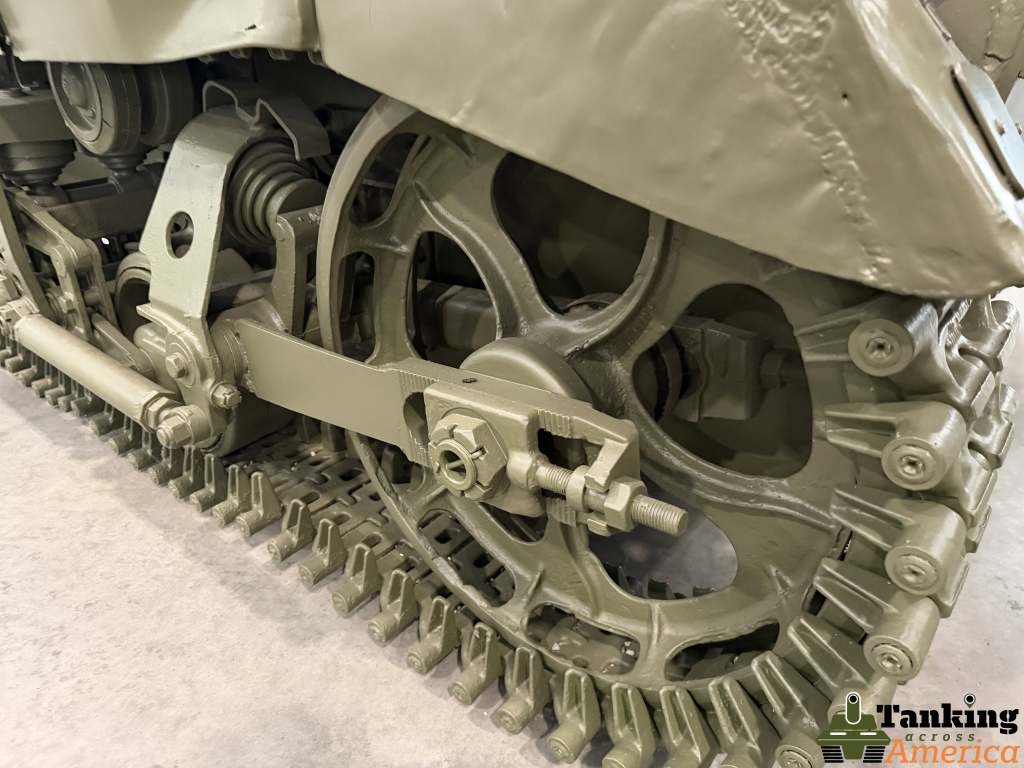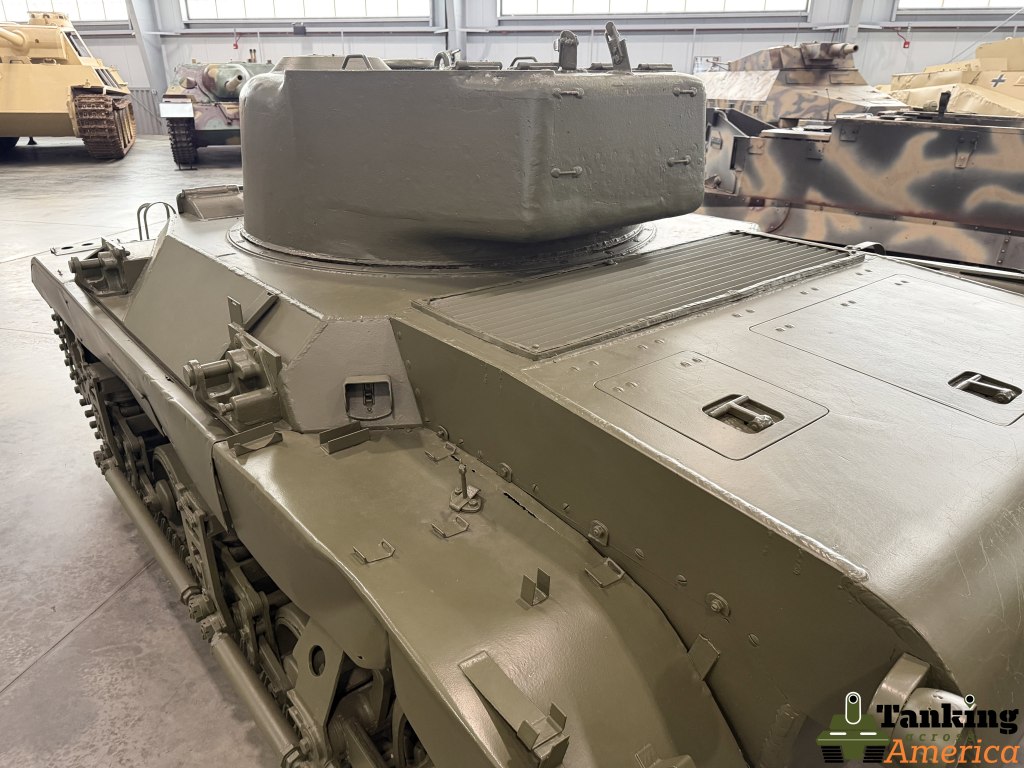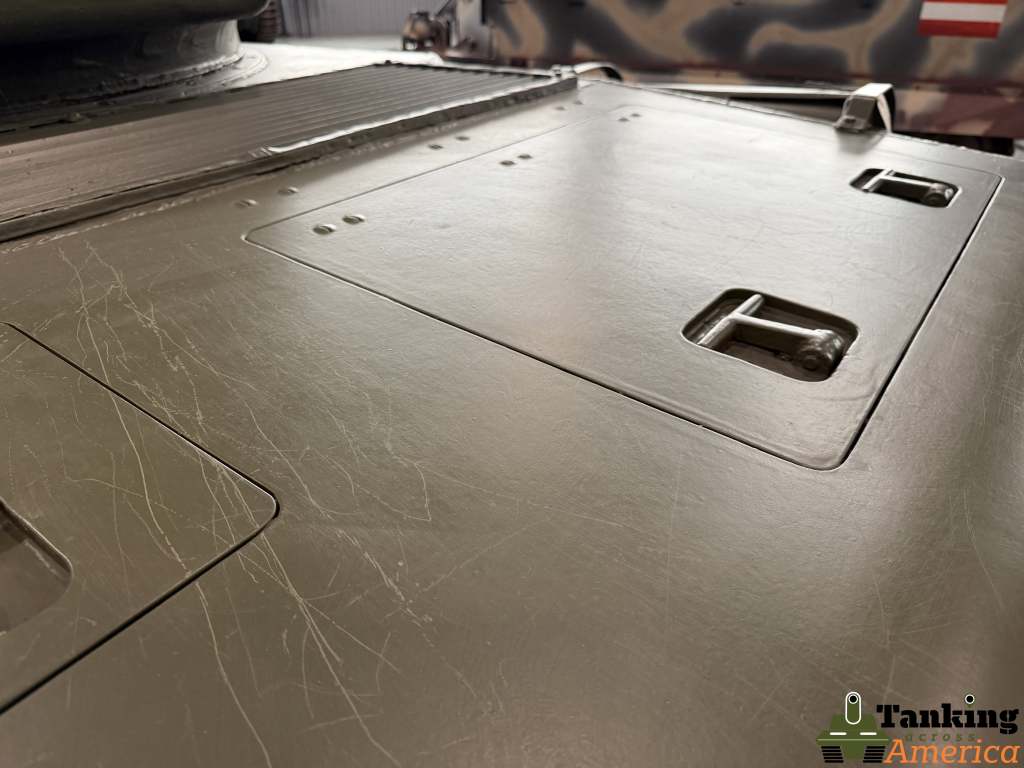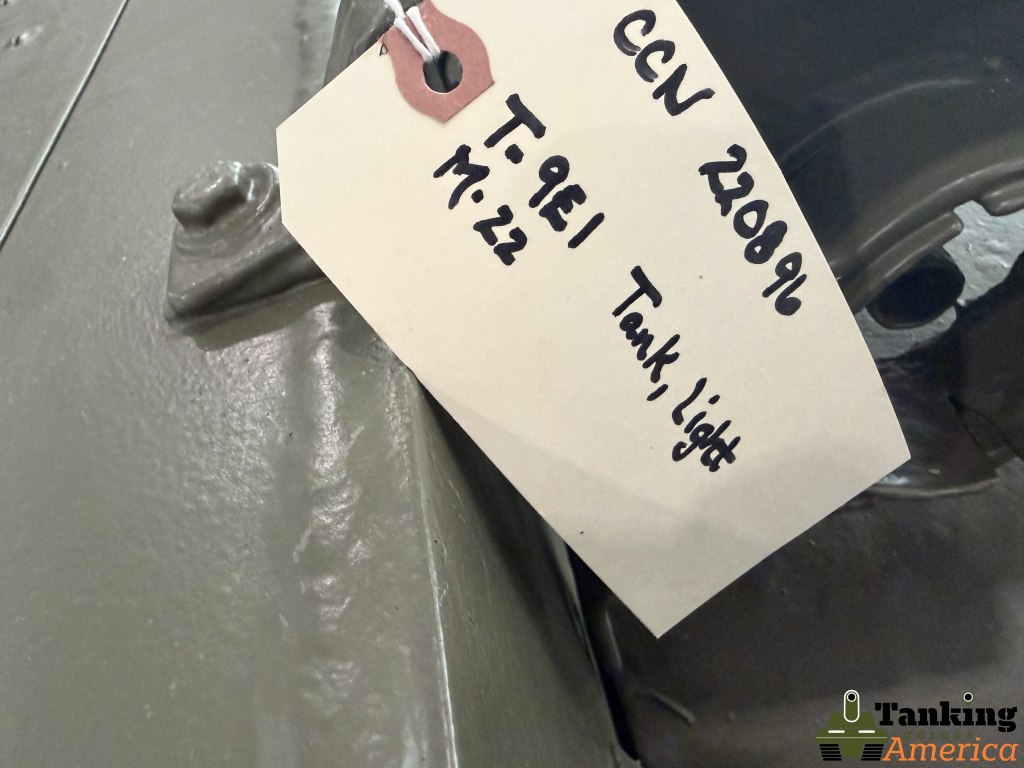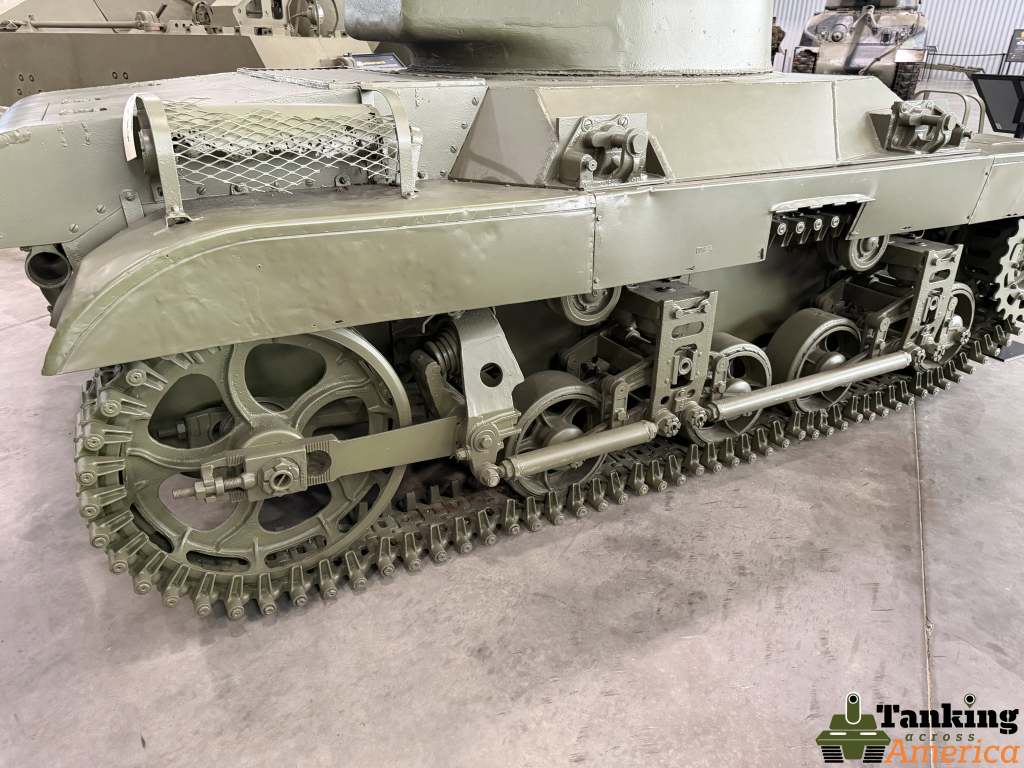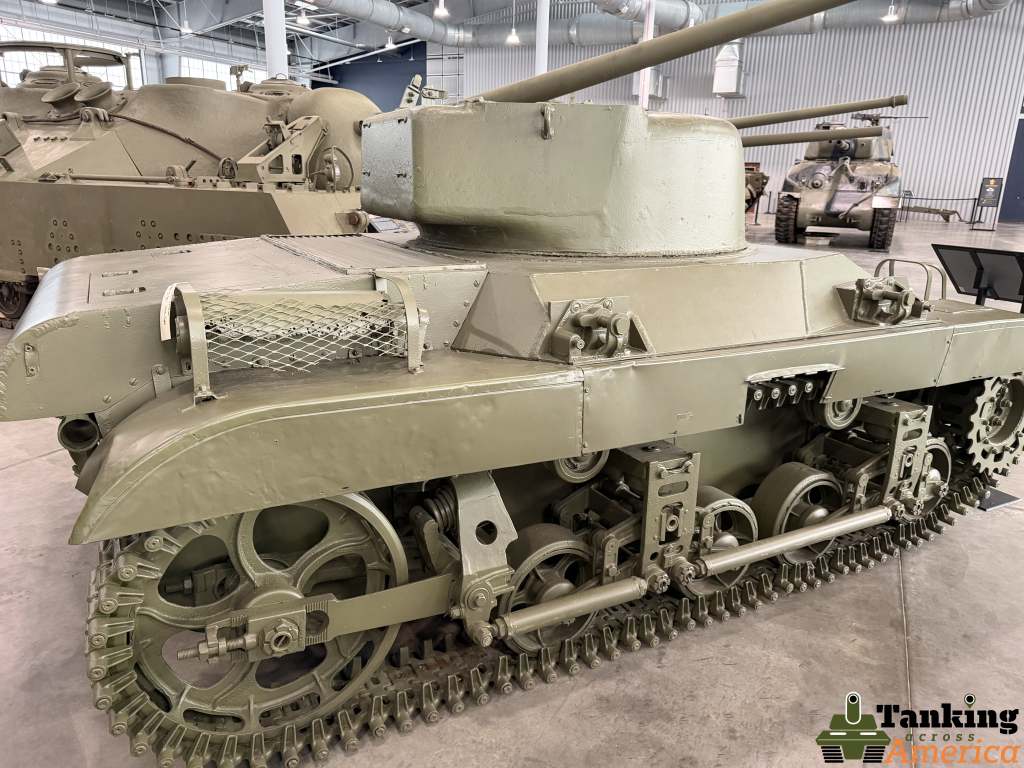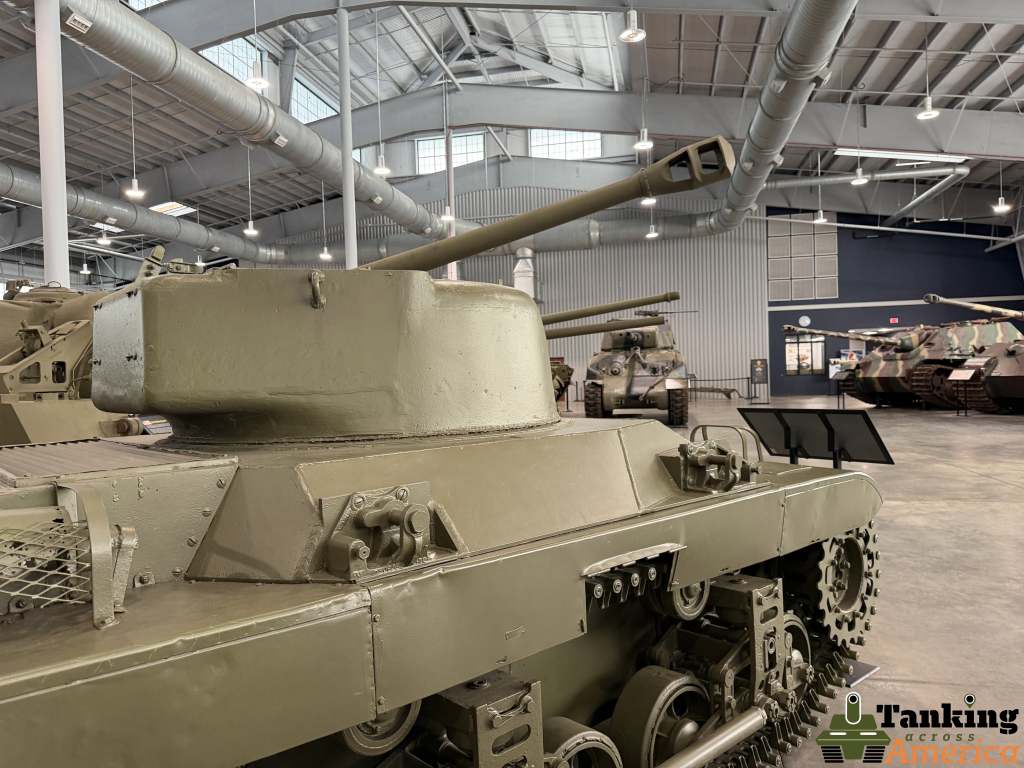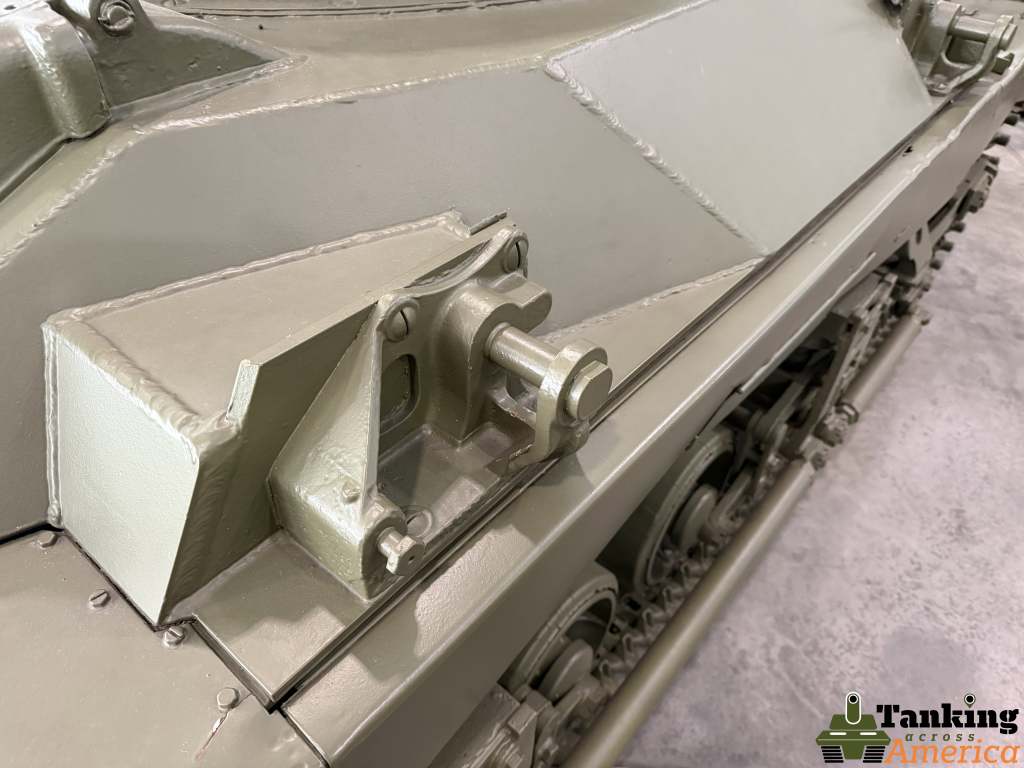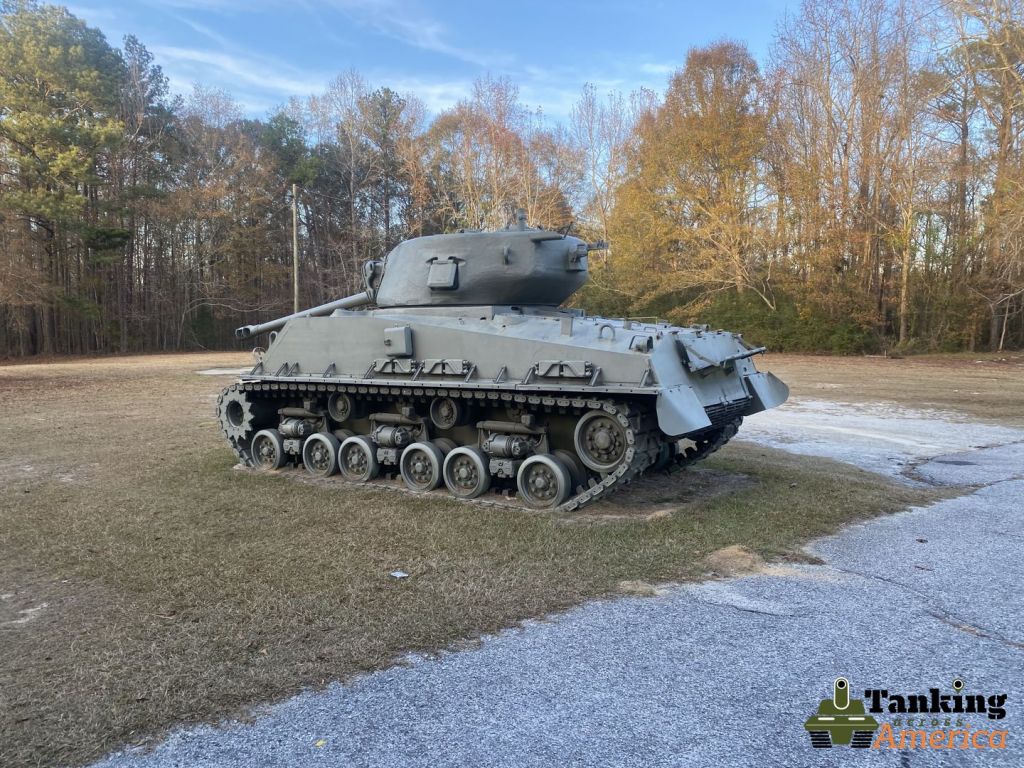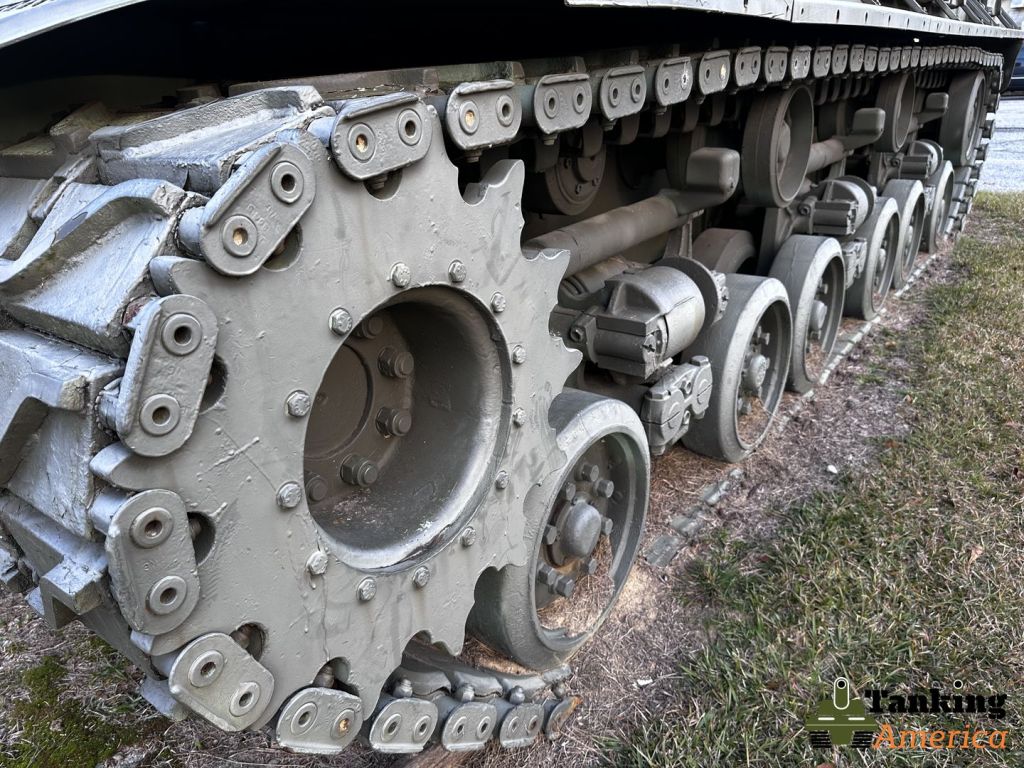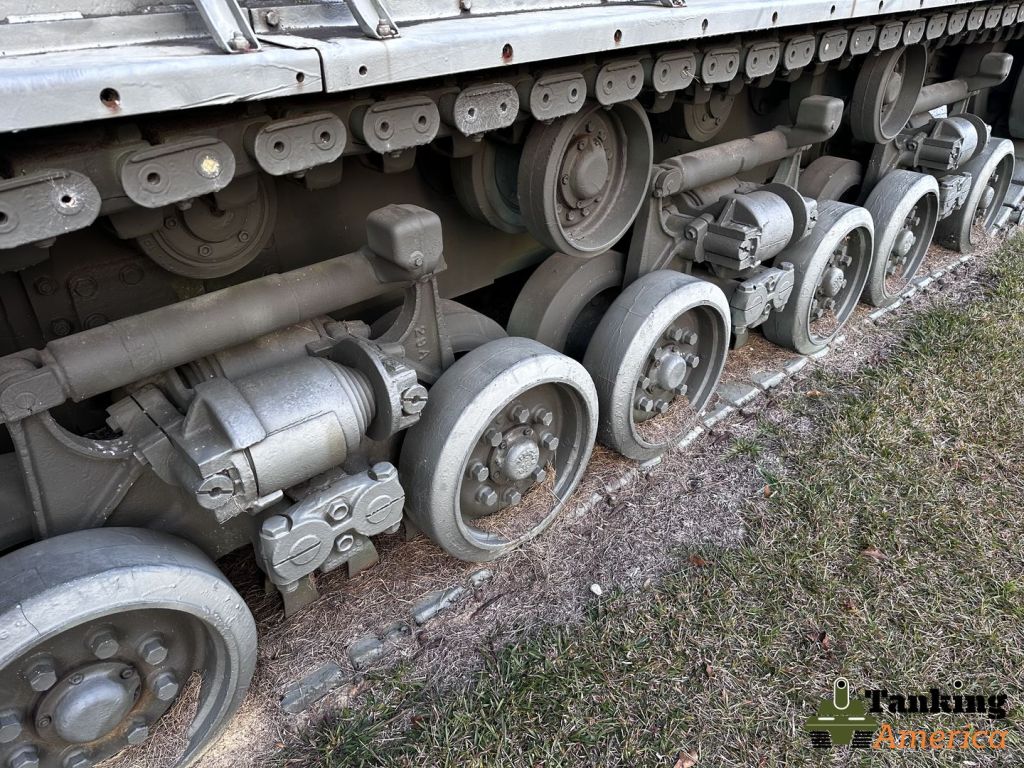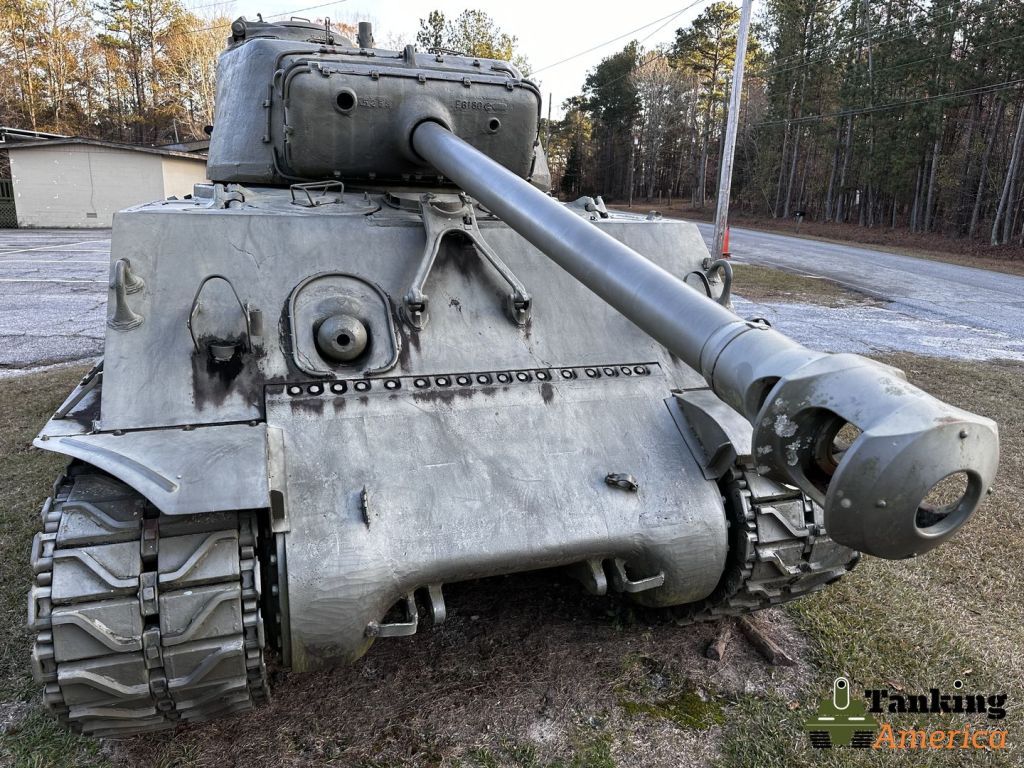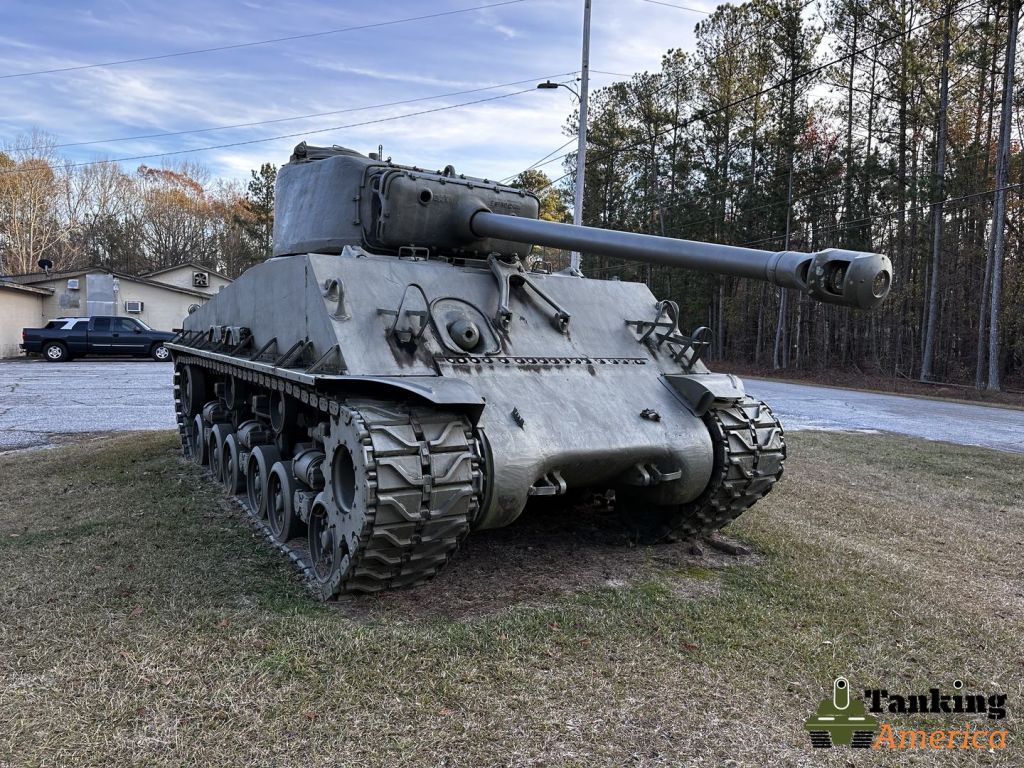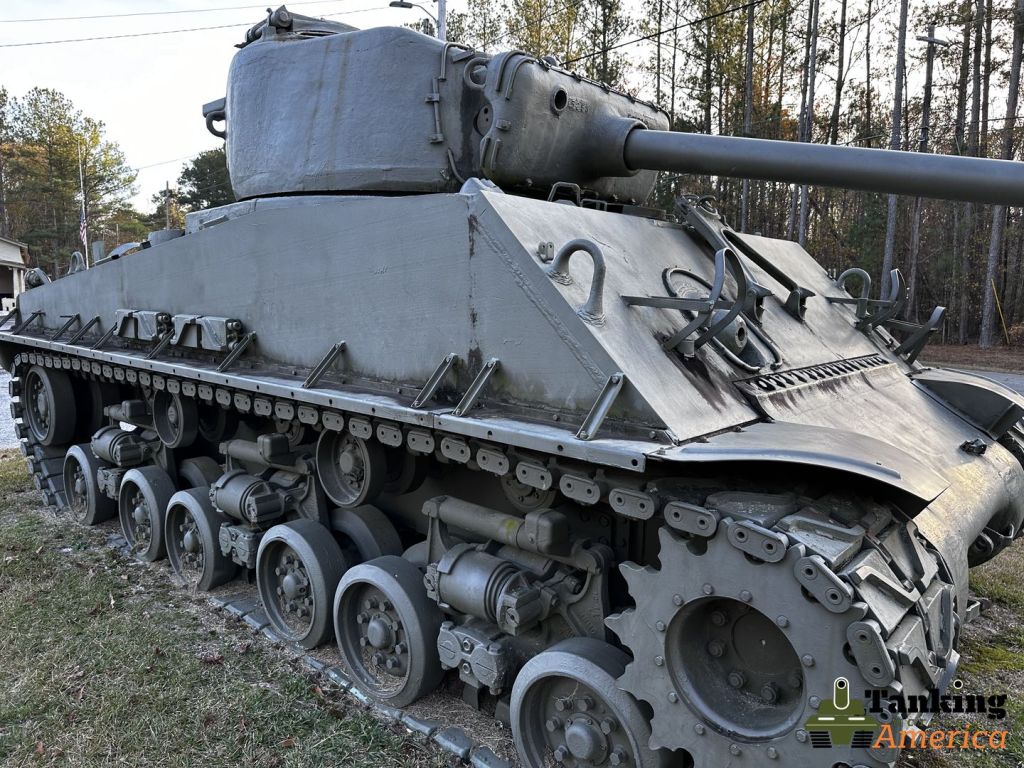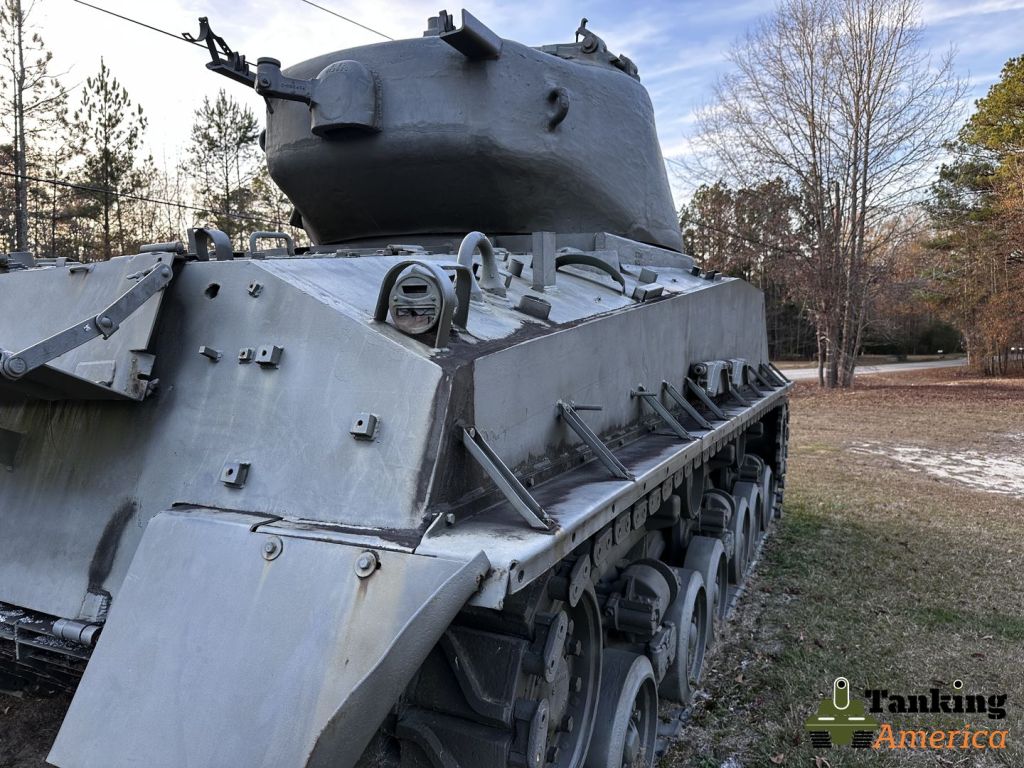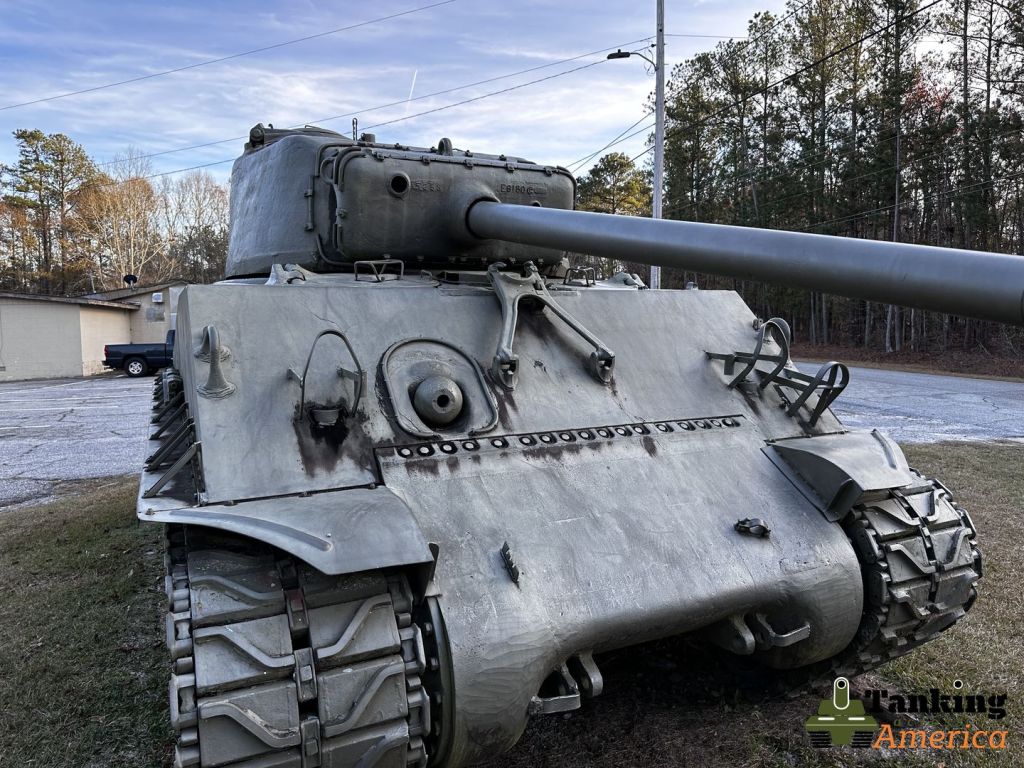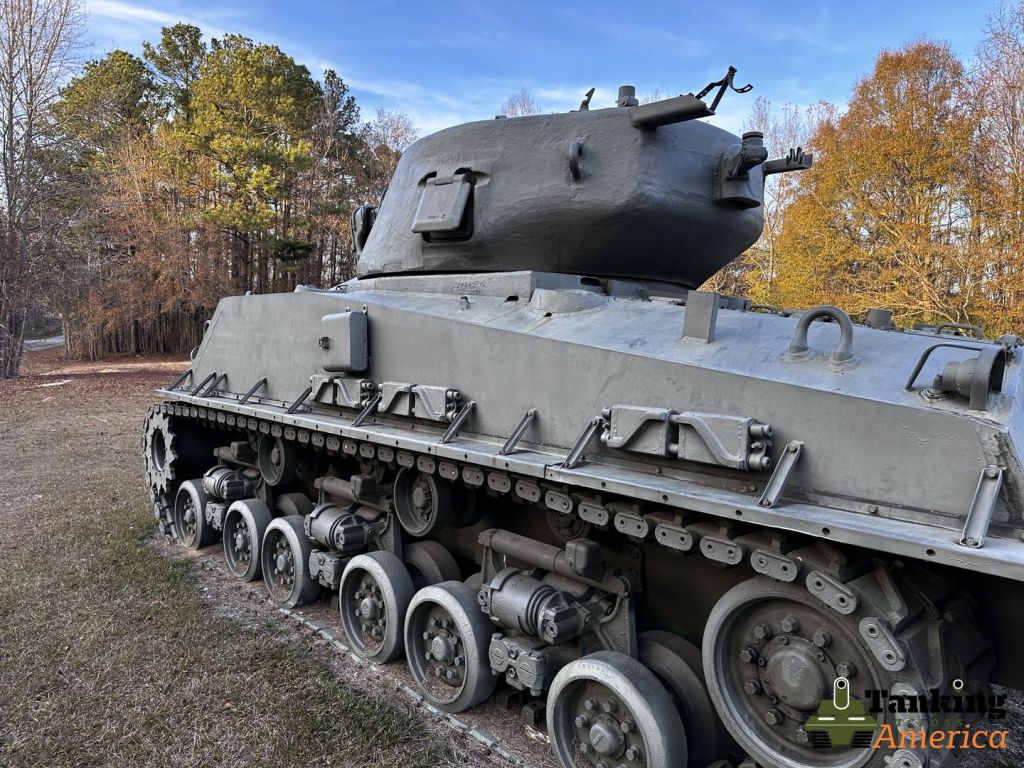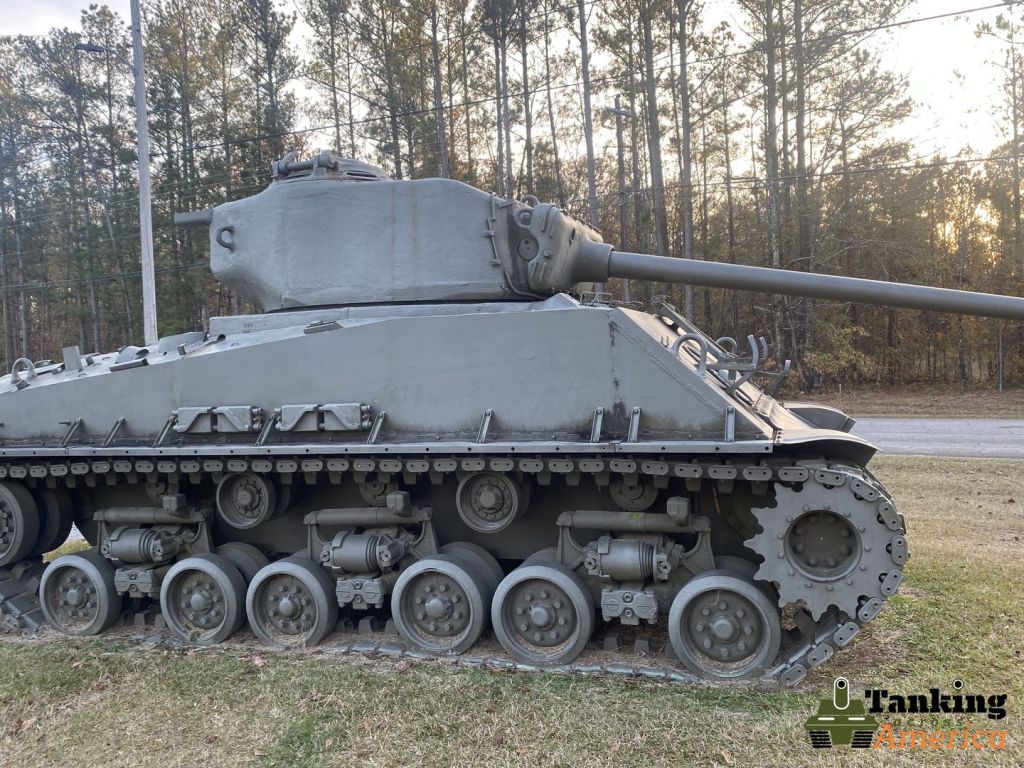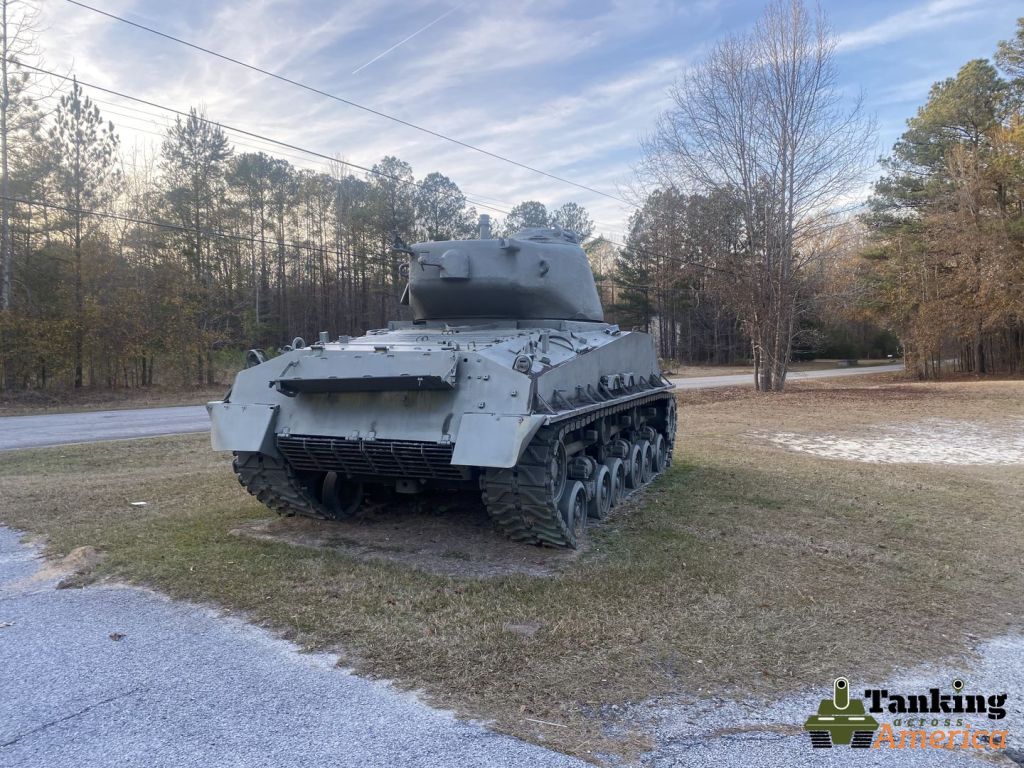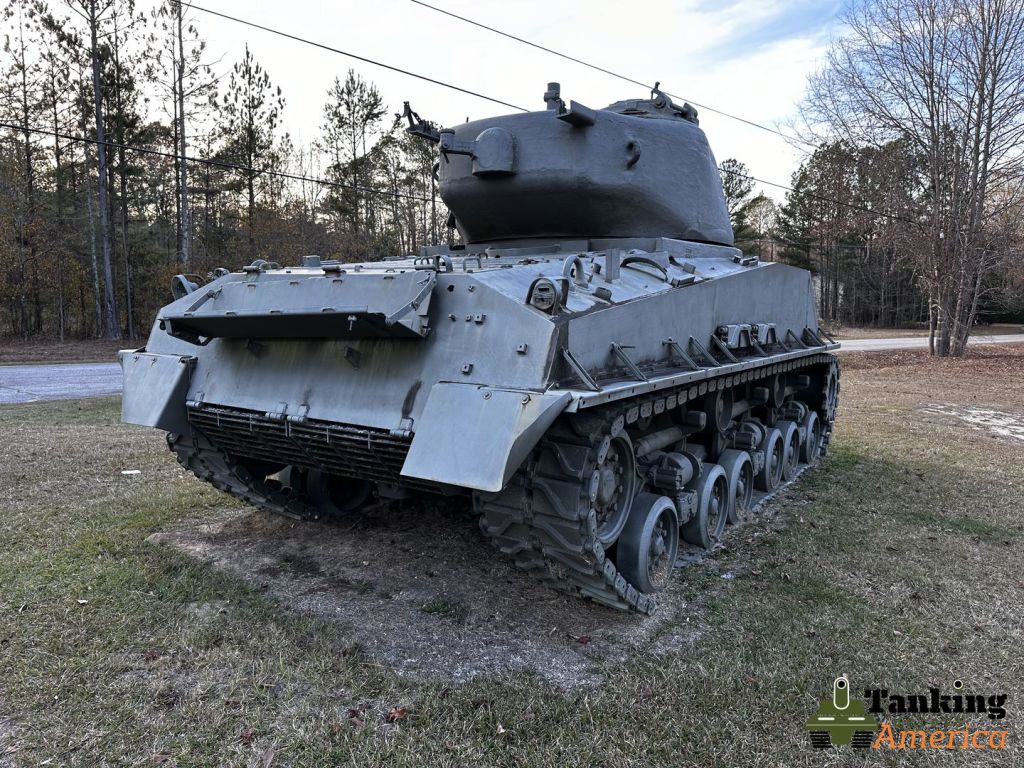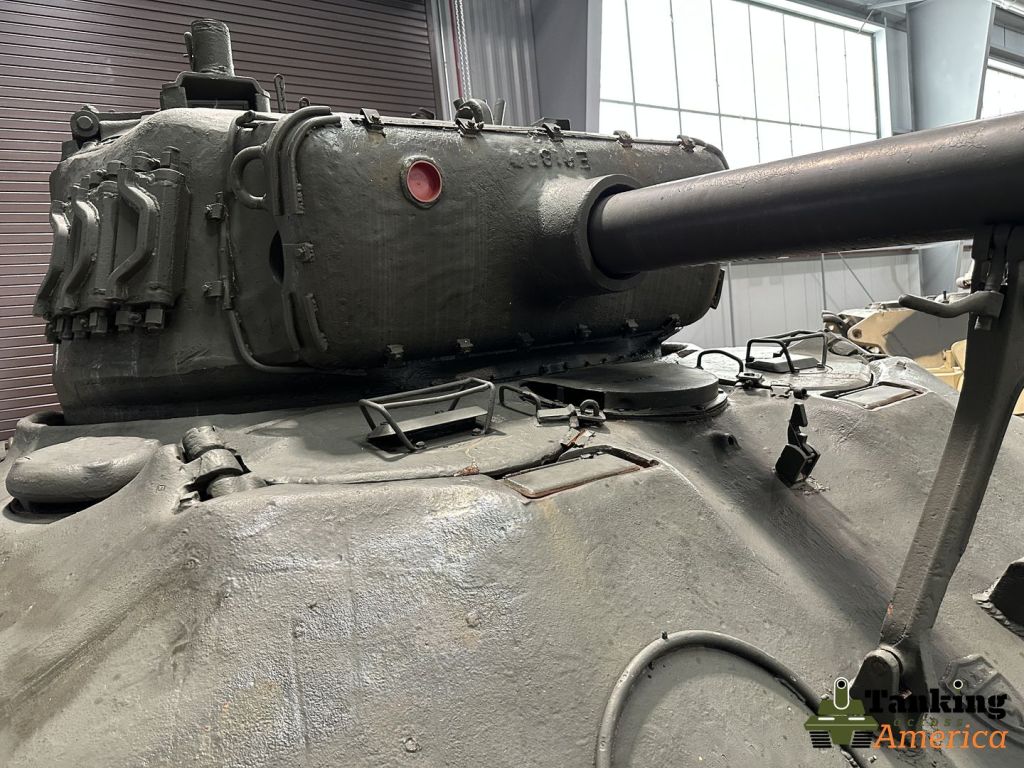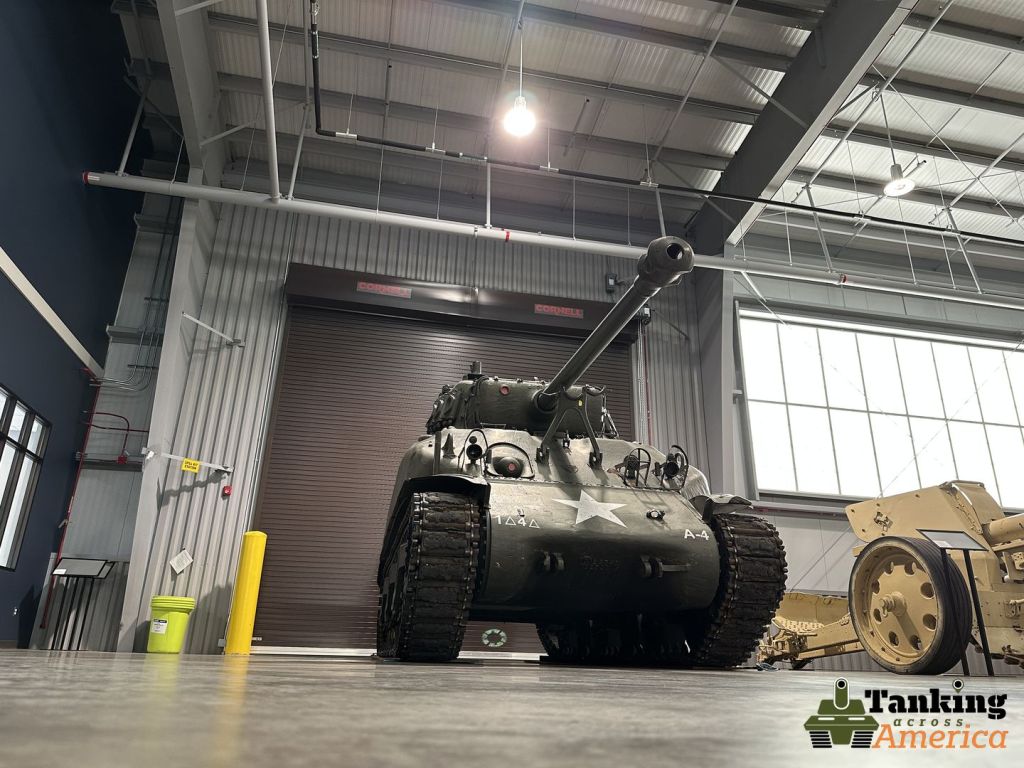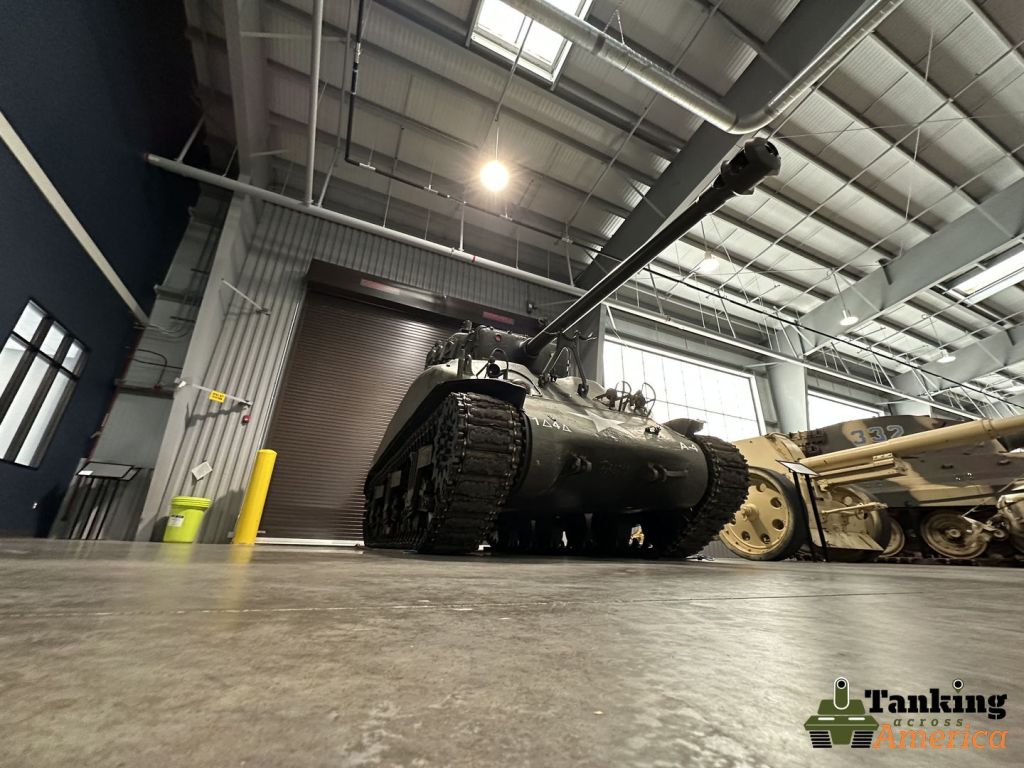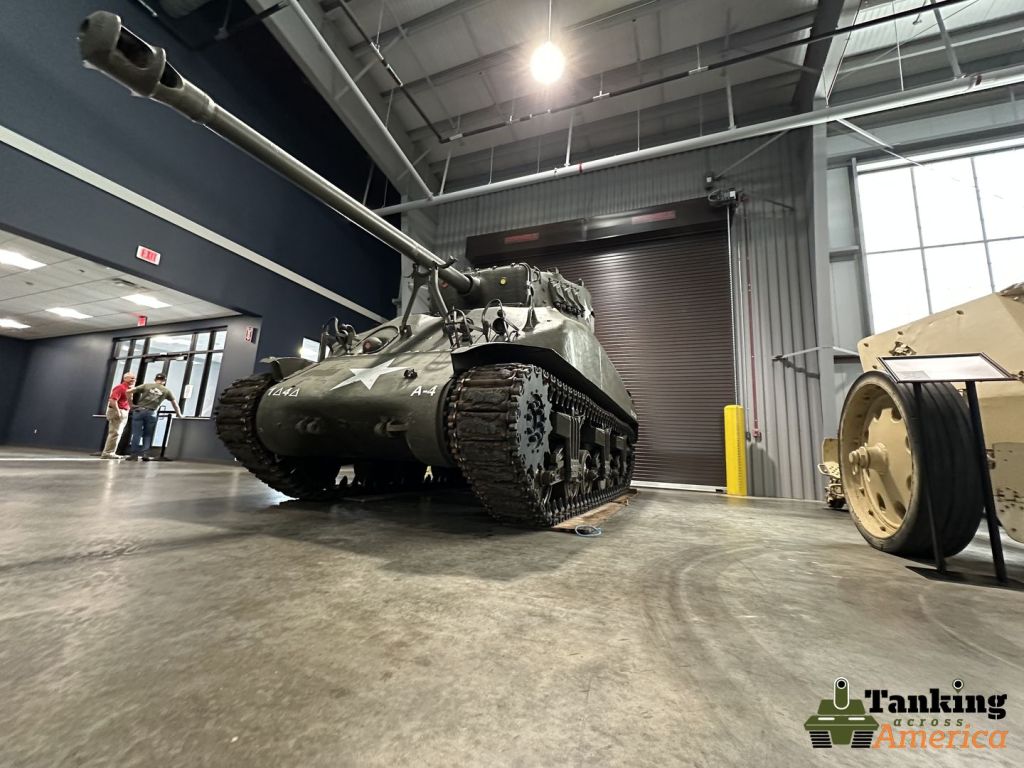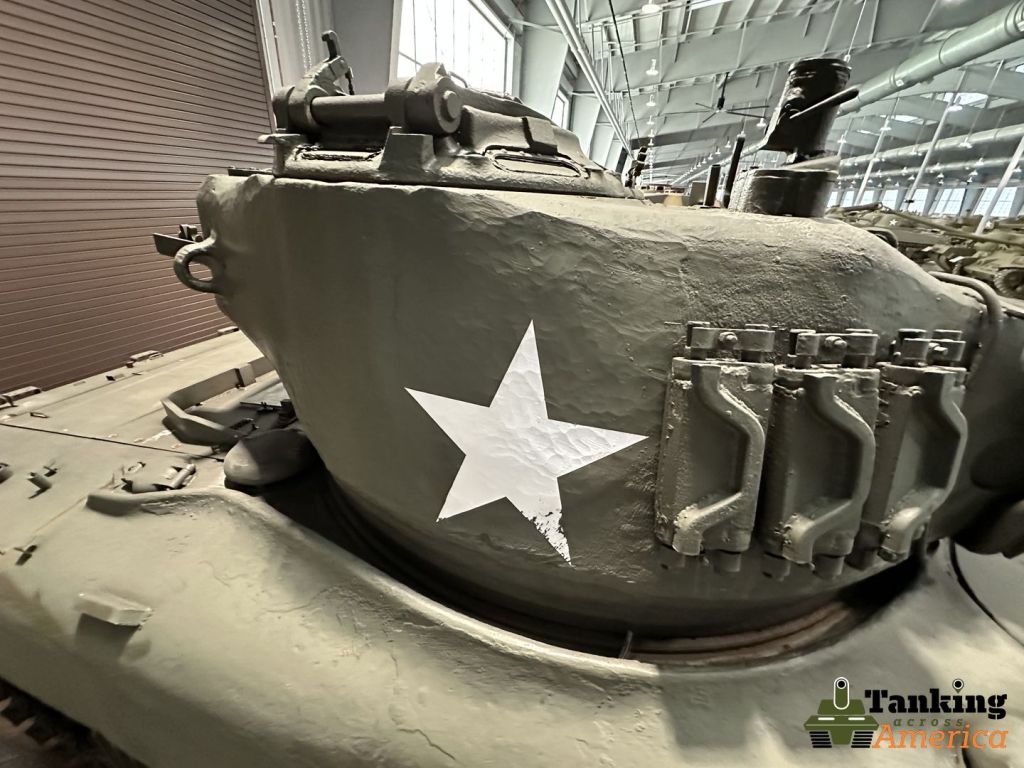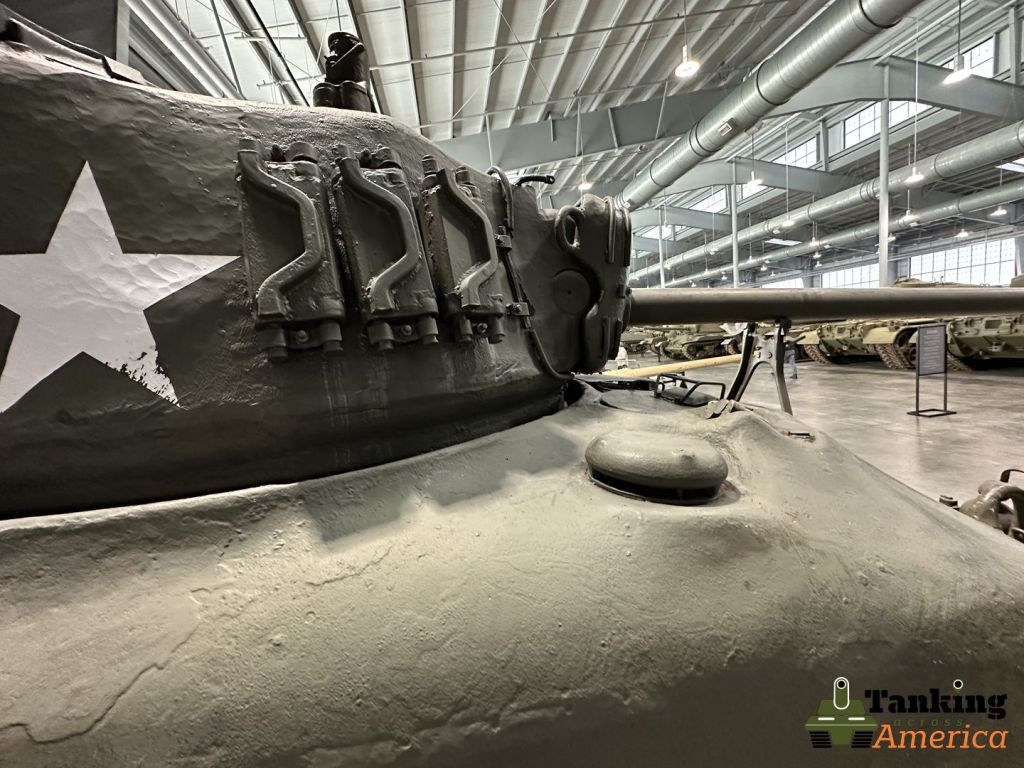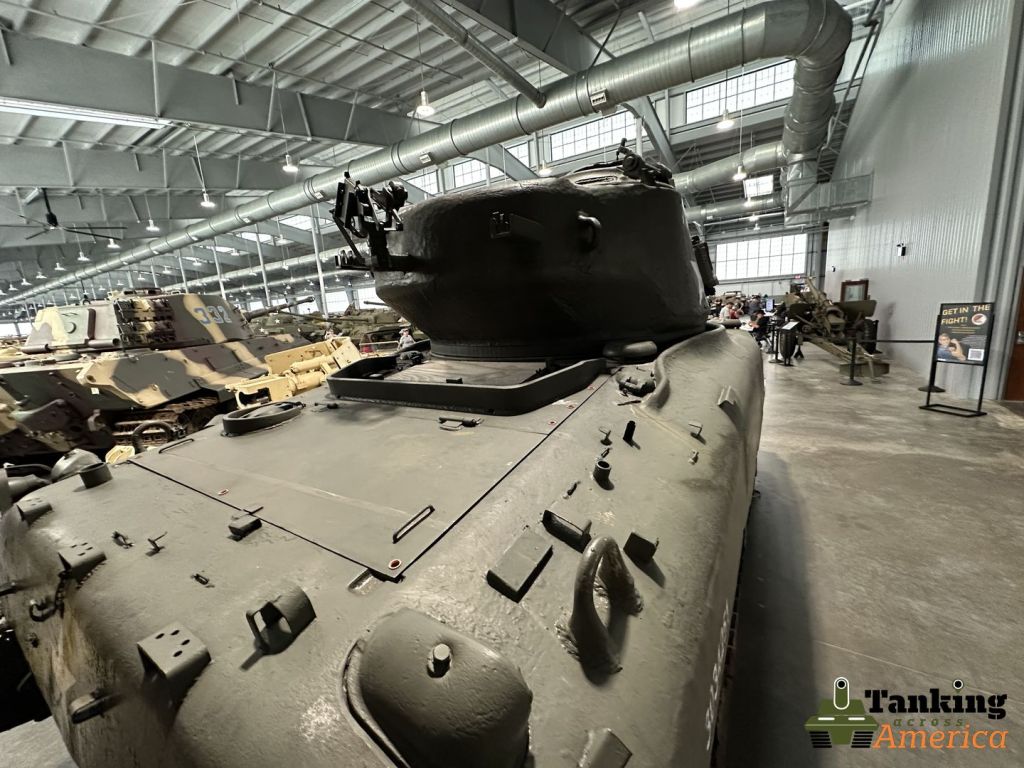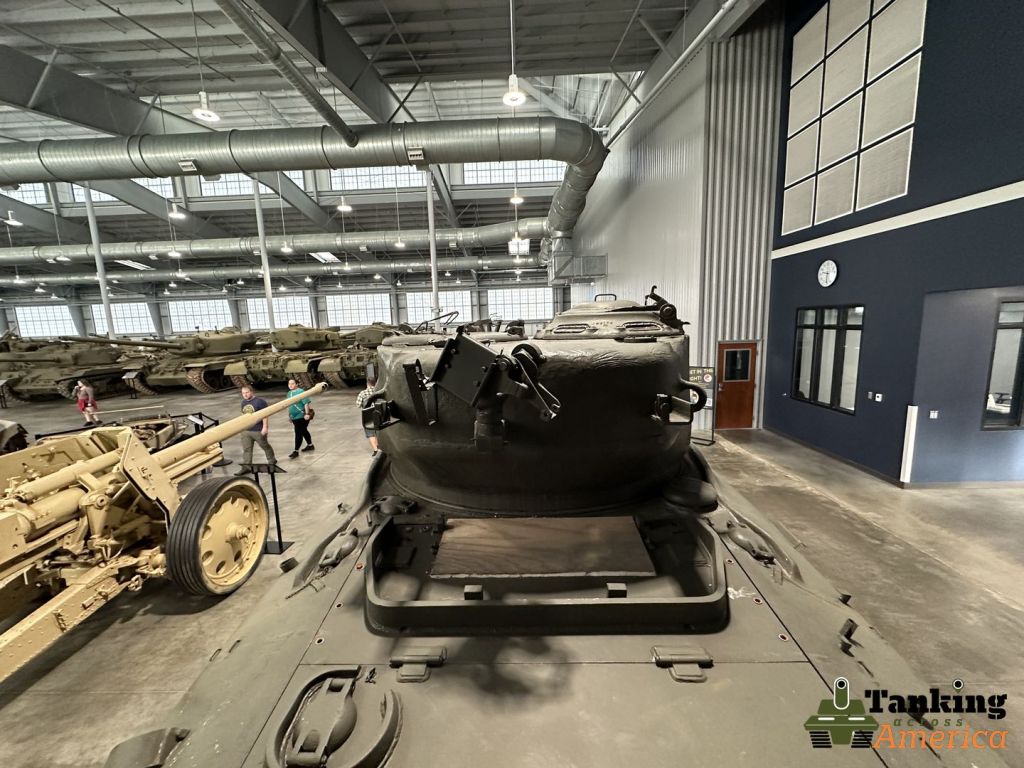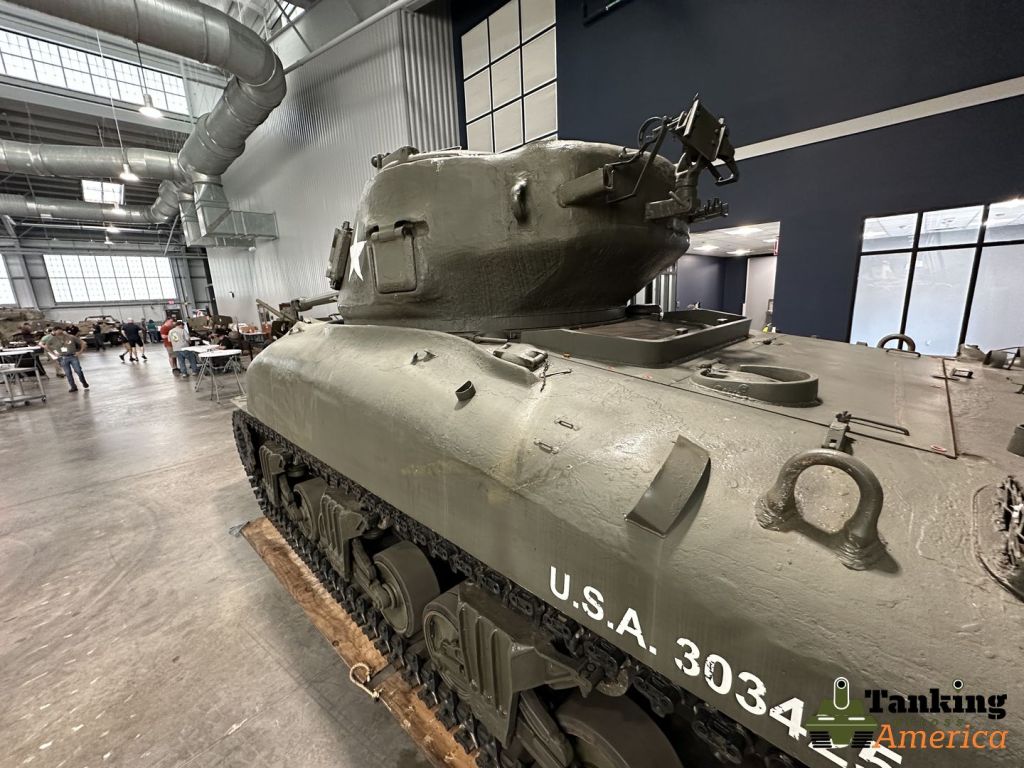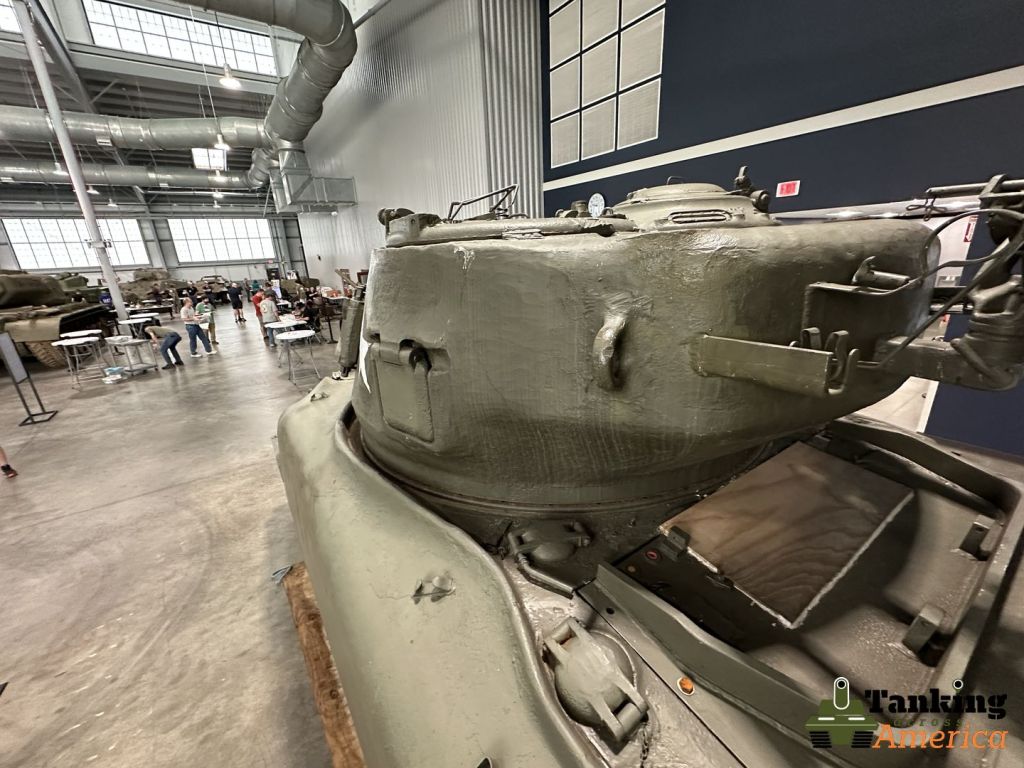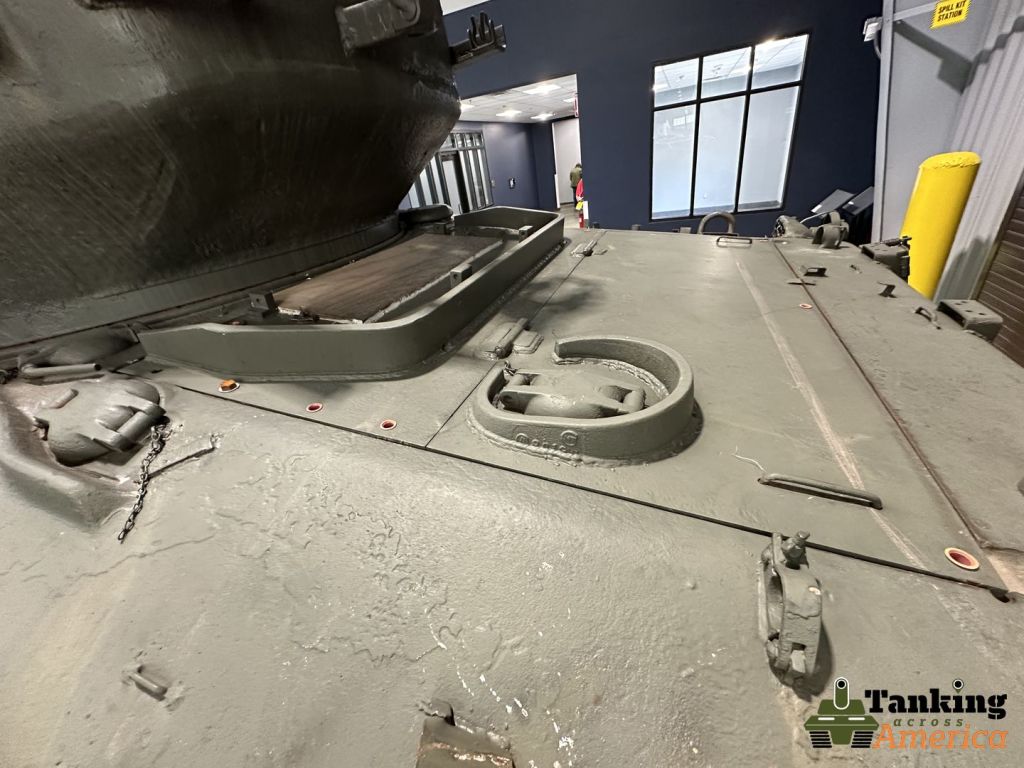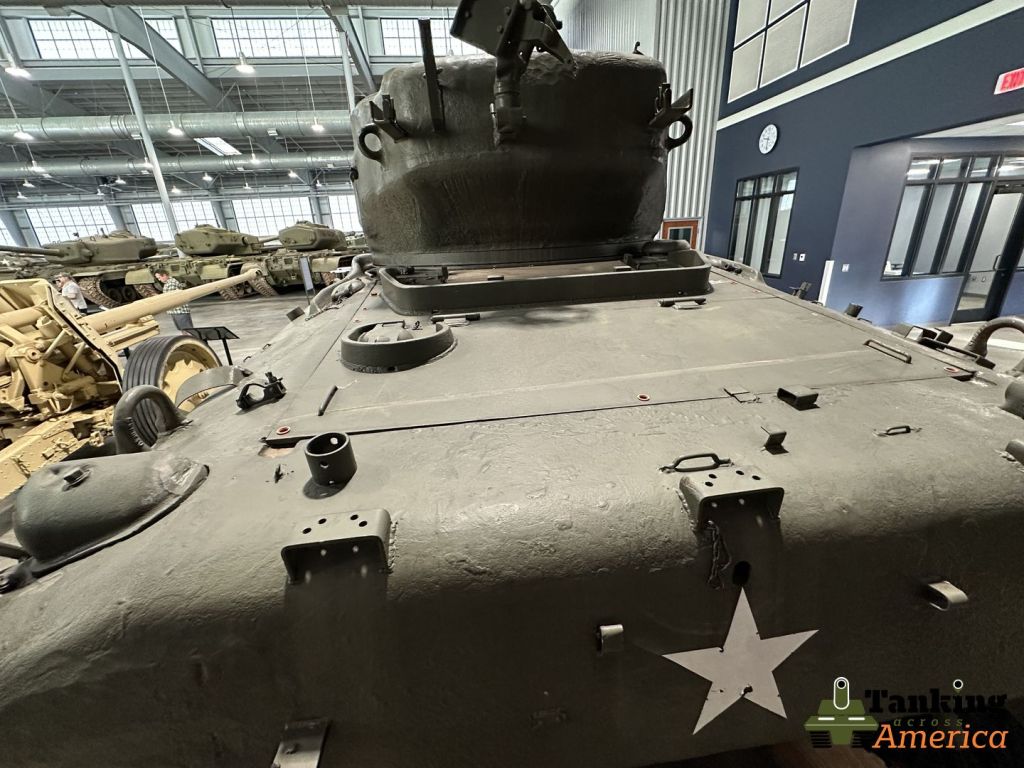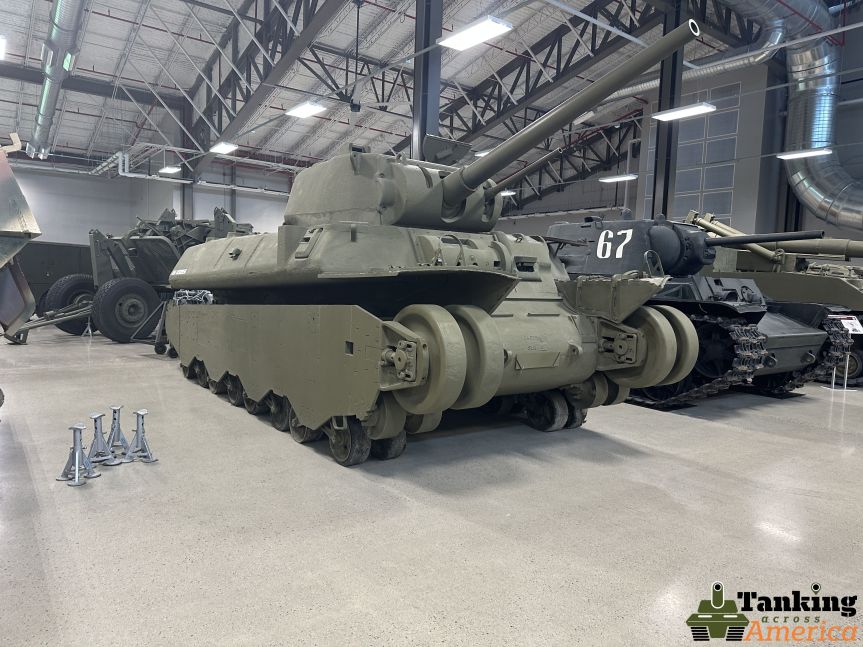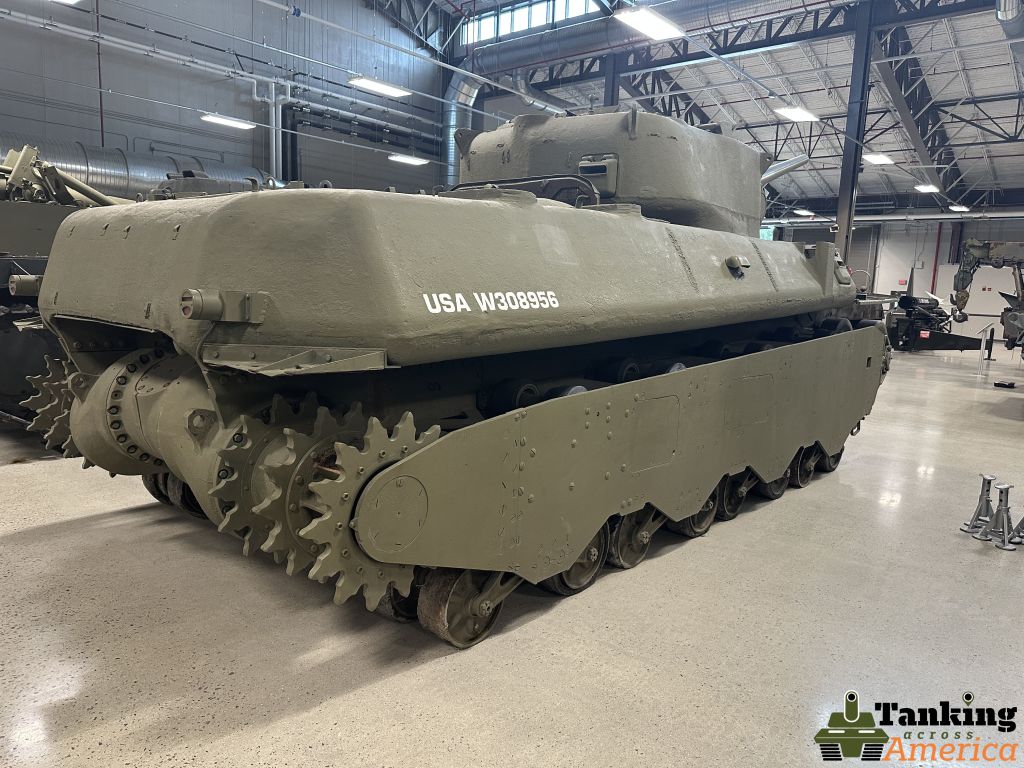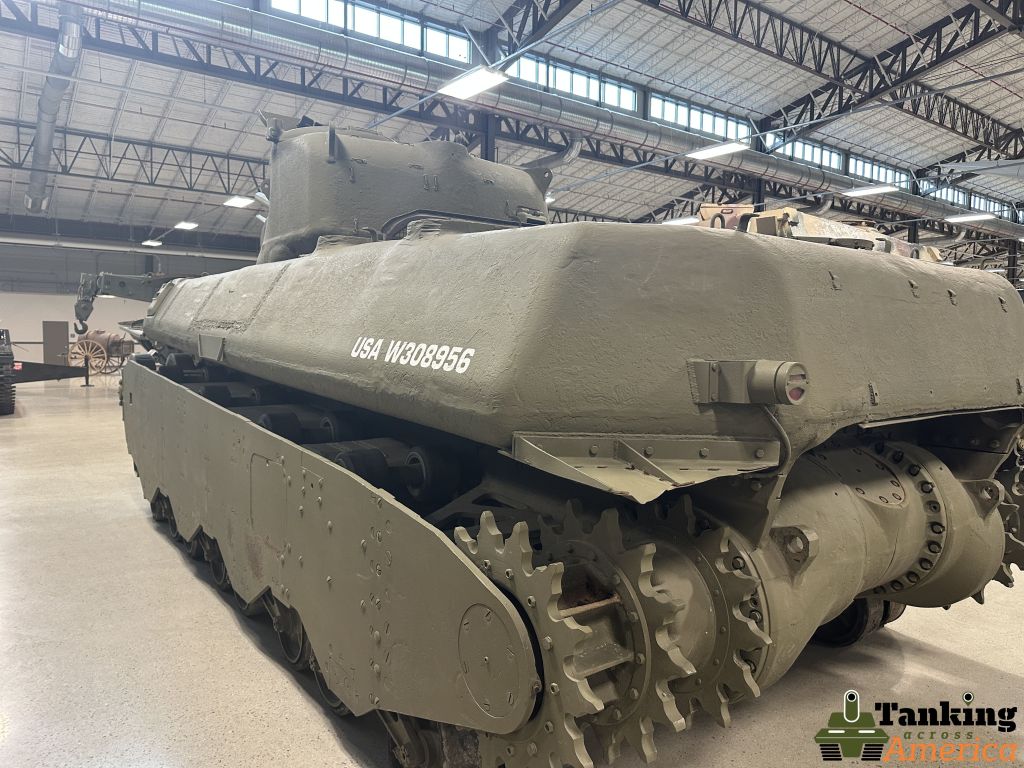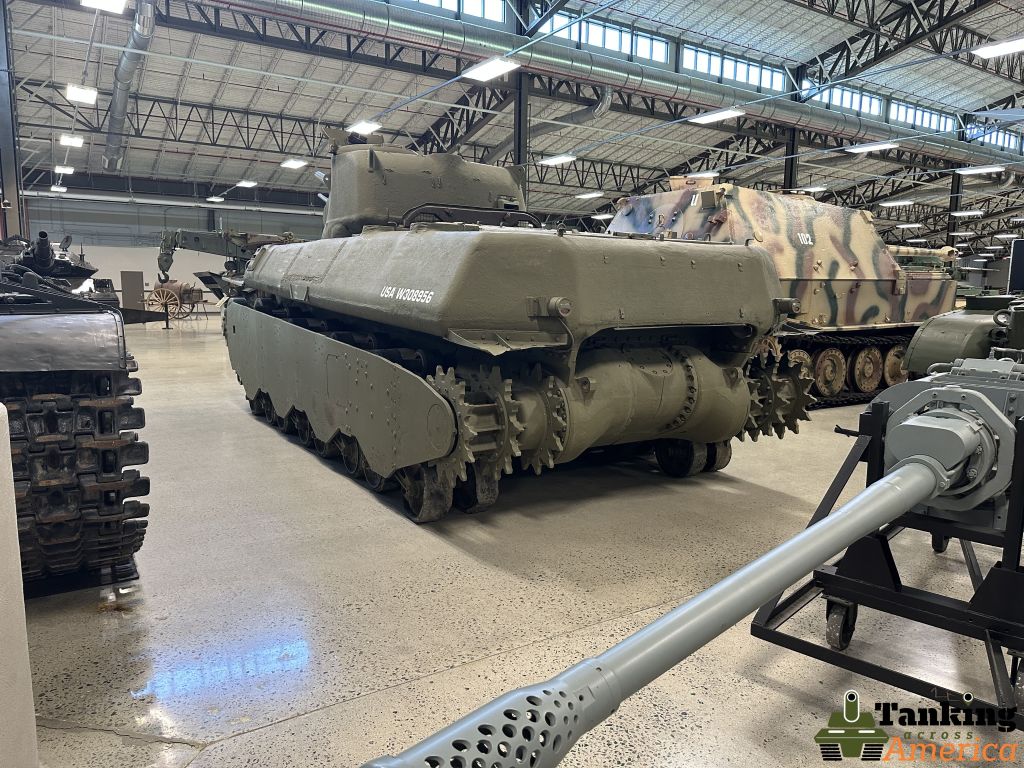
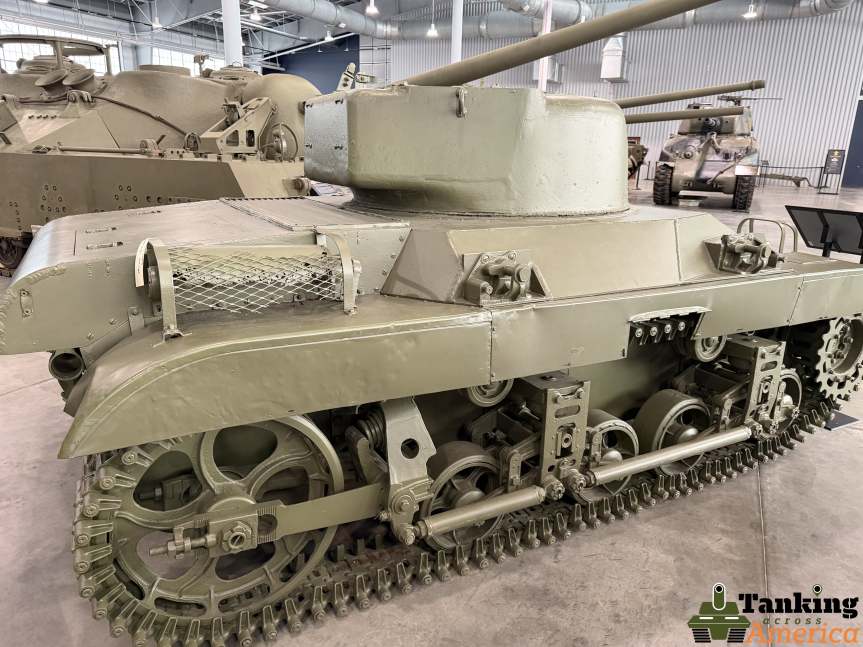
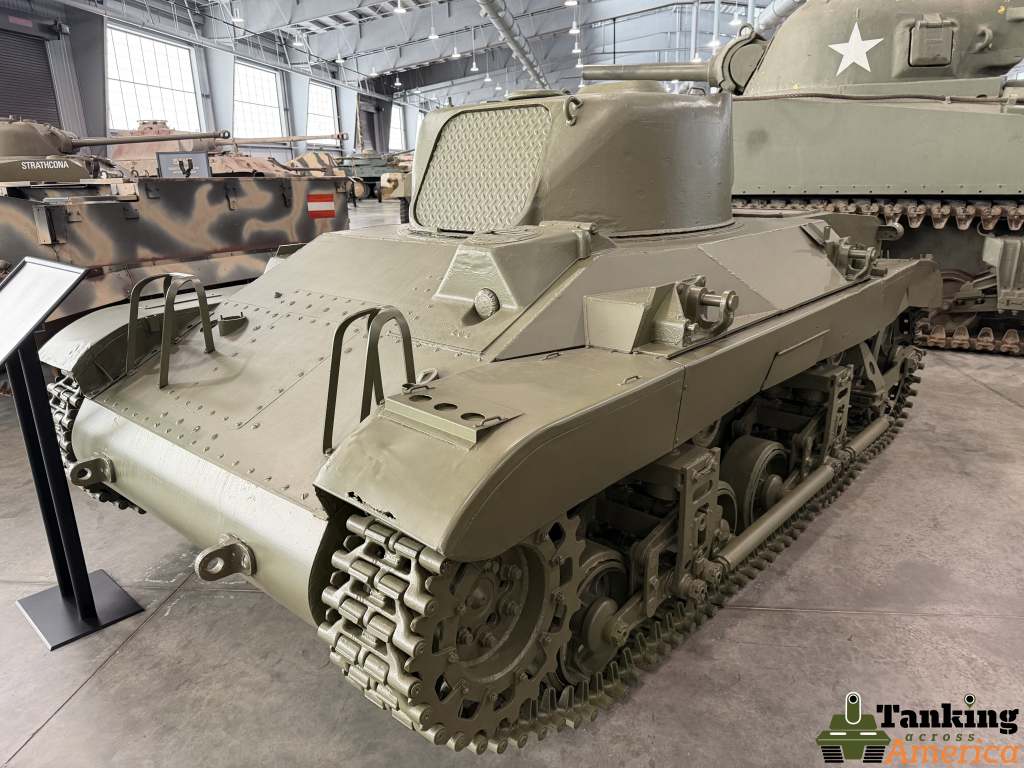
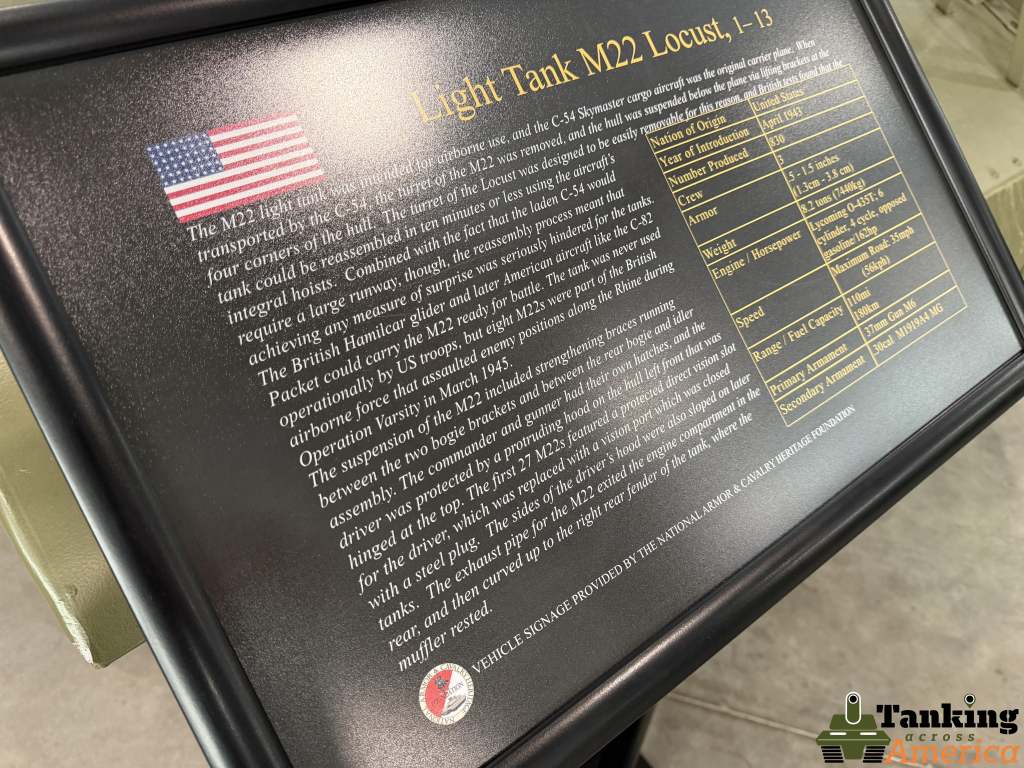
M22 Locust at Armor & Cav collection, Fort Benning

Here’s a ready-to-publish draft:The M22 Locust: America’s Tiny Airborne Tank of World War II
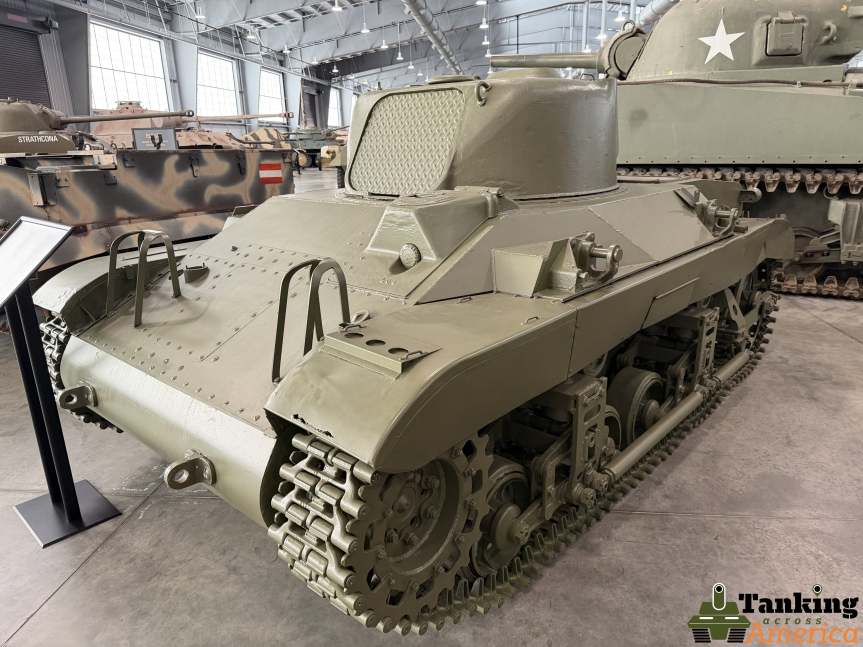

When most people picture an American tank from World War II, they probably imagine the rugged M4 Sherman rumbling across France or perhaps one of the heavier armored vehicles that appeared toward the end of the conflict. The M22 Locust, however, was something very different.

Small, lightly armored, and weighing only around eight tons, the M22 was designed around an ambitious idea: give airborne troops a tank that could travel with them into battle.

It was an intriguing concept. In practice, however, the Locust became one of World War II’s more unusual armored experiments.

A Tank Built for Airborne Warfare

The rapid development of airborne forces during the early years of World War II created a new problem for military planners. Paratroopers and glider troops could land behind enemy lines, but they generally lacked the heavy weapons and armored support available to conventional ground forces.

The solution seemed straightforward: build a tank light enough to be transported by aircraft.

In 1941, the U.S. Army began pursuing what would eventually become the M22 Light Tank. The design was developed by Marmon-Herrington, a company already experienced with light armored vehicles.

Keeping the tank small enough for air transport dictated nearly every aspect of its design.

The M22 was roughly 13 feet long and stood only about six feet tall. Its combat weight was approximately 7.4 metric tons, making it dramatically lighter than the M4 Sherman.

Its crew consisted of just three men: a commander, driver, and gunner.

For its main weapon, the Locust carried a 37 mm M6 cannon, supplemented by a coaxial .30-caliber machine gun. This was respectable armament for a light tank conceived in 1941, but battlefield technology was advancing quickly.

By the time the M22 was ready for combat, the 37 mm gun was already struggling against newer German tanks.
The Air-Transport Problem

Designing a tiny tank was only half the challenge. The other half was figuring out how to get it into battle.

The United States originally intended the M22 to work with the Douglas C-54 Skymaster transport aircraft. Unfortunately, the tank could not simply be driven intact into the aircraft.

Instead, the turret could be removed and carried inside the C-54 while the tank’s hull was transported beneath the aircraft.

That arrangement was technically possible, but hardly ideal for an airborne unit expected to land and immediately begin fighting.

The British had another solution.

Their large General Aircraft Hamilcar cargo glider had been designed specifically to carry heavy equipment for airborne forces. Unlike the American arrangement, the Hamilcar could carry a light tank intact.

This made the Locust considerably more practical in British service.

The British Take an Interest

Although the M22 was an American design, it was the British Army that ultimately gave the tank its most famous combat role.

Britain had already experimented extensively with airborne armored vehicles, including the Tetrarch light tank. Under Lend-Lease, the British received M22s and gave the vehicle the name by which it is best remembered today:

Locust.

The tank eventually equipped elements of the British 6th Airborne Armoured Reconnaissance Regiment.

Its big moment came during Operation Varsity on March 24, 1945.

Varsity was the massive Allied airborne operation supporting the crossing of the Rhine into Germany. British and American airborne forces were dropped or landed east of the river to capture important terrain and disrupt German defenses.

Among the aircraft approaching the landing zones were Hamilcar gliders carrying Locust tanks.

The Locust Goes to War

The Locust’s combat debut demonstrated both the possibilities and the limitations of airborne armor.

Eight Locusts were committed to Operation Varsity.

Simply reaching the battlefield was dangerous. Airborne operations exposed slow-moving transport aircraft and gliders to intense anti-aircraft and small-arms fire, while landing heavy equipment in fields created additional hazards.

Some of the Locusts were lost or damaged during the landing phase.

Those that became operational provided useful support to the airborne troops, but the fighting also revealed the tank’s vulnerabilities.

The Locust’s armor was extremely thin. Protection varied depending on the location, but the vehicle was designed to prioritize low weight rather than survivability. Heavy machine guns, anti-tank rifles, artillery fragments, and virtually any dedicated anti-tank weapon could pose a serious threat.

Its 37 mm cannon was also badly outclassed by 1945.

Against infantry positions, machine-gun nests, soft-skinned vehicles, and other lightly protected targets, the Locust could still be useful. Against late-war German tanks and anti-tank guns, however, its chances were considerably worse.

Too Specialized for Its Own Good

The M22 Locust illustrates one of the fundamental problems with airborne armored vehicles.

A tank normally benefits from three things: firepower, armor, and mobility.

Making a tank light enough to fly forces designers to compromise the first two.

More armor means more weight. A larger cannon means more weight. More ammunition means more weight. A bigger turret means more weight.

The aircraft transporting the tank imposes an unforgiving limit on all of them.

The Locust therefore became a tank optimized not primarily for fighting, but for being transported to the fight.

That distinction mattered.

By 1944 and 1945, even ordinary medium tanks carried guns and armor far beyond what designers had anticipated when development of the M22 began. The Locust entered service in a battlefield environment that had evolved faster than the vehicle itself.

An American Tank That America Never Used in Combat

One of the strangest aspects of the M22’s story is that although the United States developed and produced it, American forces never used the Locust in combat.

More than 800 were manufactured before production ended in 1945, but the U.S. Army ultimately concluded that the vehicle’s limitations—and the difficulties involved in transporting it—reduced its usefulness.

The British proved that an airborne tank could actually be delivered into battle by glider, but Operation Varsity also demonstrated just how vulnerable such a vehicle could be once it arrived.

After World War II, the Locust quickly became obsolete.

Some vehicles nevertheless continued their careers abroad. A number eventually served with foreign militaries, including Egypt, extending the life of a tank originally conceived for a very specific wartime mission.

A Fascinating Dead End in Tank Development

It would be easy to dismiss the M22 Locust as a failed tank.

That interpretation misses what makes the vehicle interesting.

The Locust represented an attempt to solve a genuinely difficult tactical problem. Airborne forces needed mobile firepower, but the aircraft of the early 1940s placed severe restrictions on what could accompany them.

Engineers responded by creating one of the smallest operational tanks of World War II.

The result wasn’t powerful enough to compete with conventional tanks, and the technology required to transport it remained cumbersome. But the underlying idea—giving rapidly deployed troops their own armored fire support—didn’t disappear.

Later generations would approach the problem using larger transport aircraft, air-droppable armored vehicles, helicopters, anti-tank missiles, and increasingly mobile infantry weapons.

In that sense, the M22 Locust belongs to an important period of experimentation in airborne warfare.

It may have been tiny. It may have arrived too late. And it certainly wasn’t going to win a duel with a Panther.

But few tanks can claim they were designed with the expectation that flying to the battlefield was simply part of the job.

A strong next step would be adding a specifications box, Operation Varsity sidebar, and SEO title/meta description to turn this into a more polished history-site article.
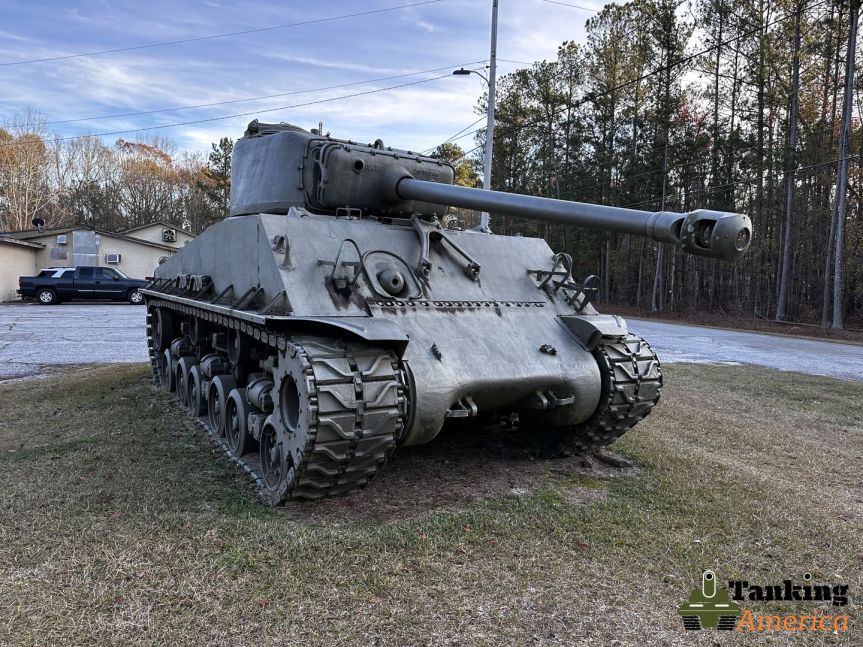
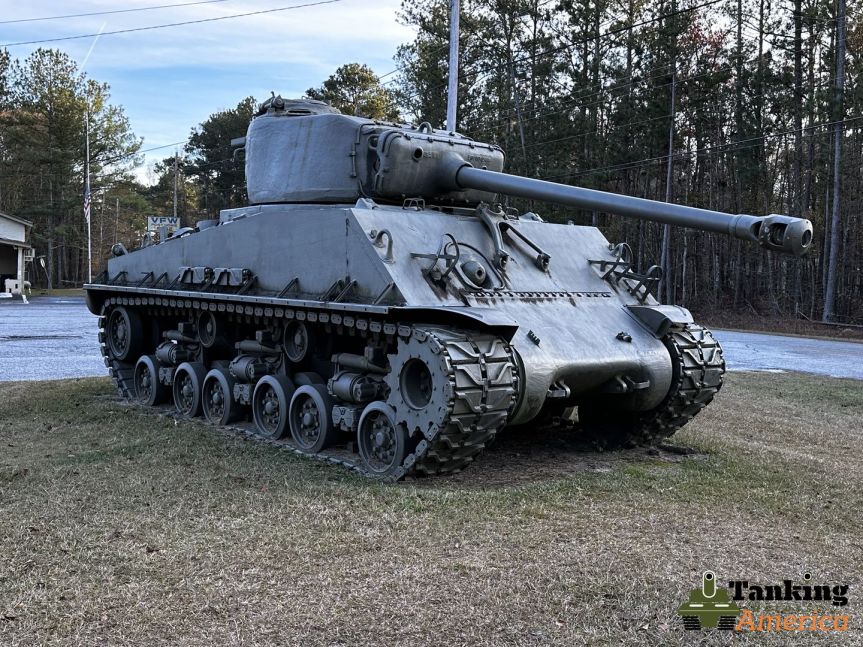
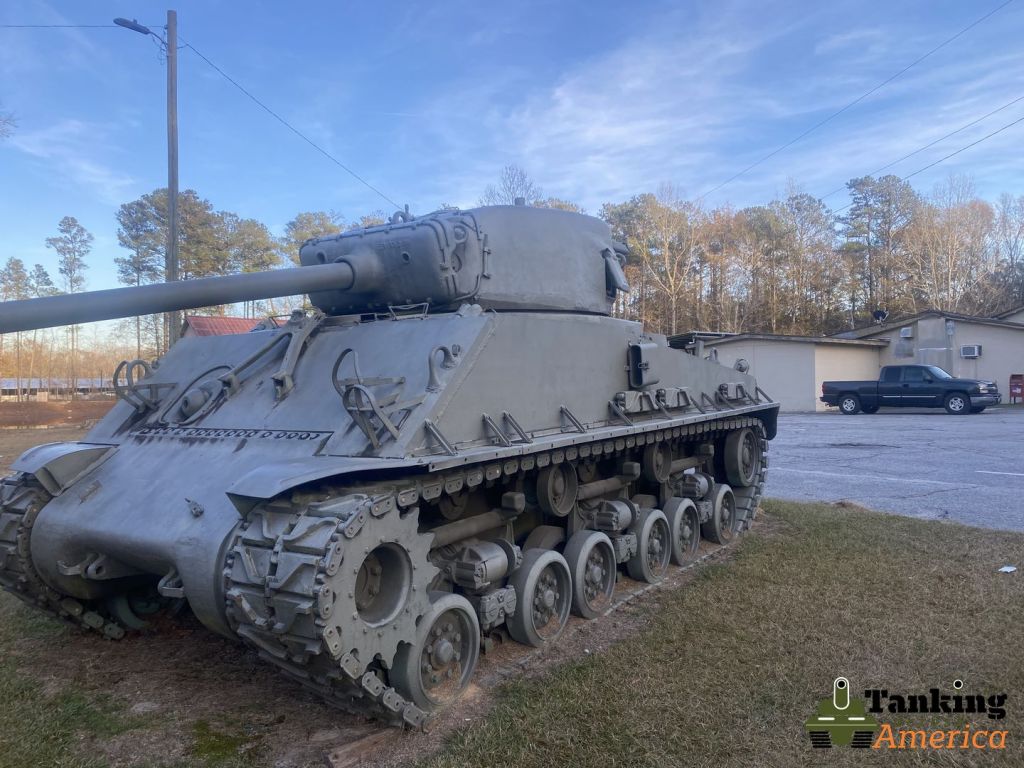
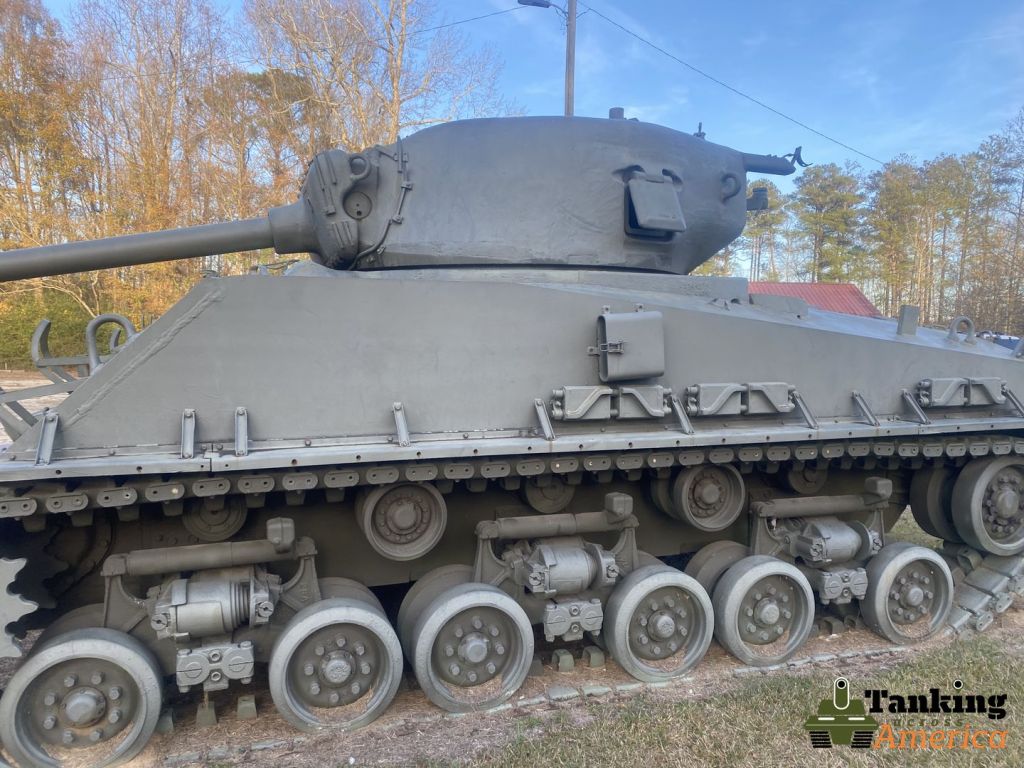
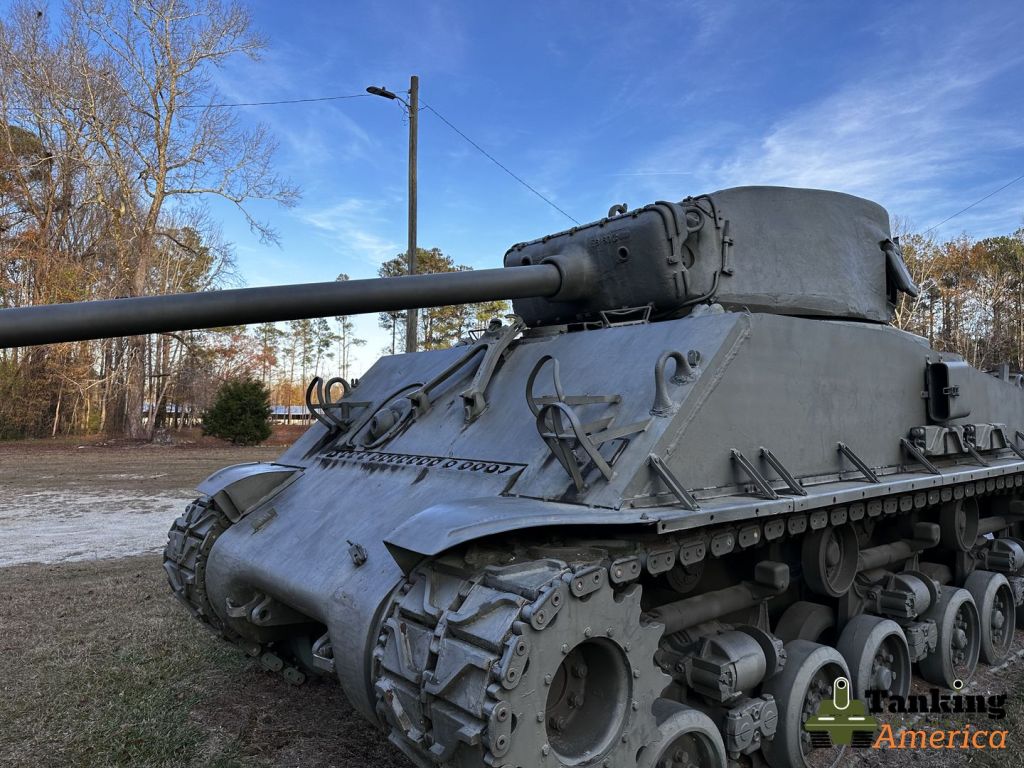
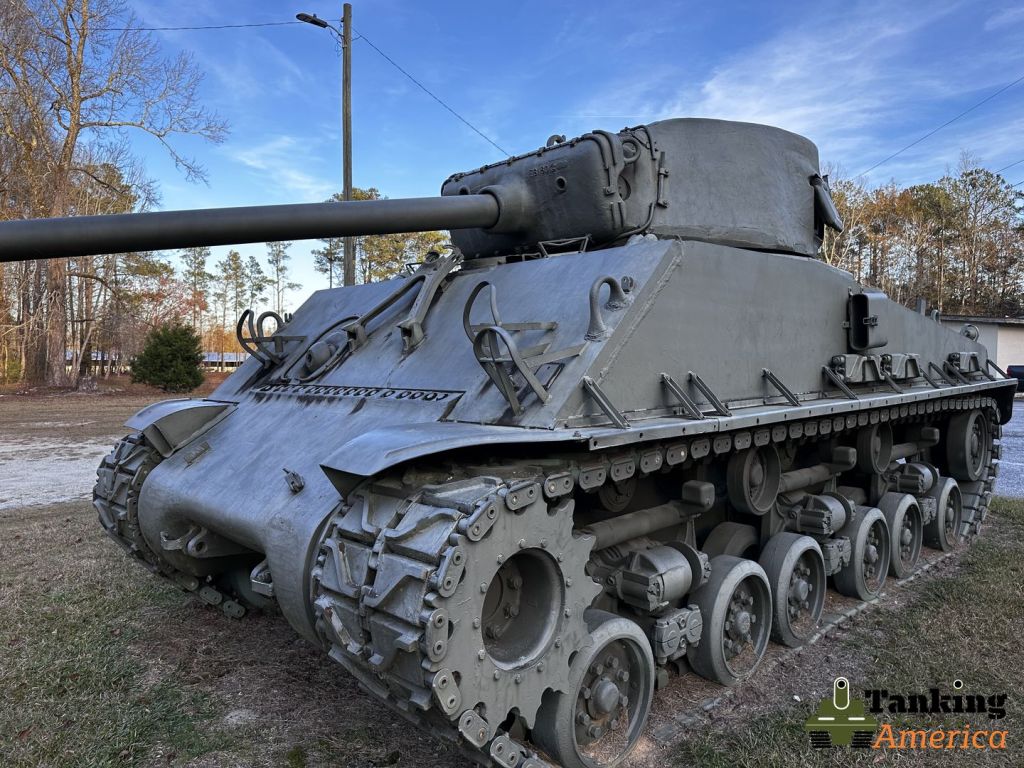
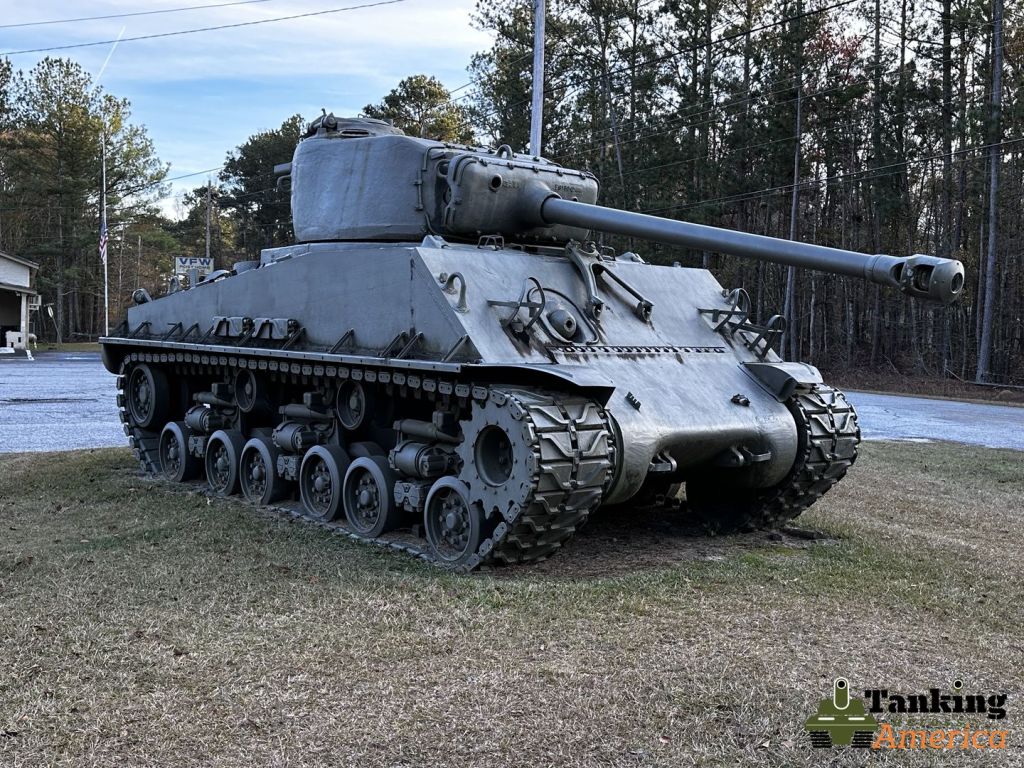
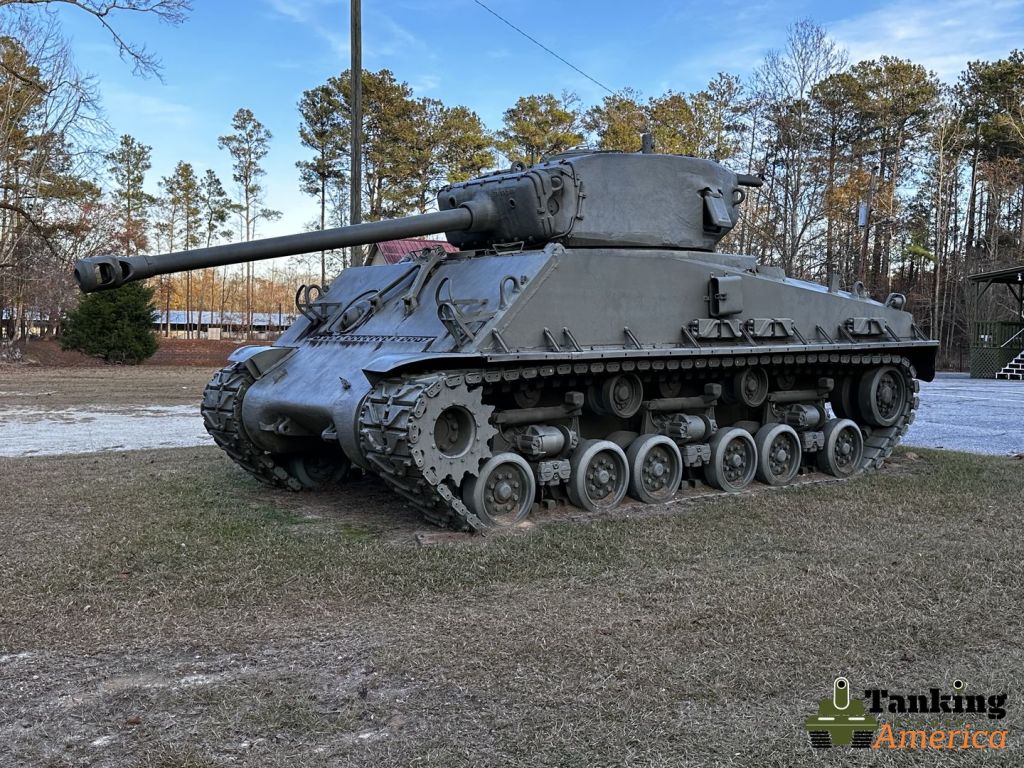
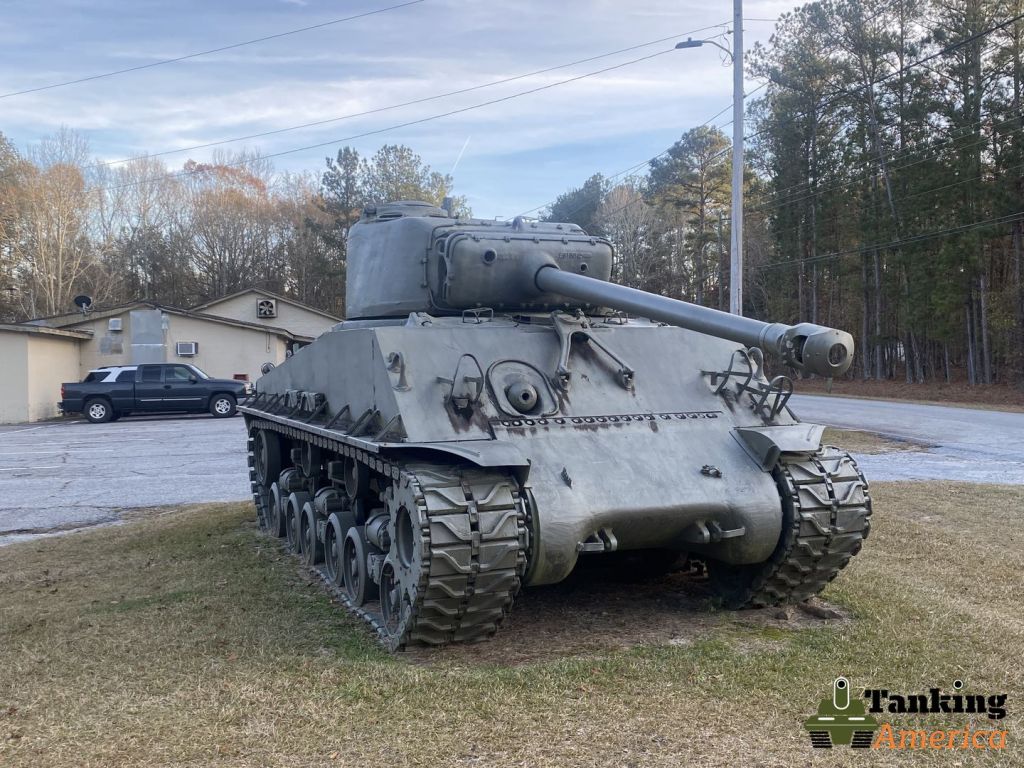
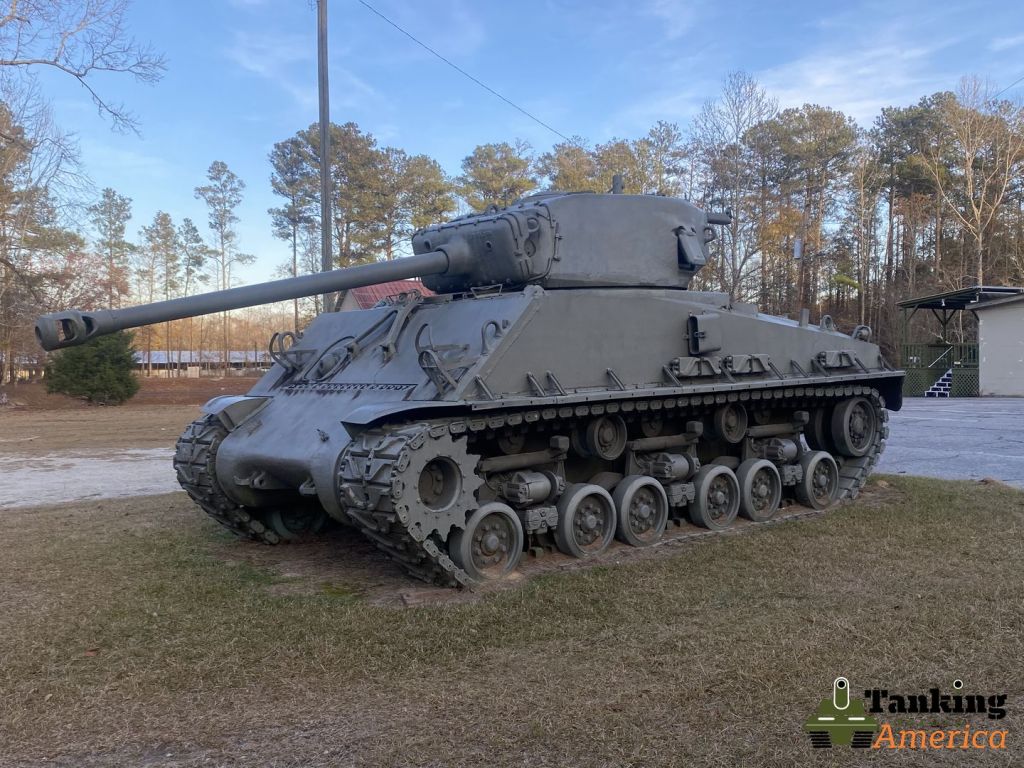
A Historic Ride Home: The WWII Sherman Tank Finds a New Honor on Campus

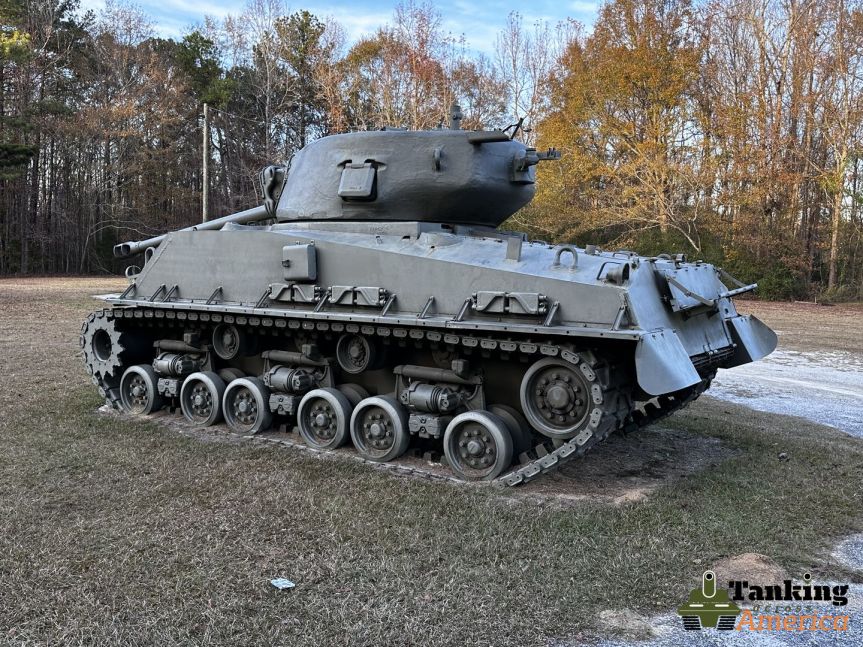
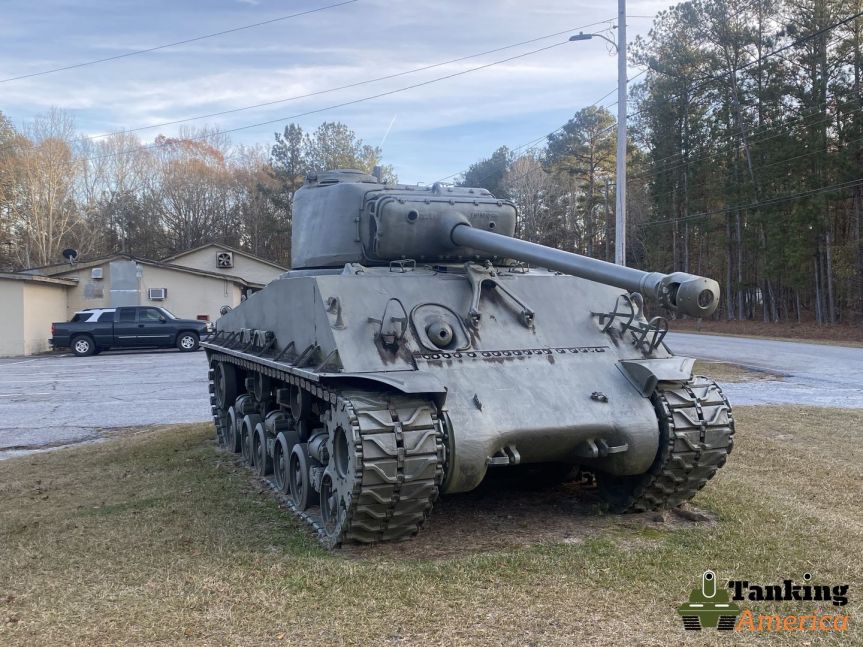
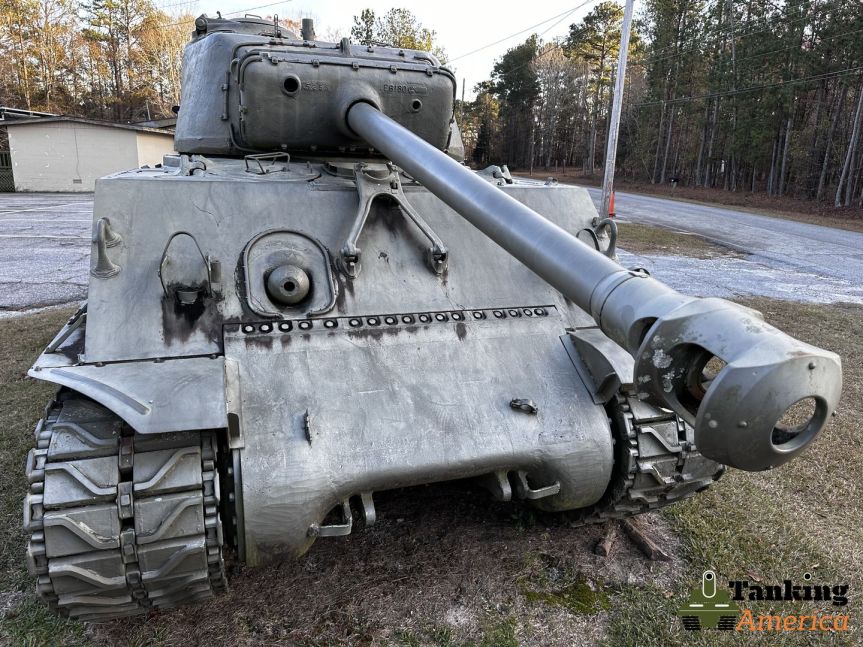
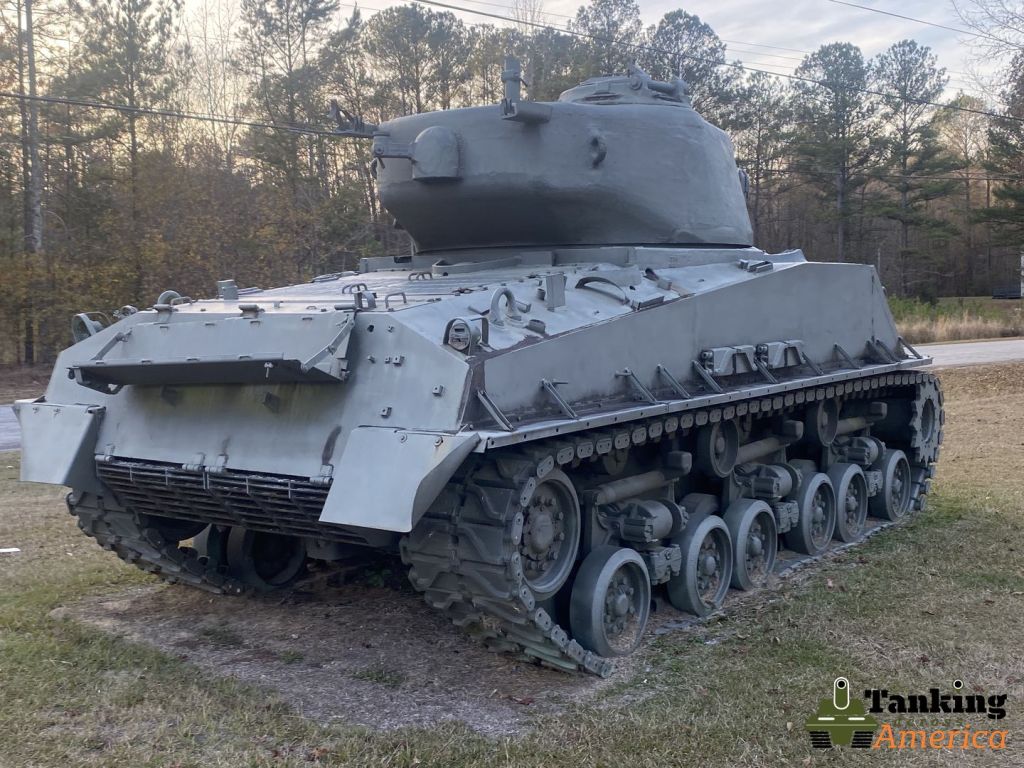
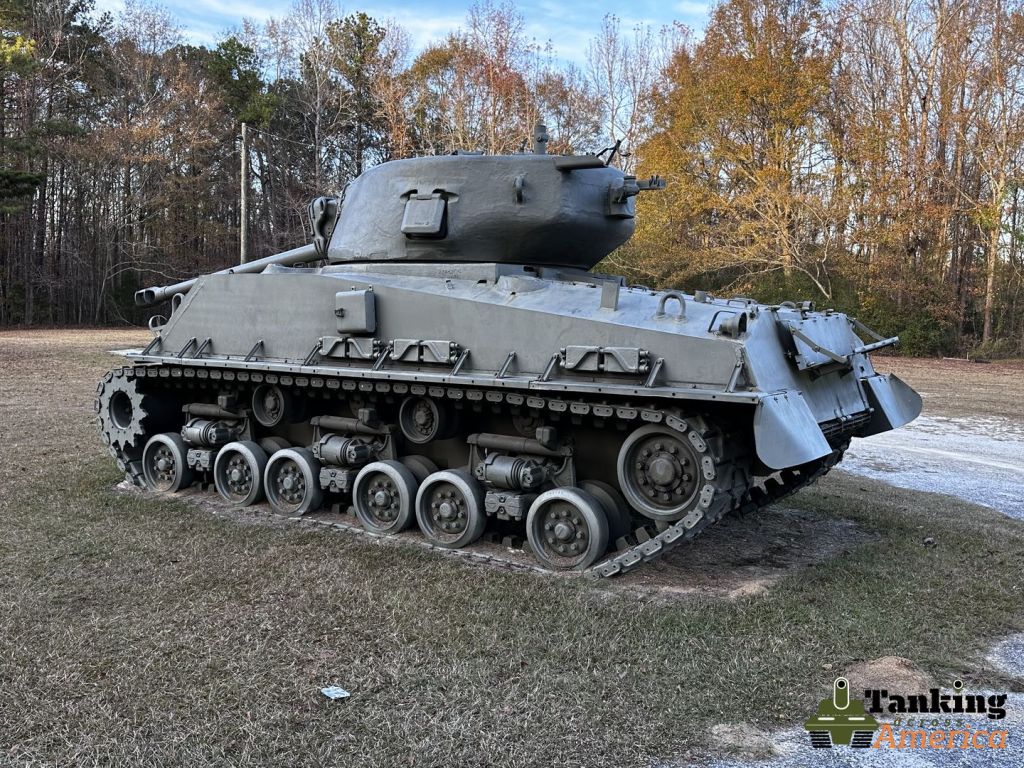
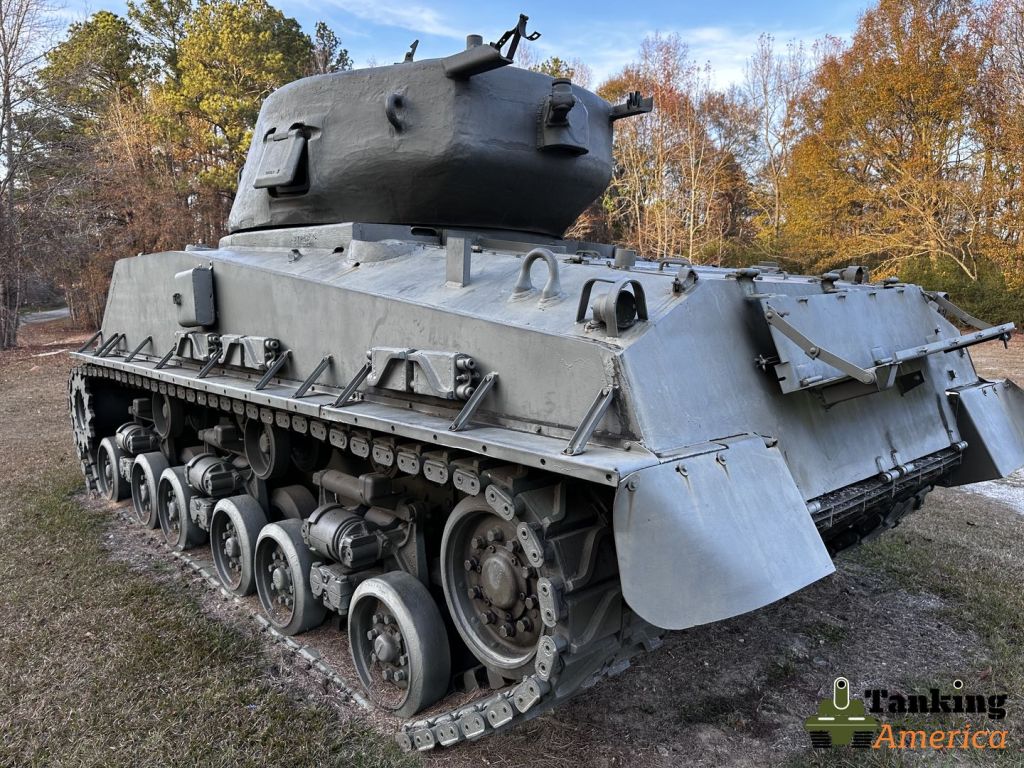
These photos were taken before the move from Barnesville, GA.

Nestled now on the grounds of Lamar County High School, near Burnette Road, is a powerful emblem of both a community’s military heritage and its enduring spirit of learning. The M4A3E8 (76) Sherman tank (Serial No. 61312, U.S. Registration No. 30114334), built in January 1945, has finally found its long-awaited resting place—not in a museum, but as a living monument to history, service, and education.

From Campus Icon to Community Treasure

Once stationed at Gordon Military College, this Sherman tank was a familiar centerpiece on campus. For many former cadets, it was more than a relic—it was a playground. Stories abound of students who “painted the tank” overnight, splashing vibrant colors across its steel surface in an unofficial rite of passage that bonded classes and boosted school spirit.

In 1972, following the transition of the college into Gordon Junior College under the University System of Georgia, the tank—an unmistakable symbol of the school’s military past—was moved to the VFW post on Old Highway 41 to preserve its legacy.

A Hero’s Welcome to LCHS

Fast-forward to July 18, 2025, when the tank made its dramatic return to the heart of the county. Thanks to the efforts of school board member Danny Turner, local leaders, and the U.S. Army’s approval, the tank was gifted to Lamar County Schools free of charge—courtesy of an anonymous donor who funded the entire project.

Transporting the 70,000-pound behemoth was no small feat. After initial setbacks with standard tow trucks, heavy-duty rotator tow trucks were called in, and with a bit of humor—”The Nazis couldn’t beat the Sherman tank, but Eddie Buice and Arthur Edge did!” quipped Turner—the tank was safely delivered and positioned on the school’s grounds.

A Living Memorial of Pride and Purpose

The tank now stands as more than an artifact—it’s an educational ally to Lamar County High School’s AJROTC program. A grand memorial is in the works, intended to honor America’s veterans, the history of Gordon Military School, and the cadets who march past it today.

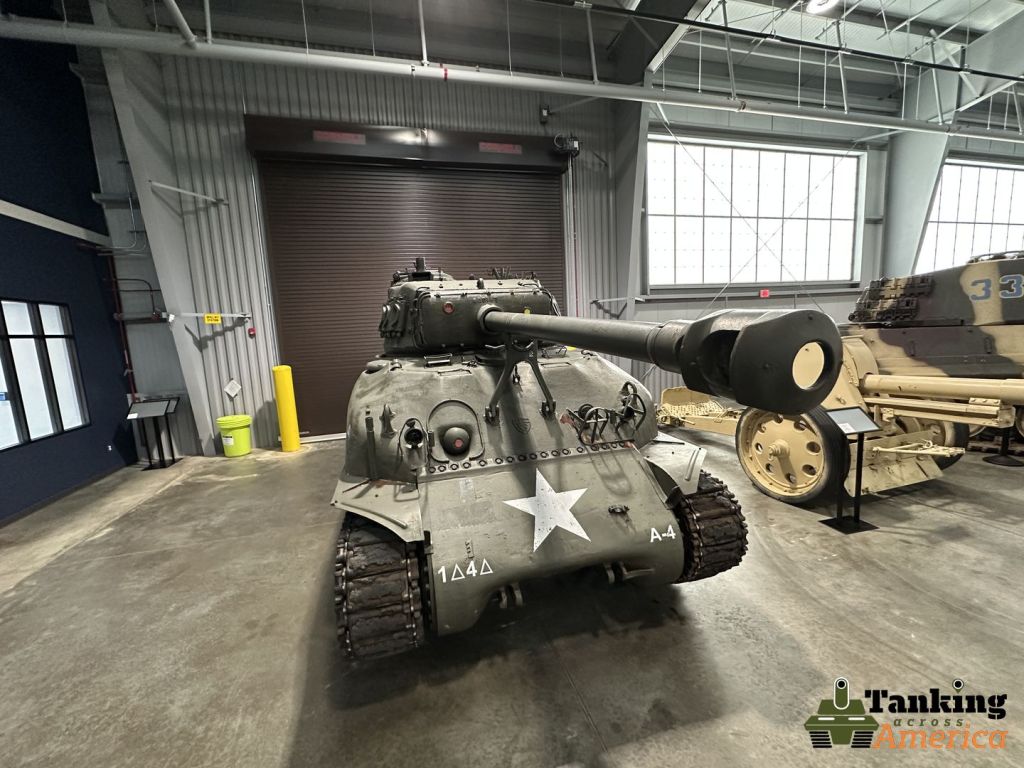
A Historic Homecoming: M4A1(76)W Sherman Returns After 80 Years

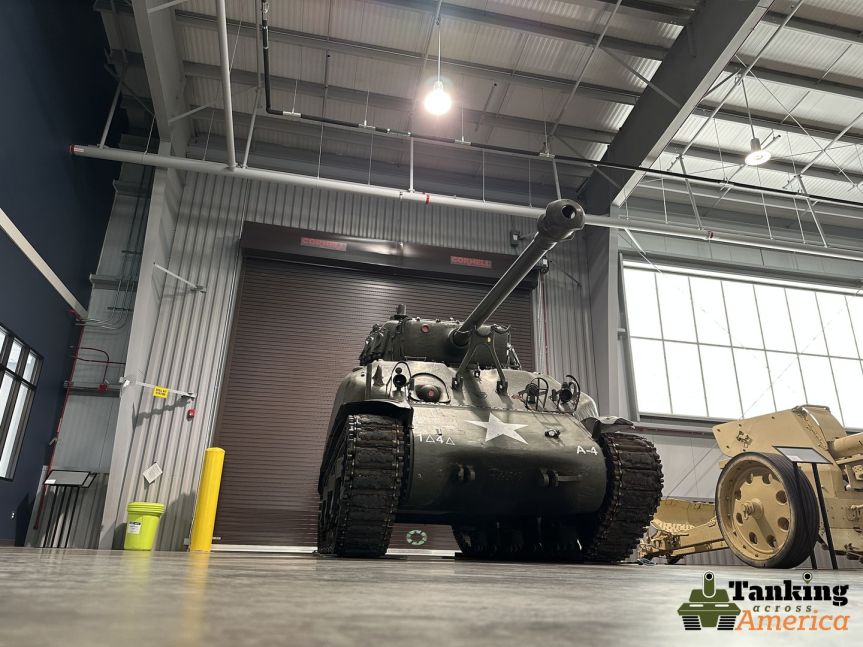
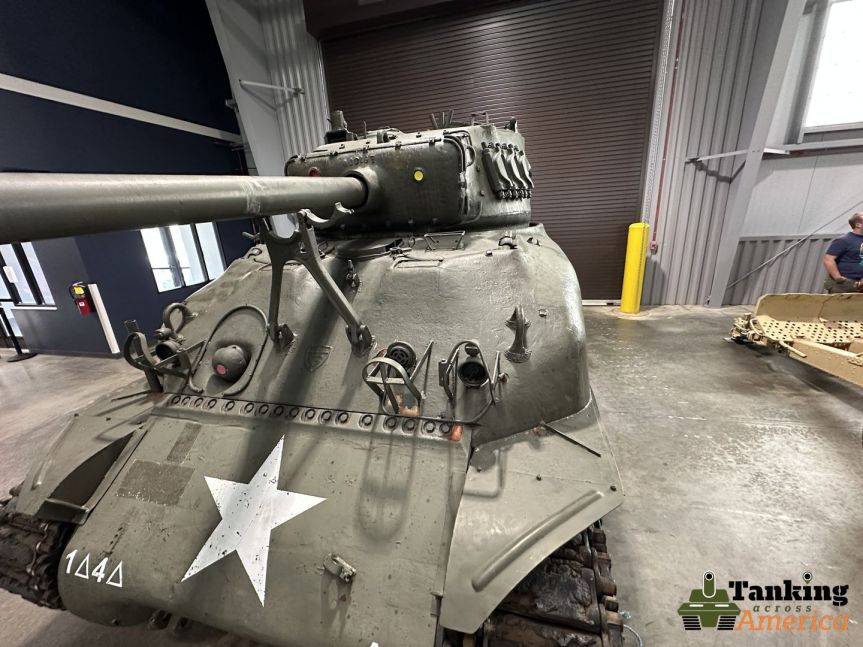
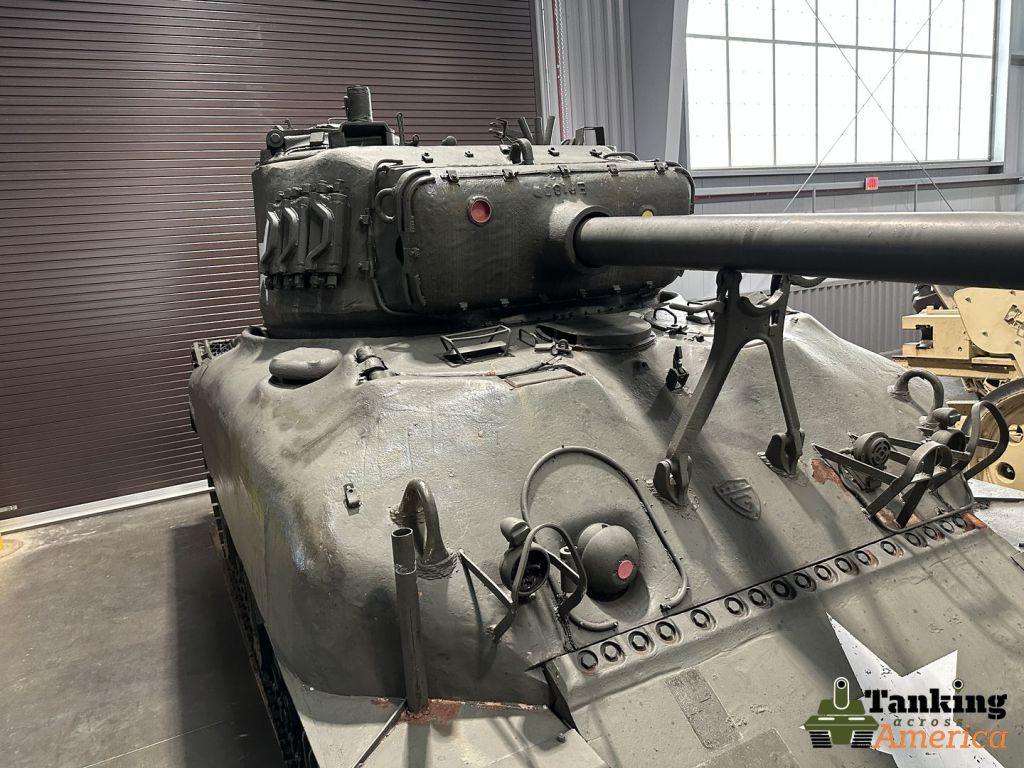
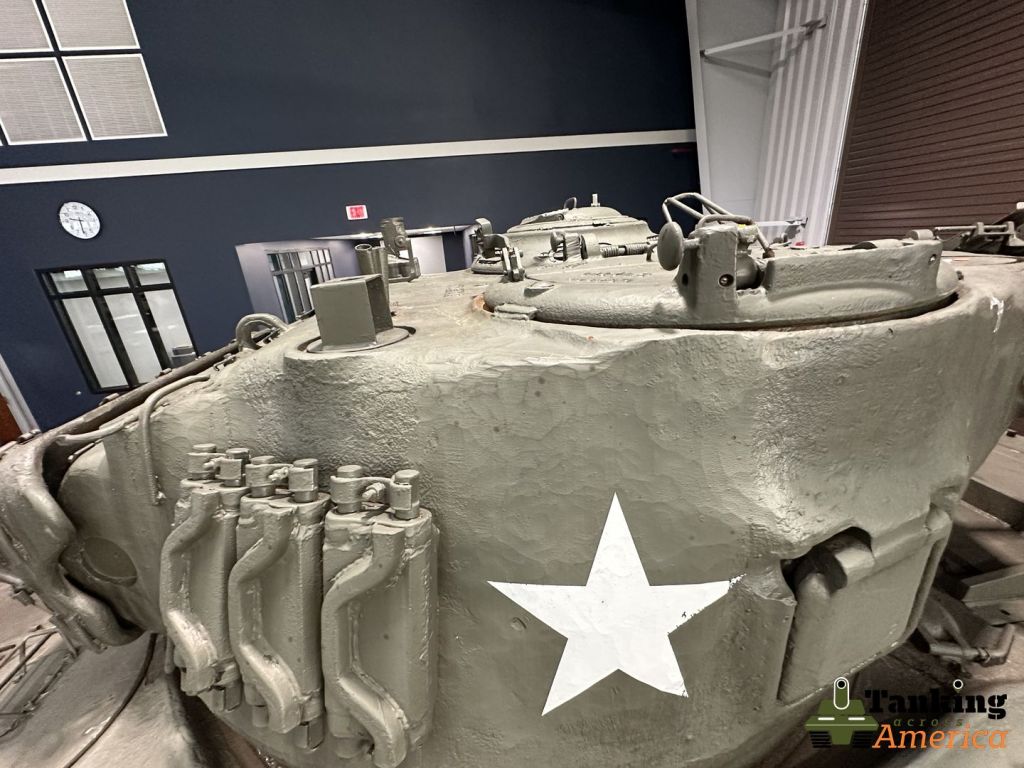
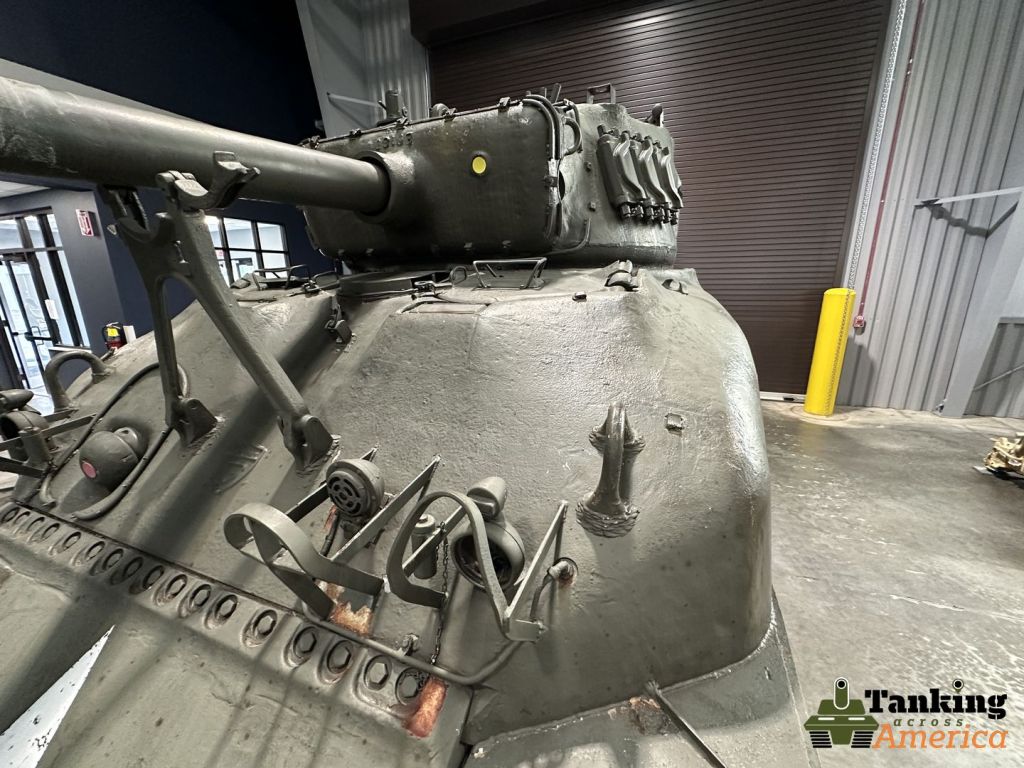
This past fall, history rolled back into the US Army Armor and Cavalry Collection—literally. After eight decades abroad, an American World War II tank has made its way home from Europe. This is no ordinary Sherman, but a rare M4A1(76)W, one of the first U.S. tanks to carry the longer and more powerful 76 mm M1 gun.
The Sherman’s Role in WWII

The M4A1(76)W represented a significant upgrade to the iconic Sherman line, offering increased firepower to meet the evolving challenges of armored warfare. These “up-gunned” Shermans first saw combat in Operation Cobra, the Allied breakout from Normandy in the summer of 1944.

In 1944 alone, the Pressed Steel Car Company produced 2,171 of these tanks, followed by 1,255 more in 1945 that featured the later horizontal volute suspension system. But of all those thousands, the one that just arrived in our care holds a unique distinction.

The Oldest Known Survivor

The newest arrival is only the fourth M4A1(76)W ever built—and the oldest surviving example known today. Constructed in January 1944, it was shipped to the United Kingdom in April 1944 and assigned to an American unit by July 1944, just in time for Operation Cobra.

After the war, it received upgrades and modifications before embarking on a new chapter in the early 1950s as part of the U.S. Mutual Defense Assistance Program, likely serving in the French military. Eventually, it was returned to the U.S. Army and placed as a monument at the American base in Baumholder, West Germany, where it stood sentinel for decades.

From Europe to the Collection

Now back on U.S. soil, the M4A1(76)W has taken up a temporary position in one of the restoration bays. The goal is to present it in the wartime paint scheme of “In the Mood.” While its journey home marks an important milestone, the mission is far from over—the goal is to restore it for near time display in 2025, honoring its combat service and historical significance.

Steel and Legacy: The M46 Patton Tank at the First Division Museum

Introduction
In the leafy grounds of Wheaton, Illinois, where Cantigny Park unfolds as both sanctuary and memorial, stands a formidable relic—the M46 Patton tank. Nestled within the tank park of the First Division Museum, this Cold War-era war machine quietly tells a story of innovation, conflict, and remembrance.

A Brief History of the M46 Patton
Emerging from the shadow of World War II, the M46 Patton was conceived as a superior successor to the M26 Pershing. Updated with a more powerful Continental AV‑1790 engine and a refined 90 mm gun, it offered superior speed, maneuverability, and firepower during the Korean War—proving its worth against rugged Soviet-made T‑34/85s and supporting combat operations long after hostilities had ceased.

A Feature in the Tank Park
Today, the M46 Patton is a highlight of Cantigny’s immersive Tank Park—an open-air collection of military vehicles where, uniquely, visitors are encouraged to climb aboard and explore. It’s part of a dozen or more tanks displayed in the park, with each offering a tactile connection to First Division’s storied past.

Design and Specs Snapshot

  • Weight & Crew: Approximately 48.5 tons, operated by a five-person crew First Division Museum.
  • Armament: Fitted with a 90 mm main gun complemented by .30‑caliber and .50‑caliber machine guns in the turret and hull Wikipedia+3First Division Museum+3Wikipedia+3.
  • Performance: Powered by an 810‑hp air-cooled engine, it could reach speeds up to 30 mph with an operational range near 80 miles

Experiencing It Today
Visitors to Cantigny don’t merely observe the M46—they experience it. The museum’s hands-on approach brings history to life, allowing one to literally climb into the past. The surrounding gardens, interactive exhibits, and reminders of the First Infantry Division’s service—from WWI to modern times—frame the M46 as both education and tribute First Division Museum+8We Are The Mighty+8artsdupage.org+8.

Why It Matters

  • A Technological Bridge: The M46 represents a pivotal shift between WWII and Cold War tank design, blending inherited strengths with enhanced mobility and firepower.
  • Legacy of the First Division: As the 1st Infantry Division (the “Big Red One”) fought in Korea and beyond, the M46 played a key role in reinforcing American armored doctrine and battlefield resilience.
  • From Combatant to Classroom: Now static, this once-mobile war machine educates visitors—transforming lessons of strategy, engineering, and sacrifice into something felt.

Conclusion
At Cantigny Park, the M46 Patton stands not as a mute steel artifact, but as a vibrant educator. It embodies the dual heritage of military innovation and historical remembrance. Climb up, run your hands along its cold steel, sit in the driver’s seat—and for a moment, feel time reverse, and the tank return to its true purpose.

Introducing the T88 105 mm Howitzer Motor Carriage

At the United States Army’s Ordnance Training Support Facility, located at Fort Lee, you can find the last remaining T88, 105 mm Howitzer Motor Carriage, in existence. This track is based upon the M18 Hellcat. The US Army has recently allowed for Open House events to be held the Ordnance Training Support Facility and I was able to attend the first of these.

Enjoy these photos and history. There are additional Open House days in the future so keep an eye on the Fort Lee Facebook page for details. Also, look for additional posts on the vehicles and items at the Ordnance Training Support Facility. It is quite an amazing place.

In late 1944, the U.S. Ordnance Department initiated a project to adapt the high-speed M18 Hellcat tank destroyer chassis into a mobile artillery platform. The goal: mount a 105 mm M4 howitzer to deliver direct fire support with Hellcat‑like agility. The result was the T88 HMC—an open-topped prototype that married firepower to mobility. Work began on 31 August 1944, and two pilot vehicles were completed and tested at Aberdeen Proving Ground before the project was ultimately canceled at war’s end.

Design & Features

  • Main Armament: The standard 76 mm gun was replaced with the 105 mm M4 howitzer, a weapon originally developed for Sherman tanks. An elevation gyro-stabilizer was added for improved firing stability on the move.
  • Turret Modifications: The crew layout changed—gunner moved to the right of the gun. A new pedestal mount replaced the M18’s ring mount for the coaxial .50‑cal machine gun. An emergency peephole sight and a panoramic telescope shooter’s sight were installed.
  • Ammunition Capacity: Stored 16 rounds ready in the turret and another 24 rounds in sponsons—total 40 rounds of 105 mm ammunition.
  • Chassis & Mobility: Retained the lightweight, fast M18 Hellcat running gear. Armor remained minimal (7–19 mm), trading protection for speed. Top speeds were in the 80 km/h range.

A variant, the T88E1, tested the lighter 105 mm T51 howitzer and concentric recoil system, reducing turret weight and internal clutter.

Comparison Table: T88 vs. M18 Hellcat

FeatureT88 105 mm HMCM18 Hellcat
Chassis BaseM18 HellcatM18 Hellcat
Main Armament105 mm M4 howitzer (gyro-stabilized)76 mm M1A1 gun
Crew LayoutGunner on right; open turretGunner on left; open turret
Ammunition Storage16 turret rounds + 24 hull (40 total)Approximately 45 rounds of 76 mm
Armor Thickness7–19 mm7–19 mm
Top Speed~80 km/h~80 km/h
Intended RoleMobile assault gun / fire supportFast tank destroyer
StatusPrototype; project canceled at war’s end2,500+ built; saw combat in Europe

Role & Intended Use

Unlike traditional tank destroyers like the M10 or M18—which focused on anti-armor gunnery—the T88 was conceived as a fast-moving assault howitzer, providing direct fire support for infantry and armor in fast-paced operations. Its stabilized 105 mm gun would have been effective against bunkers, trenches, and clustered enemy formations.

Why It Didn’t Move Beyond Prototype

Development of the T88 wrapped up just as WWII was coming to a close. With the shift in U.S. armored doctrine towards multi-role tanks (such as the M26 Pershing) and the success of conventional self-propelled artillery, the T88 was no longer a priority. Only two prototypes were built—no mass production ever took place.

Legacy and Influence

While the T88 never saw combat, its concept—a high-speed chassis armed with a large-caliber gun—anticipated postwar designs like the M56 Scorpion and later Cold War SPGs. It also influenced amphibious experiments such as the T87, which used the T88 turret on a floating M18 chassis for waterborne operations.

Final Thoughts

The T88 105 mm Howitzer Motor Carriage stands as an intriguing “what-if” in U.S. armored development—a hybrid of firepower and mobility built on one of the fastest chassis of WWII. Though it never entered service, the T88’s ambition and design innovations make it a fascinating footnote in the history of armored warfare.

Thumbnails of the Gallery of the M88.

The T1 Heavy Tank: America’s Early Heavy Armor Experiment

The United States Army’s Ordnance Training Support Facility, located at Fort Lee, you can find the last remaining T1 (T1E1/M6) in existence. The US Army has recently allowed for Open House events to be held the Ordnance Training Support Facility and I was able to attend the first of these.

Enjoy these photos and history. There are additional Open House days in the future so keep an eye on the Fort Lee Facebook page for details. Also, look for additional posts on the vehicles and items at the Ordnance Training Support Facility. It is quite an amazing place.

When World War II erupted in Europe, the U.S. Army recognized its existing tanks wouldn’t withstand modern battlefield threats. In response, Project T1 began in spring 1940—to produce a 50-ton “land battleship” with potent firepower and heavier armor.

Prototypes & Evolution

Several T1 variants were produced during development:

Full production plans aimed for about 5,000 units, but only around 40–45 tanks were ever built.

T1E1: Featuring an electric-drive system and later known unofficially as M6A2; approximately 2–3 units built.

T1E2 & T1E3: Hybrid models using mechanical transmissions; standardized by mid‑1942 as M6 and M6A1 respectively .

Performance & Issues

  • Engine: Powered by a Wright G‑200 radial engine producing around 825–960 hp, paired with early hydromechanical transmissions, the tank struggled to reliably move its bulk.
  • Mobility: Speeds topped out around 23–25 mph on-road. However, drivetrain reliability remained a persistent issue.
  • Crew: Between 6 and 7 men were needed to manage its heavy weapons and systems efficiently.

Legacy & Historical Importance

Though never deployed in battle, the T1 program provided invaluable lessons—and set the stage for improved heavy‑tank designs like the M26 Pershing, which finally saw service in WWII’s final months.

Summary Table

FeatureSpecification
Weight~50 tons
ArmorUp to 83 mm
Armament76 mm + 37 mm guns, MGs
Crew6–7 men
Engine Power~825–960 hp
Top Speed≈ 23–25 mph
Production Quantity~40–45 units
Combat UseNone

Final Thoughts

The T1 Heavy Tank exemplifies a bold chapter in U.S. armored vehicle development—a bridging design between grandiose interwar ideals and pragmatic wartime production realities. Though overshadowed by more famous armored vehicles, it deserves recognition for pushing tank engineering forward. For enthusiasts and historians alike, the T1/M6 remains a testament to ambition, design evolution, and the lessons hard‑learned on the path to modern mobile warfare.