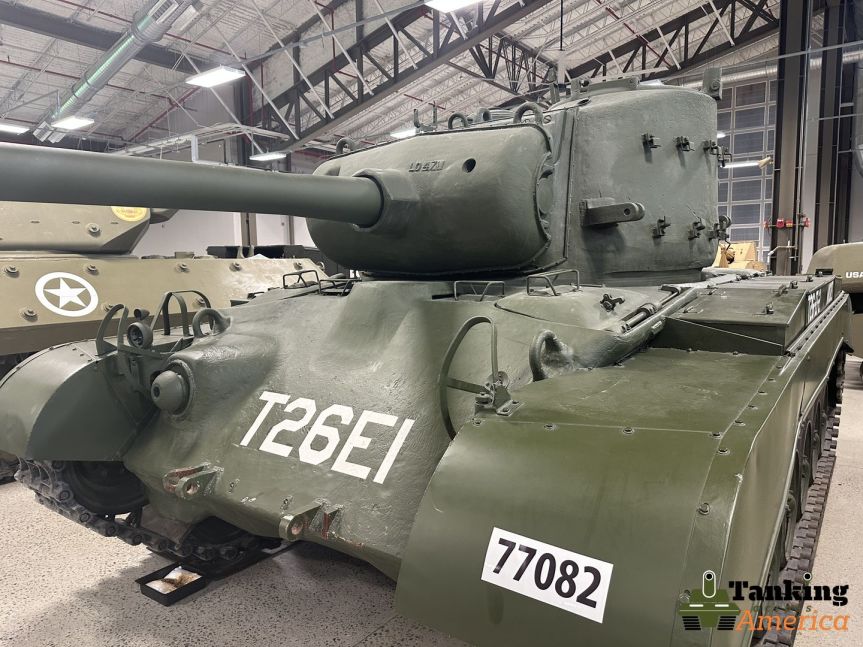
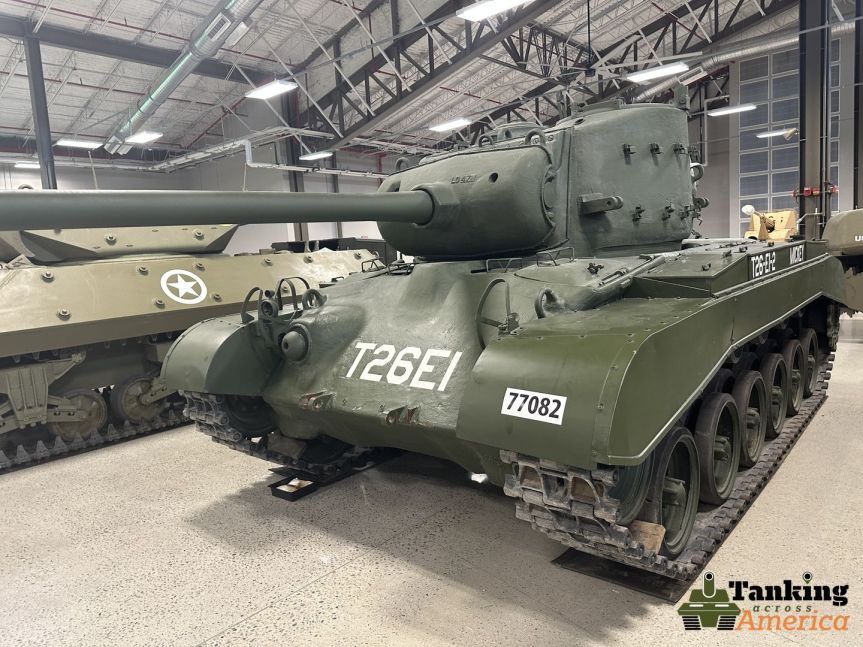
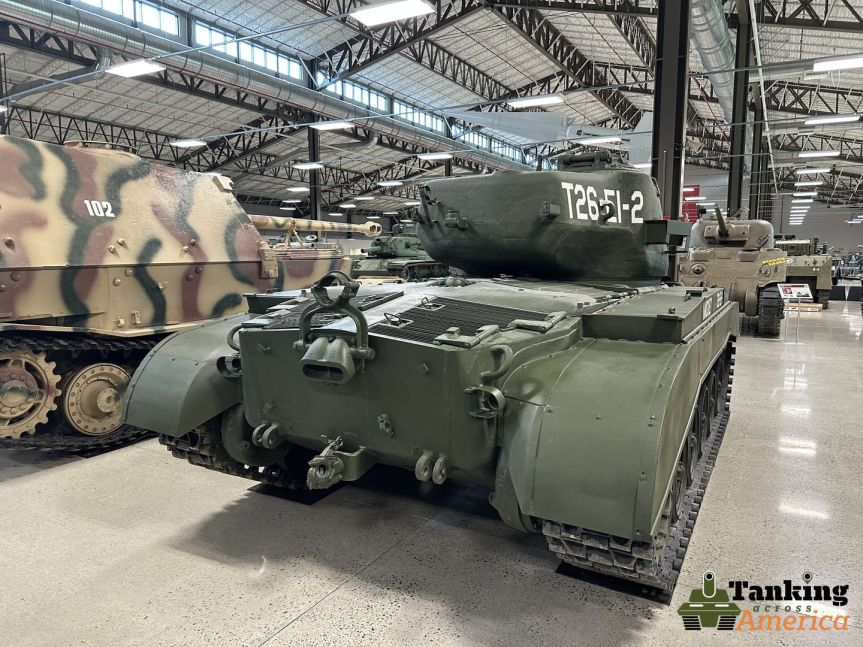
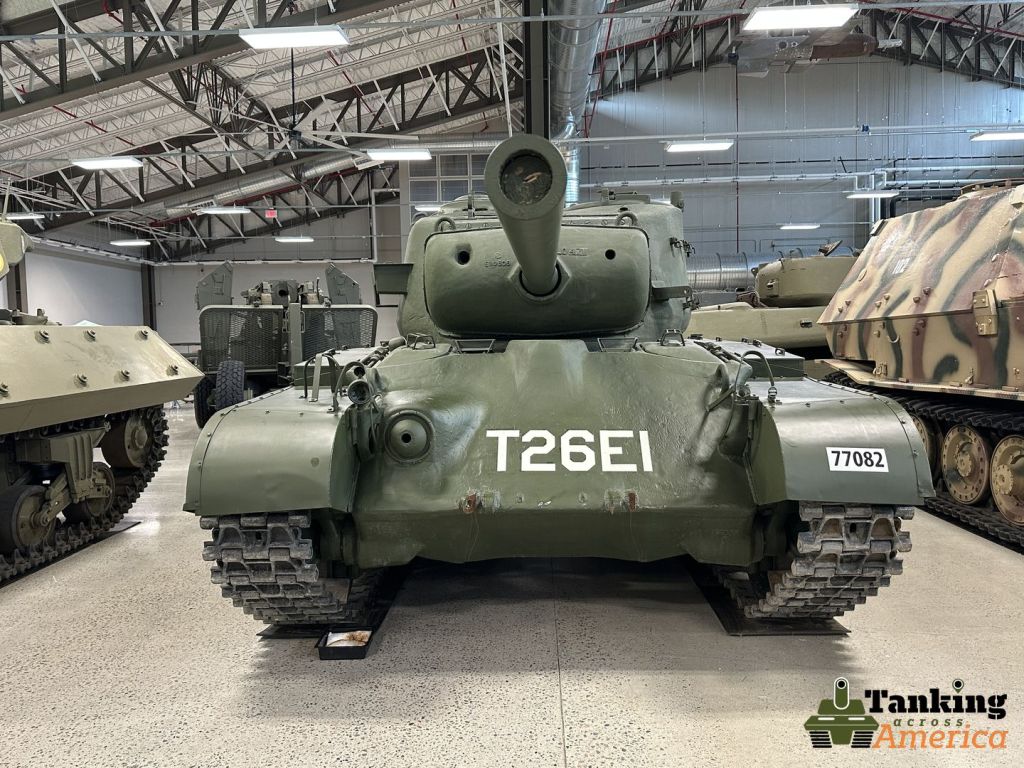
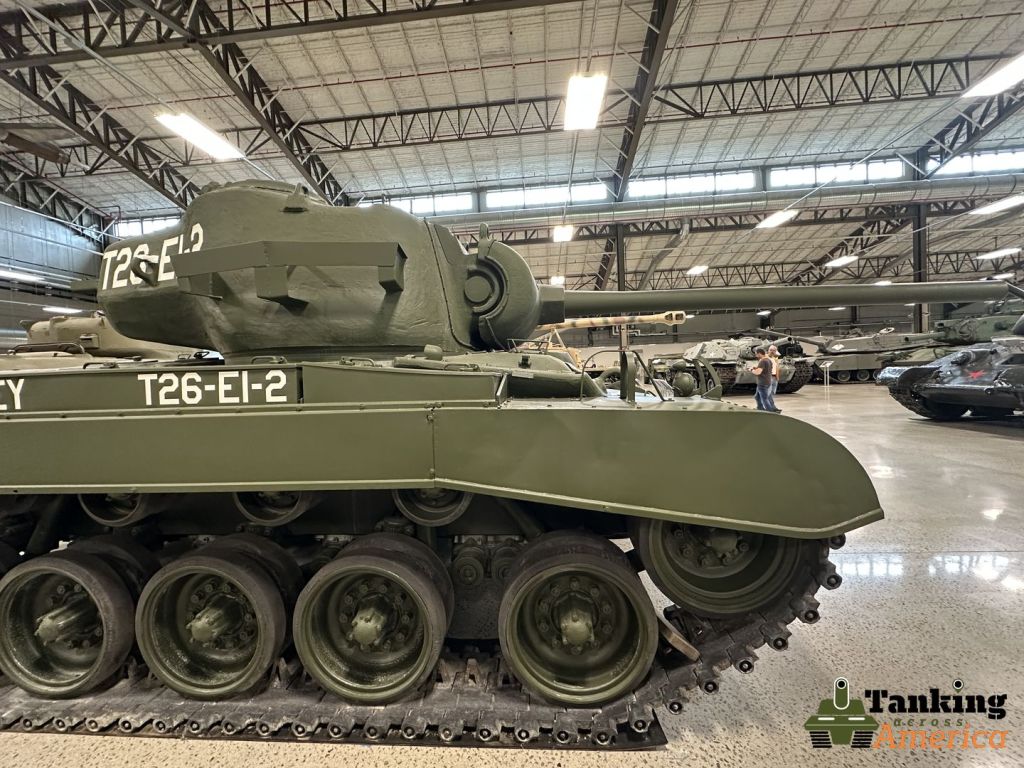
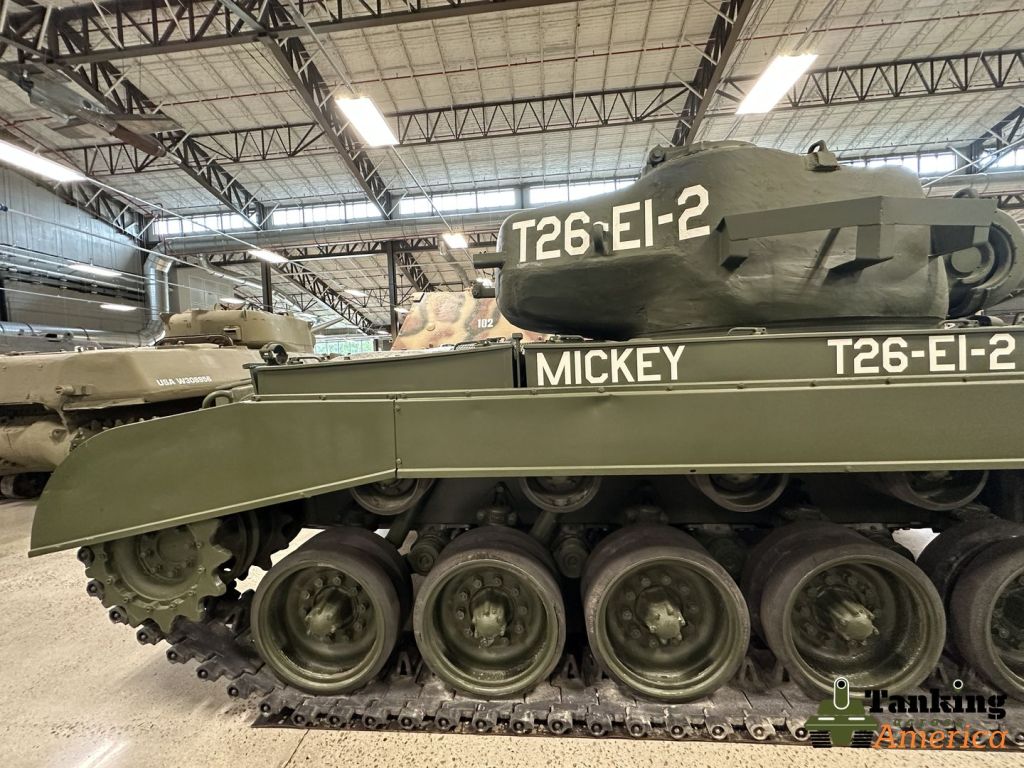
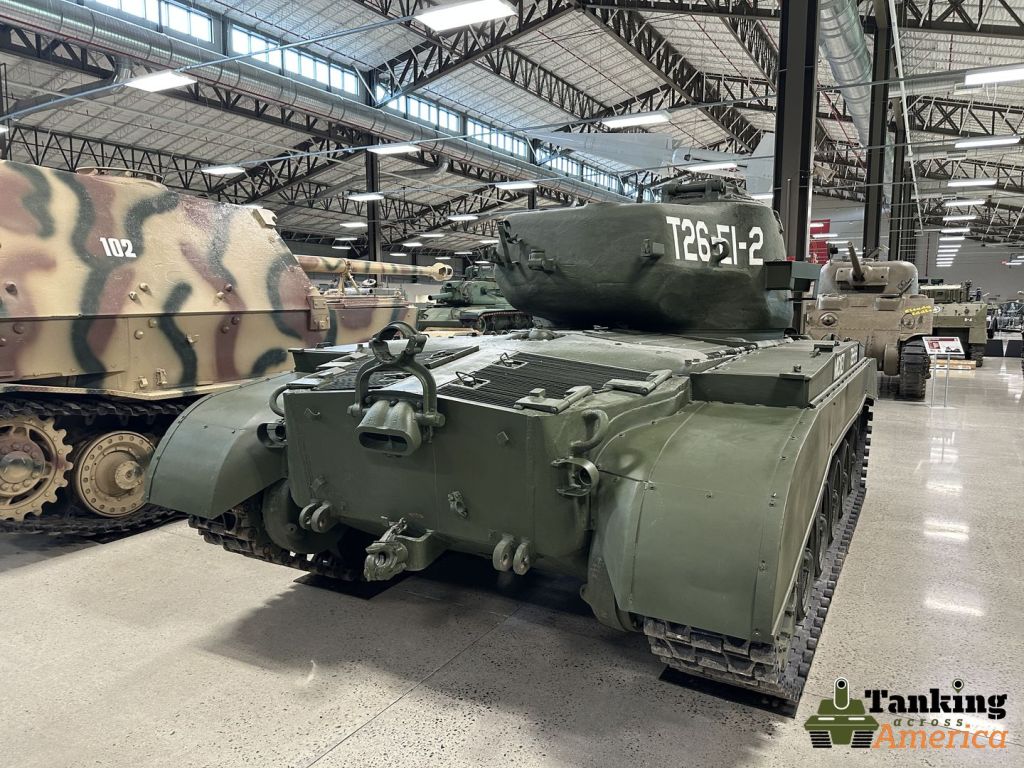
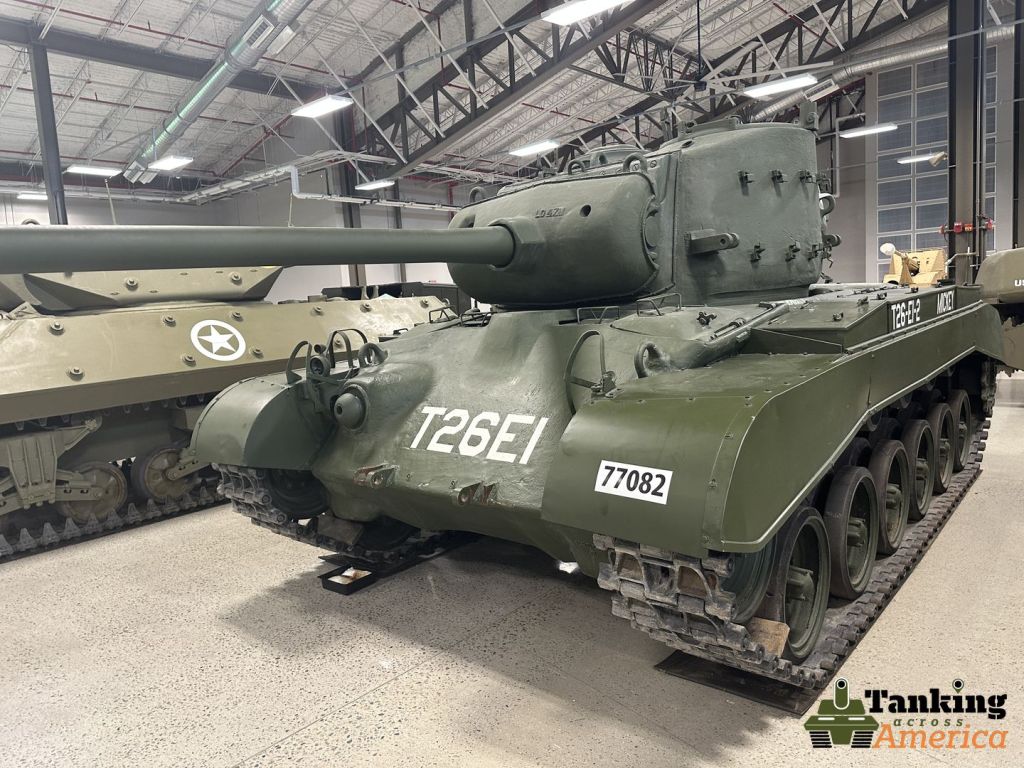
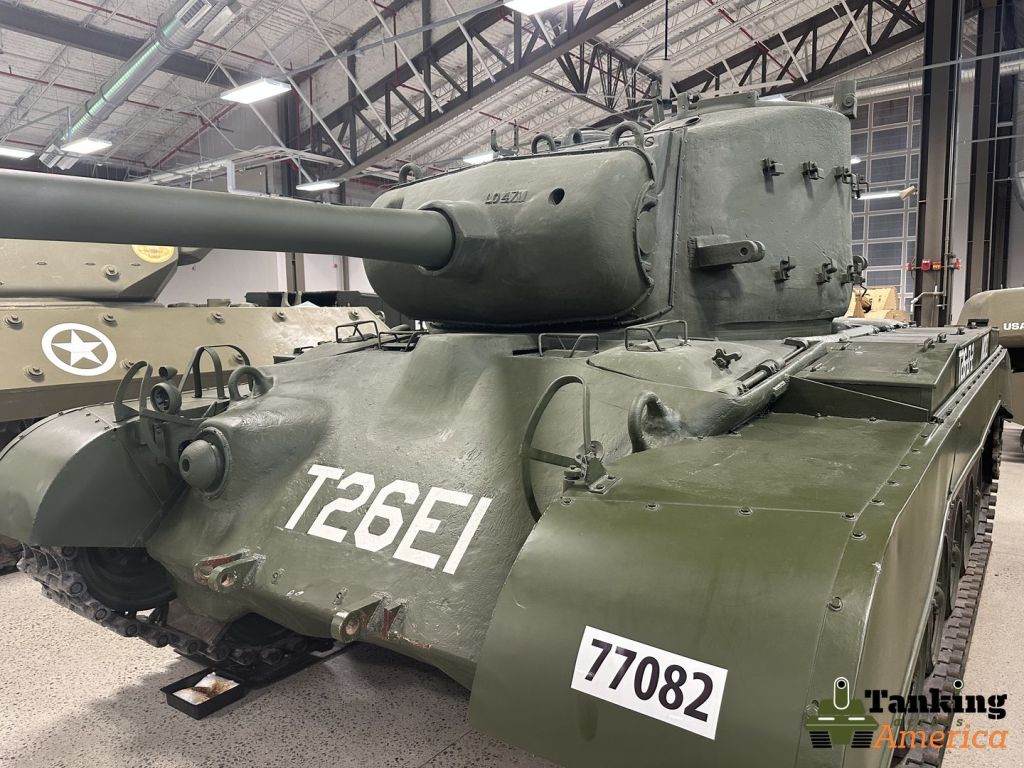
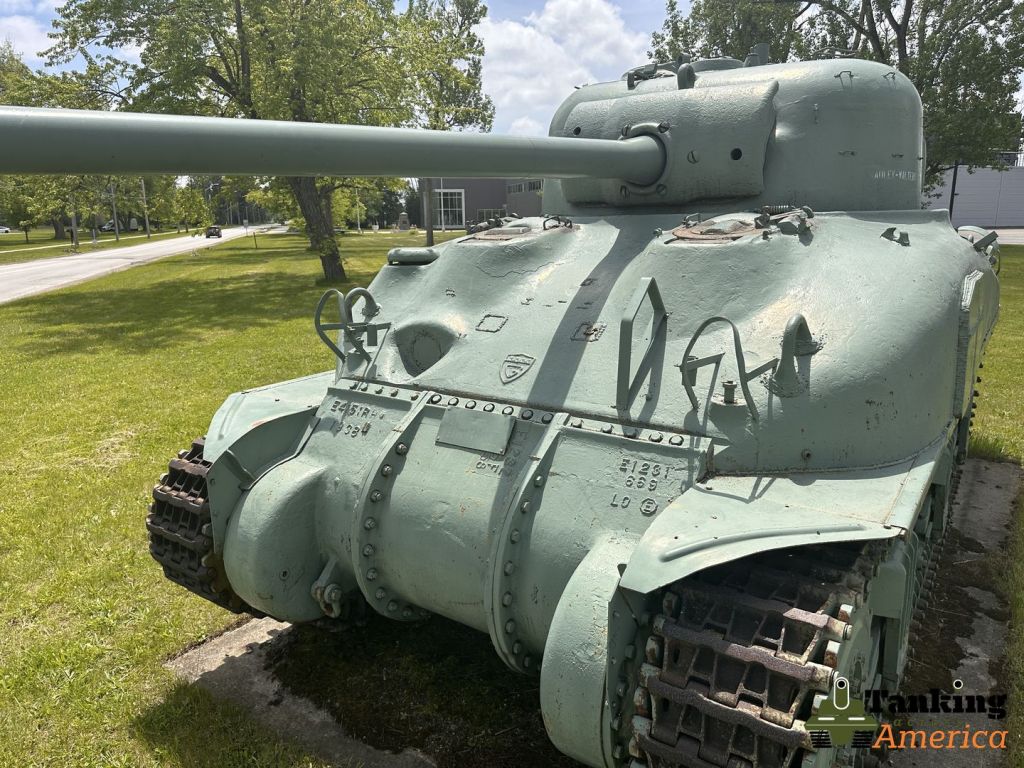
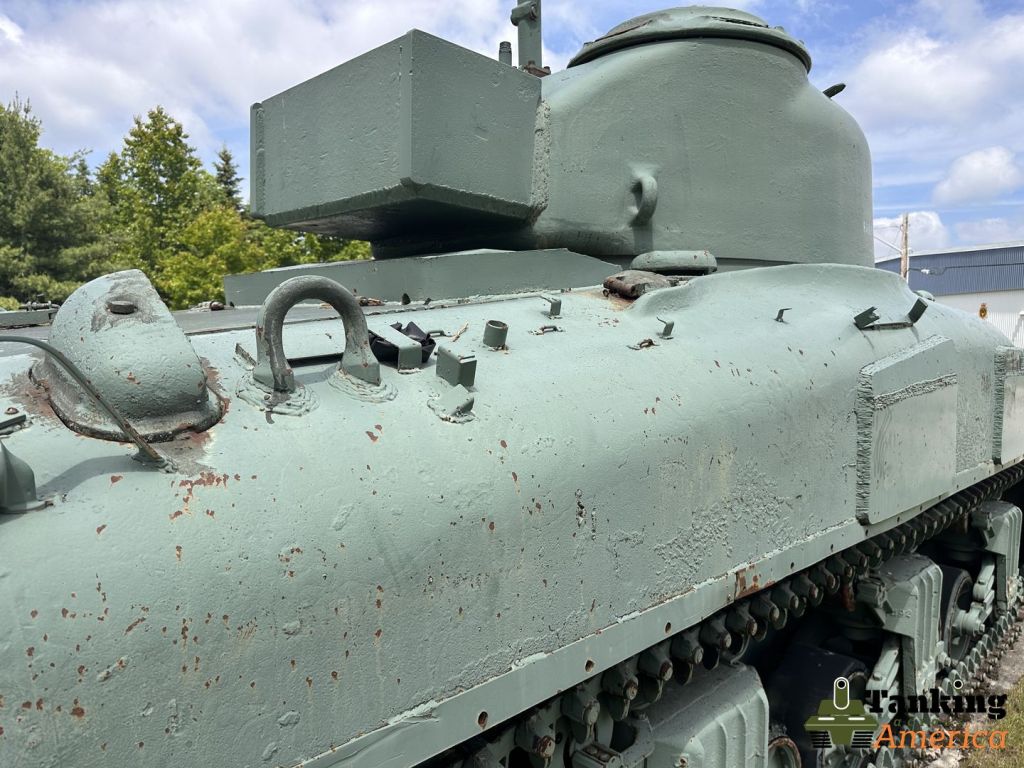
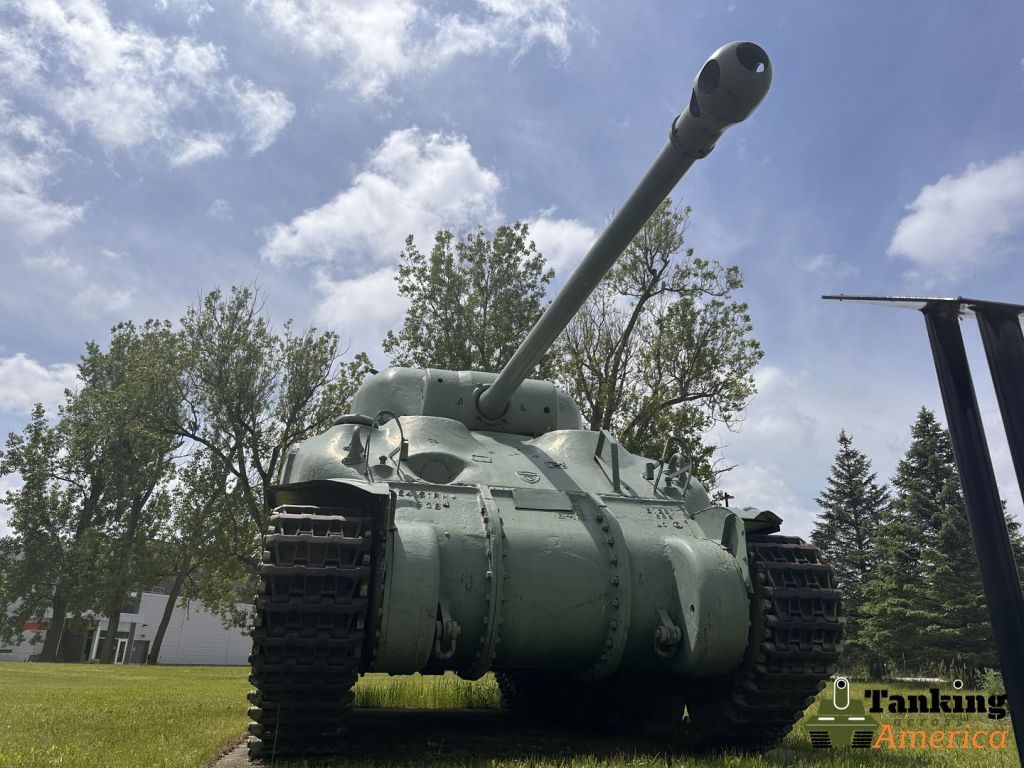
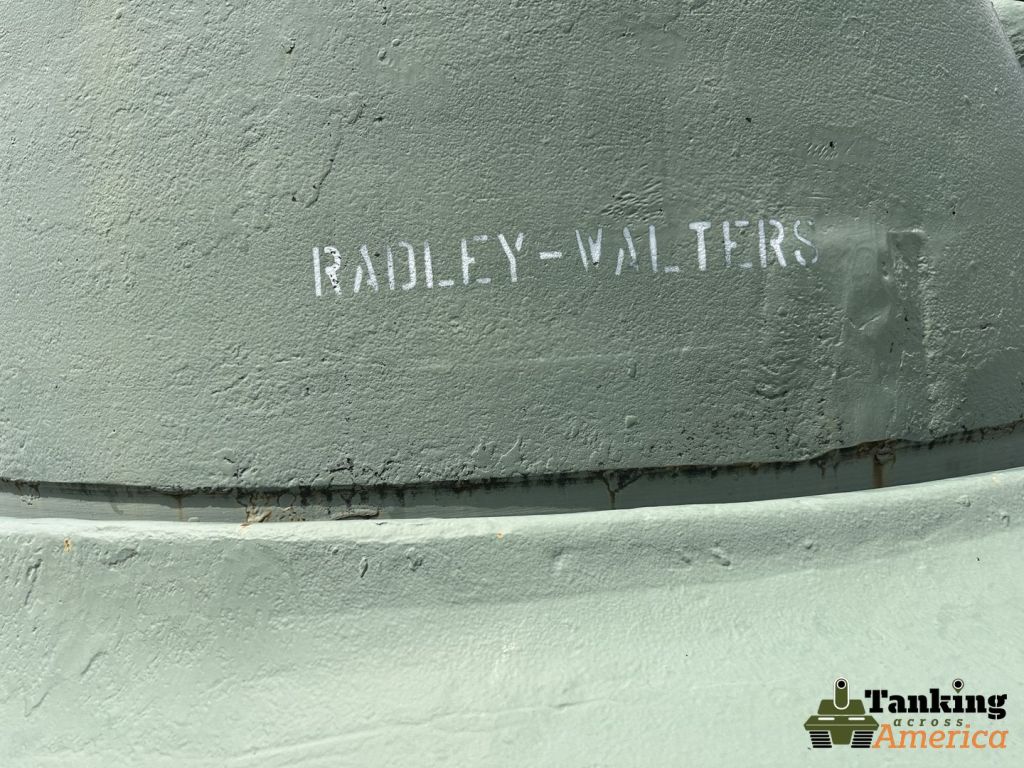
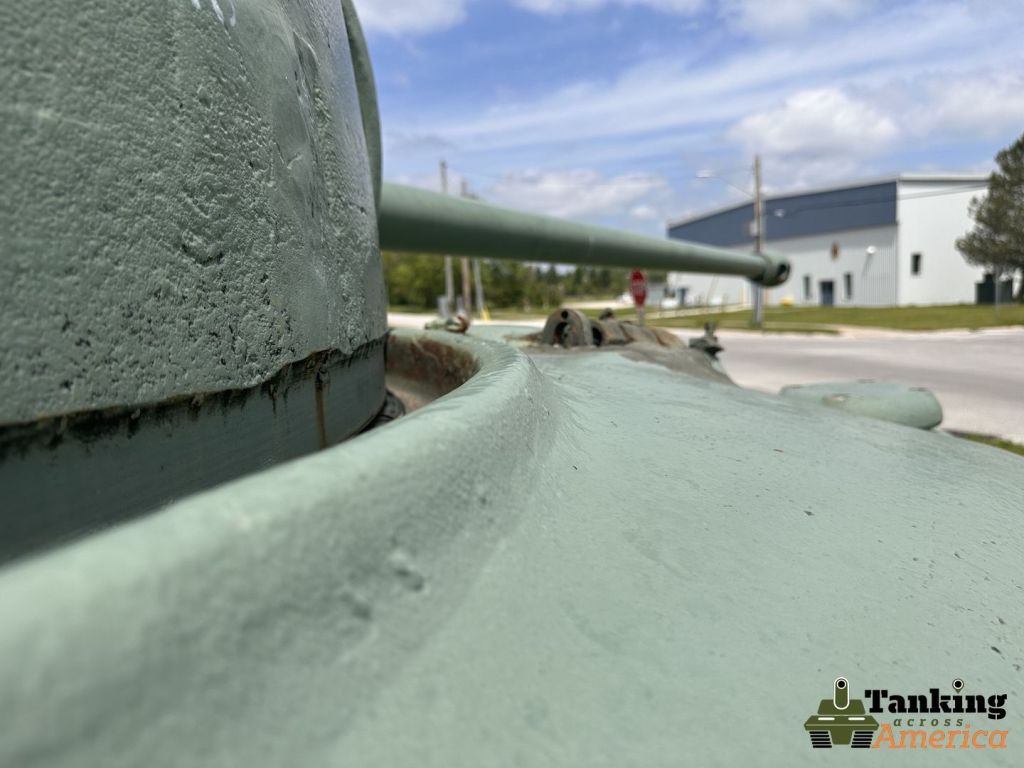
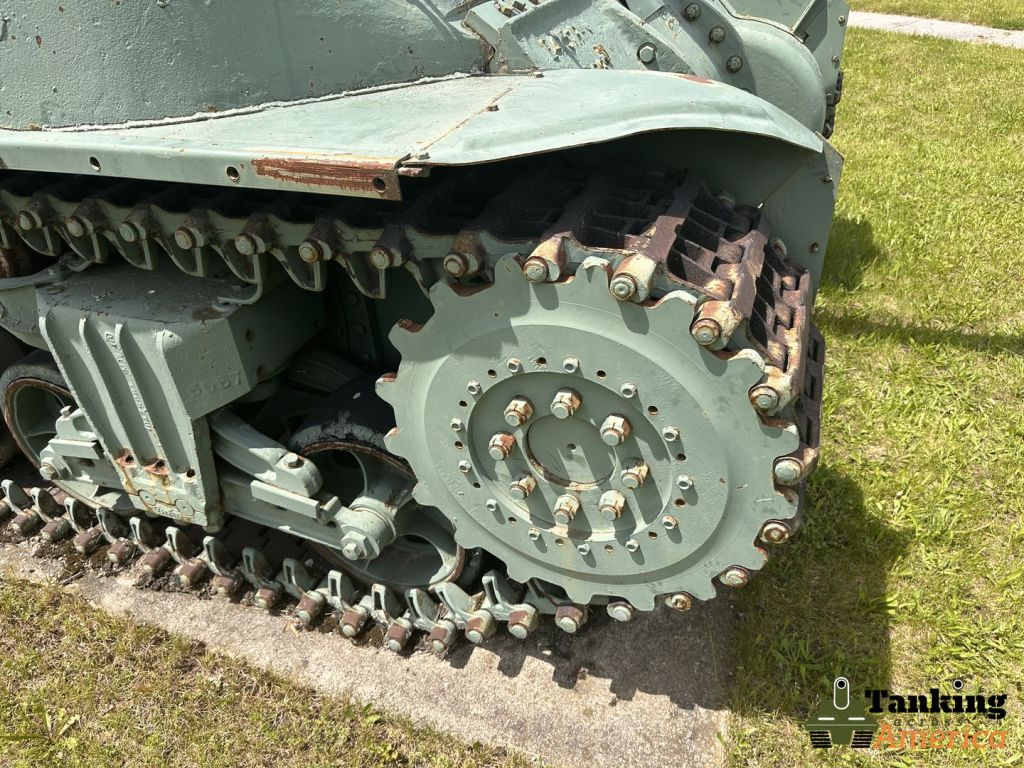
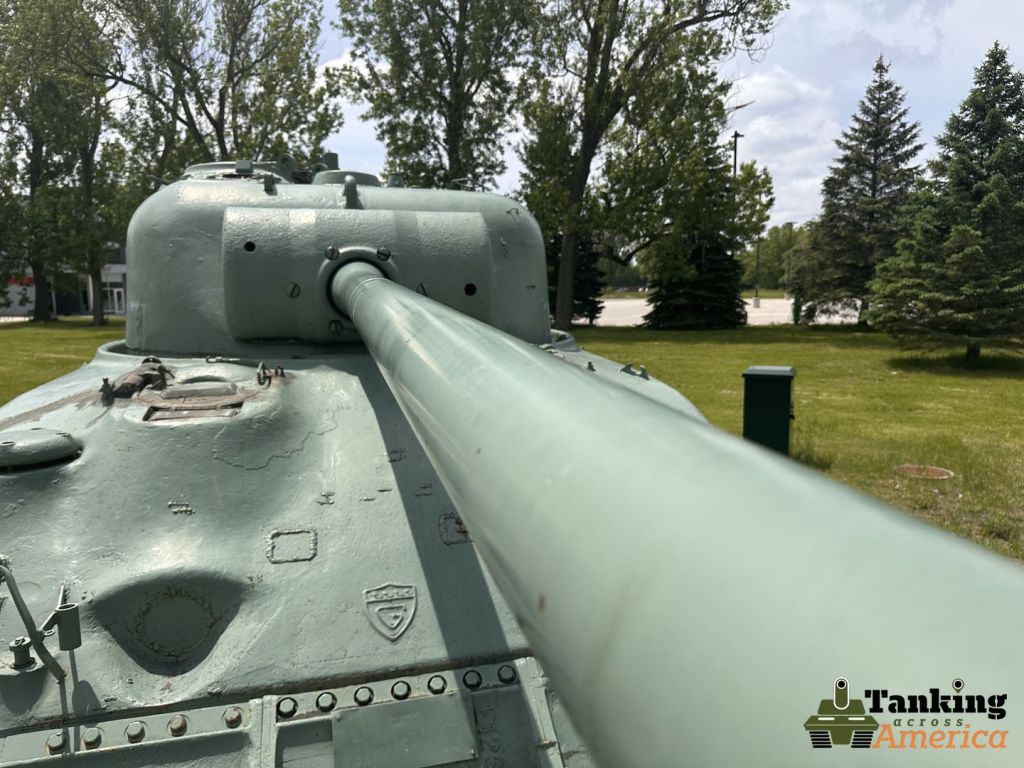
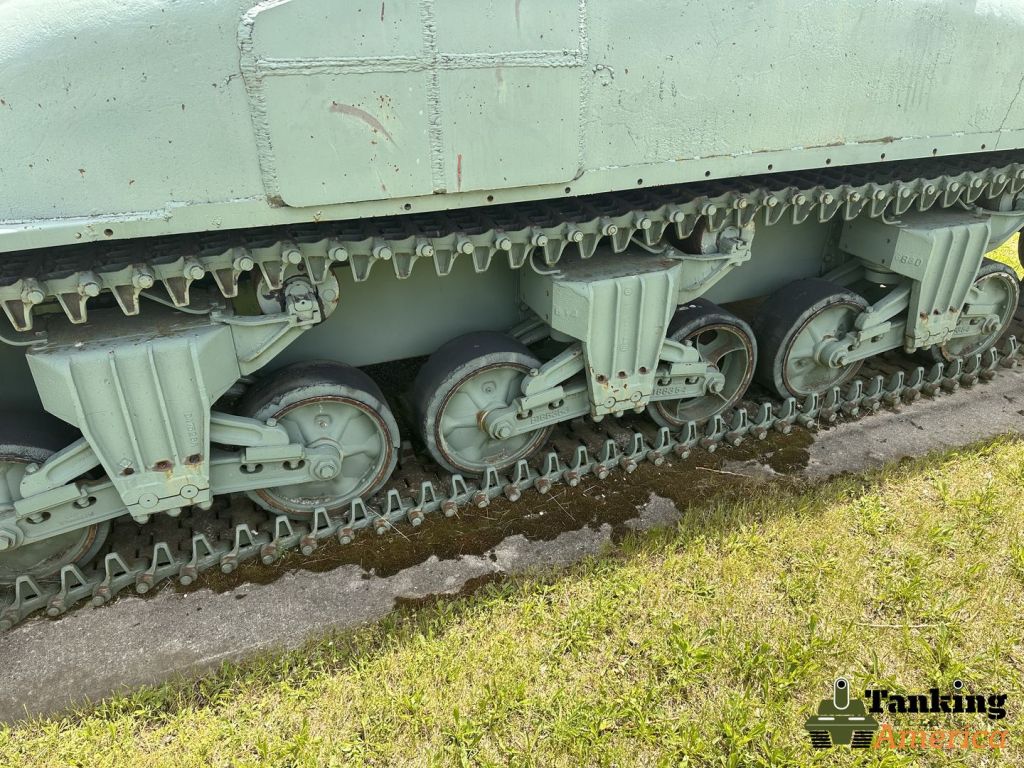
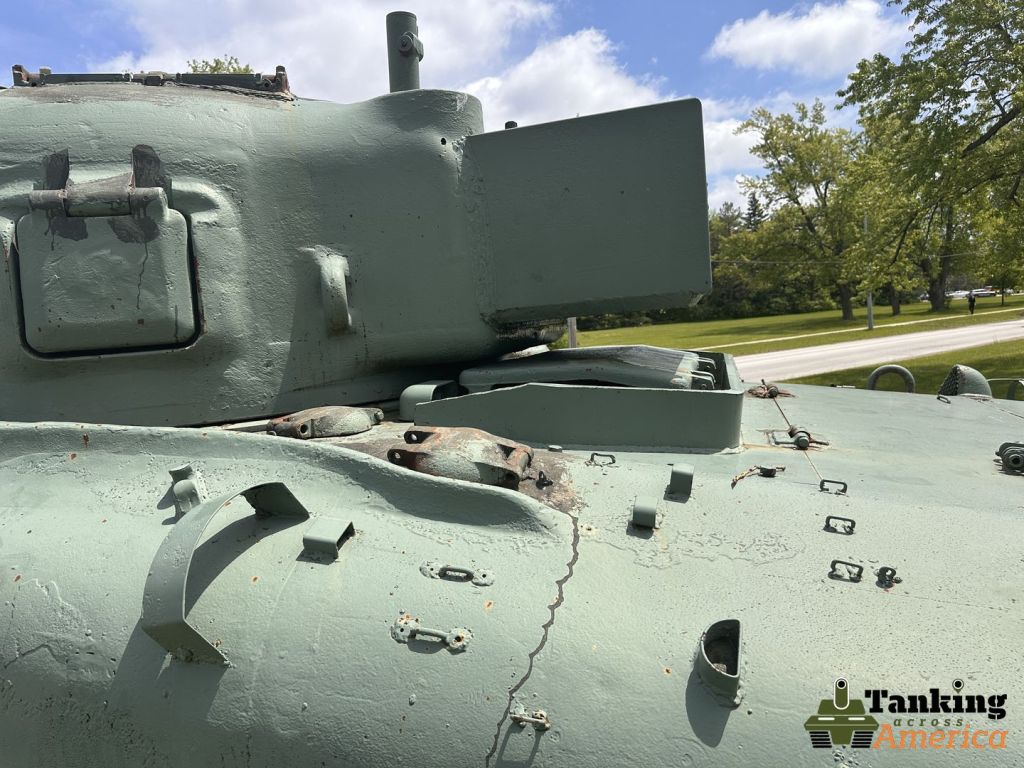
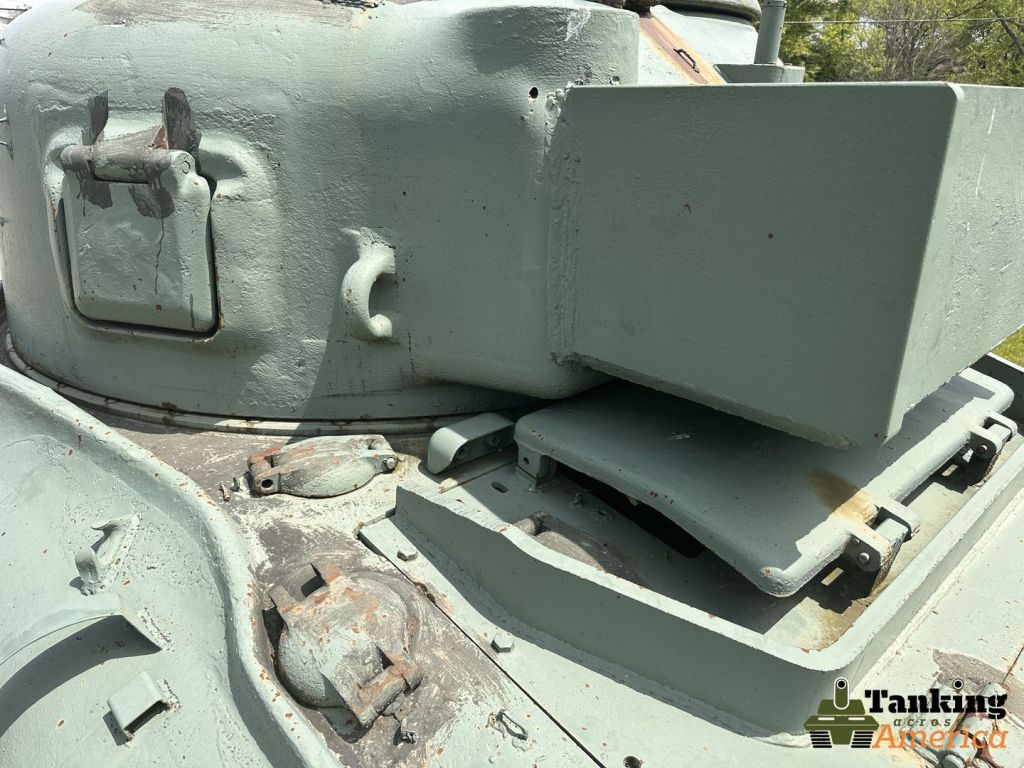
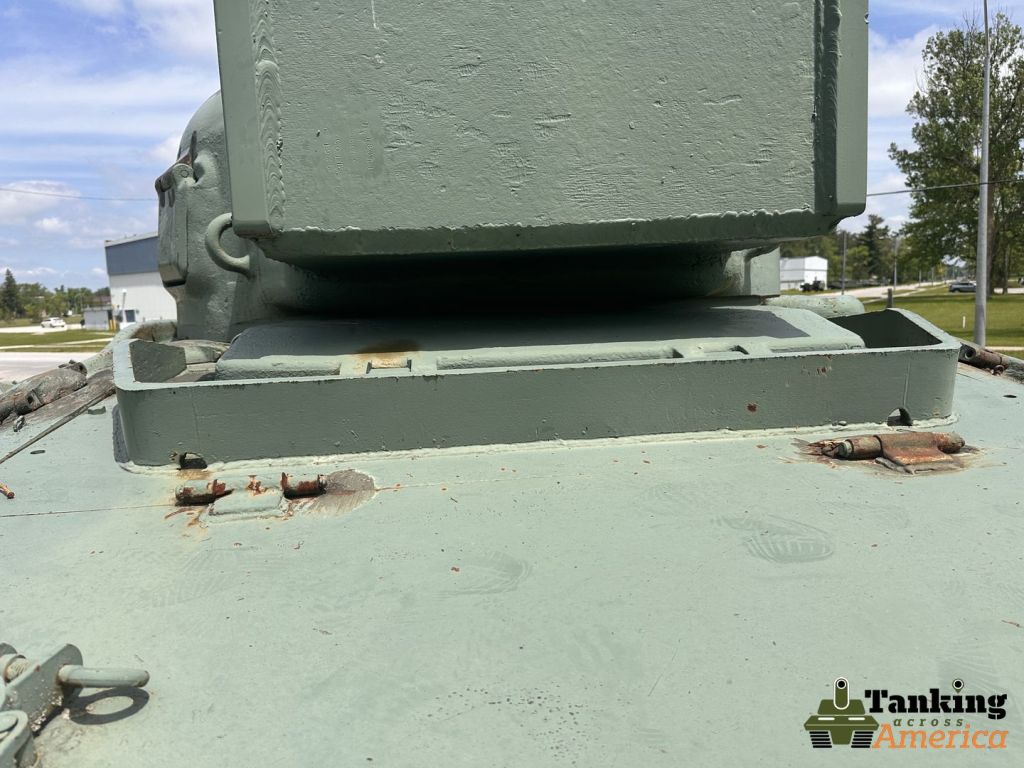
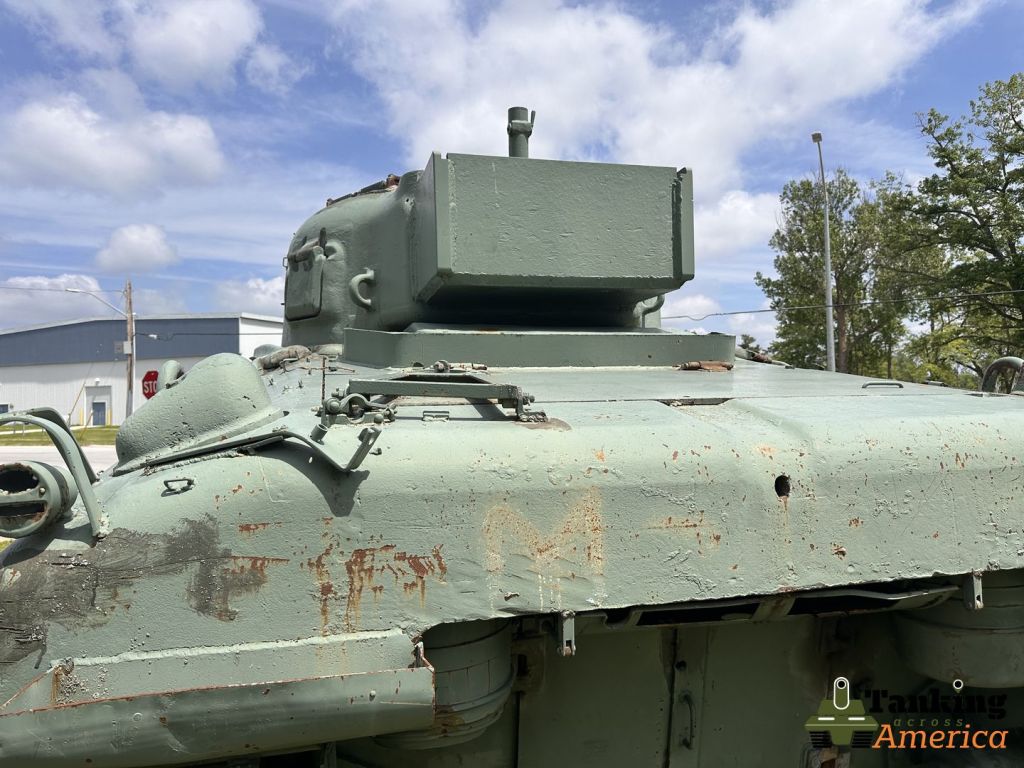
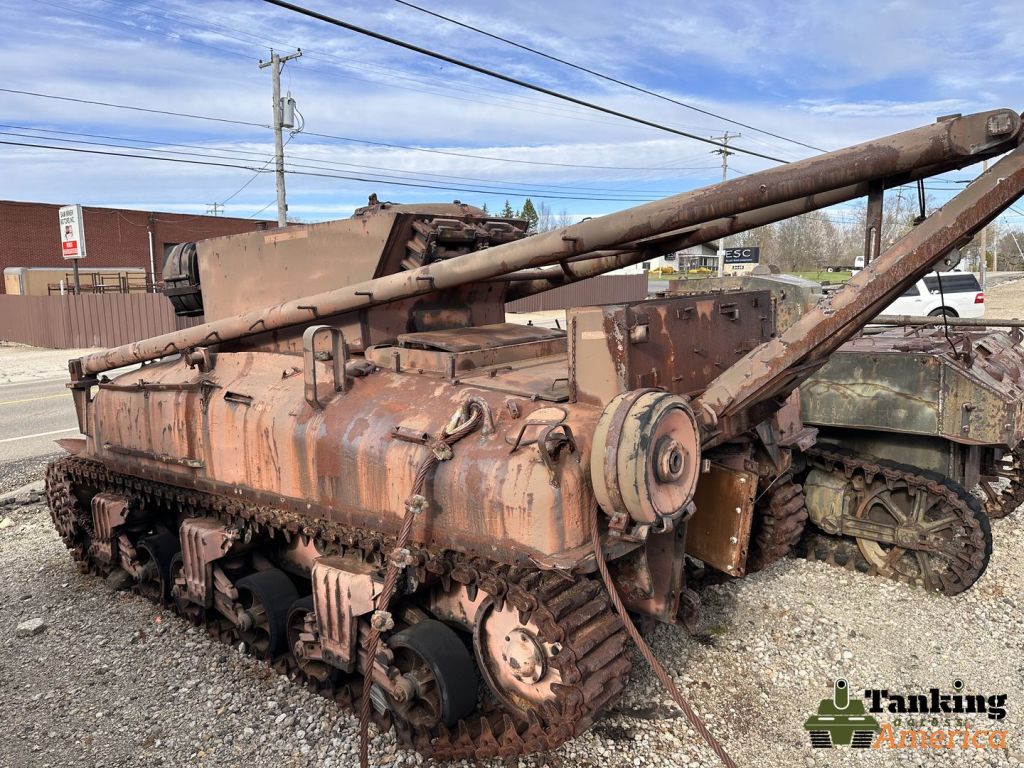
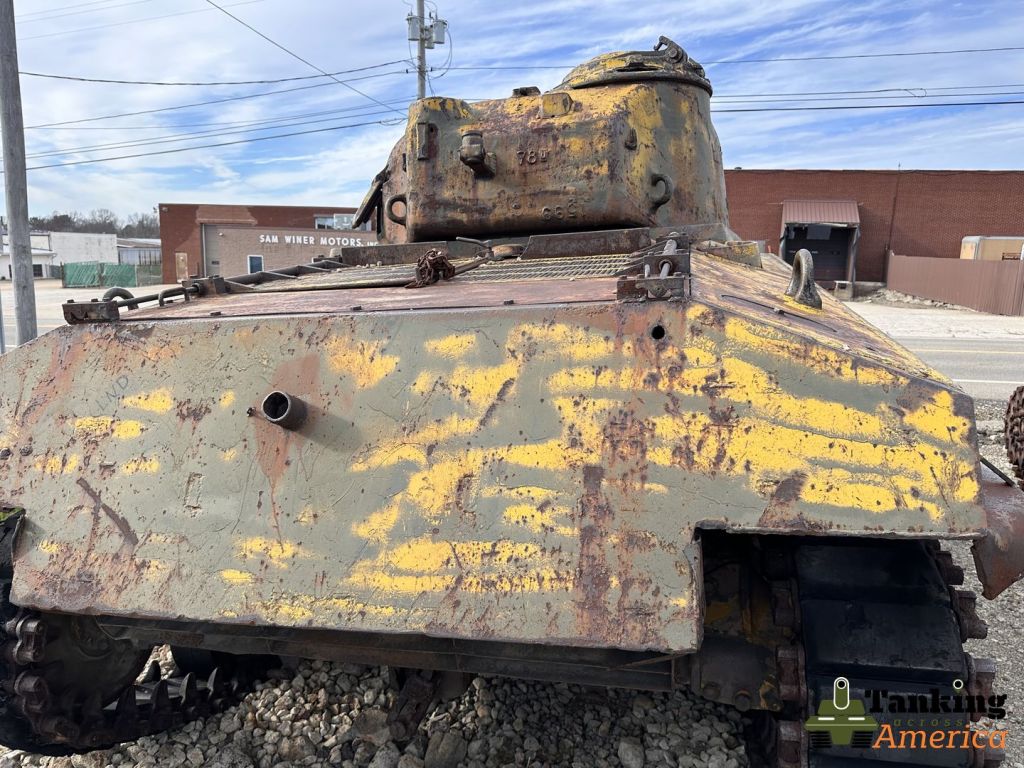
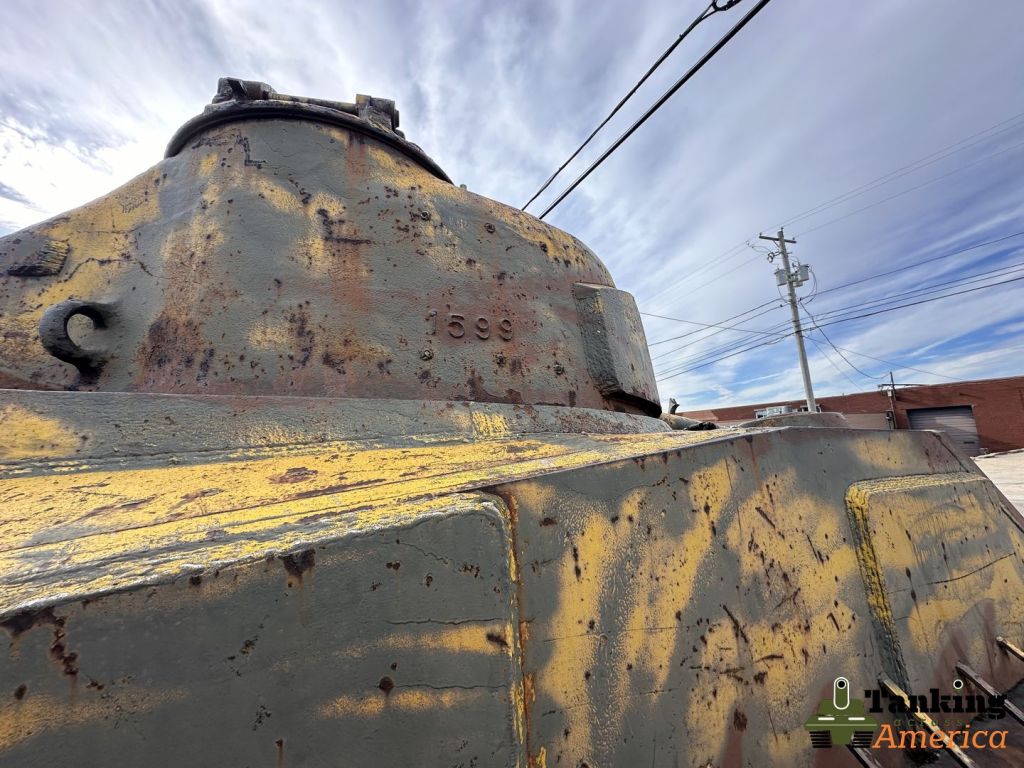
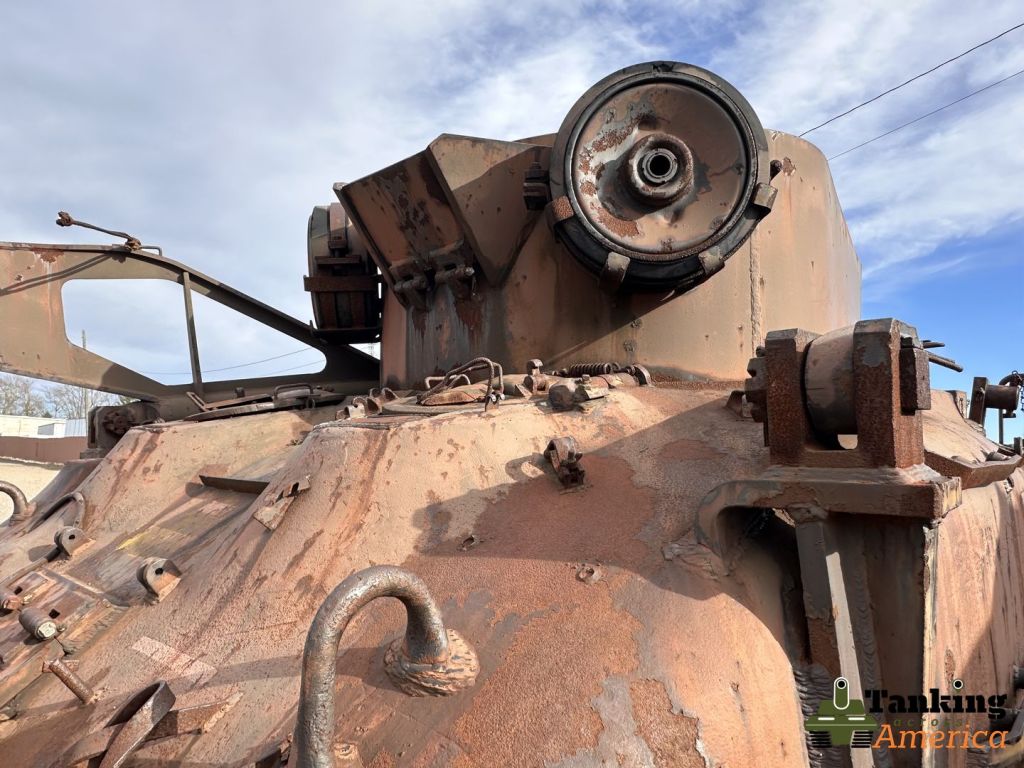
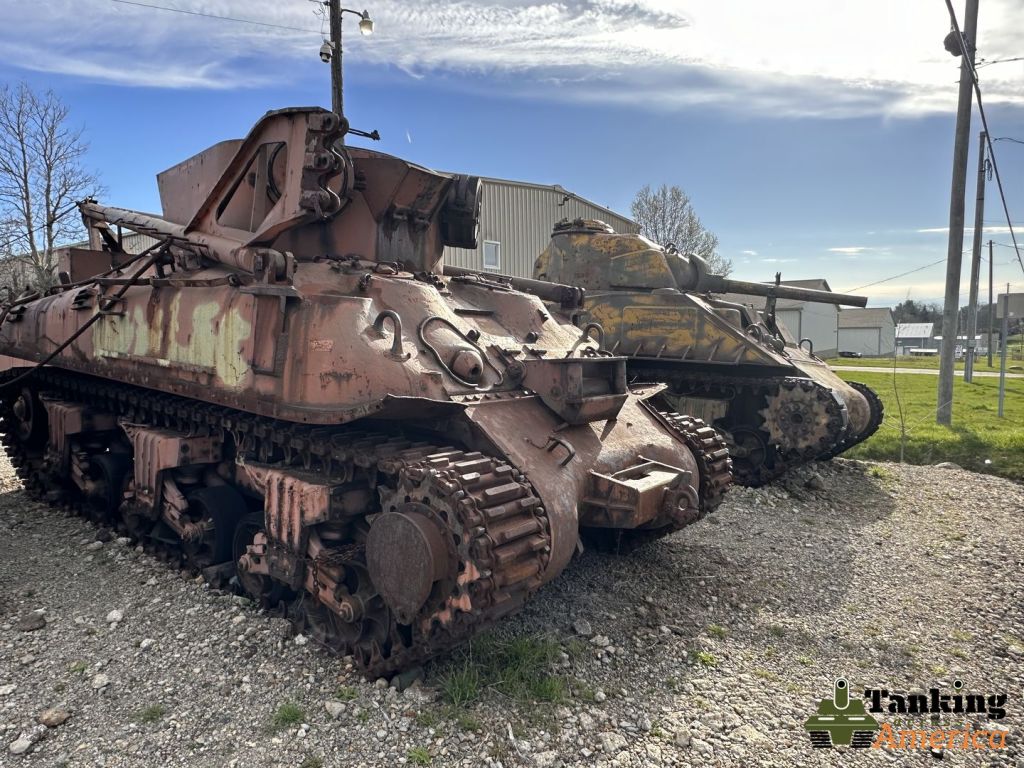
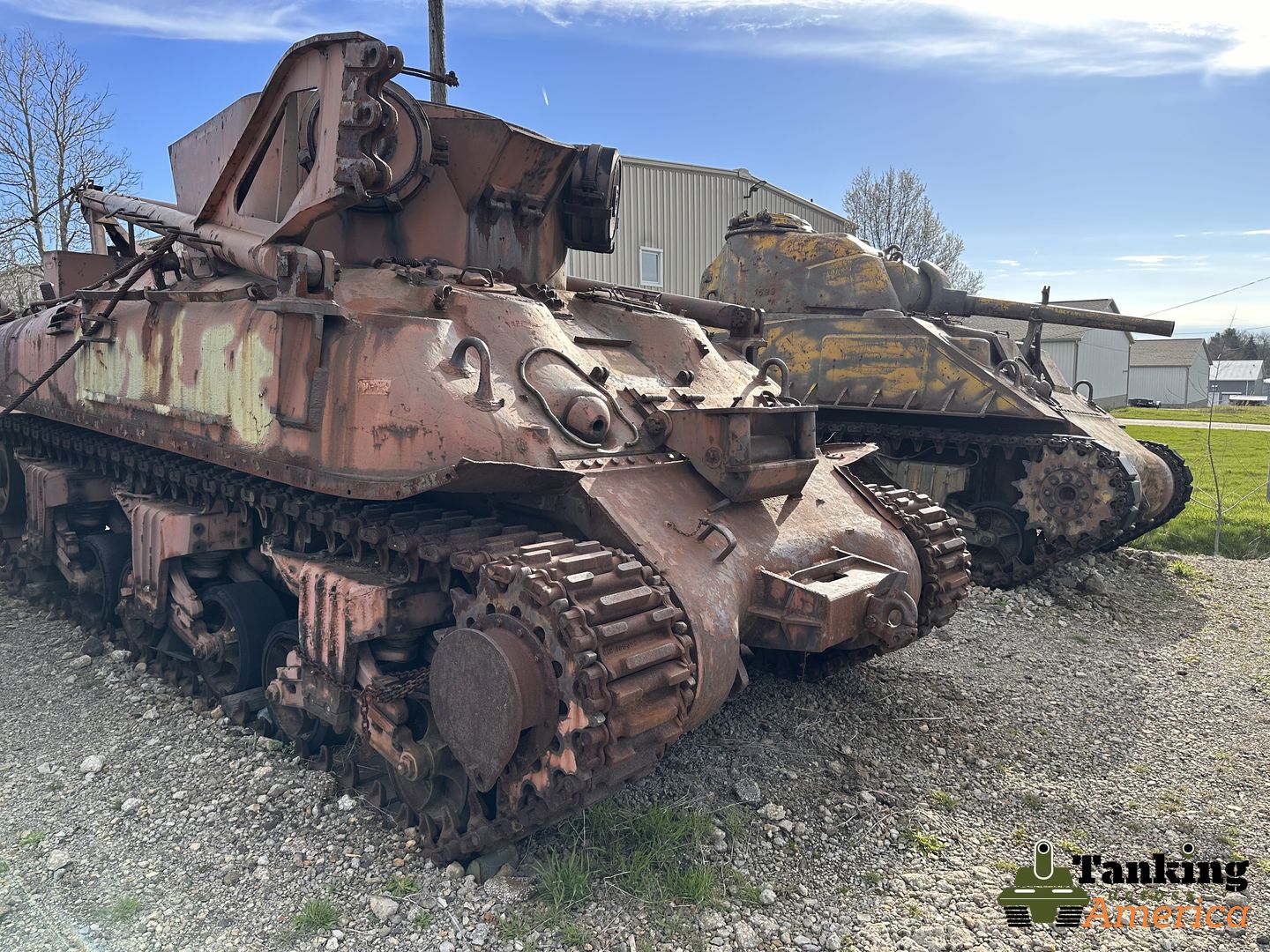
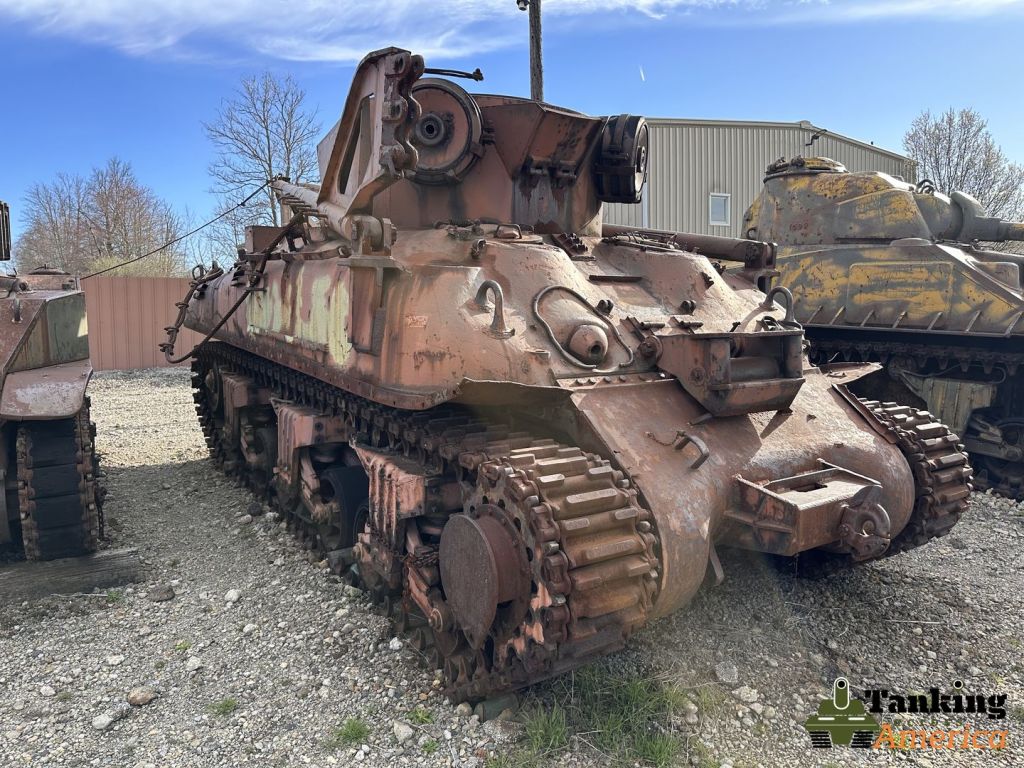
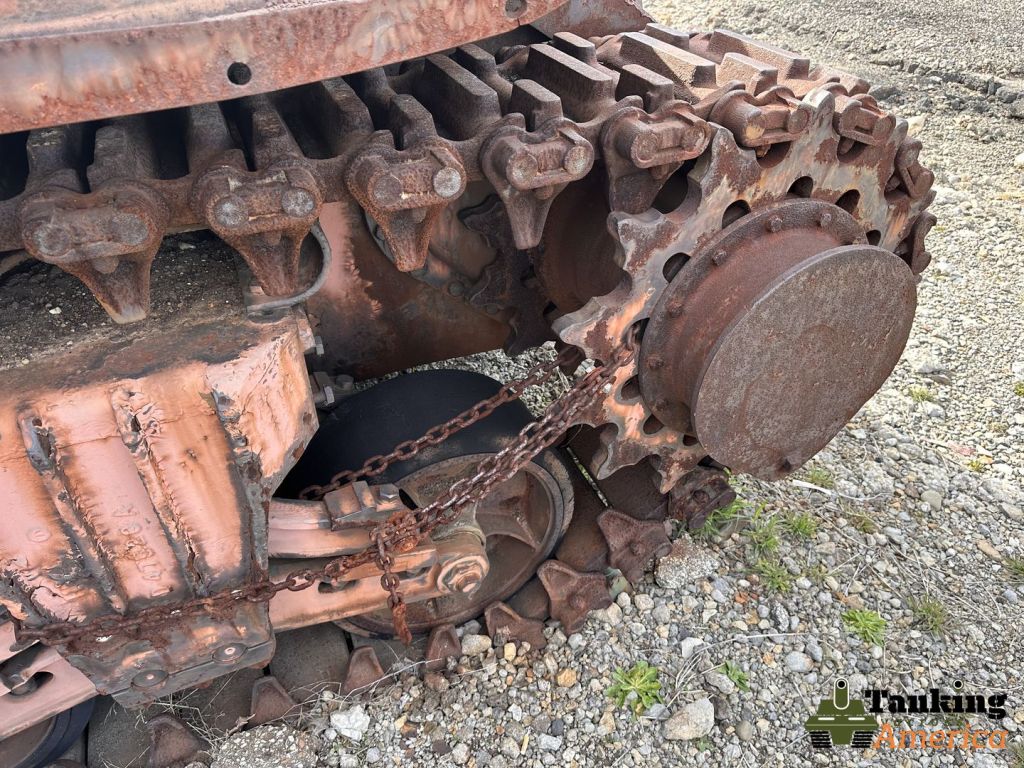
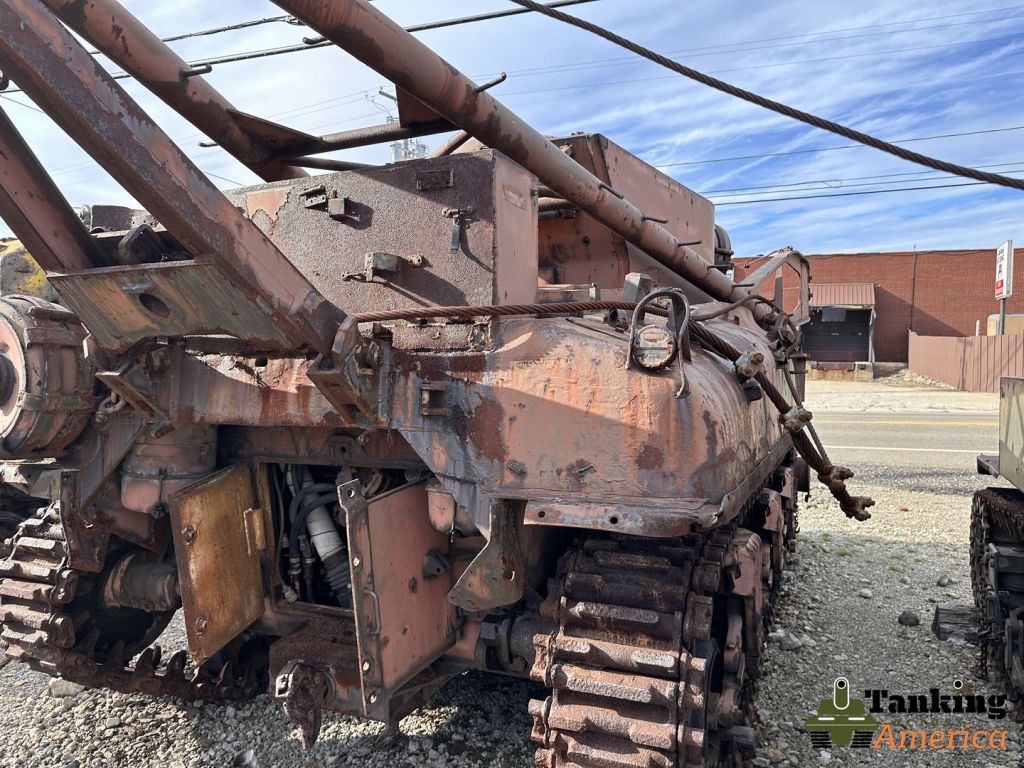
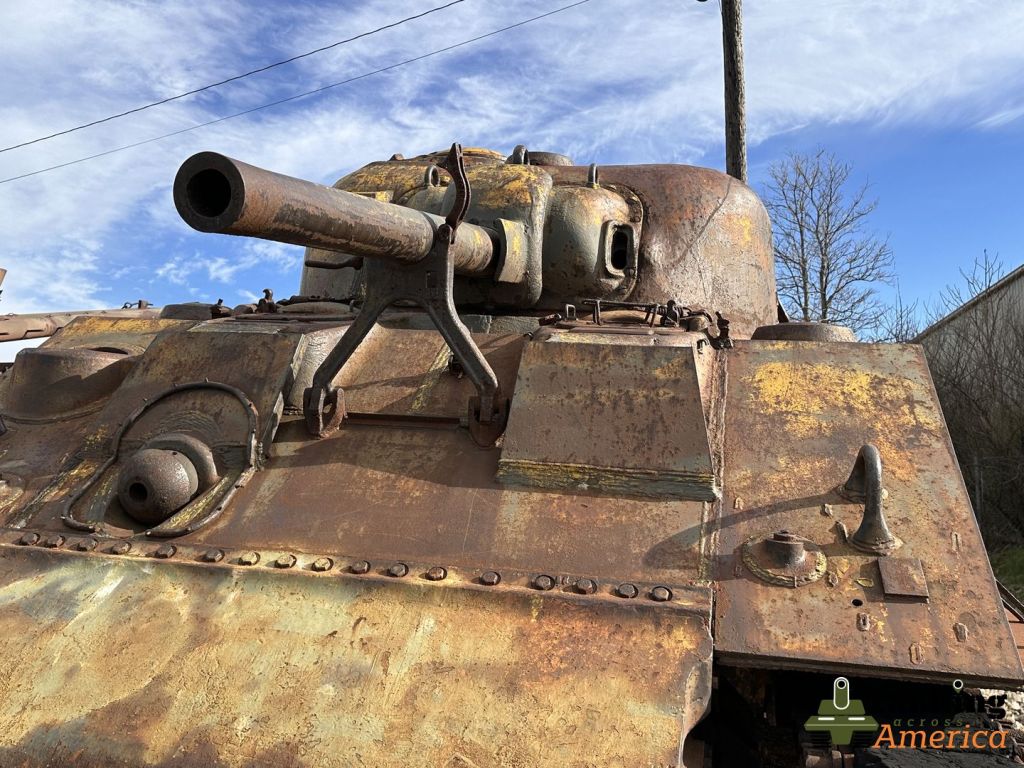
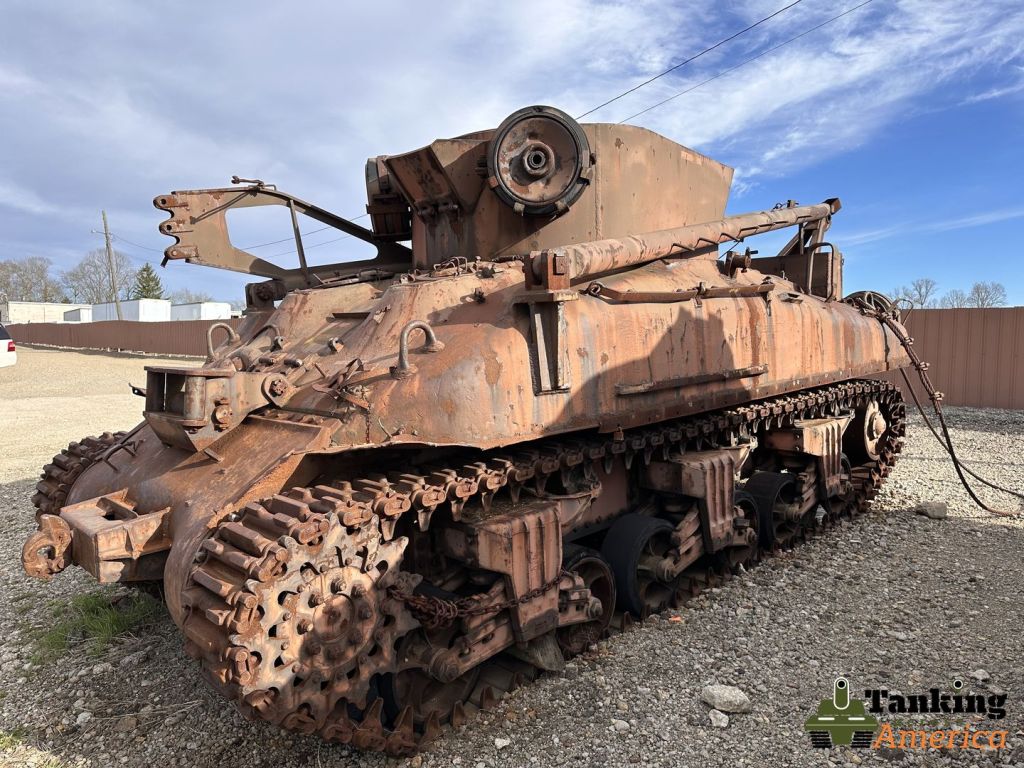
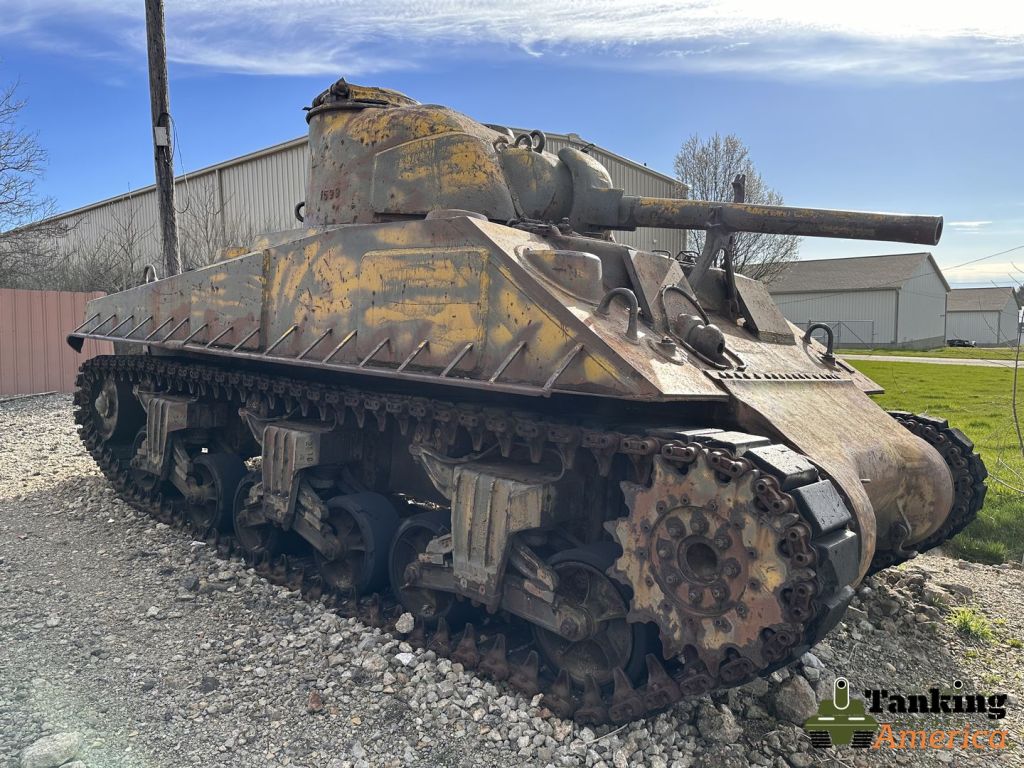
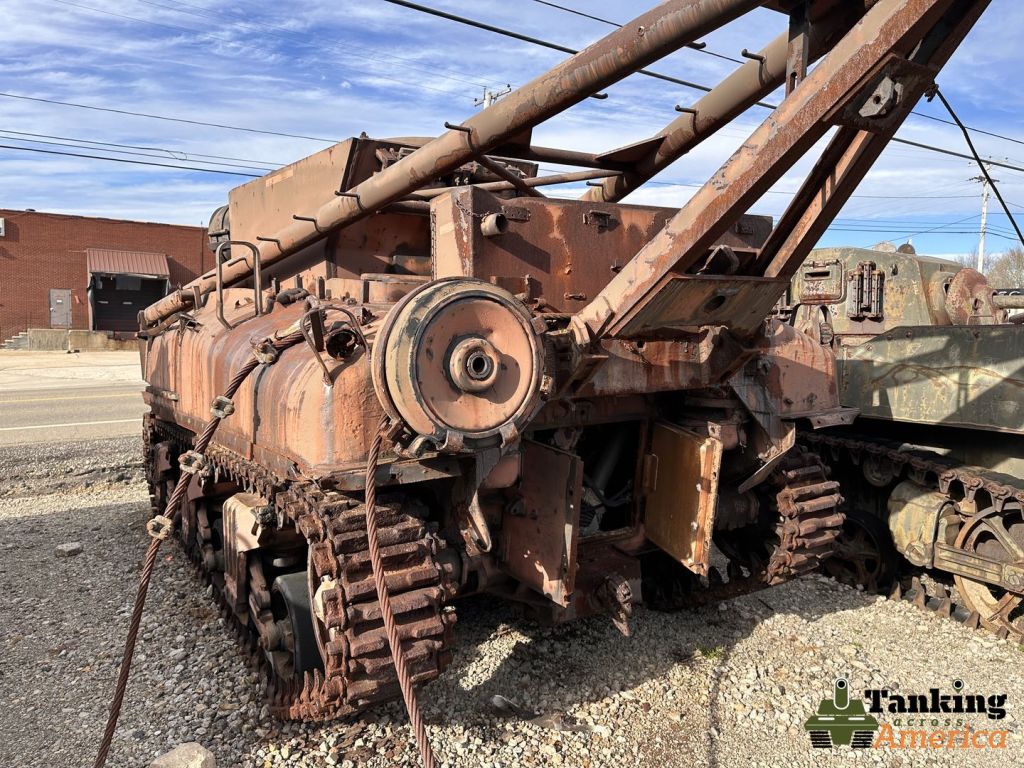
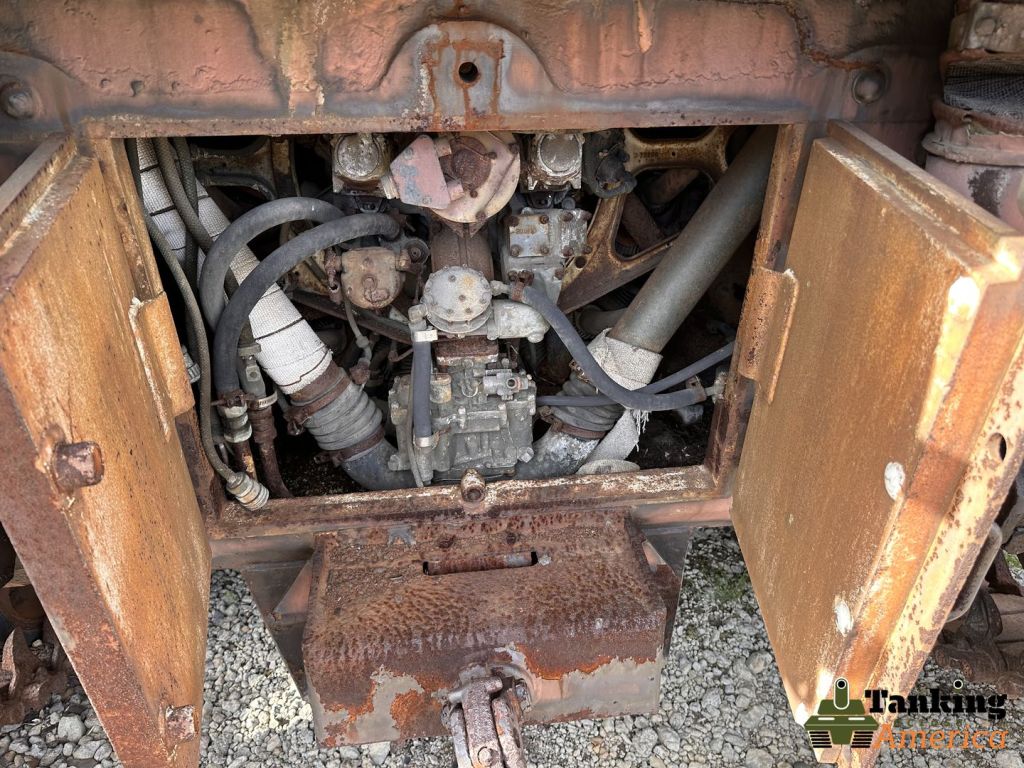
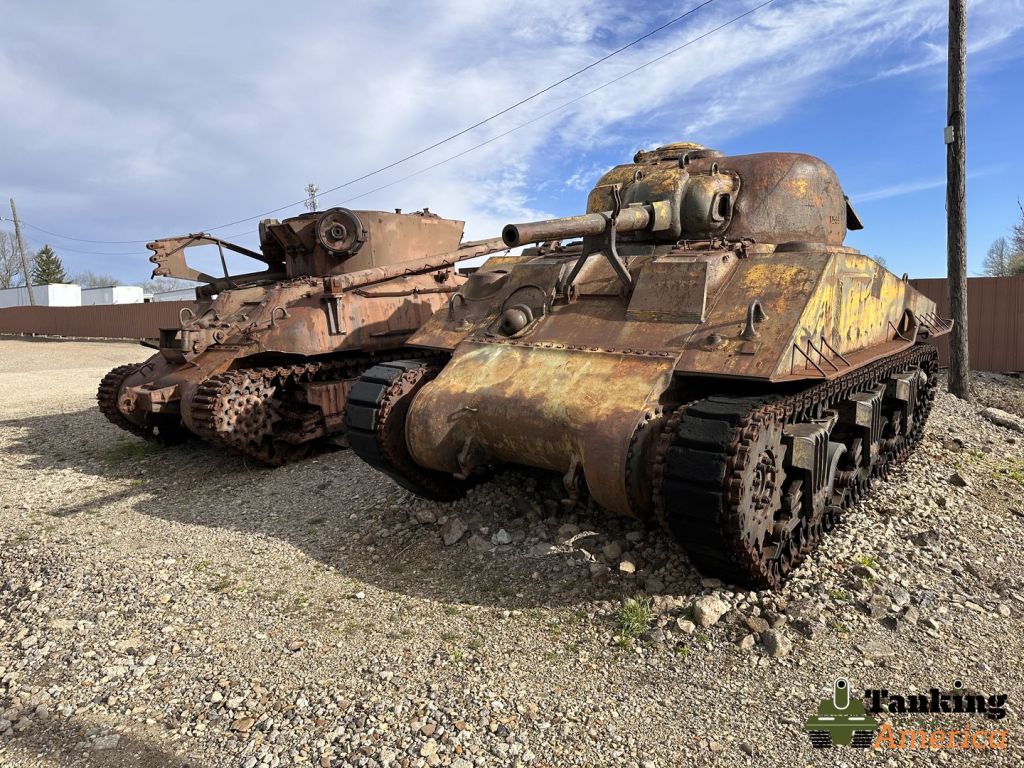
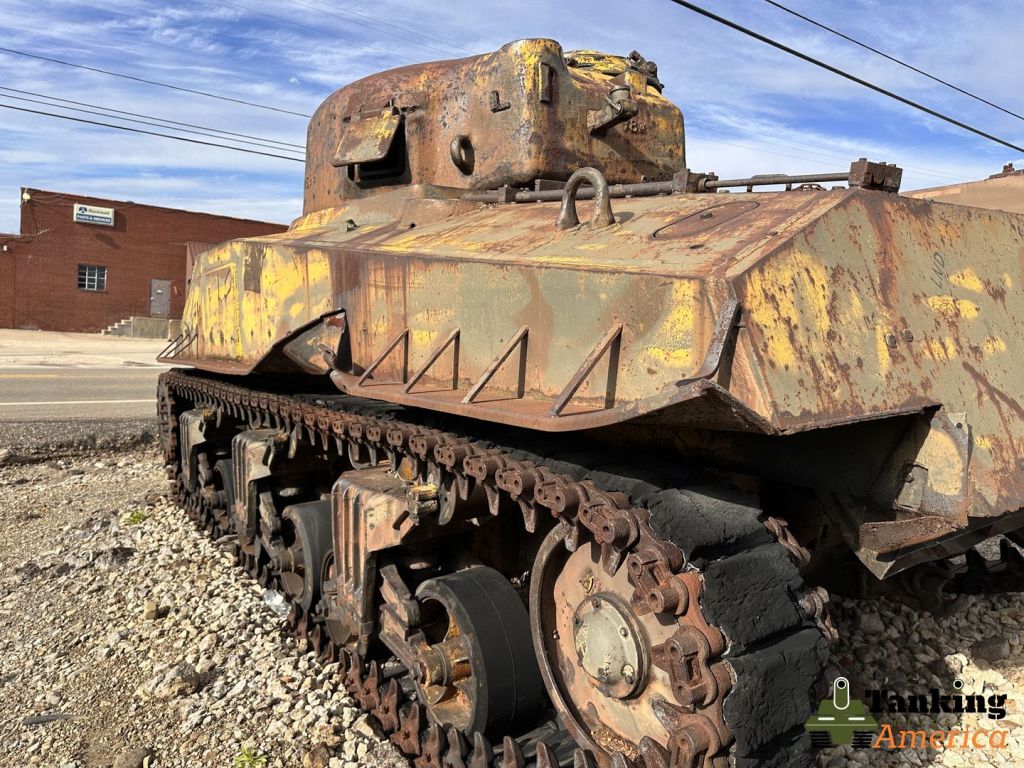
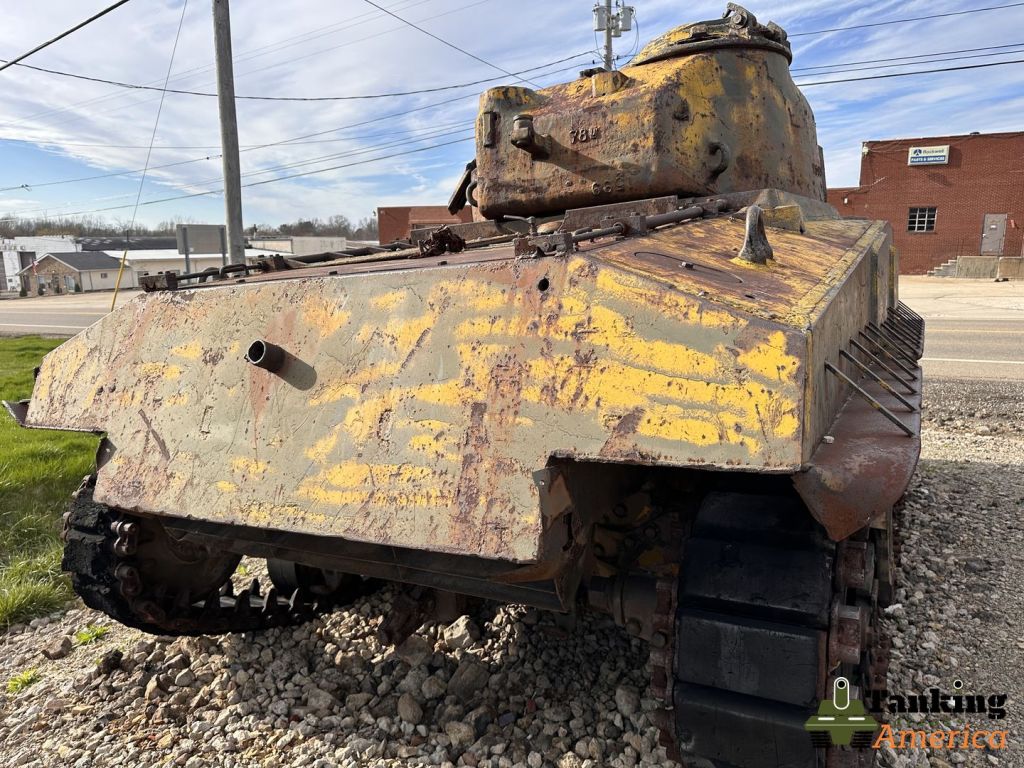
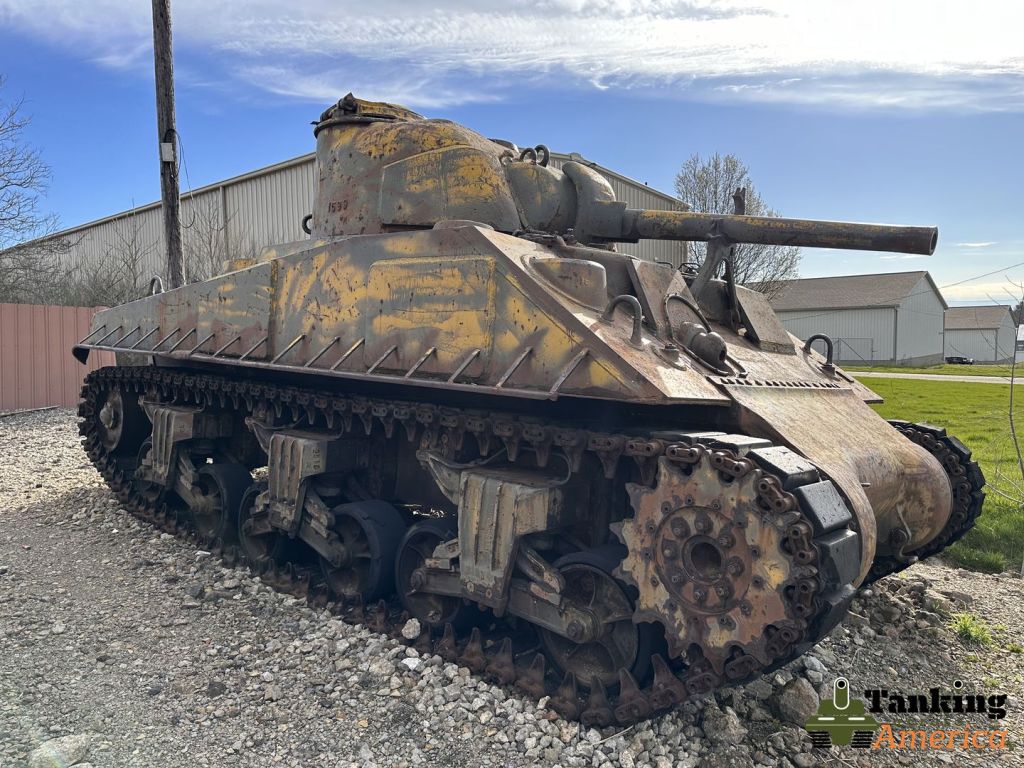
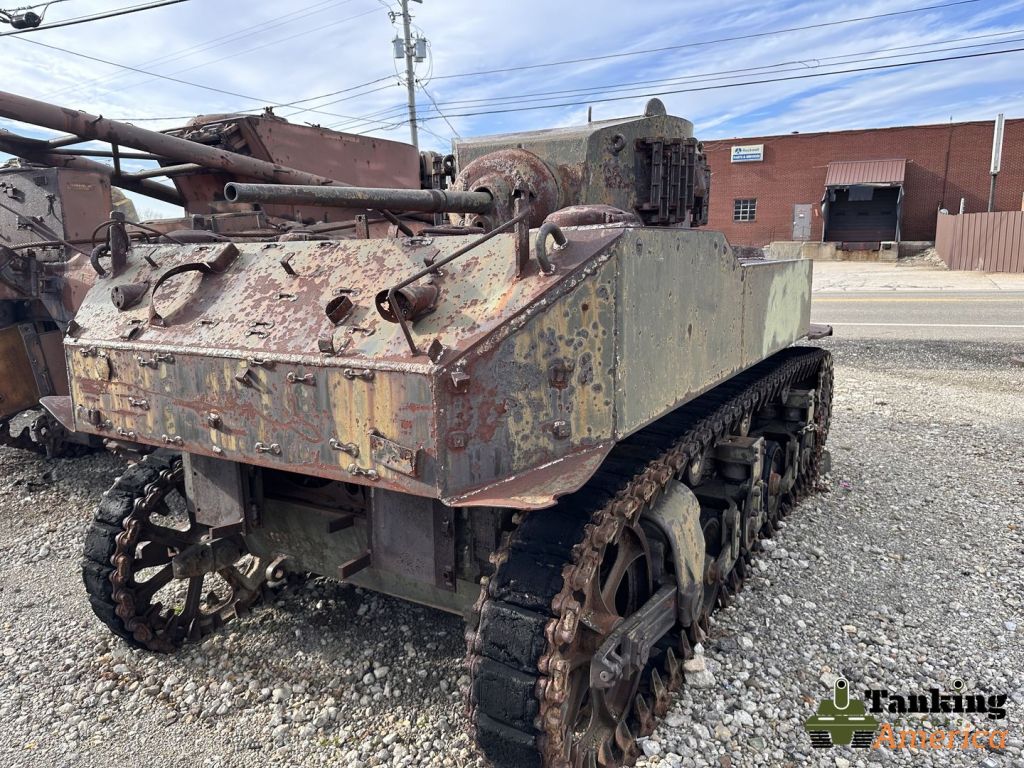
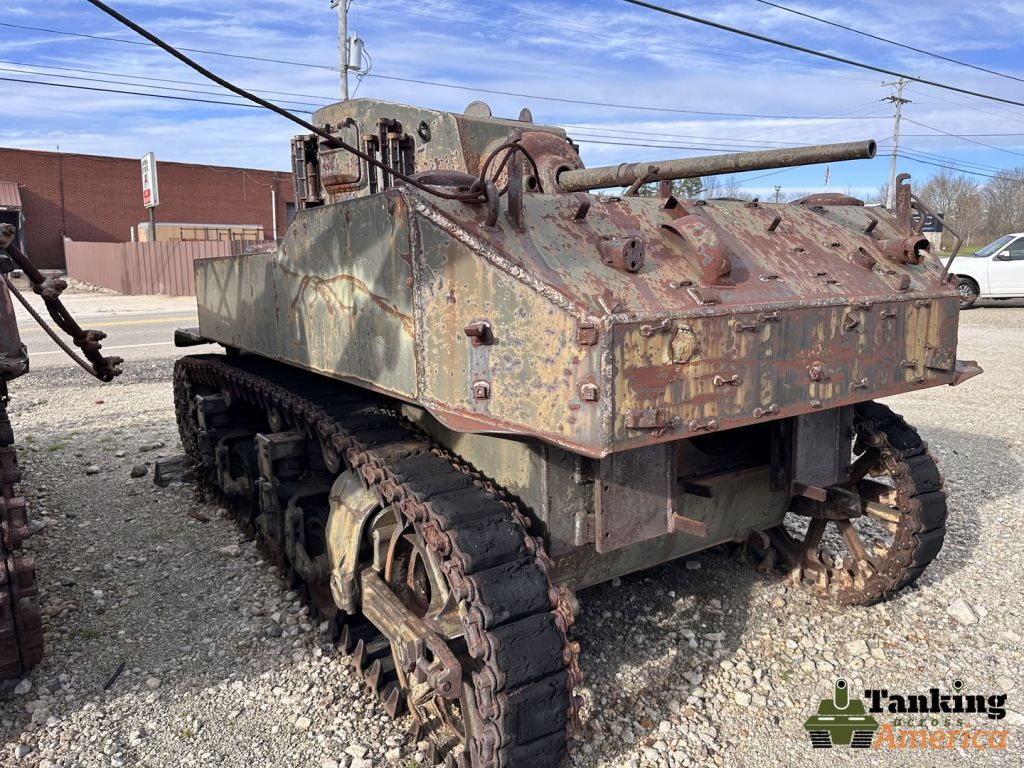
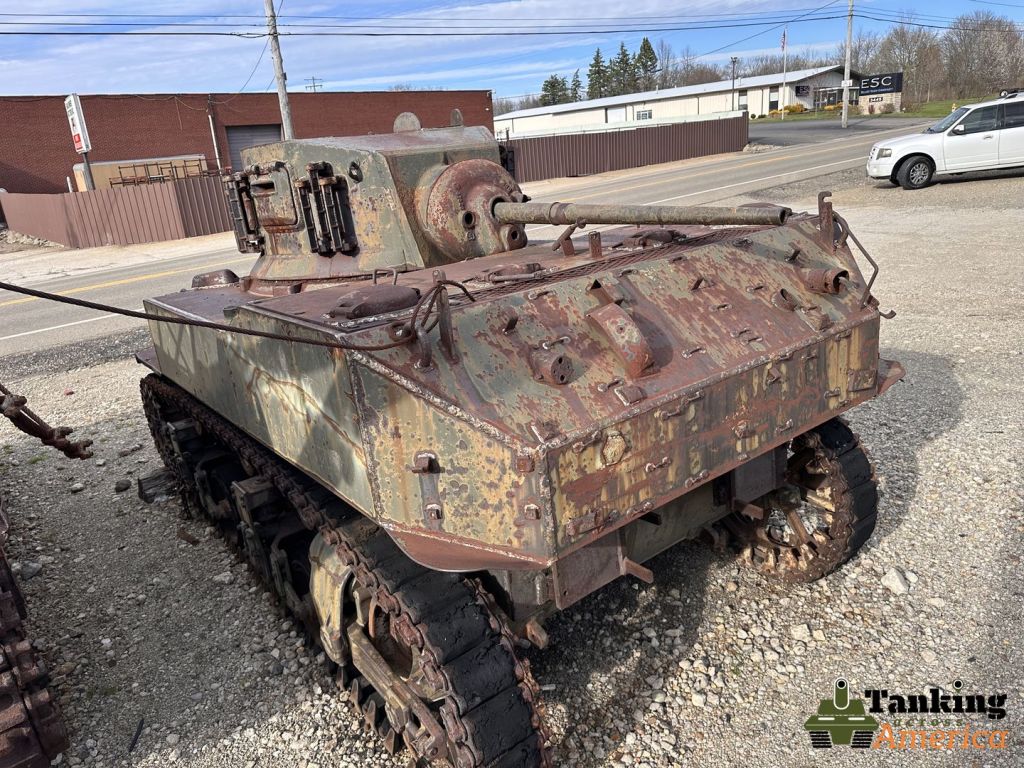
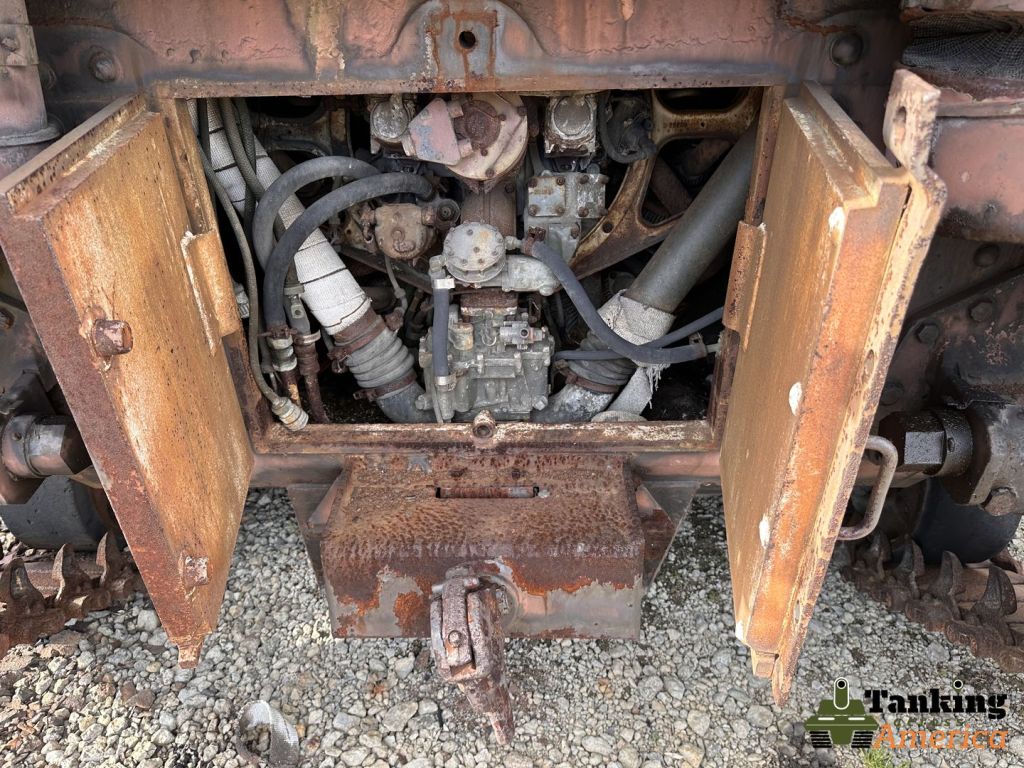
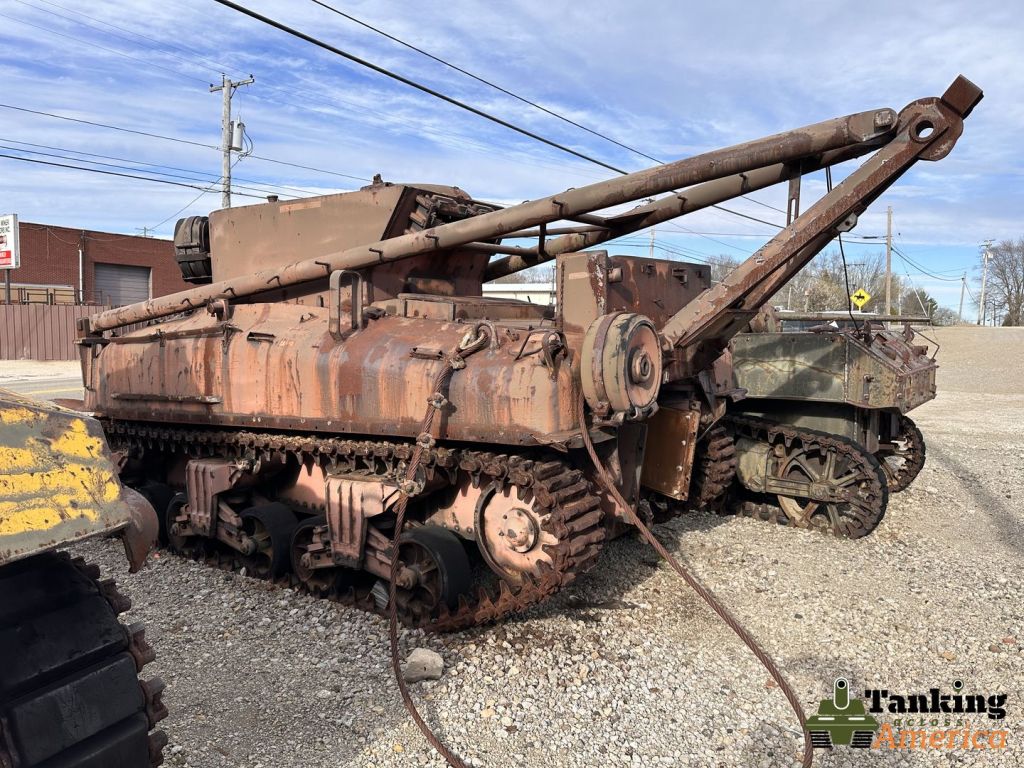
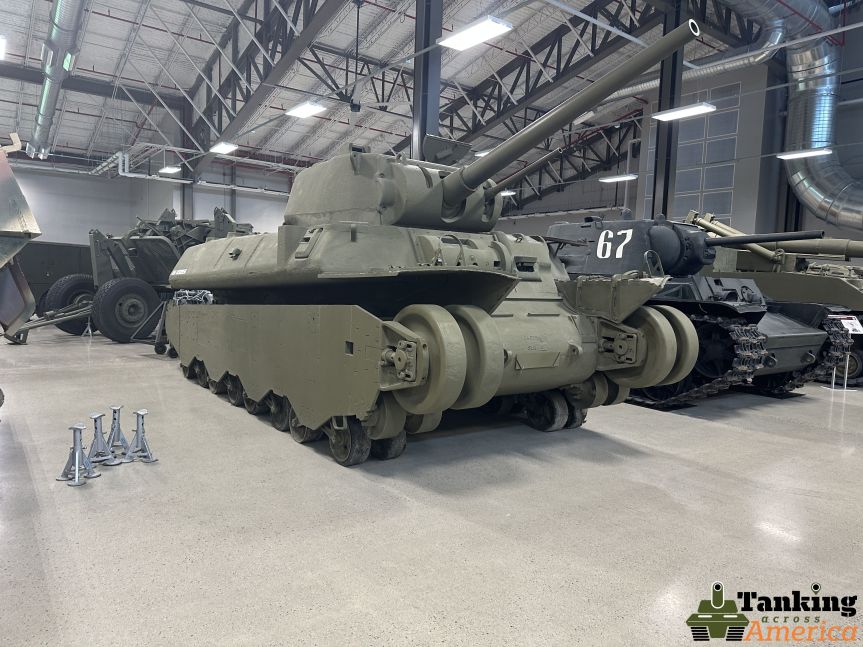
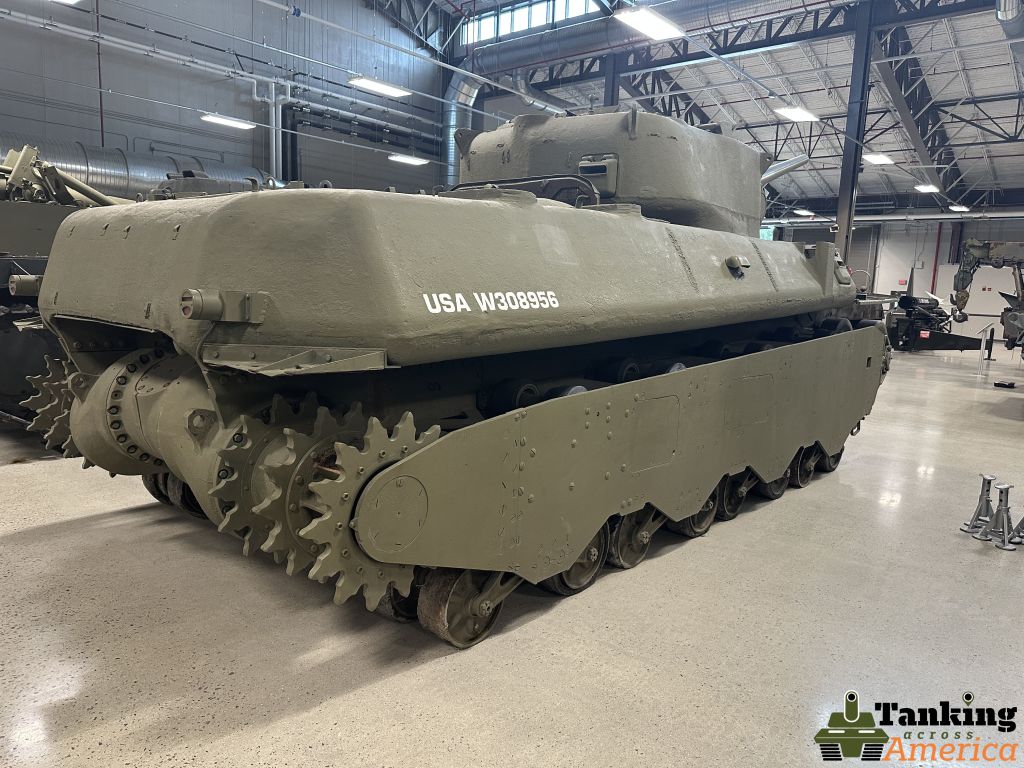
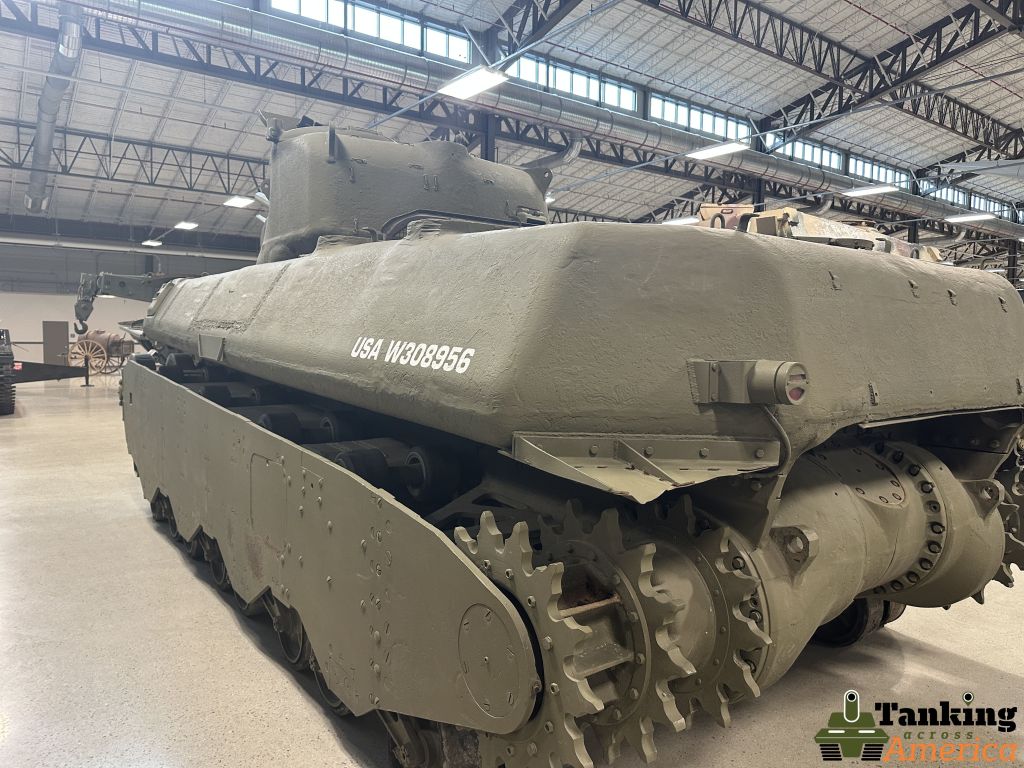
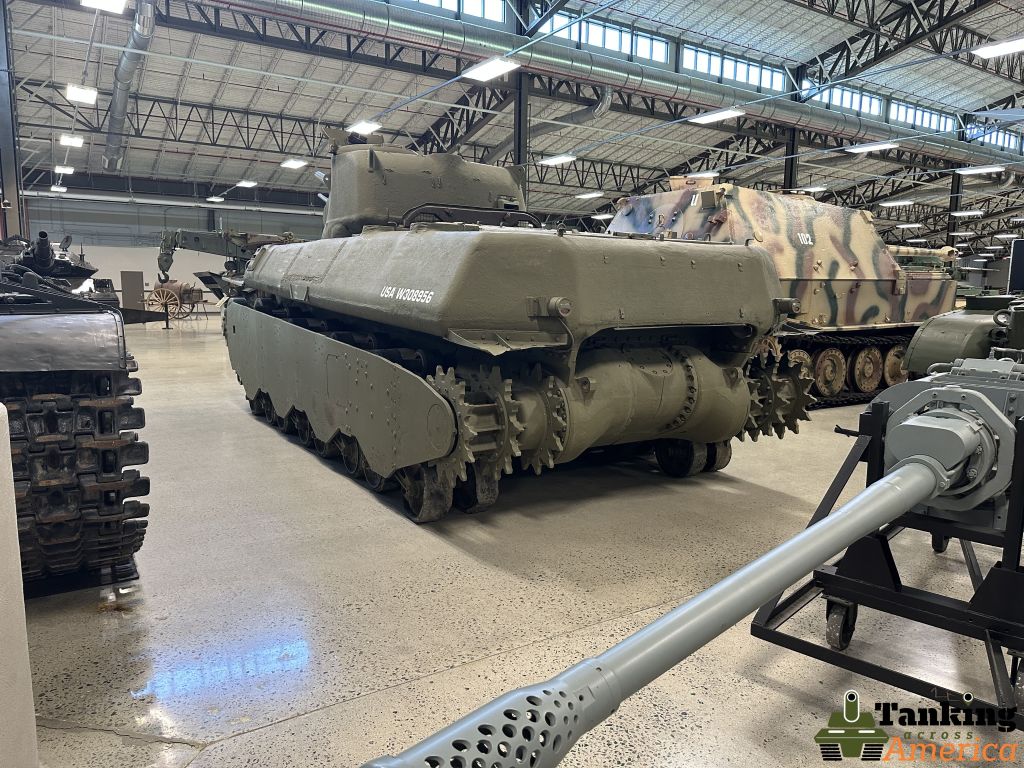
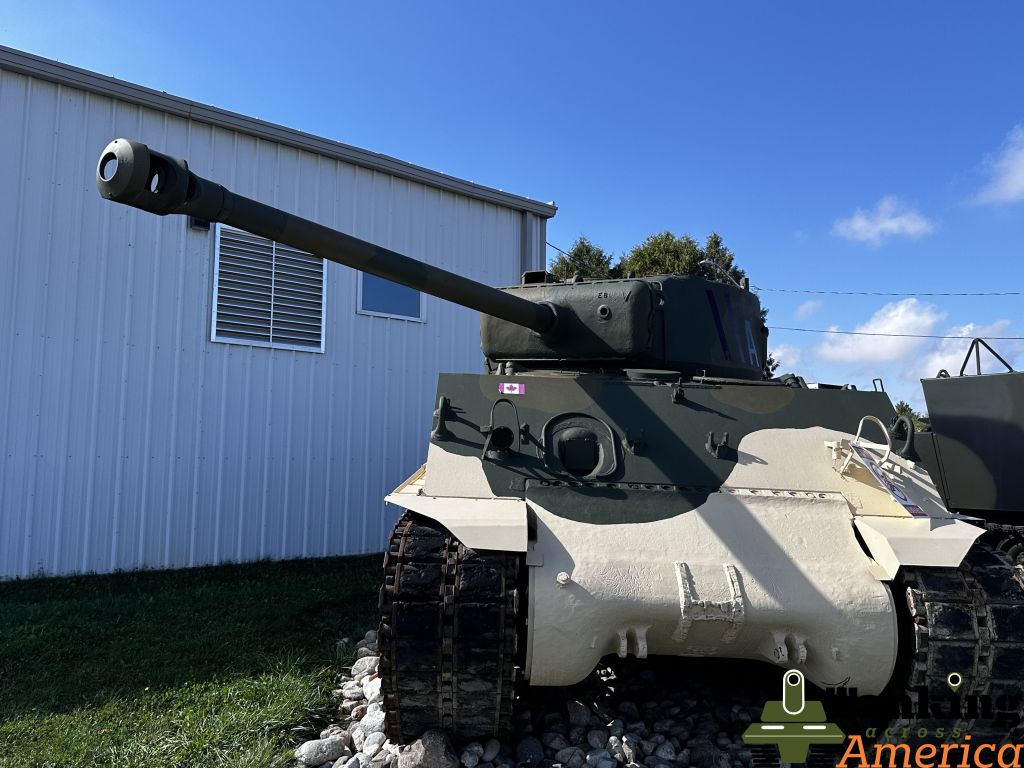
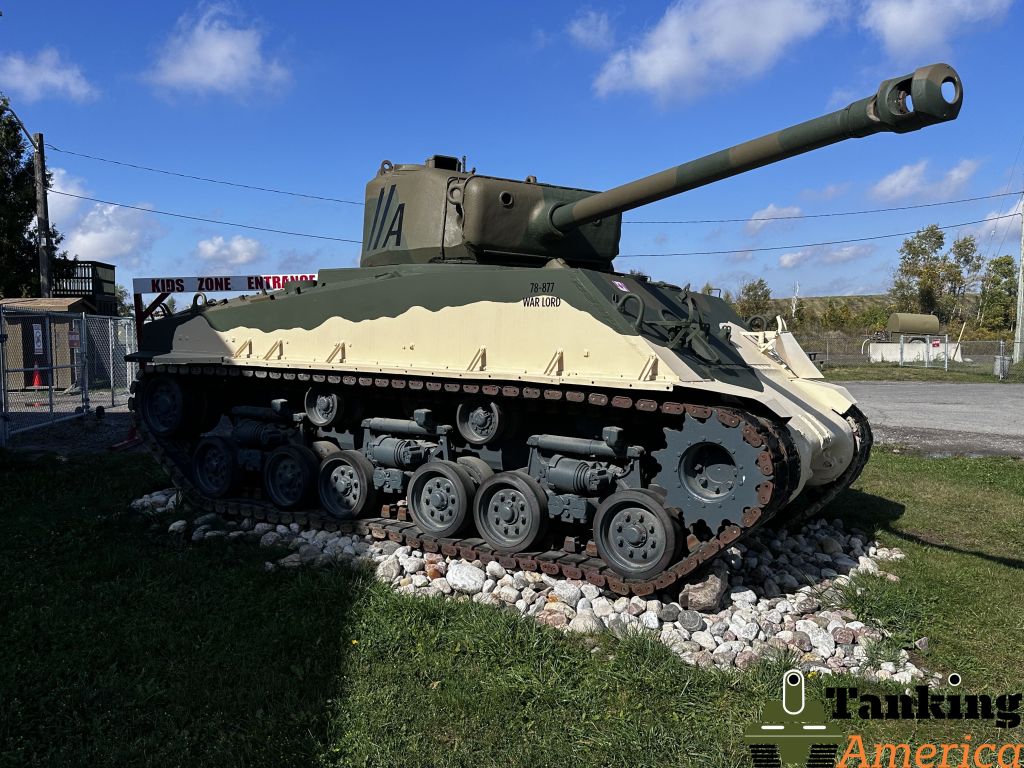
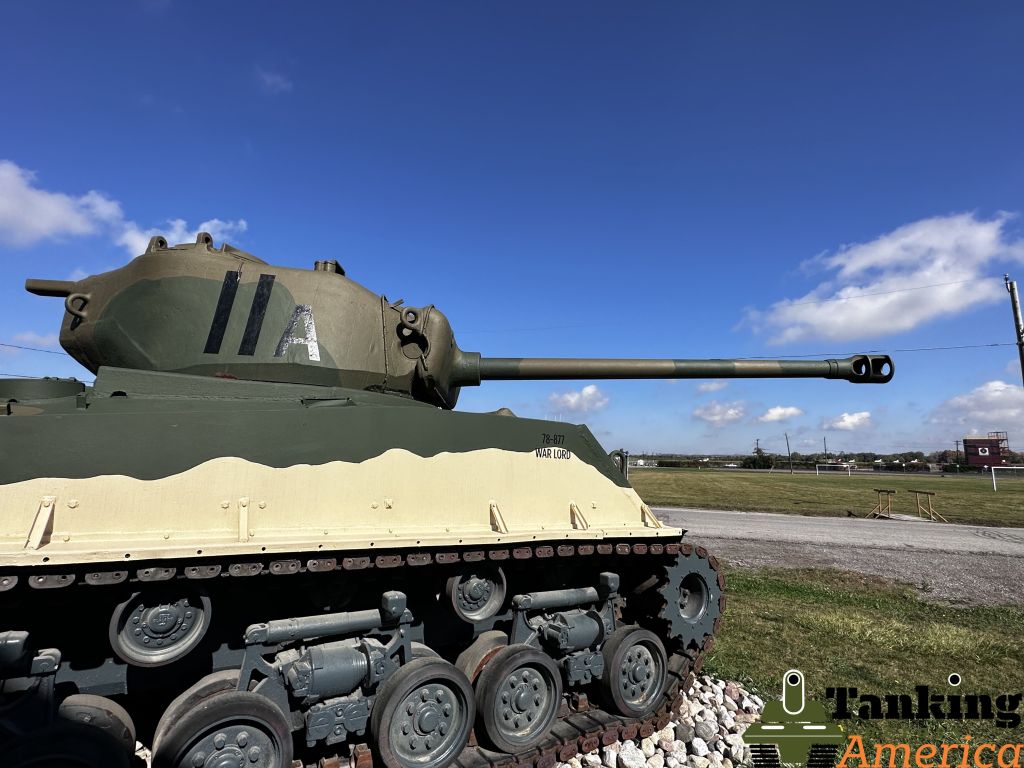
Located at the Fort Lee Ordnance Facility, is one of the T25 medium tank prototypes that is on display. It was painted with “T26E1” on the front which is incorrect.
Origins & Development
The T25 emerged mid-1943 as the Army Ordnance Department sought to surpass the M4 Sherman with a more powerful successor. Built upon the T23 prototype’s platform, two T23 hulls were modified with a new cast turret housing the formidable 90 mm M3 (T7) gun.
Prototype Testing & Plans
In total, two prototypes were completed and sent to Aberdeen Proving Ground in early 1944. One early unit carried registration U.S.A. 30103053 and began trials in January 1944. The original plan called for converting about 40 additional T23s into T25E1s — variants with torqmatic transmission — but full production never materialized.
Specifications & Features
Here’s what made the T25 stand out:
Armament: Primary 90 mm M3 gun; secondary weapons included a coaxial and hull-mounted .30‑cal Browning M1919, plus a .50‑cal M2 on the turret roof .
Crew & Dimensions: Carried a crew of five; weighed approximately 35–38 tons; length around 7–7.5 m, width 3.1 m.
Performance: Powered by a Ford GAN V8 engine (~470 hp for T25; GAF for T25E1), providing a top speed near 40 km/h.
Protection: Frontal armor ~76 mm, turret up to ~68 mm, mantlet ~89 mm.
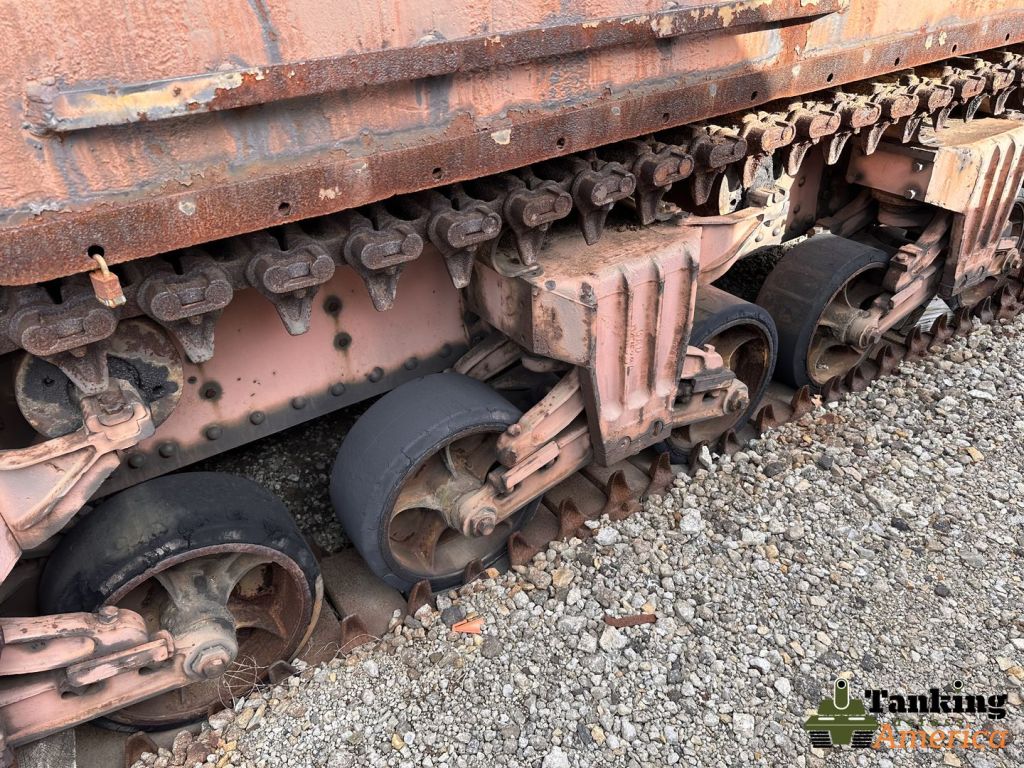
Suspension: The T25 used HVSS (horizontal volute spring suspension); the T25E1 moved to torsion-bar suspension for better load handling.
Why the T25 Was Shelved
Despite its upgrade in firepower, the T25 didn’t offer enough advantage over its heavier counterpart — the T26 — which eventually entered mass production as the M26 Pershing. By early 1945, focus shifted to the latter, and the T25 was quietly dropped.
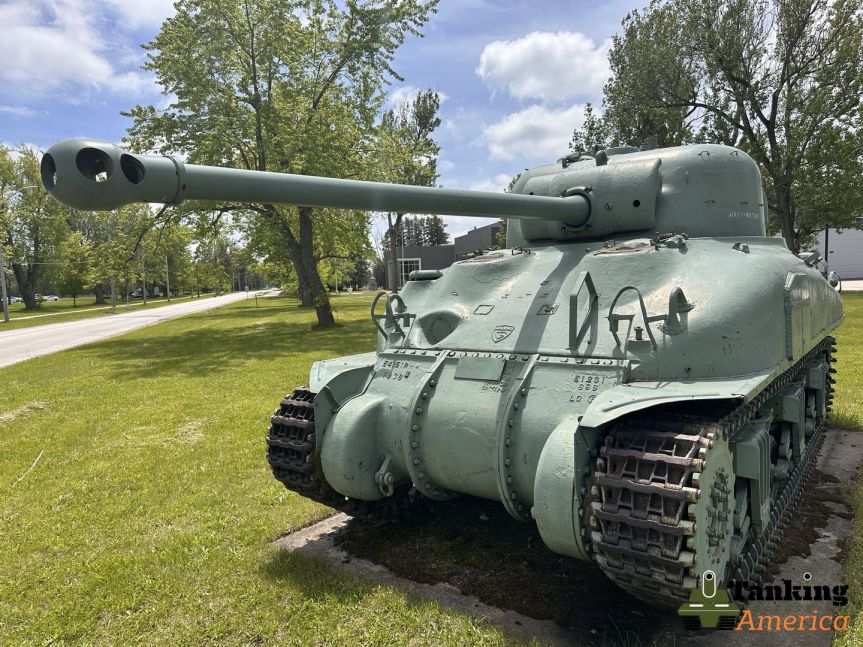
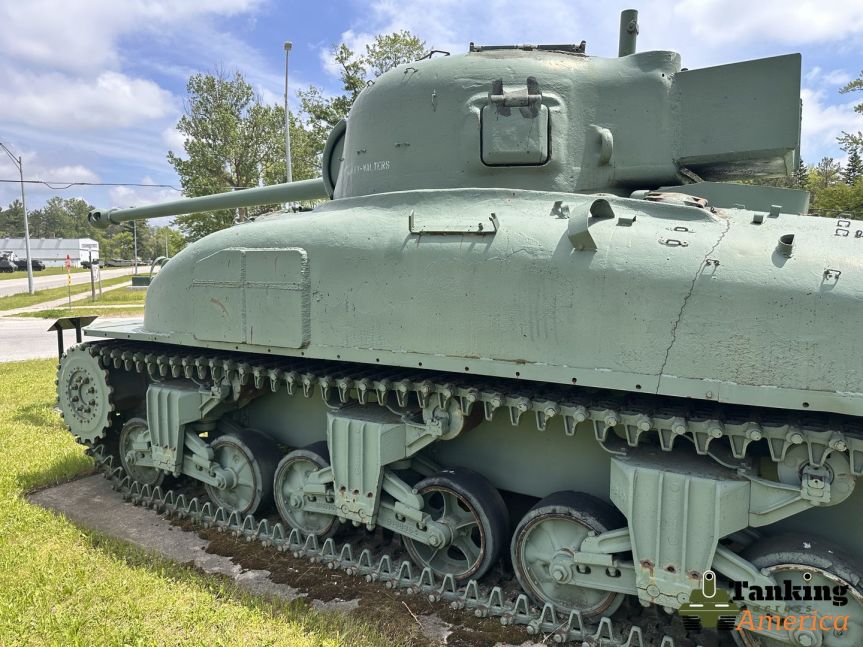
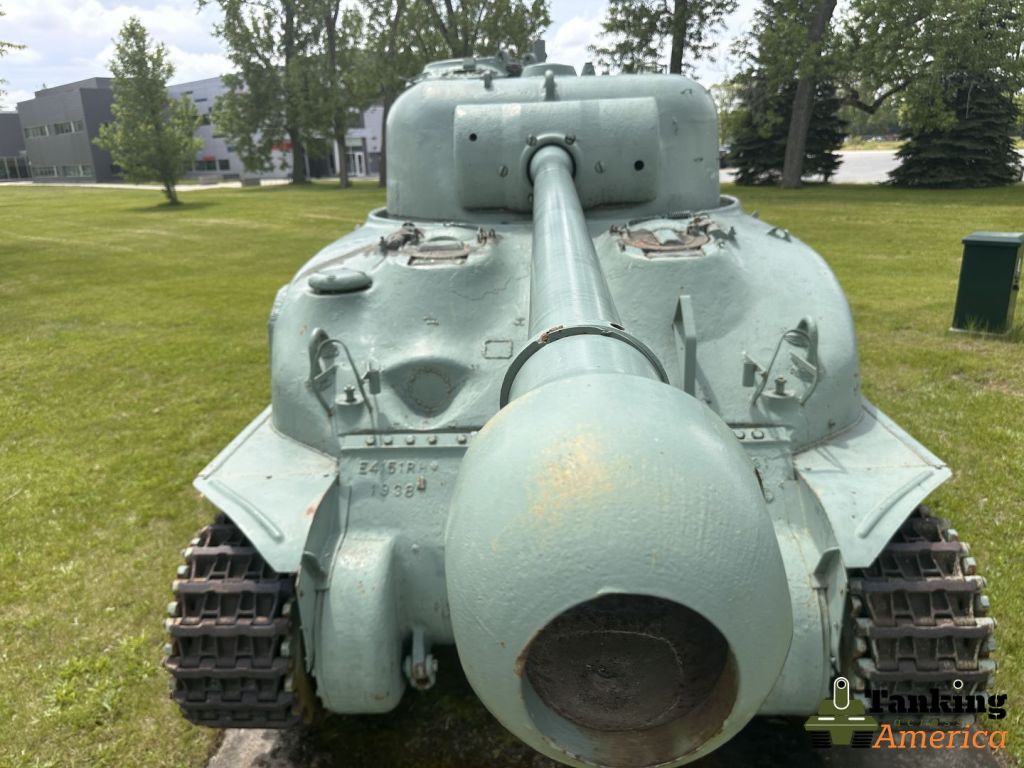
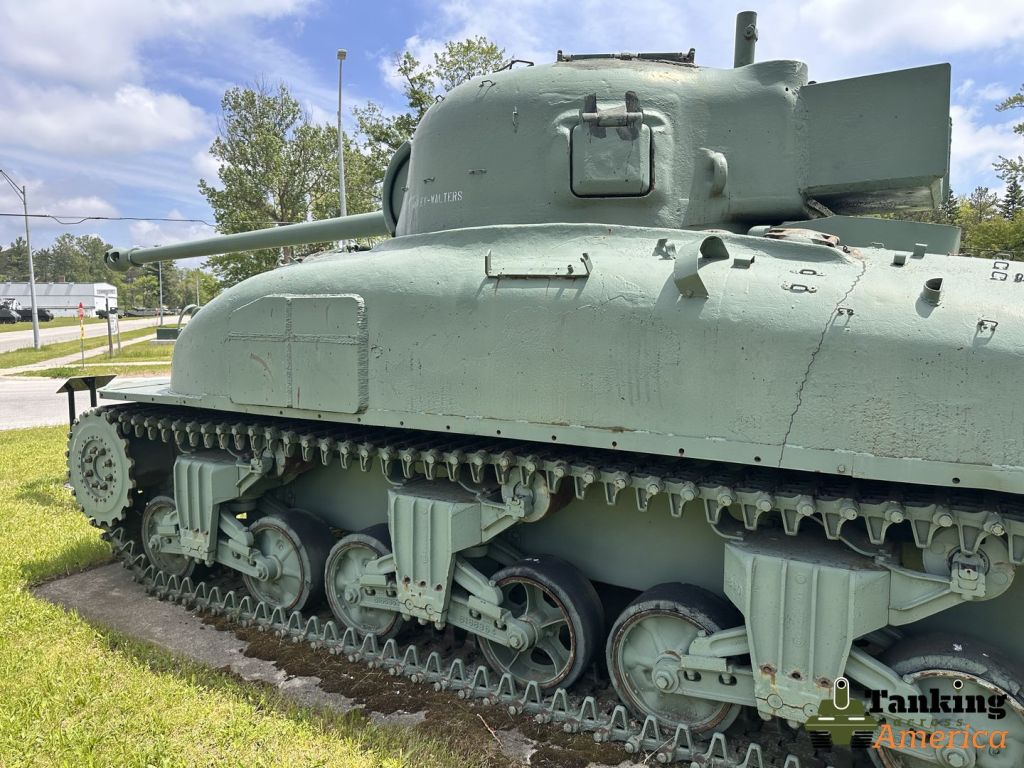
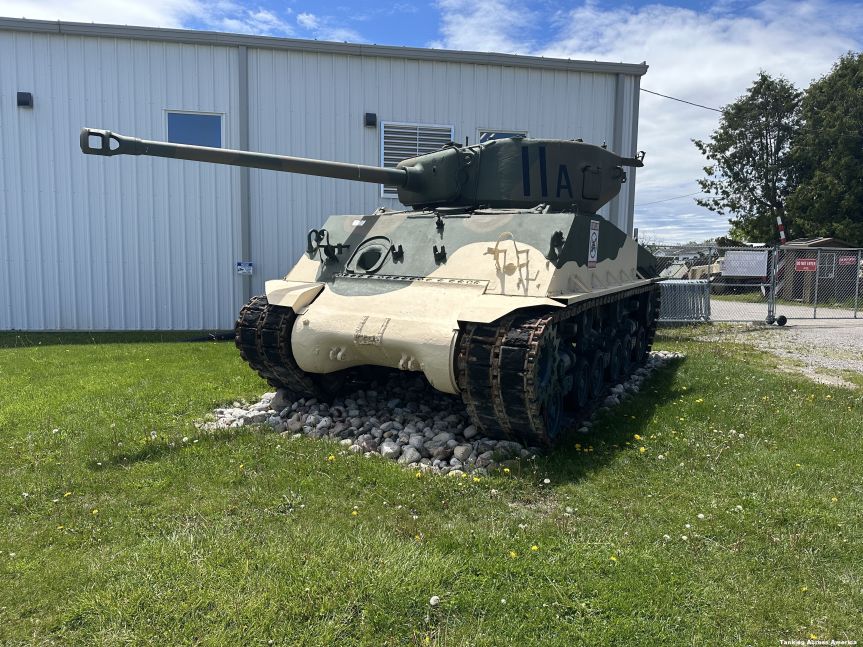
At CFB Borden, north of Toronto, there is a installation museum with a M4A1 Grizzly tank with a 17-pounder Firefly turret. In early 1945, the British Army sent a couple of 17 pounder Firefly turrets with guns to the Canadian and American Armies to test. Three Grizzlies were reconfigured by the Canadians so they could be used as test vehicles.
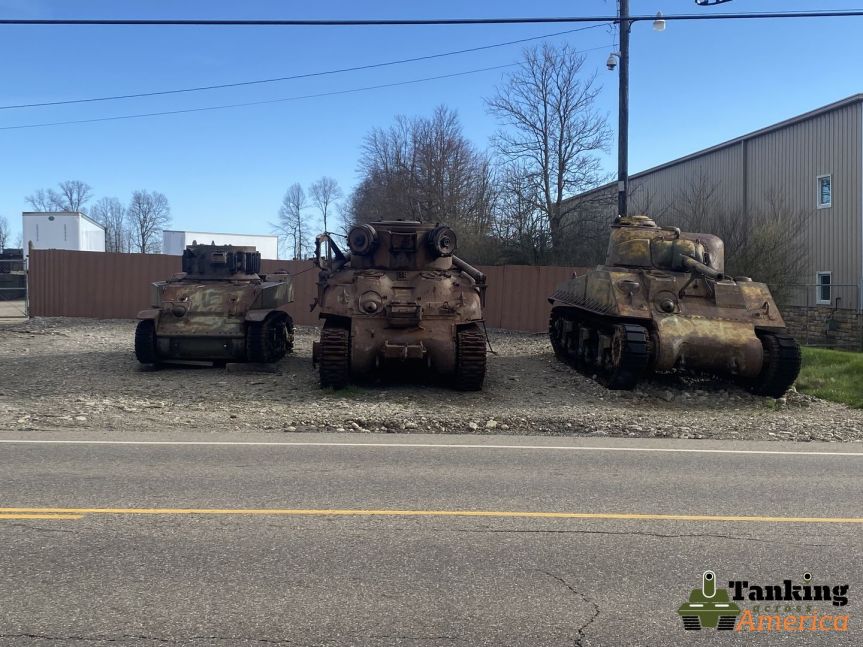
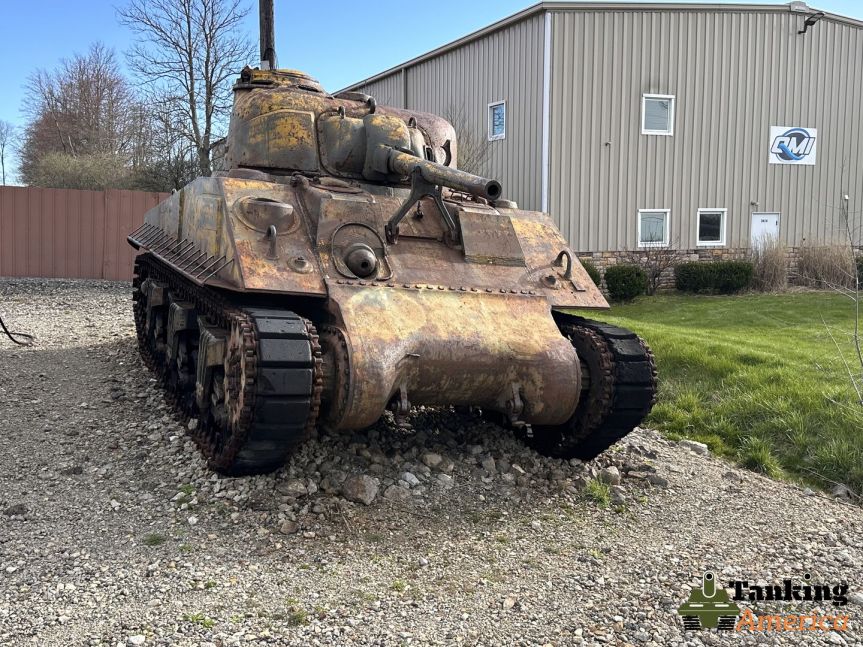
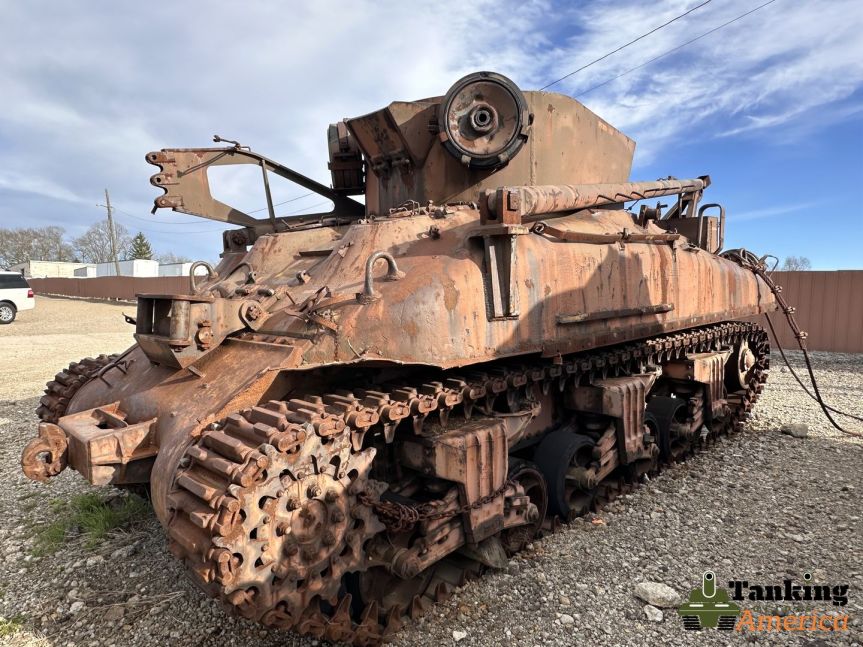
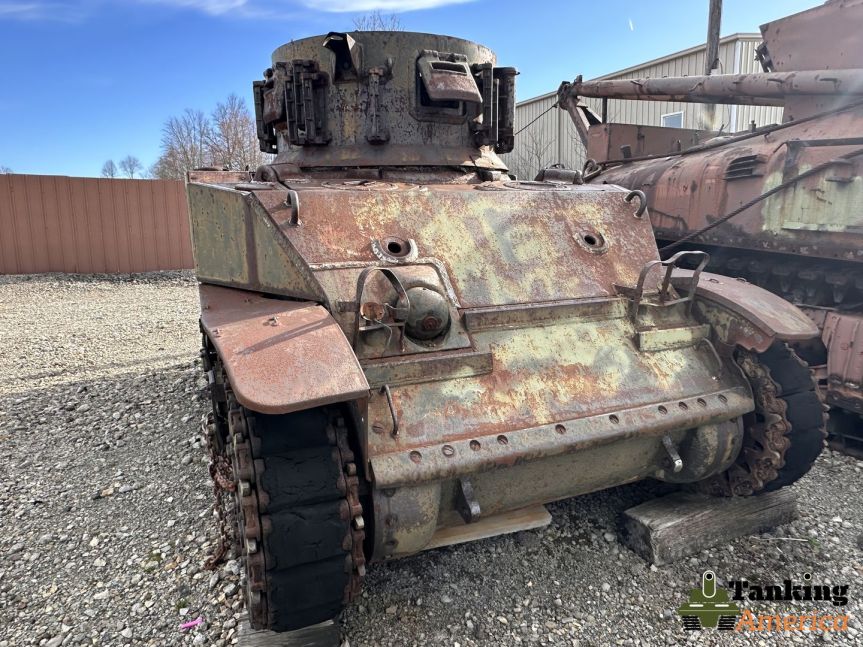
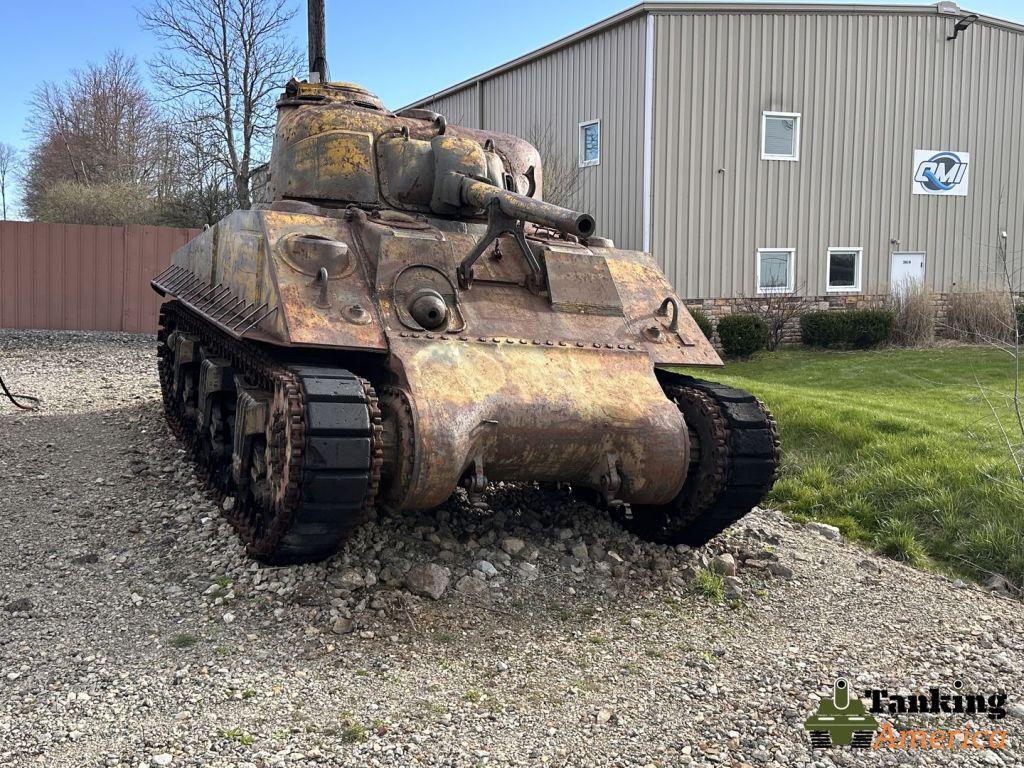
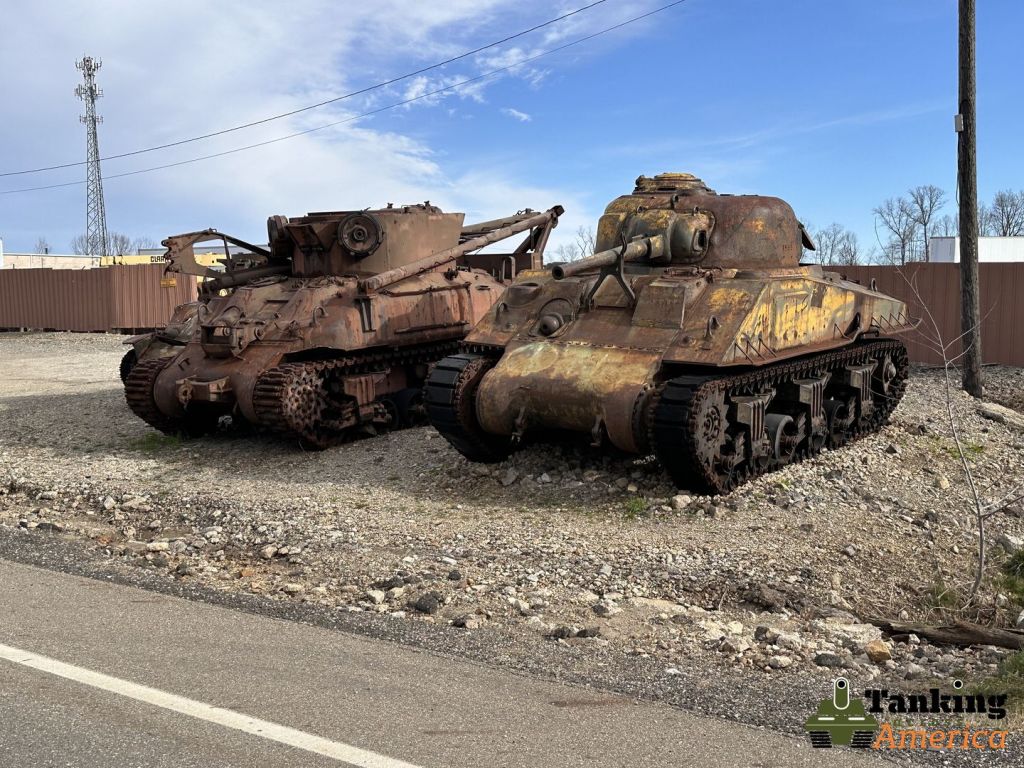
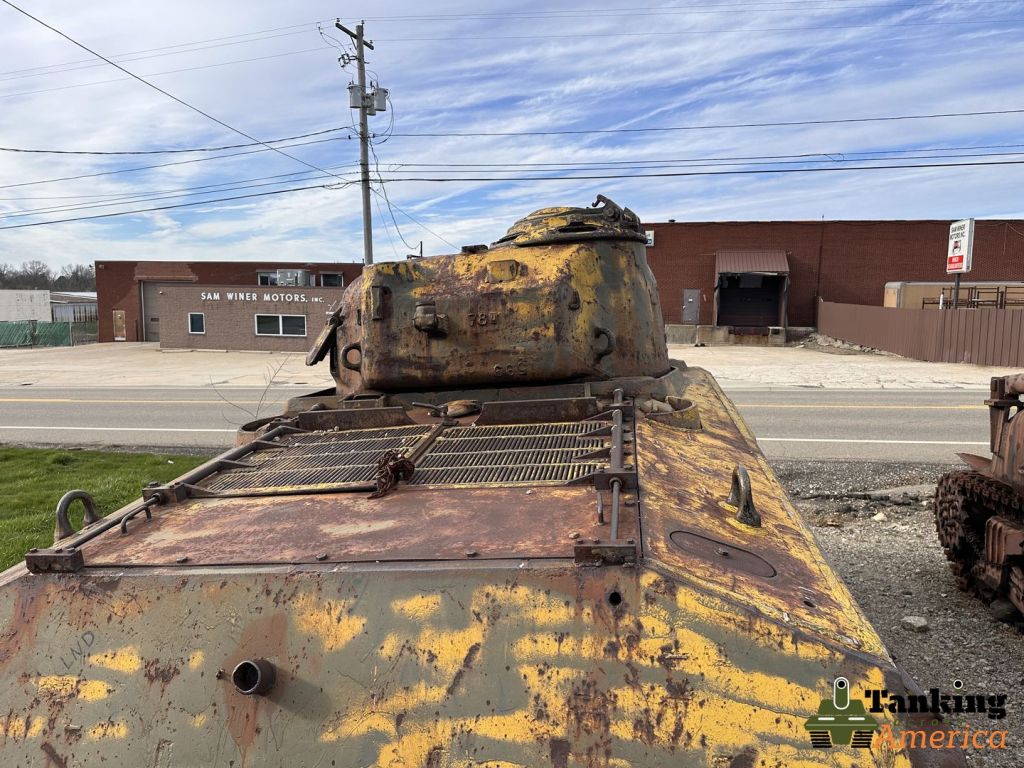
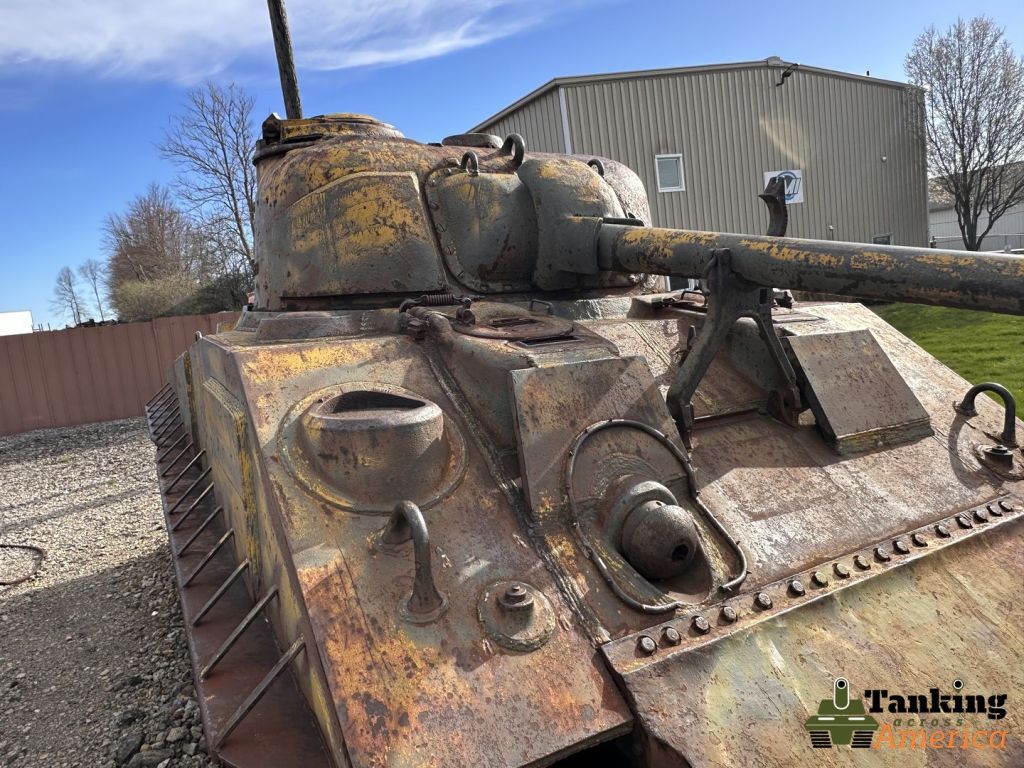
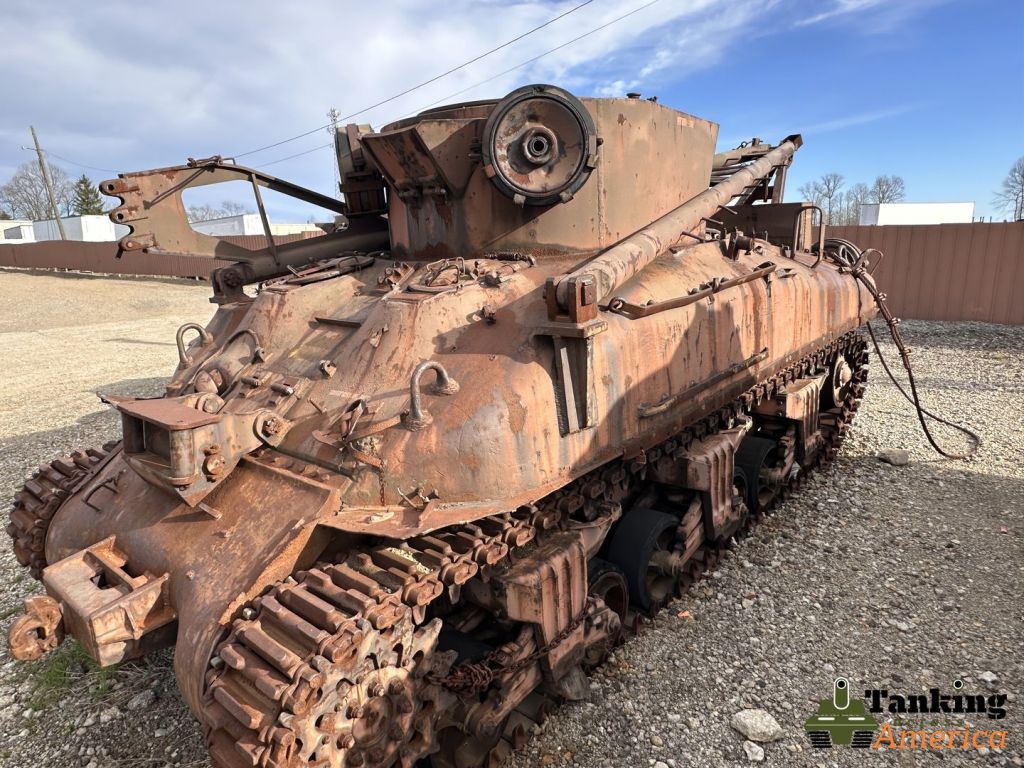
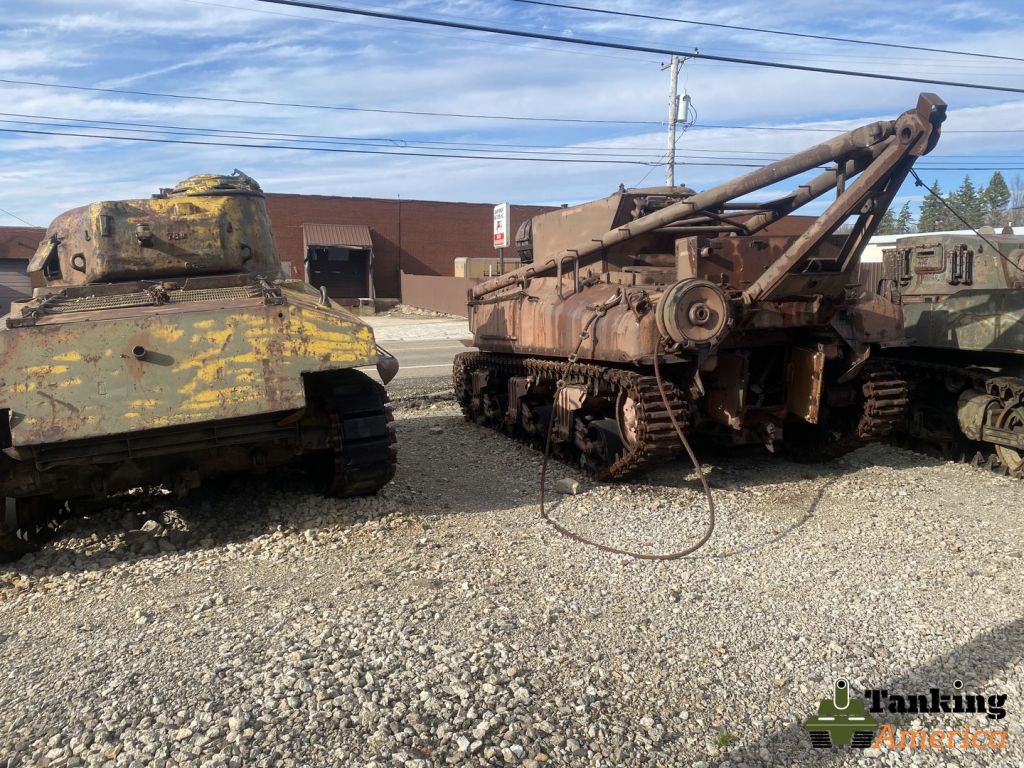
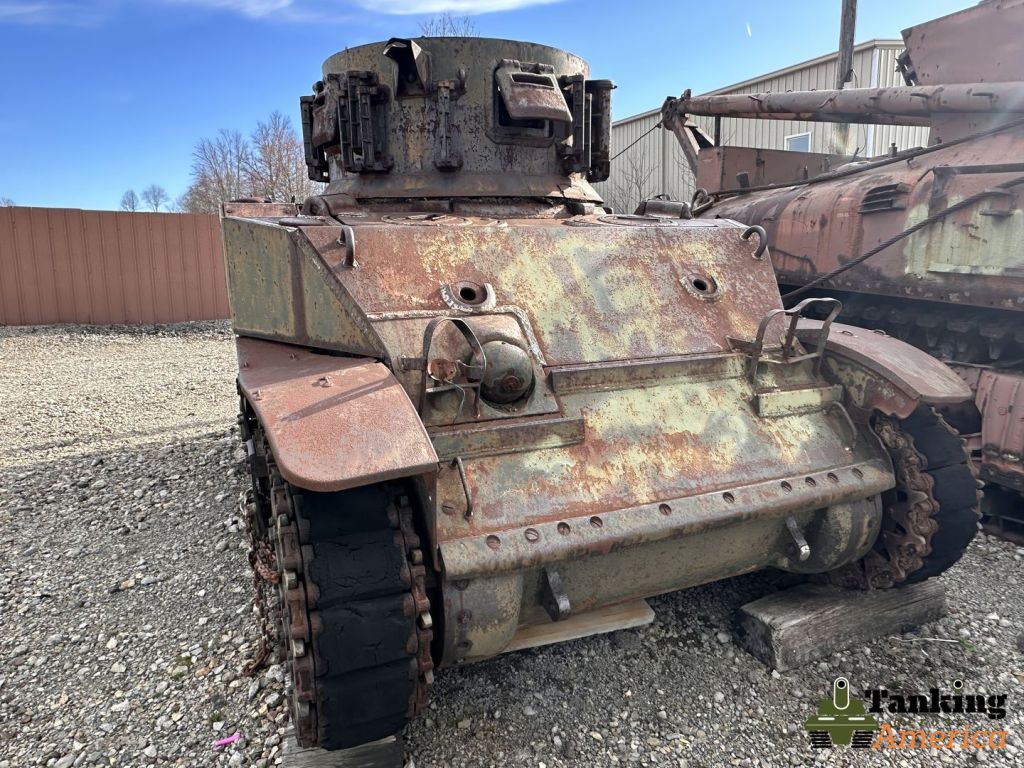
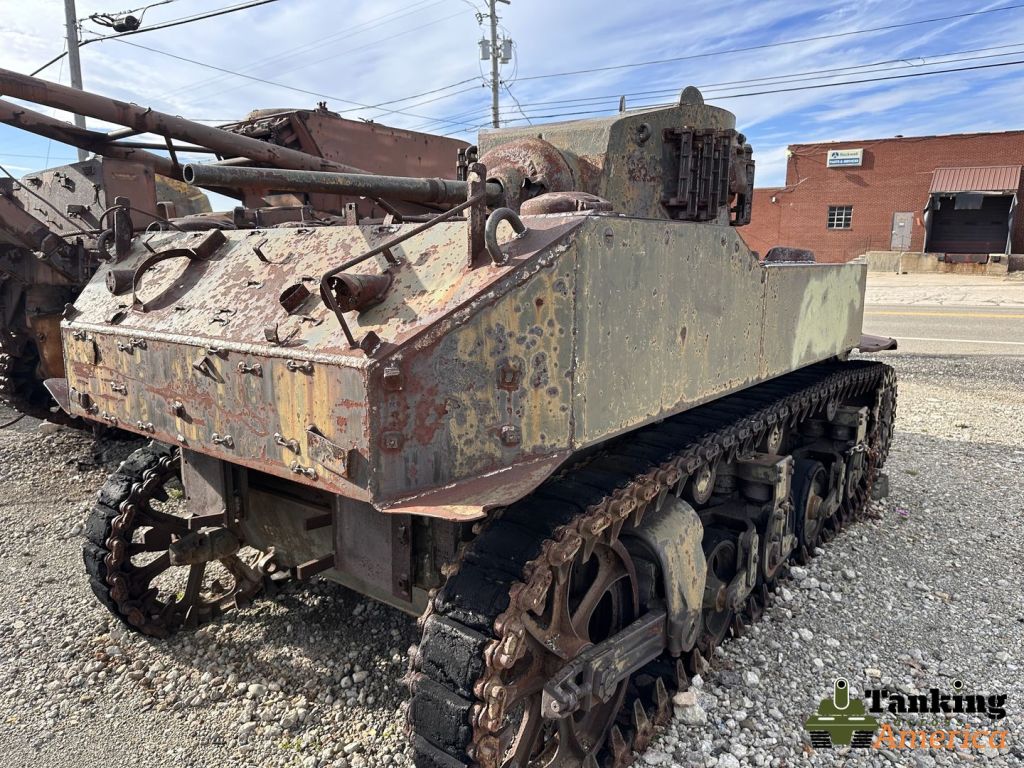
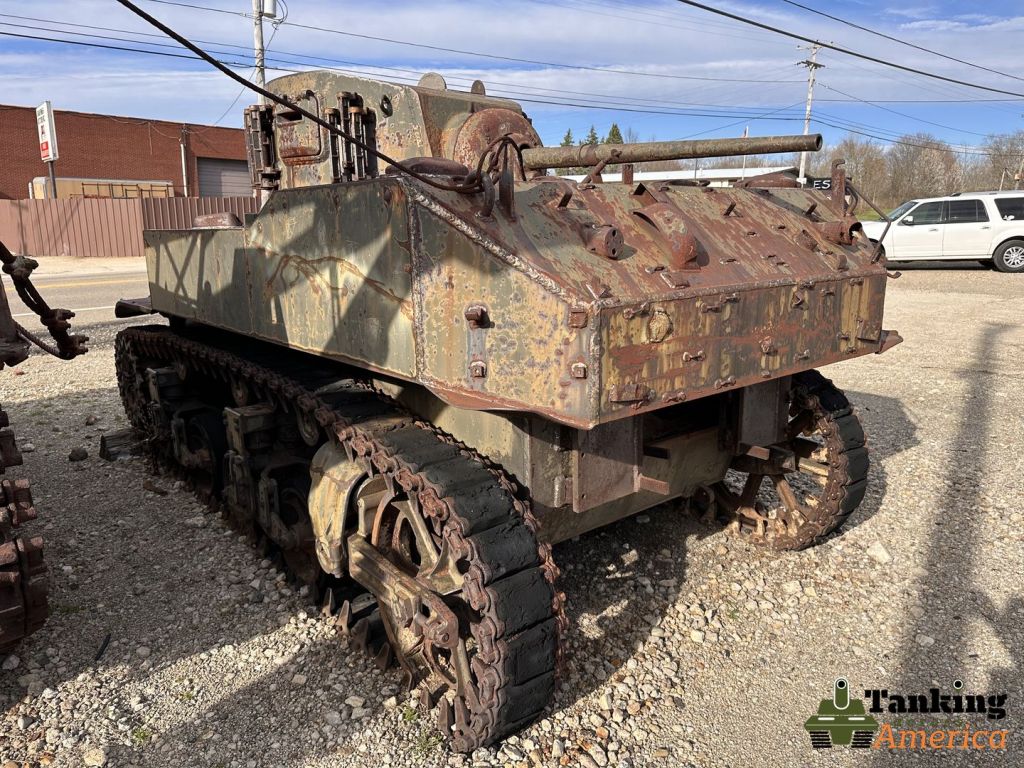
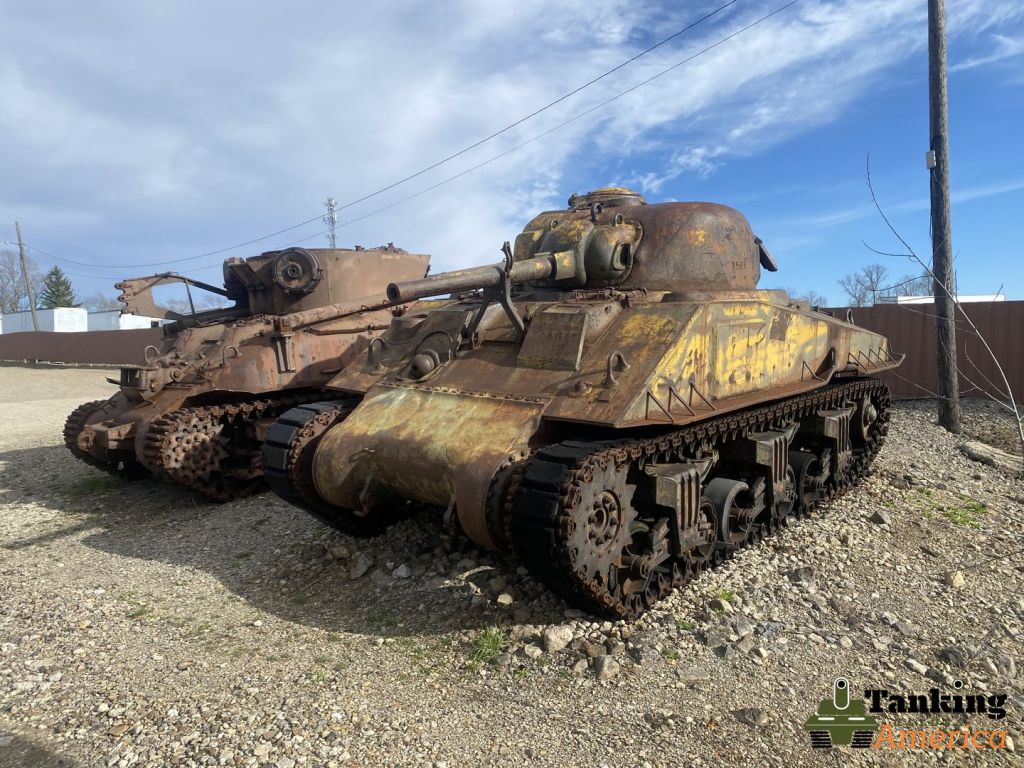
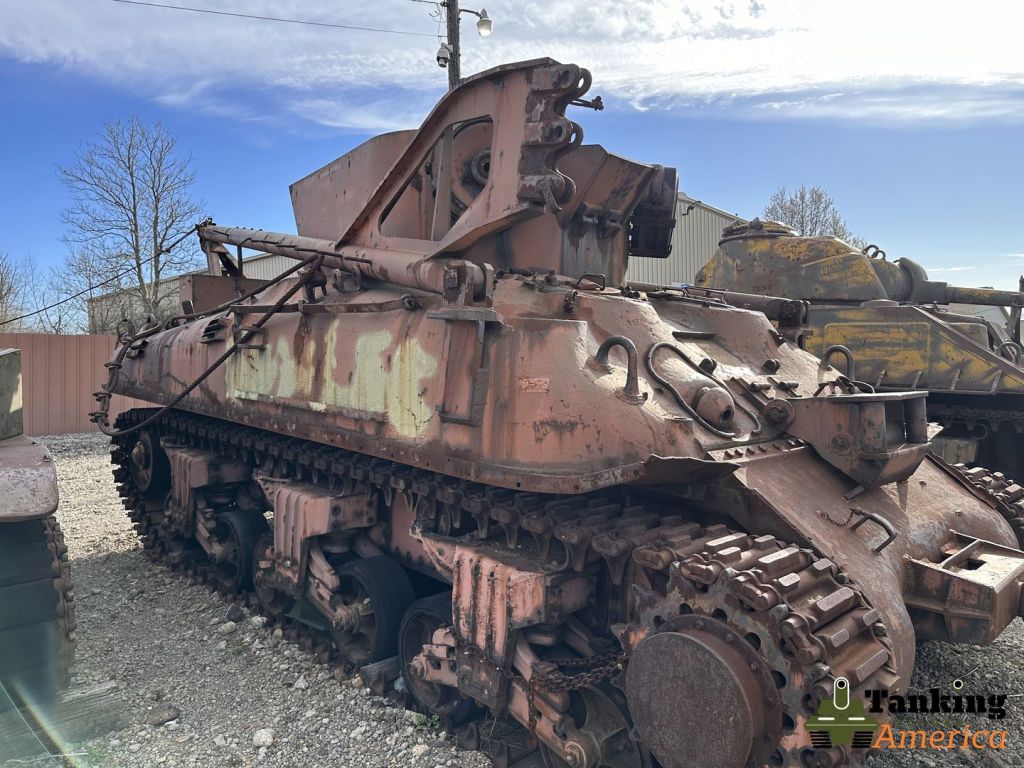
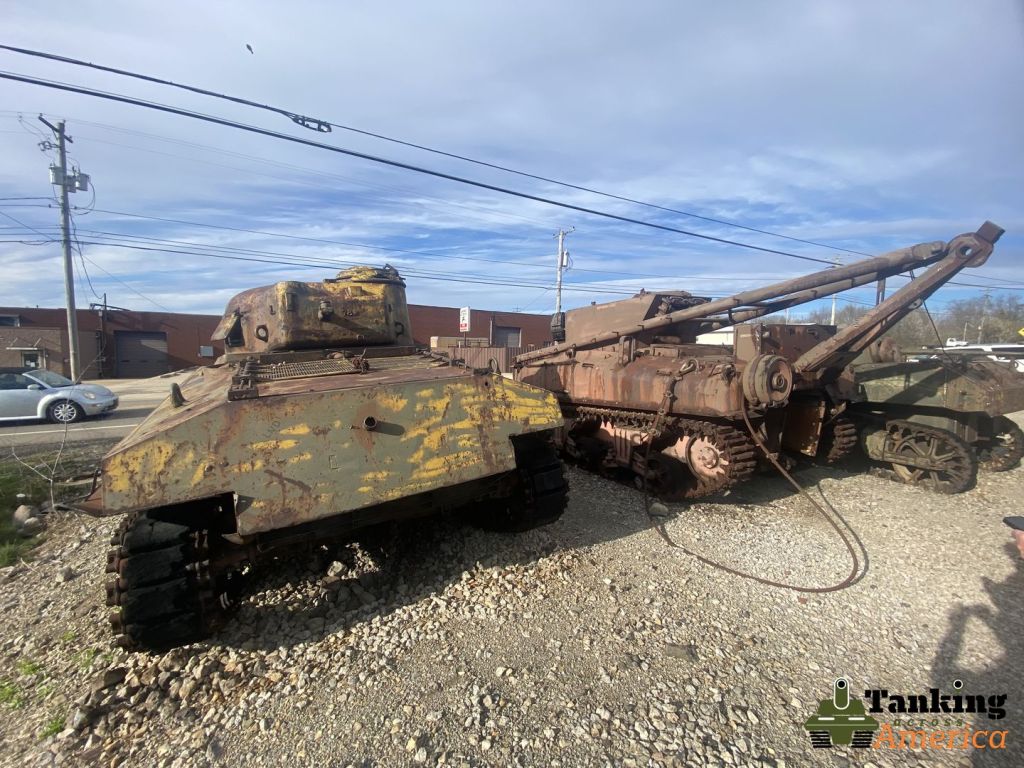
In Akron, Ohio, there is a company called Sam Winer Motors, that sells military vehicles and parts. In front of their yard, one can find a M4A3E9 Sherman, a M32 Tank Recovery Vehicle and a M5 Stuart.
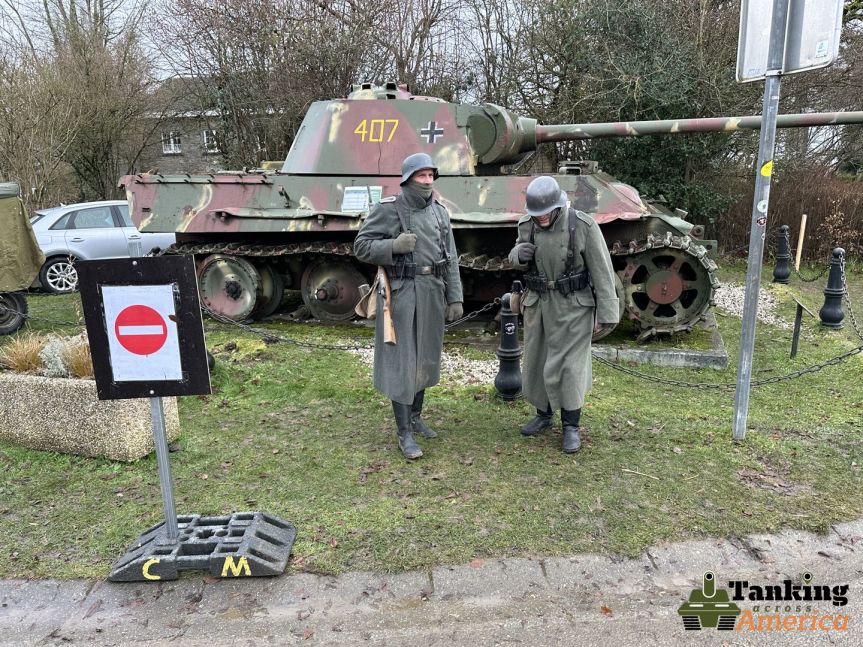
Last year, my family and I visited Bastogne and the local area to visit various events centered around the 80th anniversary of the Battle of the Bulge. Lots of tanks, tracks and museum visited. Had an amazing time and everyone was so charged up about the anniversary.
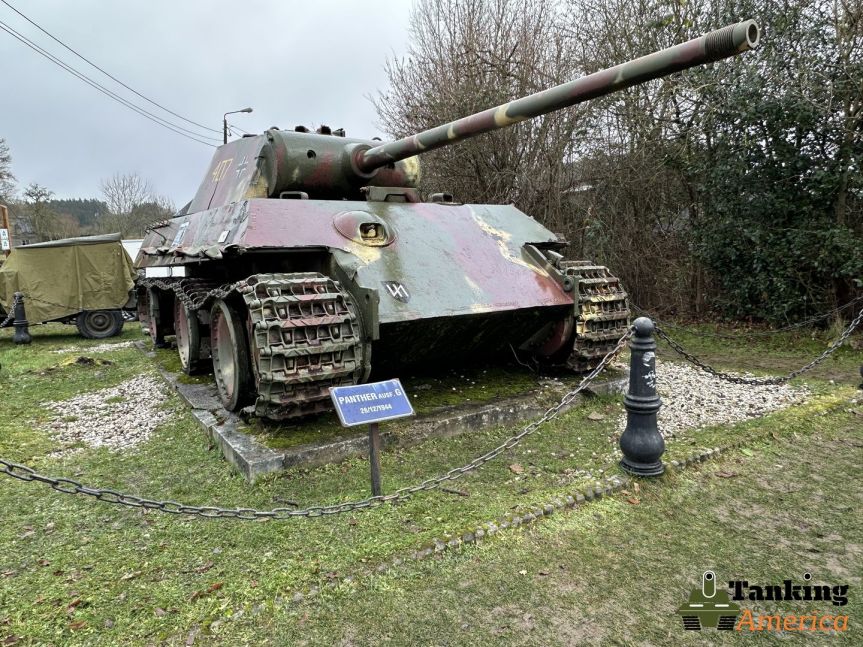
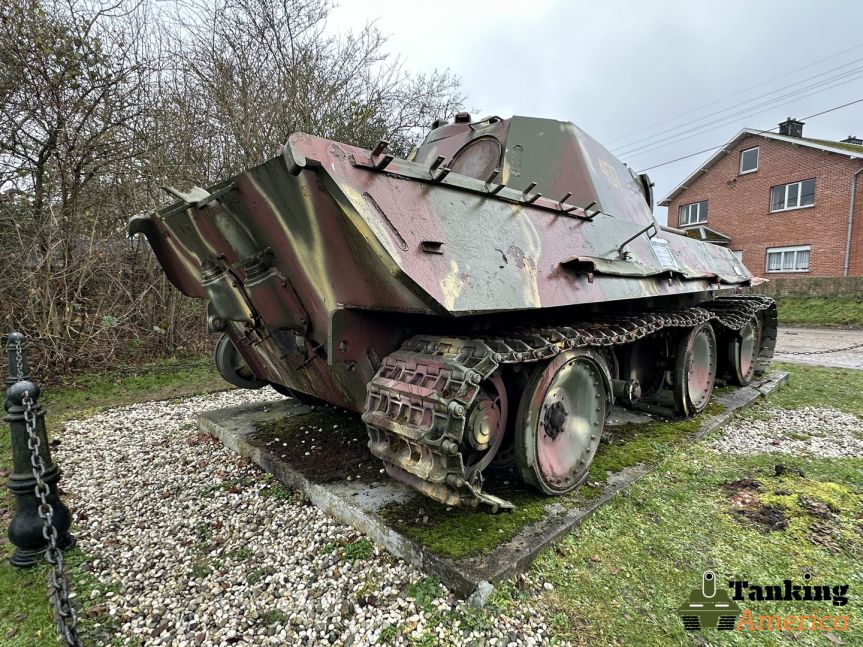
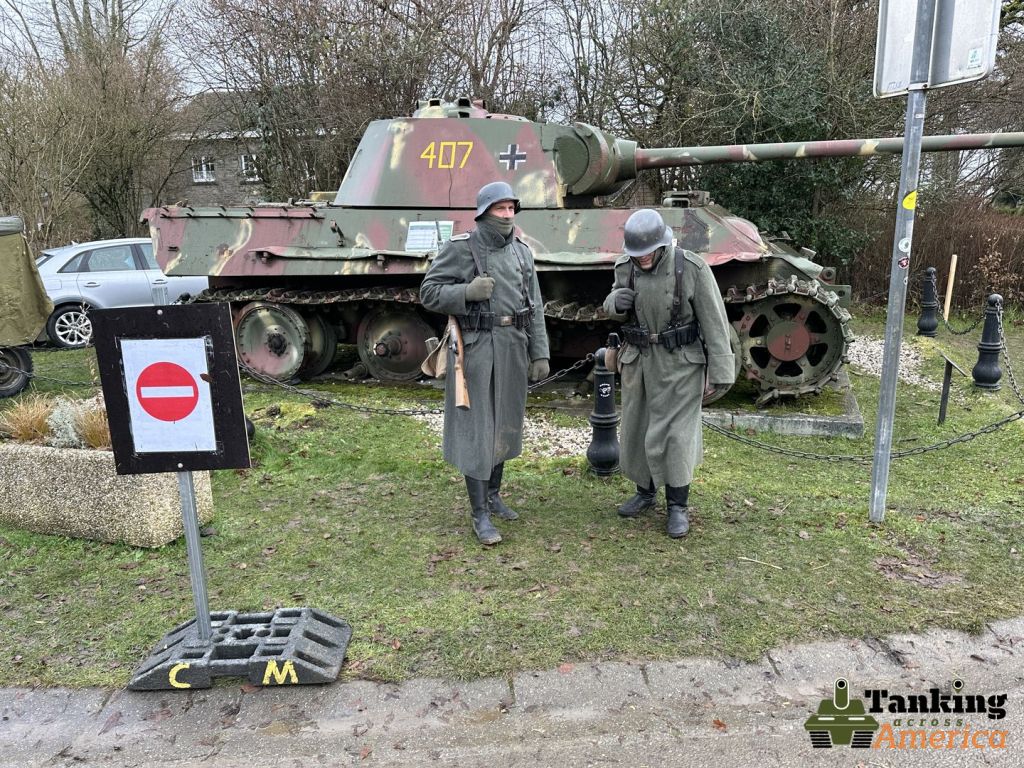
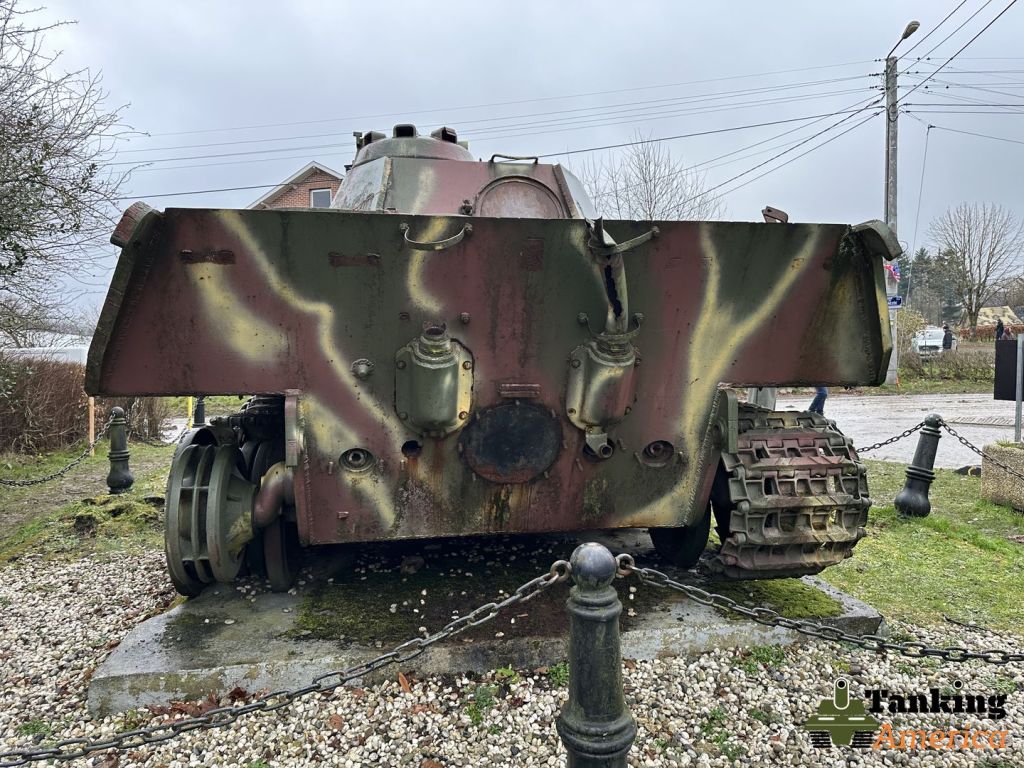
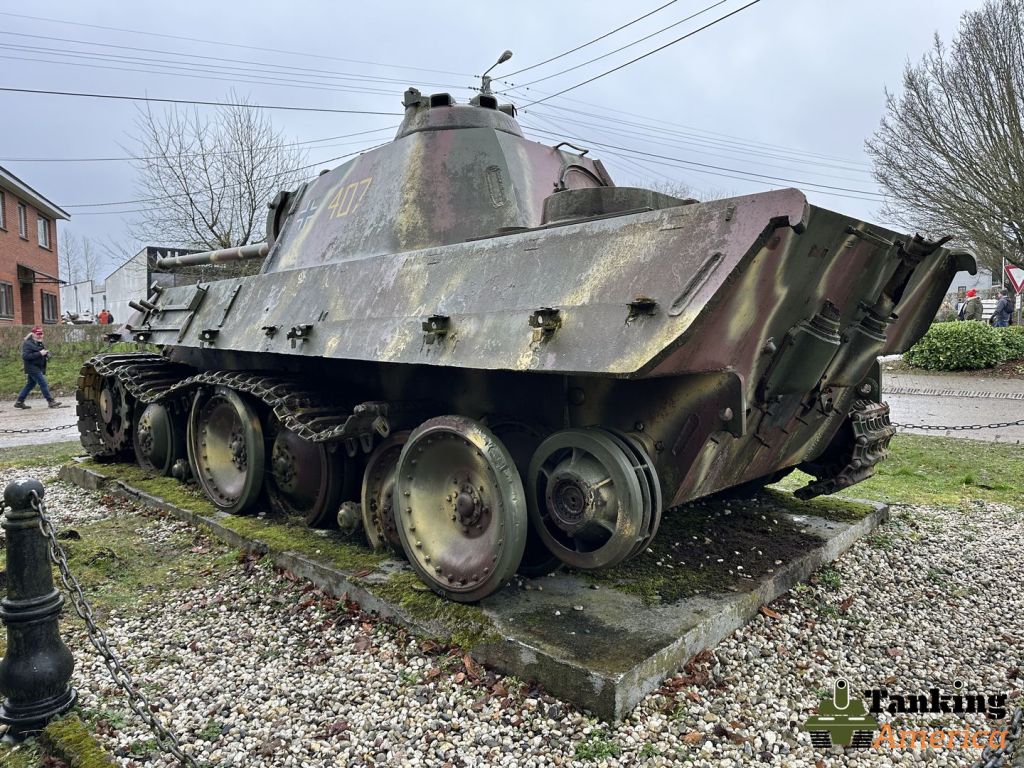
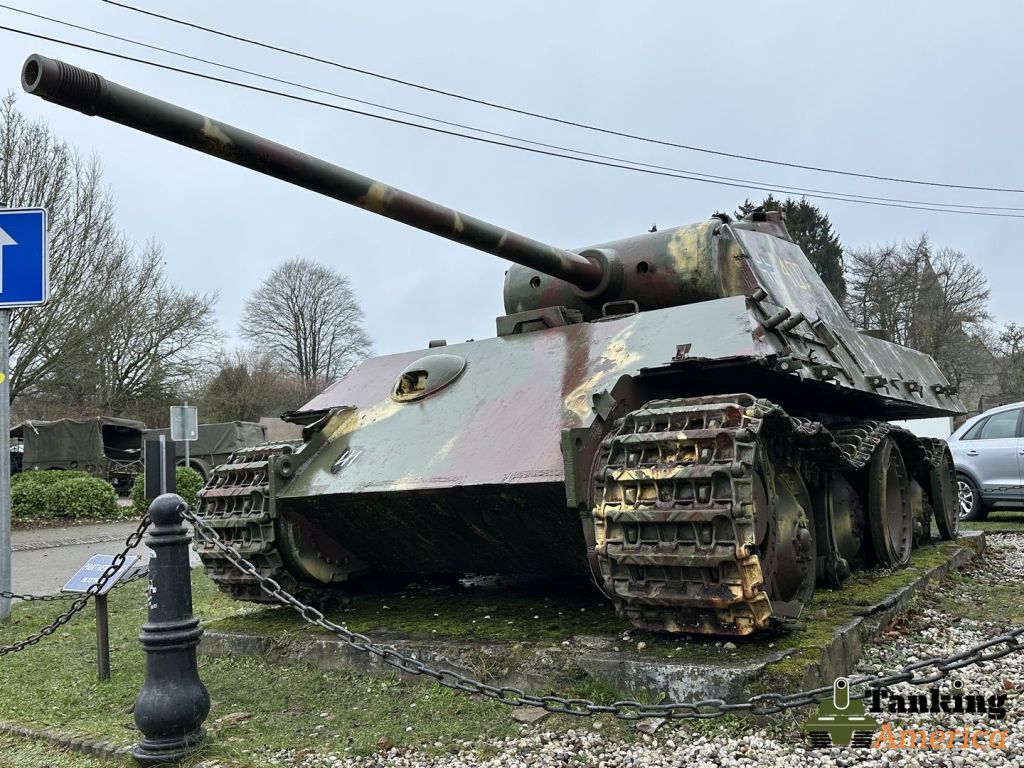
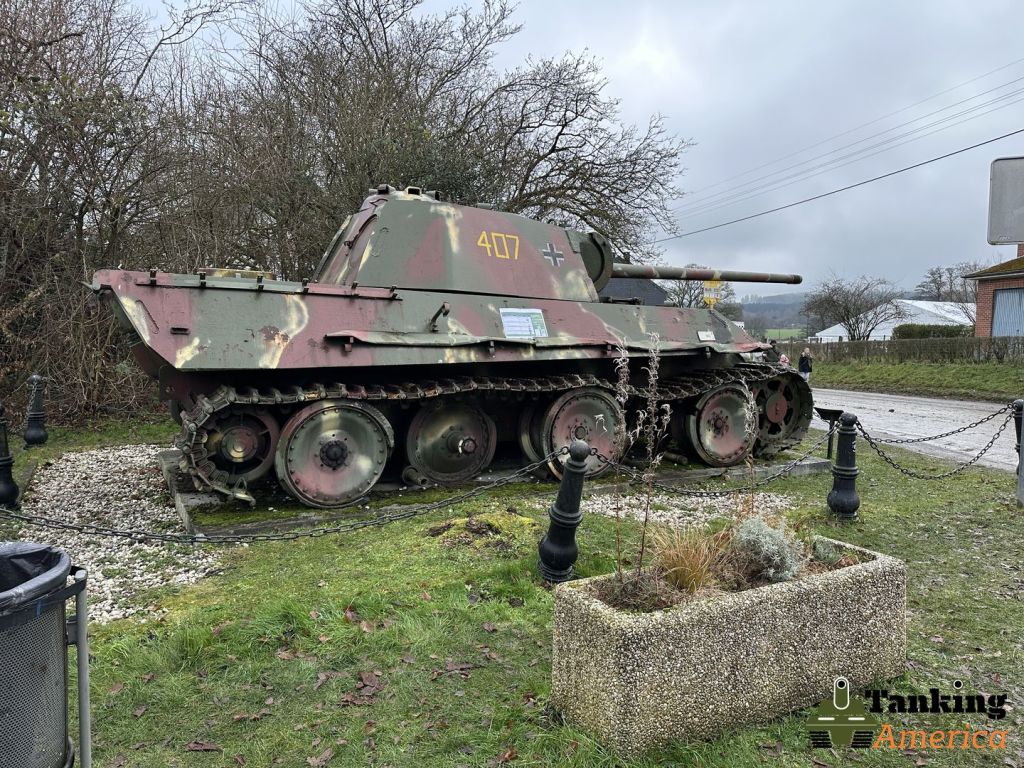
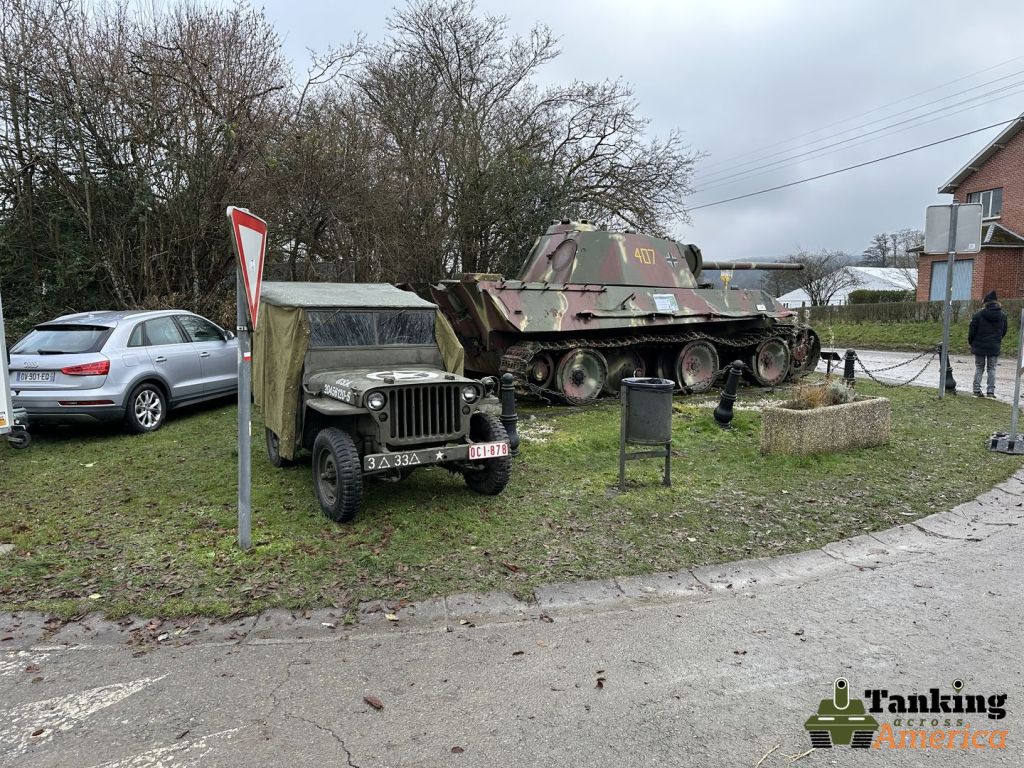
We went up to Manhay to see the battle re-enactment and this Panther is on display. It needs some help and there is a fund-raising campaign underway. If you want to help, click this link.
In the winter of 1944–1945, the small Belgian village of Manhay found itself at the center of the German Ardennes Offensive—better known as the Battle of the Bulge. Amid frostbitten forests and bomb-cratered roads, one mechanical predator stood out: the Panzerkampfwagen V “Panther” Ausführung G, Germany’s deadly mid-to-late war main battle tank.
The Panther Ausf. G was the final production variant of the Panther series, boasting both improvements in design and combat survivability:
Armor: Sloped glacis plate increased frontal protection to 80 mm.
Firepower: The 75mm KwK 42 L/70 gun could destroy most Allied tanks at over 2,000 meters.
Mobility: Powered by a Maybach V12 engine, it combined decent speed with rugged terrain traversal.
Upgrades: The Ausf. G featured a redesigned hull, simplified internal layout, and strengthened suspension for better durability.
Into Manhay: A Winter Clash
In late December 1944, as part of Operation Wacht am Rhein, German forces made a push into the Ardennes in a bid to split Allied lines. Manhay became a critical crossroads—a gateway to the interior and a key to controlling supply routes.
Role of Panthers: Units like the 2nd SS Panzer Division and elements of the Panzer Lehr Division deployed Panther Ausf. G tanks to spearhead assaults.
Combat Realities: Narrow roads, dense woods, and deep snow hampered maneuverability. Allied forces used airstrikes and anti-tank ambushes to slow Panther advances.
Aftermath: Several Panthers were disabled or abandoned in the region—including one famously left near the crossroads in Manhay and later studied by Allied intelligence.
Legacy in the Landscape
Today, Manhay stands quiet, its forests echoing only with wind and birdsong. But reminders of that brutal winter remain:
Locals still recount tales of frozen tank crews and sudden firefights.
Metal detectors occasionally unearth shell fragments near old positions.
A Panther wreck from the area was recovered and restored, now housed in a museum as testament to wartime engineering.
Why It Matters
The Panther in Manhay embodies more than just raw firepower—it reflects the desperate final gambits of a faltering war machine and the stubborn resilience of Allied defenders. It’s a symbol of a war that left its imprint in steel, mud, and memory.
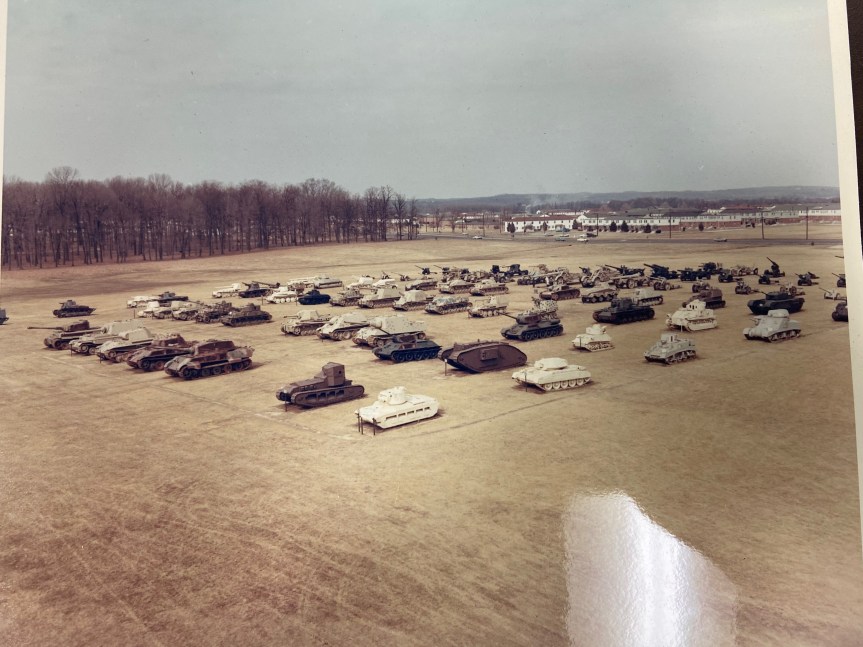
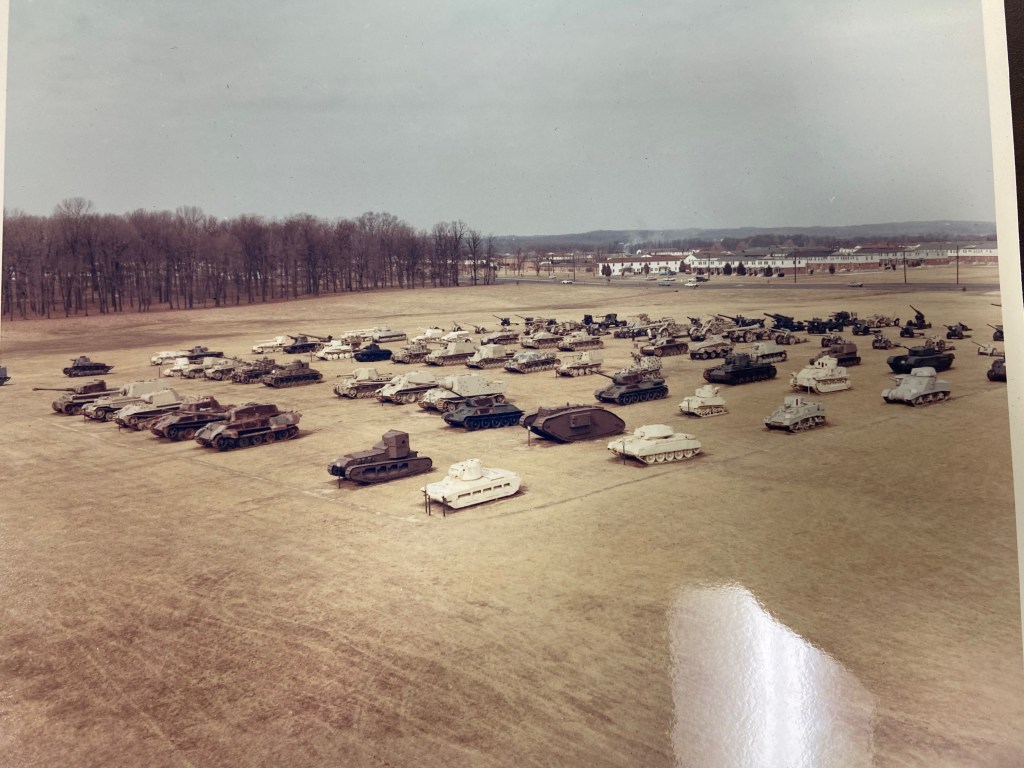
A photo that was seen at Fort Lee depicting the Aberdeen Proving Grounds tank display. I figure late 60s, maybe early 70’s, based upon the cars at the rear of the photo. If you have a different date, please share it.
At the United States Army’s Ordnance Training Support Facility, located at Fort Lee, you can find the last remaining T88, 105 mm Howitzer Motor Carriage, in existence. This track is based upon the M18 Hellcat. The US Army has recently allowed for Open House events to be held the Ordnance Training Support Facility and I was able to attend the first of these.
Enjoy these photos and history. There are additional Open House days in the future so keep an eye on the Fort Lee Facebook page for details. Also, look for additional posts on the vehicles and items at the Ordnance Training Support Facility. It is quite an amazing place.
In late 1944, the U.S. Ordnance Department initiated a project to adapt the high-speed M18 Hellcat tank destroyer chassis into a mobile artillery platform. The goal: mount a 105 mm M4 howitzer to deliver direct fire support with Hellcat‑like agility. The result was the T88 HMC—an open-topped prototype that married firepower to mobility. Work began on 31 August 1944, and two pilot vehicles were completed and tested at Aberdeen Proving Ground before the project was ultimately canceled at war’s end.
Design & Features
Main Armament: The standard 76 mm gun was replaced with the 105 mm M4 howitzer, a weapon originally developed for Sherman tanks. An elevation gyro-stabilizer was added for improved firing stability on the move.
Turret Modifications: The crew layout changed—gunner moved to the right of the gun. A new pedestal mount replaced the M18’s ring mount for the coaxial .50‑cal machine gun. An emergency peephole sight and a panoramic telescope shooter’s sight were installed.
Ammunition Capacity: Stored 16 rounds ready in the turret and another 24 rounds in sponsons—total 40 rounds of 105 mm ammunition.
Chassis & Mobility: Retained the lightweight, fast M18 Hellcat running gear. Armor remained minimal (7–19 mm), trading protection for speed. Top speeds were in the 80 km/h range.
A variant, the T88E1, tested the lighter 105 mm T51 howitzer and concentric recoil system, reducing turret weight and internal clutter.
Comparison Table: T88 vs. M18 Hellcat
Feature
T88 105mm HMC
M18 Hellcat
Chassis Base
M18 Hellcat
M18 Hellcat
Main Armament
105 mm M4 howitzer (gyro-stabilized)
76 mm M1A1 gun
Crew Layout
Gunner on right; open turret
Gunner on left; open turret
Ammunition Storage
16 turret rounds + 24 hull (40 total)
Approximately 45 rounds of 76 mm
Armor Thickness
7–19 mm
7–19 mm
Top Speed
~80 km/h
~80 km/h
Intended Role
Mobile assault gun / fire support
Fast tank destroyer
Status
Prototype; project canceled at war’s end
2,500+ built; saw combat in Europe
Role & Intended Use
Unlike traditional tank destroyers like the M10 or M18—which focused on anti-armor gunnery—the T88 was conceived as a fast-moving assault howitzer, providing direct fire support for infantry and armor in fast-paced operations. Its stabilized 105 mm gun would have been effective against bunkers, trenches, and clustered enemy formations.
Why It Didn’t Move Beyond Prototype
Development of the T88 wrapped up just as WWII was coming to a close. With the shift in U.S. armored doctrine towards multi-role tanks (such as the M26 Pershing) and the success of conventional self-propelled artillery, the T88 was no longer a priority. Only two prototypes were built—no mass production ever took place.
Legacy and Influence
While the T88 never saw combat, its concept—a high-speed chassis armed with a large-caliber gun—anticipated postwar designs like the M56 Scorpion and later Cold War SPGs. It also influenced amphibious experiments such as the T87, which used the T88 turret on a floating M18 chassis for waterborne operations.
Final Thoughts
The T88 105 mm Howitzer Motor Carriage stands as an intriguing “what-if” in U.S. armored development—a hybrid of firepower and mobility built on one of the fastest chassis of WWII. Though it never entered service, the T88’s ambition and design innovations make it a fascinating footnote in the history of armored warfare.
The United States Army’s Ordnance Training Support Facility, located at Fort Lee, you can find the last remaining T1 (T1E1/M6) in existence. The US Army has recently allowed for Open House events to be held the Ordnance Training Support Facility and I was able to attend the first of these.
Enjoy these photos and history. There are additional Open House days in the future so keep an eye on the Fort Lee Facebook page for details. Also, look for additional posts on the vehicles and items at the Ordnance Training Support Facility. It is quite an amazing place.
When World War II erupted in Europe, the U.S. Army recognized its existing tanks wouldn’t withstand modern battlefield threats. In response, Project T1 began in spring 1940—to produce a 50-ton “land battleship” with potent firepower and heavier armor.
Prototypes & Evolution
Several T1 variants were produced during development:
Full production plans aimed for about 5,000 units, but only around 40–45 tanks were ever built.
T1E1: Featuring an electric-drive system and later known unofficially as M6A2; approximately 2–3 units built.
T1E2 & T1E3: Hybrid models using mechanical transmissions; standardized by mid‑1942 as M6 and M6A1 respectively .
Performance & Issues
Engine: Powered by a Wright G‑200 radial engine producing around 825–960 hp, paired with early hydromechanical transmissions, the tank struggled to reliably move its bulk.
Mobility: Speeds topped out around 23–25 mph on-road. However, drivetrain reliability remained a persistent issue.
Crew: Between 6 and 7 men were needed to manage its heavy weapons and systems efficiently.
Legacy & Historical Importance
Though never deployed in battle, the T1 program provided invaluable lessons—and set the stage for improved heavy‑tank designs like the M26 Pershing, which finally saw service in WWII’s final months.
Summary Table
Feature
Specification
Weight
~50 tons
Armor
Up to 83 mm
Armament
76 mm + 37 mm guns, MGs
Crew
6–7 men
Engine Power
~825–960 hp
Top Speed
≈ 23–25 mph
Production Quantity
~40–45 units
Combat Use
None
Final Thoughts
The T1 Heavy Tank exemplifies a bold chapter in U.S. armored vehicle development—a bridging design between grandiose interwar ideals and pragmatic wartime production realities. Though overshadowed by more famous armored vehicles, it deserves recognition for pushing tank engineering forward. For enthusiasts and historians alike, the T1/M6 remains a testament to ambition, design evolution, and the lessons hard‑learned on the path to modern mobile warfare.
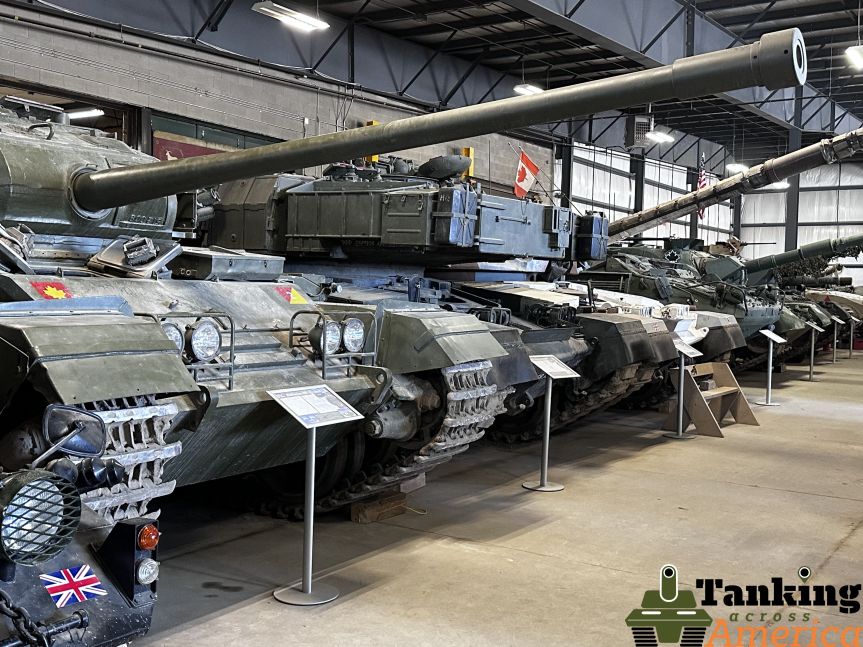
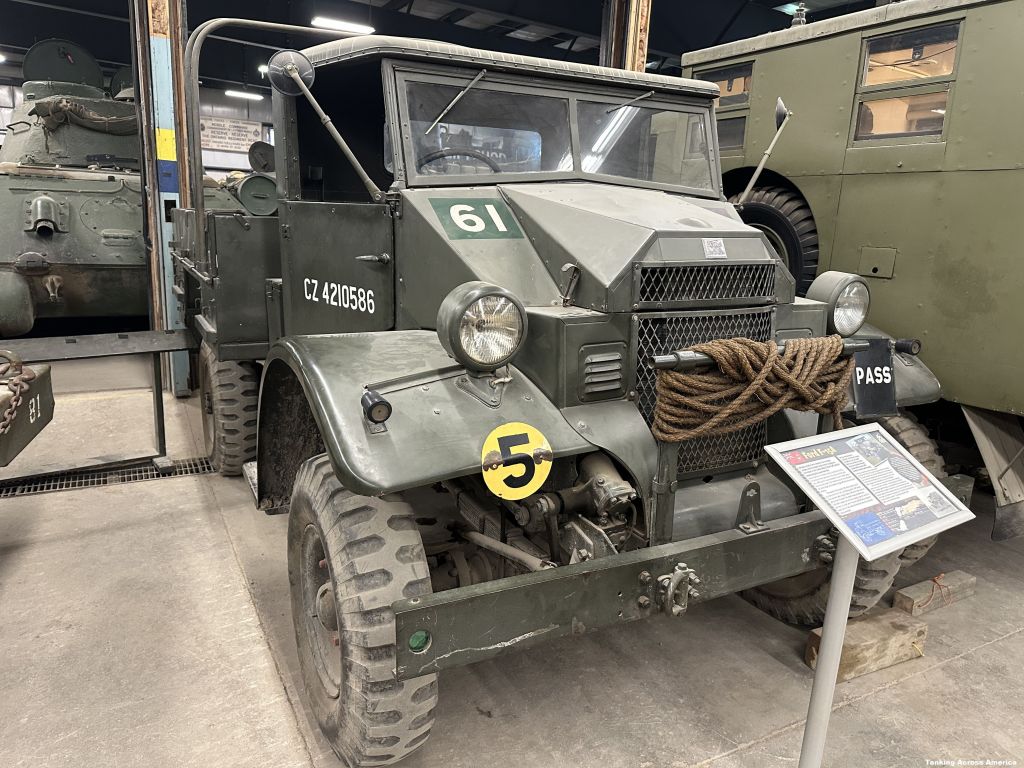
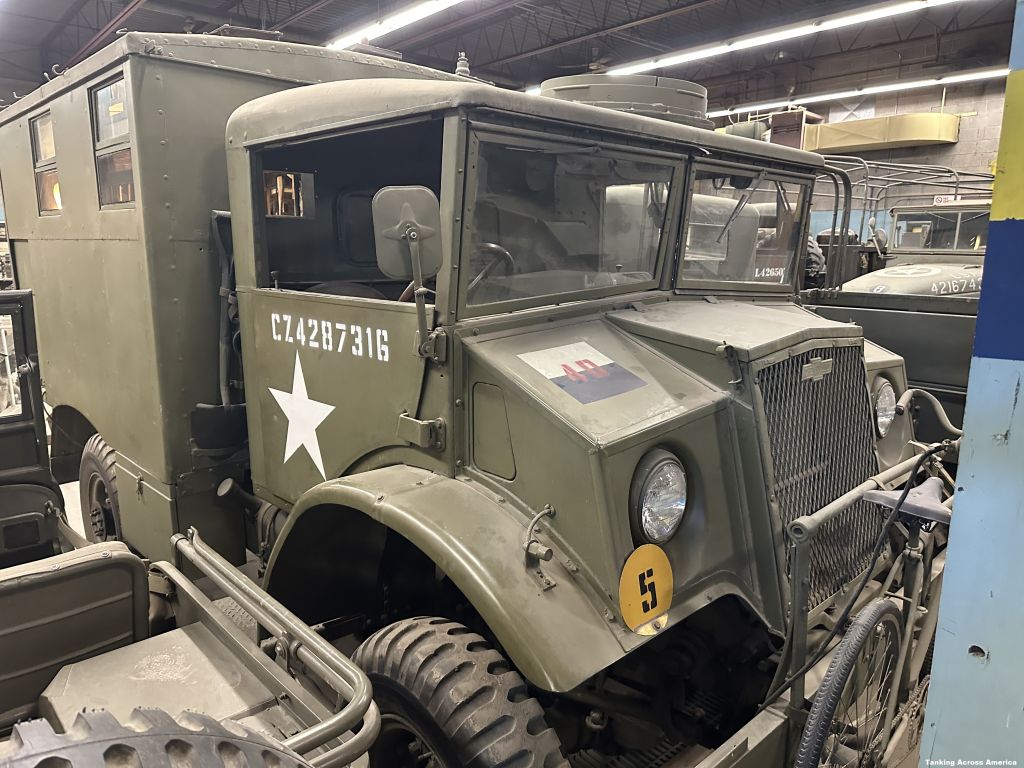
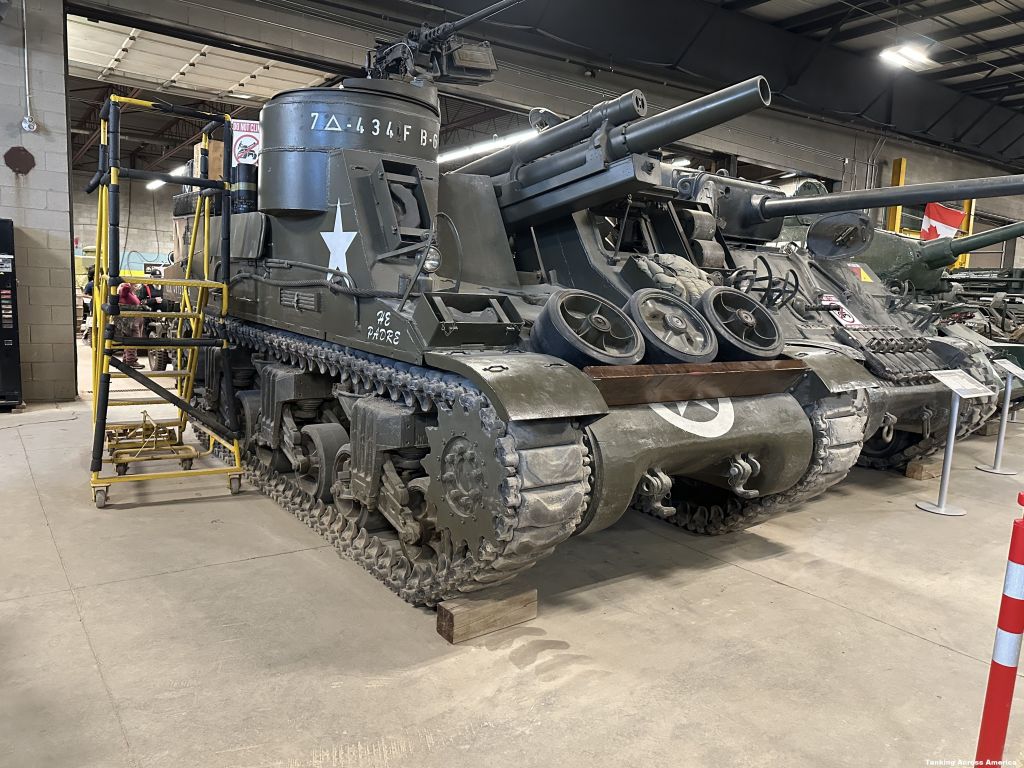
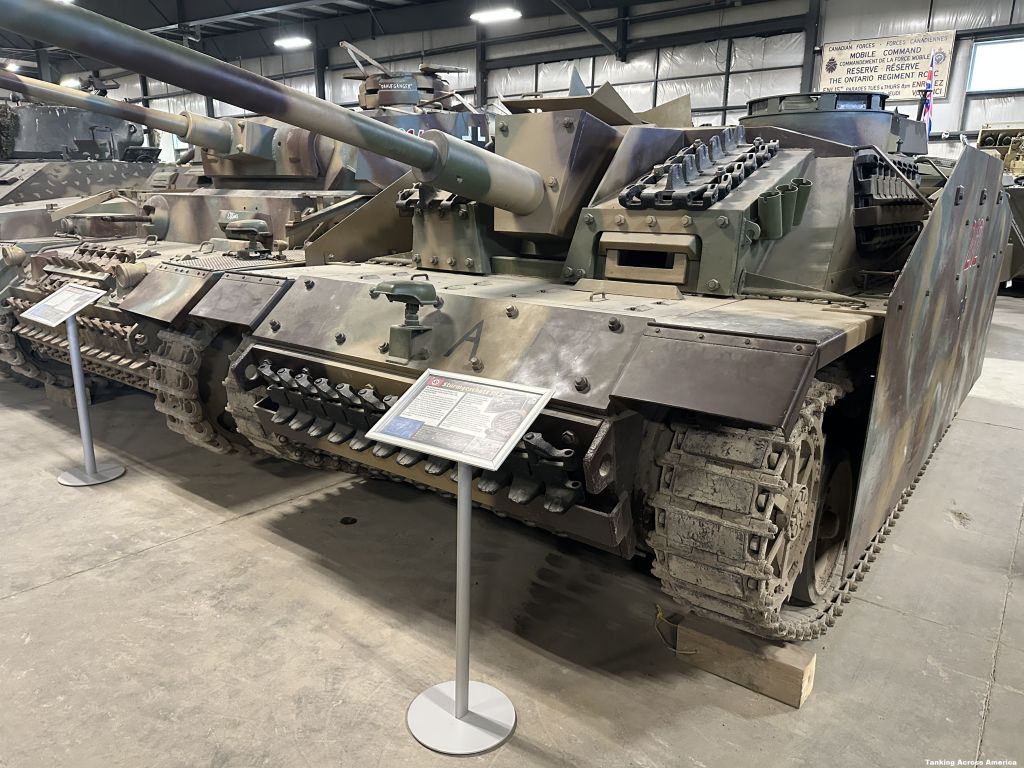
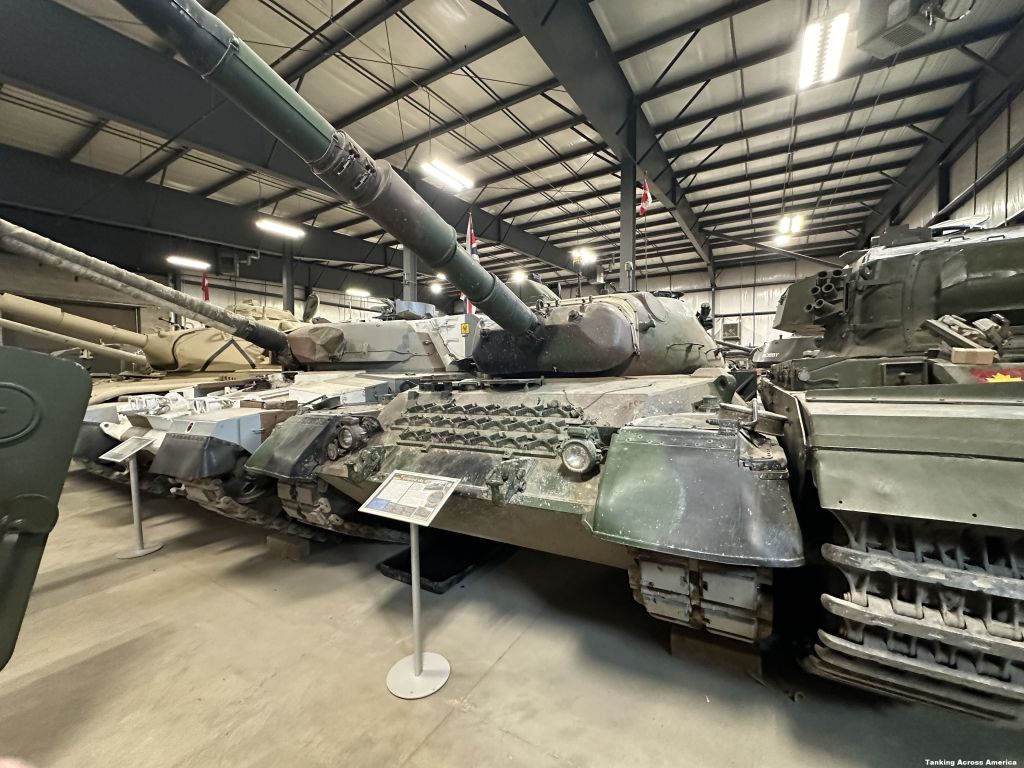
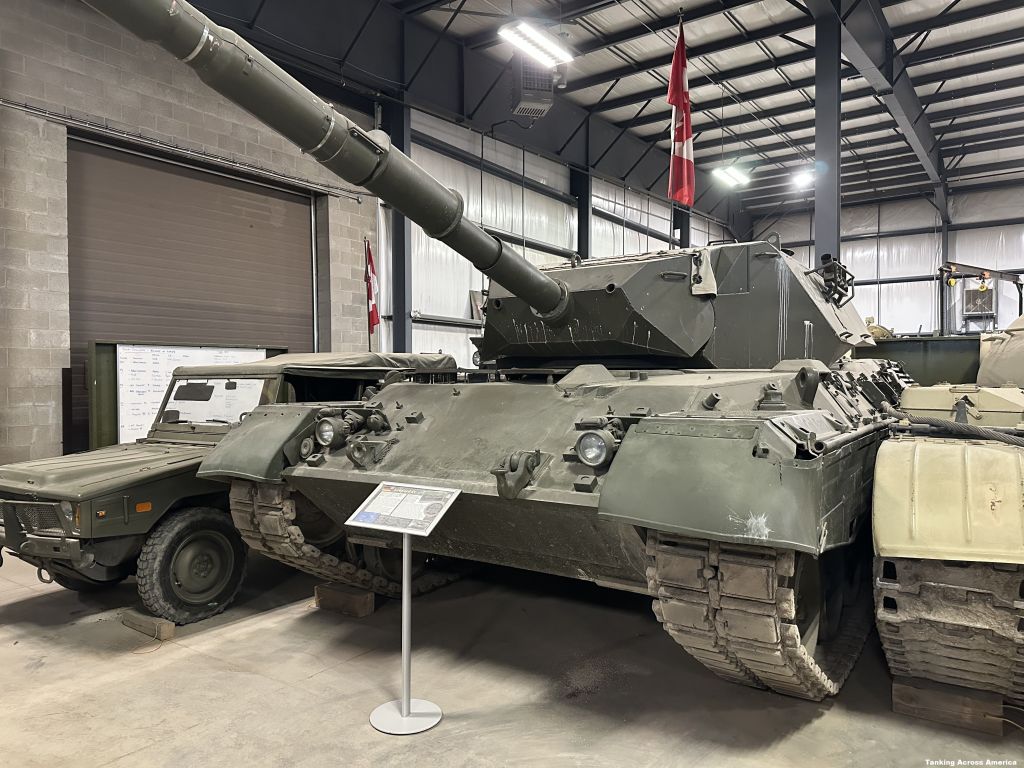
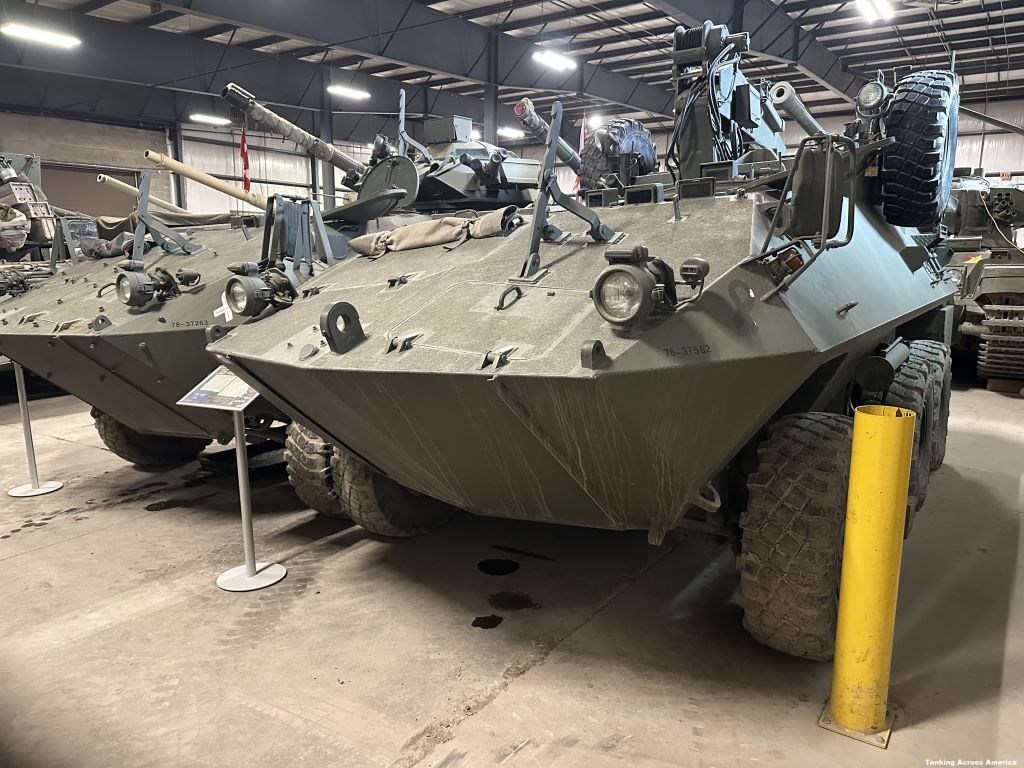
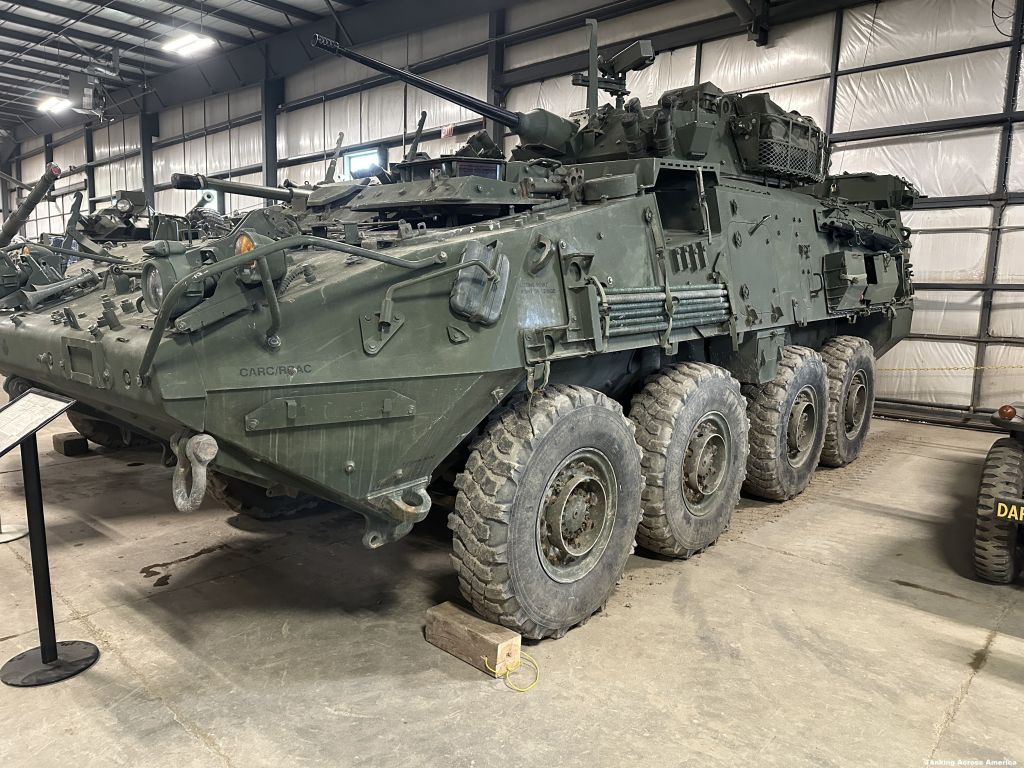
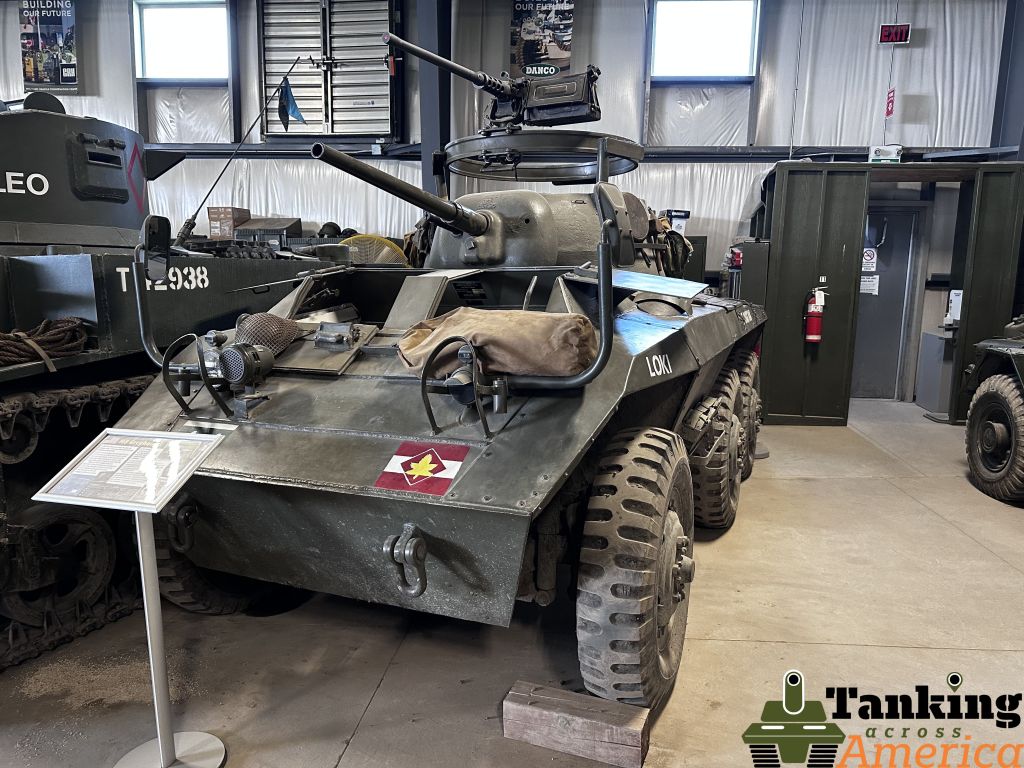
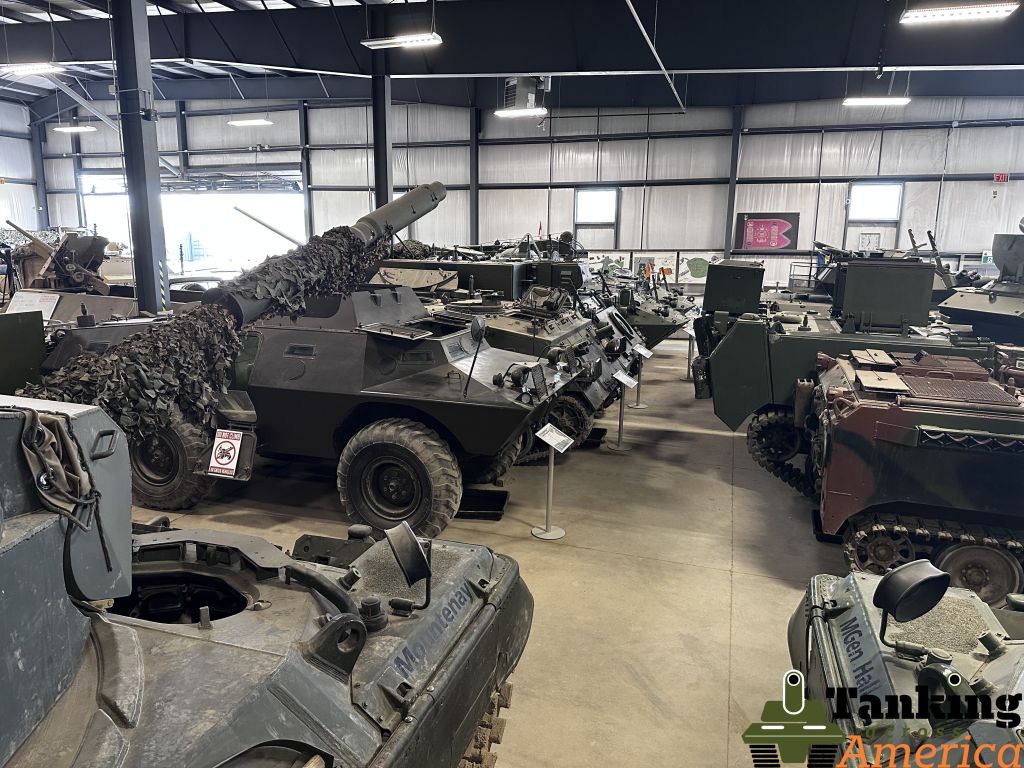
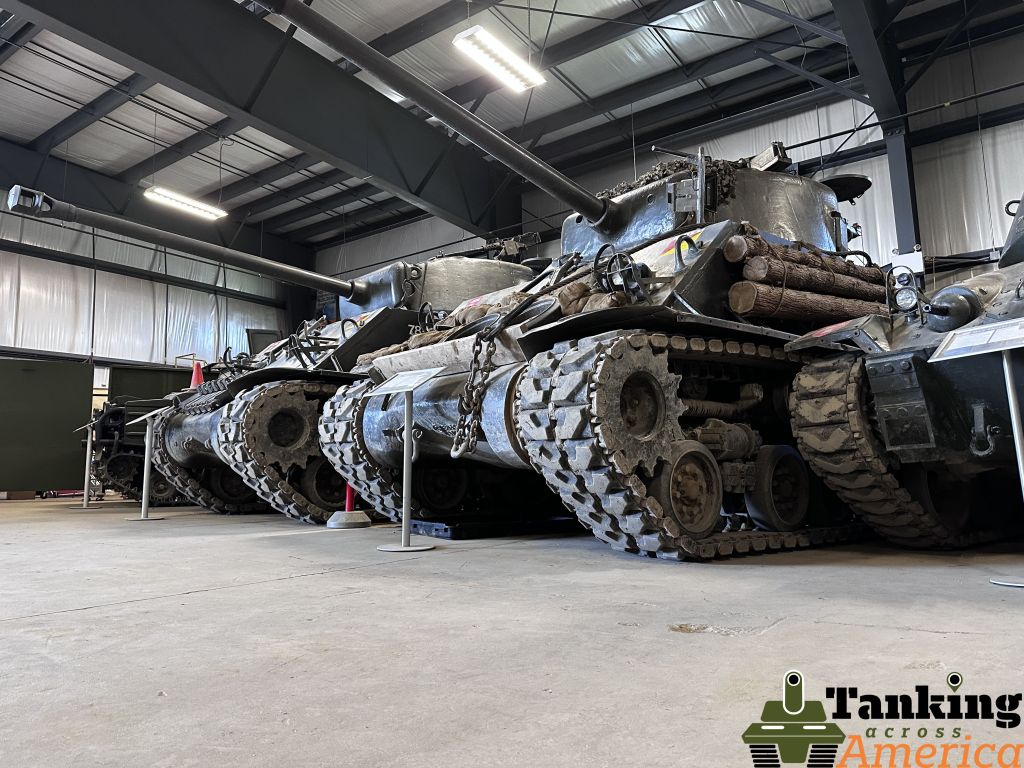
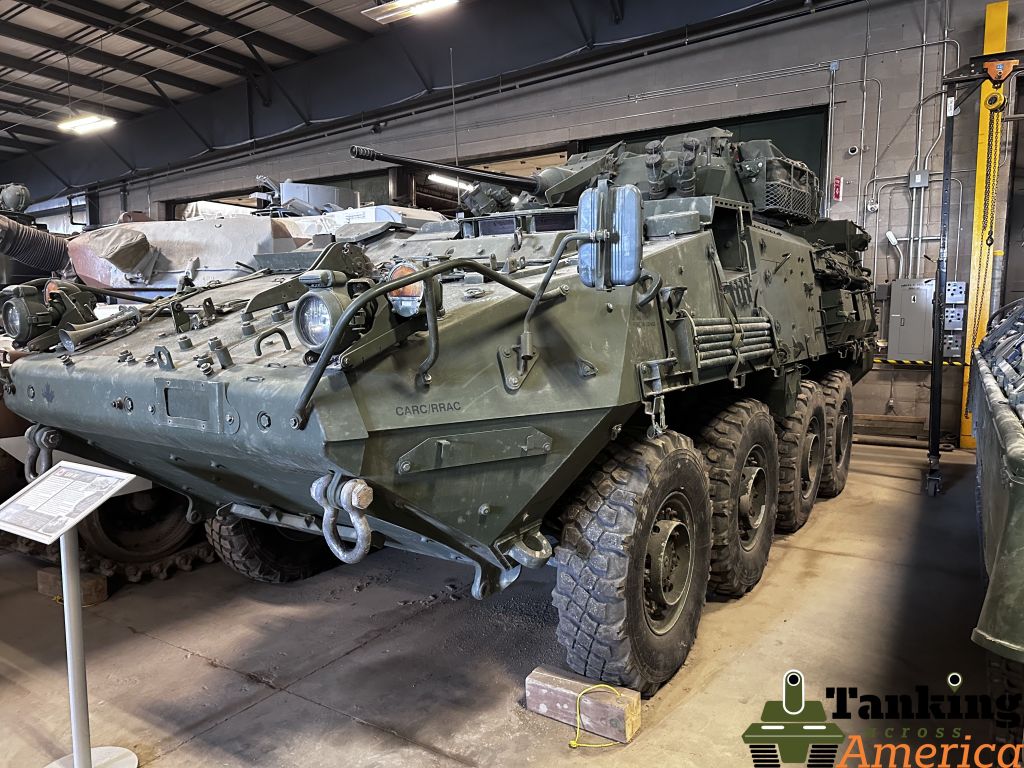
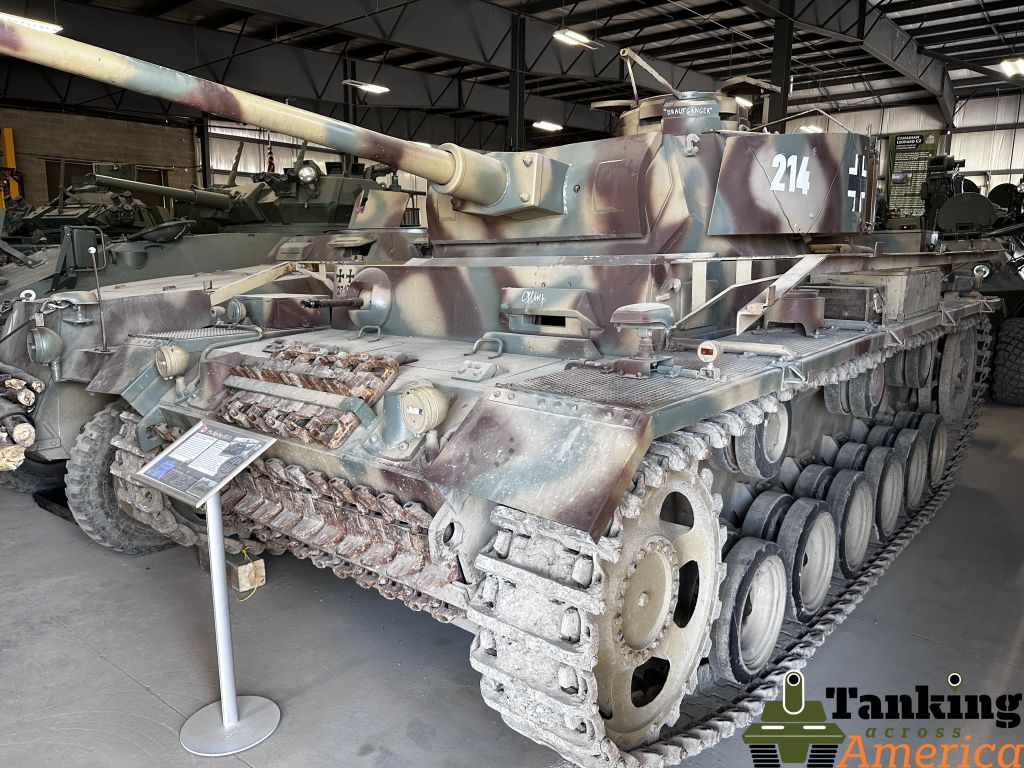
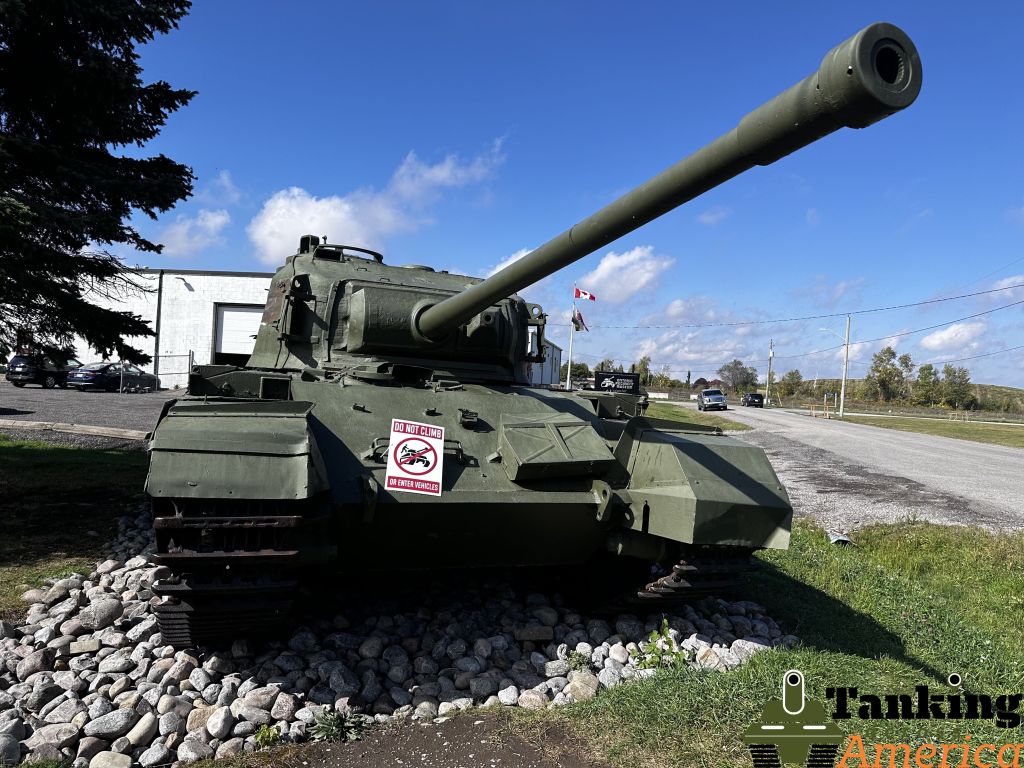
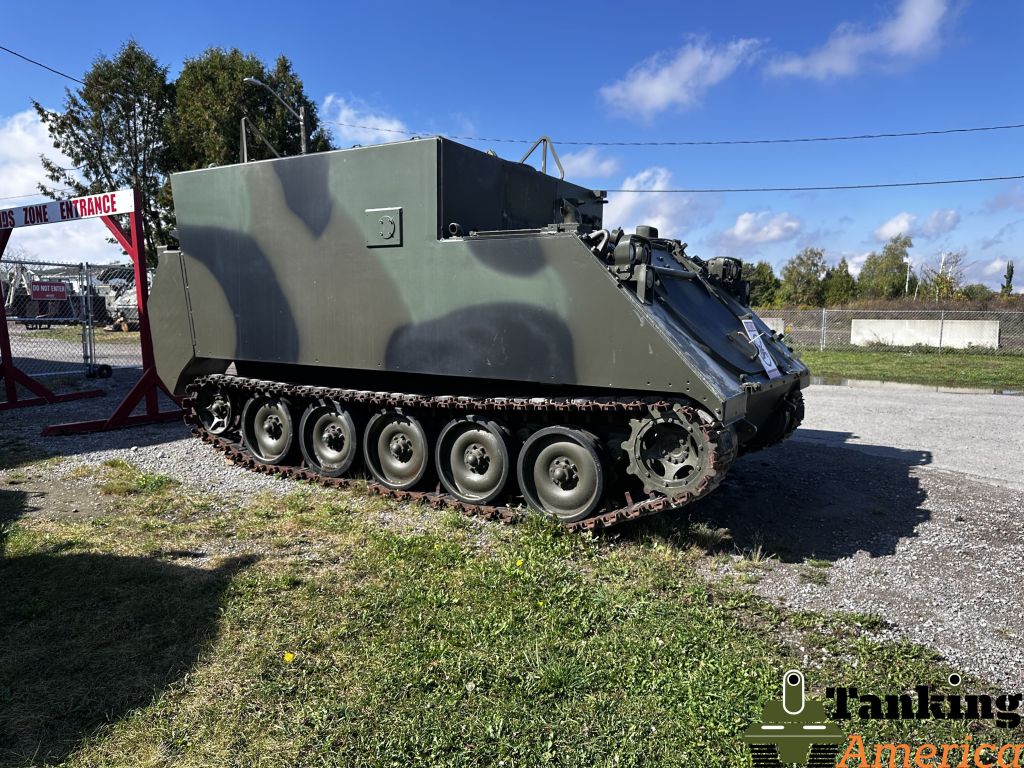
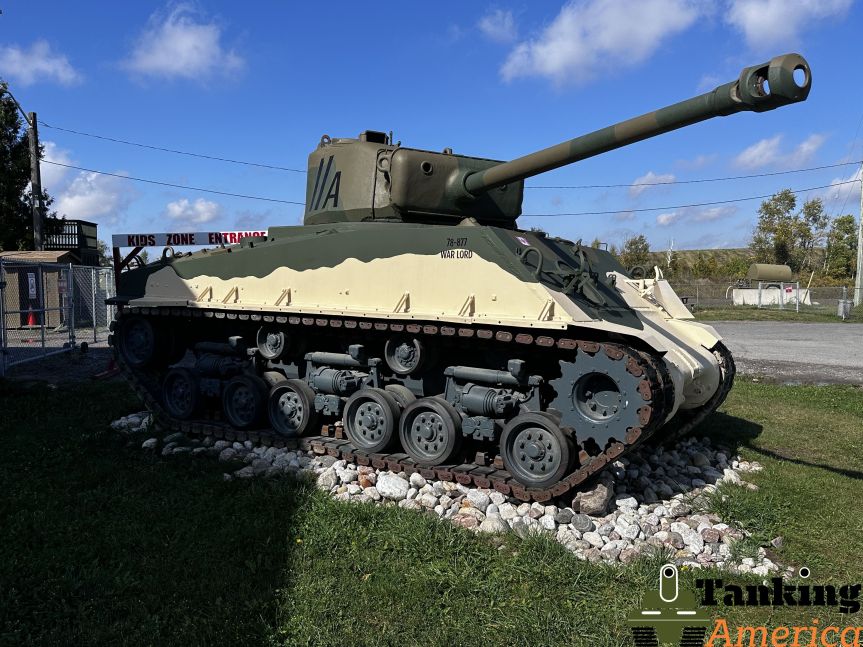
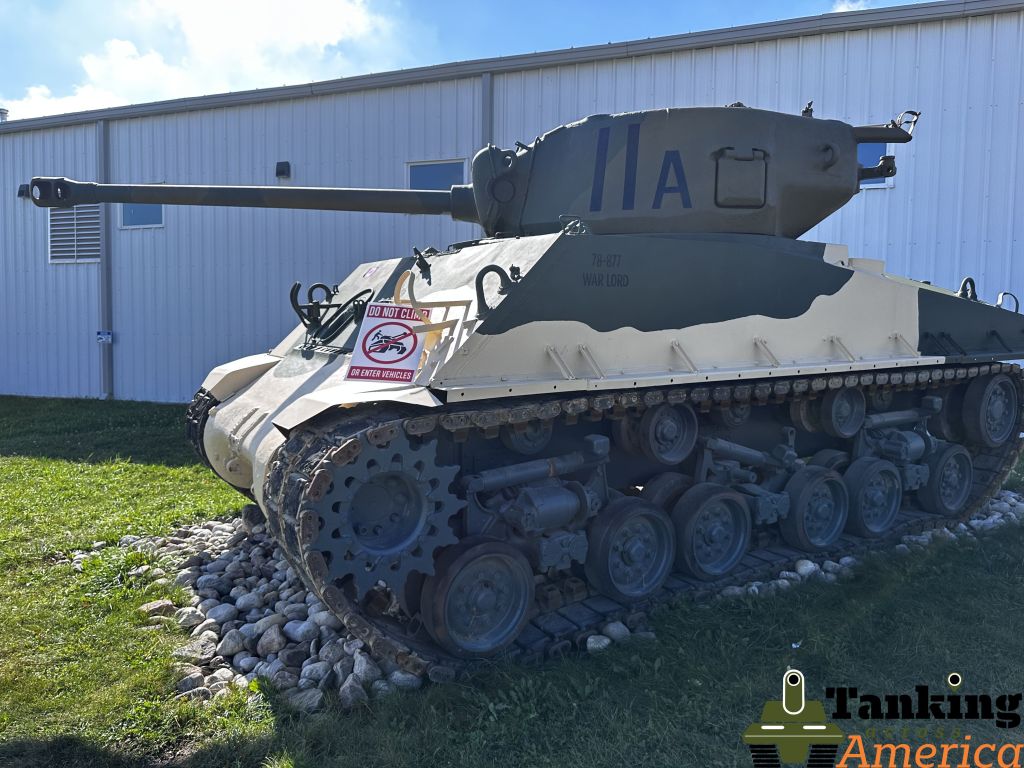
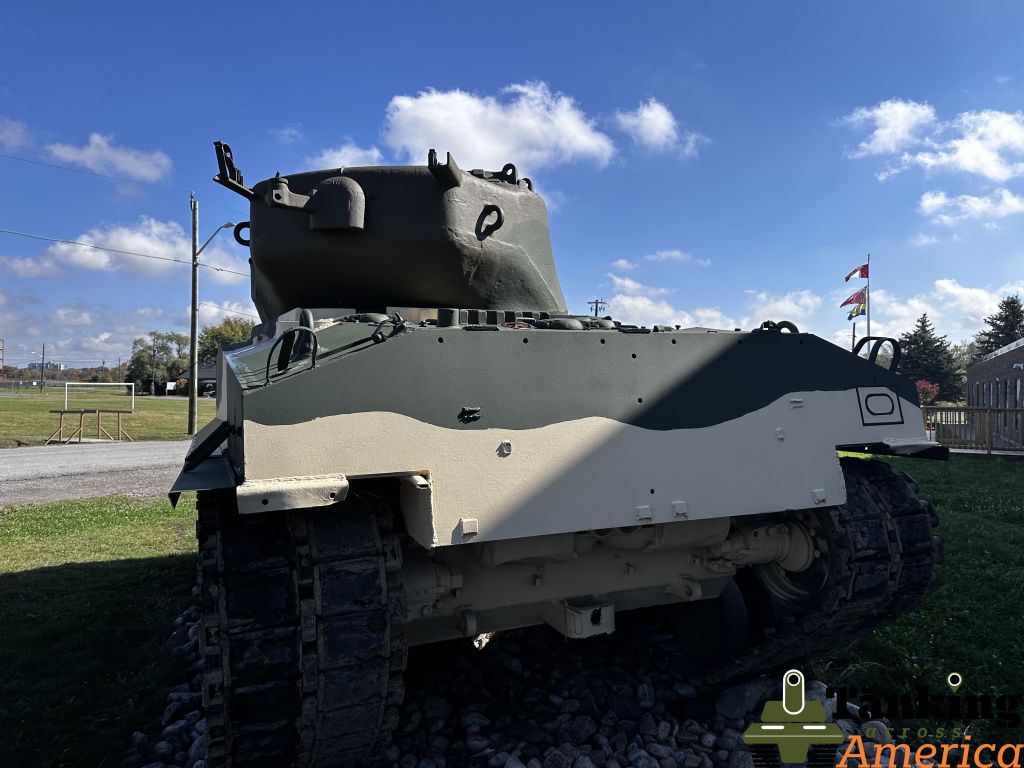
Nestled at 1000 Stevenson Road North, on the South Field of Oshawa Executive Airport, the Canadian Tank Museum has evolved into Canada’s largest collection of operational historical military vehicles, surpassing 120 in number—and counting—spanning from the First World War up to Afghanistan.
What began in 1980 as the Ontario Regiment “Ferret Club”—built around a handful of Ferret scout cars—has grown into a national institution. In 2024, a $30 million expansion and rebranding formally transformed the museum into the Canadian Tank Museum, reflecting its place on the national stage.
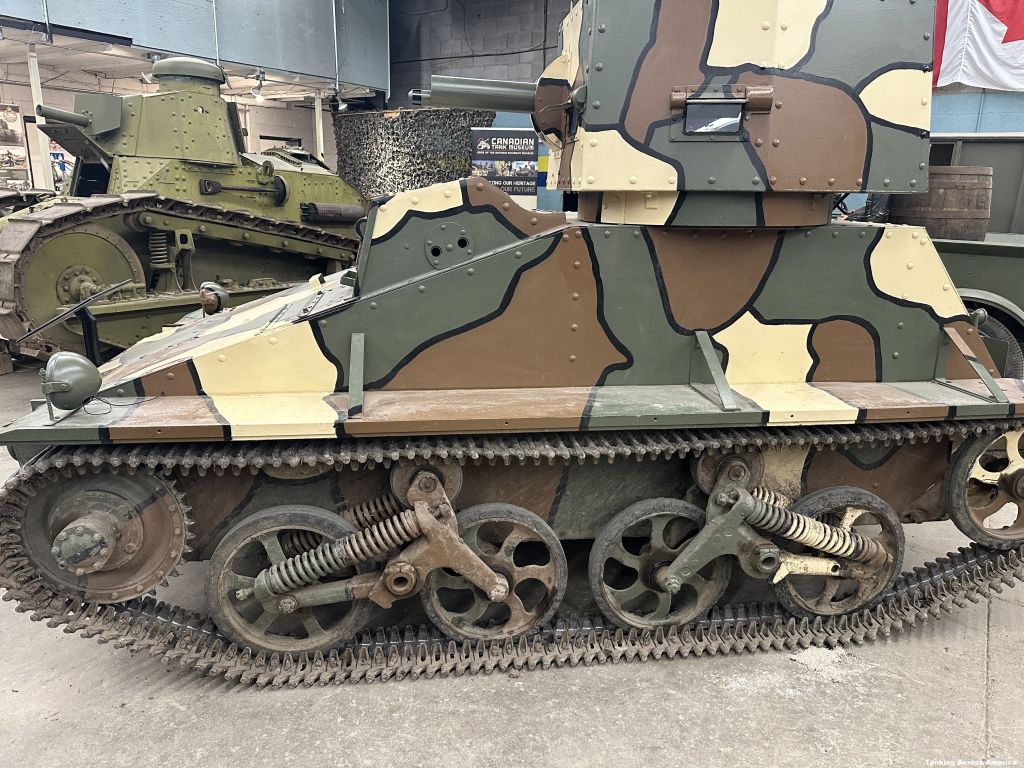
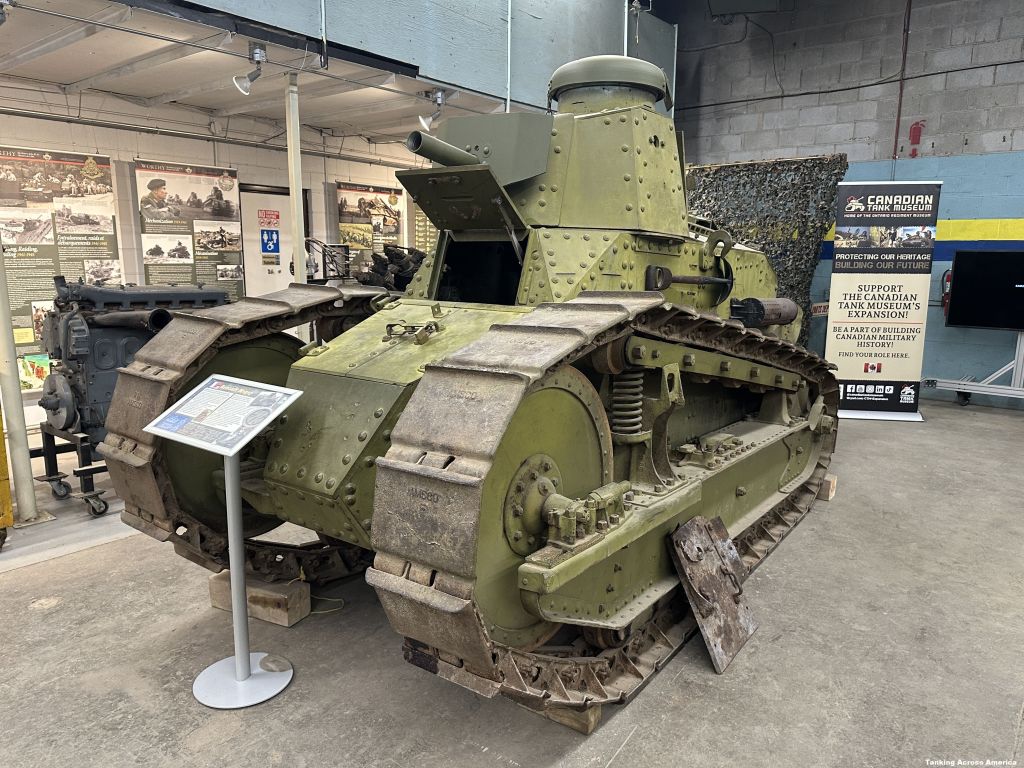
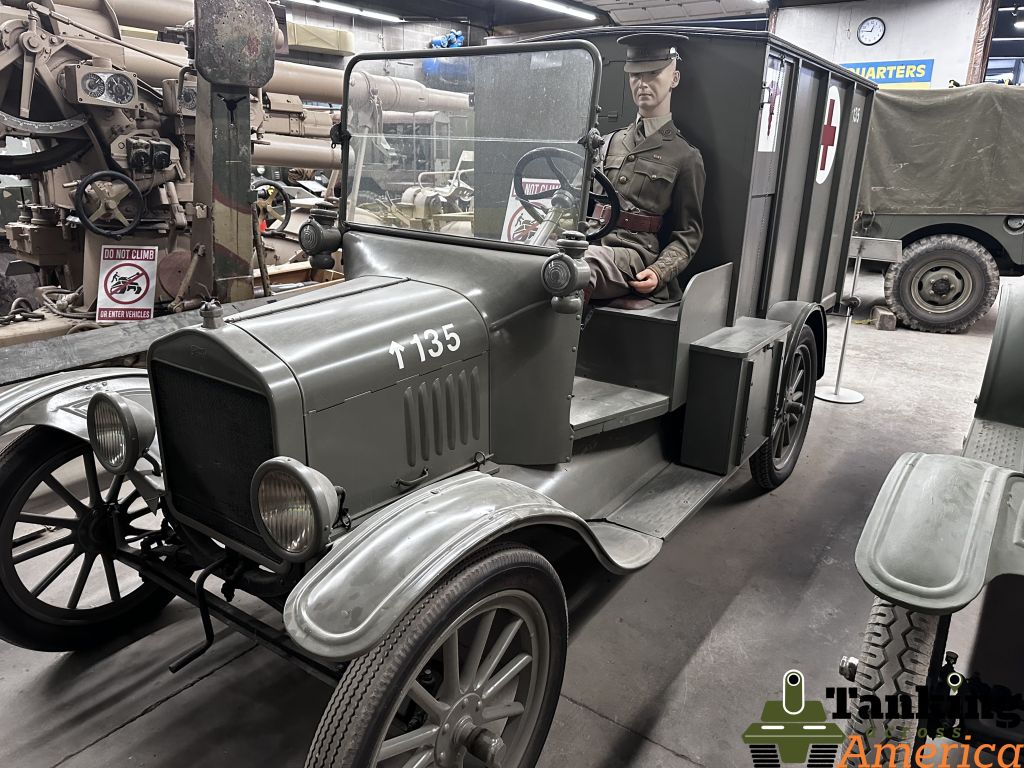
The museum houses more than 120 operational vehicles—jeeps, carriers, armoured cars, personnel carriers, self‑propelled guns, and tanks from diverse eras and nations including Canadian‑built machines like the Oshawa‑made Fox and CMP vehicles.
Static galleries: Explore the Ontario Regiment’s regimental artifacts dating back to the 1850s—uniforms, medals, diaries, photographs, and regimental memorabilia.
Vehicle Bay & Conservation Centre: Peek behind the scenes at restoration work and view over 80 vehicles in various stages—from tanks under restoration to ones ready to roll.
Almost every vehicle here is operational, restored, and driven by volunteers—often veterans or military enthusiasts. They fuel, maintain, and even display these machines in parades and exhibitions across Canada.
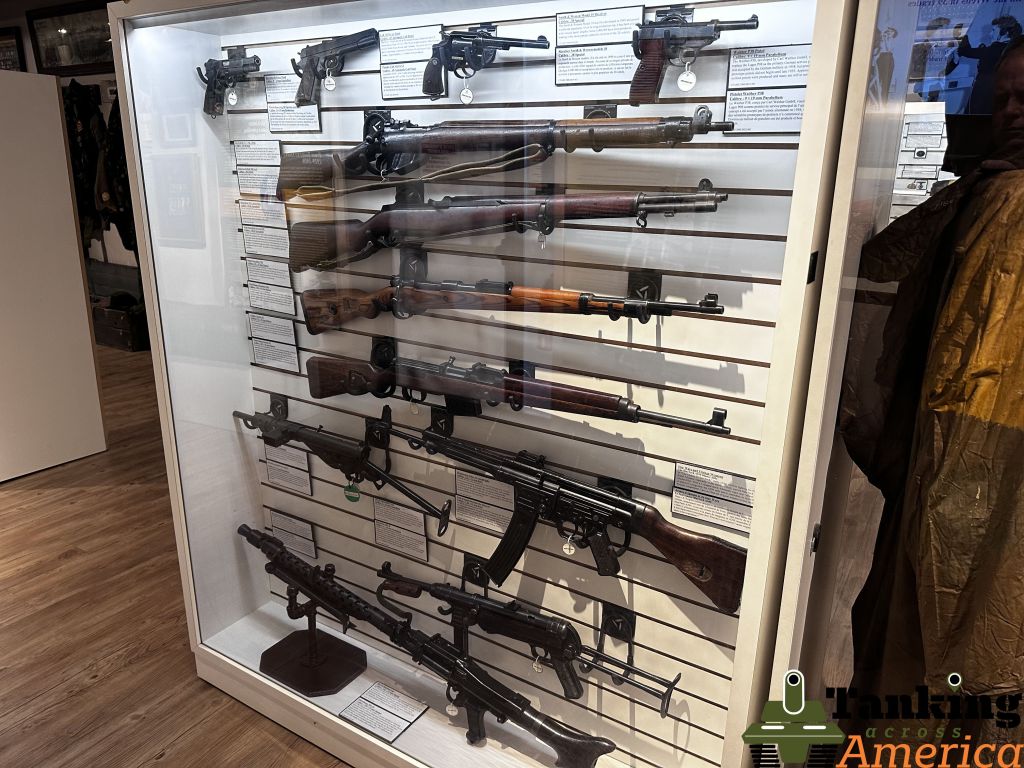
The images found in the article were taken during two separate visits.